

AC Compressor Replacement Cost: Parts vs Labor Breakdown
AC compressor replacement typically costs $500–$1,200 total. Here's the full parts vs. labor breakdown so you know what to expect.
The Short Answer
AC compressor replacement costs $500–$1,200 for most vehicles, with the part itself running $200–$700 and labor adding $150–$500 plus a refrigerant recharge.
| Cost Component | Typical Range |
|---|---|
| AC Compressor (part) | $200 – $700 |
| Labor (2–4 hrs) | $150 – $500 |
| Refrigerant Recharge | $100 – $200 |
| Receiver-Drier (recommended) | $20 – $80 |
| Total Estimate | $500 – $1,200+ |
Luxury vehicles, trucks with dual climate zones, or compressors buried deep in the engine bay can clear $1,500 without blinking. But for the average sedan or crossover, expect to land somewhere in the middle of that range.
What Makes Up the Total Cost?
AC compressor replacement isn't a single line item — it's a handful of separate charges that add up fast. Breaking each one down helps you evaluate any shop quote.
The Compressor Itself
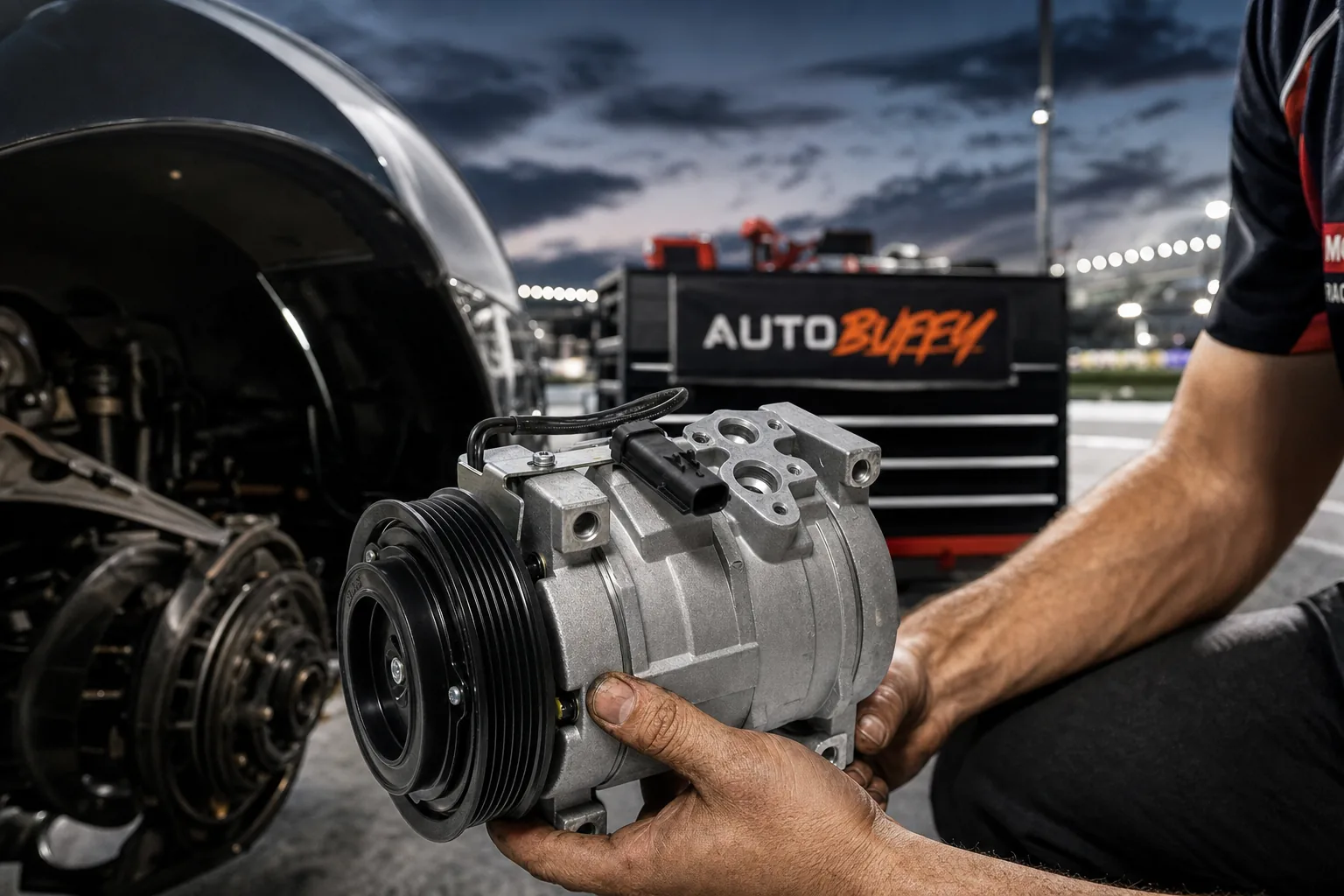
The compressor is the heart of the AC system. It pressurizes refrigerant and keeps cool air moving through your cabin. When it fails, nothing else matters.
Part pricing depends heavily on three things:
- Vehicle application — A compressor for a Honda Civic costs less than one for a BMW 5 Series or a diesel pickup with a rear AC system.
- Part type — New OEM parts sit at the high end. Quality aftermarket and remanufactured units offer solid performance at a lower price point.
- Clutch assembly — Some compressors come with the clutch included; others don't. Confirm before you buy.
For most daily drivers, a quality remanufactured compressor is the sweet spot. Factory-rebuilt to spec, covered by a real warranty, and priced well below OEM replacements.
Labor Costs
Labor is where location really matters. A shop in a high cost-of-living metro charges $120–$175 per hour. A shop in a smaller market might bill $75–$100. The job itself takes 2–4 hours on most vehicles.
What's eating those hours?
- Evacuating the old refrigerant (legally required — you can't just vent it)
- Removing components to access the compressor (sometimes significant disassembly)
- Installing the new unit and reconnecting lines
- Pulling a vacuum on the system to check for leaks
- Recharging with the correct refrigerant
On some vehicles — particularly those with the compressor tucked behind the engine or under a subframe — disassembly alone adds an hour. Ask the shop specifically how many labor hours they're quoting.
Refrigerant Recharge
Every compressor replacement includes a refrigerant recharge. The shop evacuates the old refrigerant, repairs the system, then refills it to spec. Refrigerant cost varies by type:
- R-134a (older vehicles, pre-2017 mostly): $80–$150 for the recharge
- R-1234yf (most newer vehicles): $150–$300+ because the refrigerant itself is significantly more expensive per pound
If your vehicle uses R-1234yf and your shop doesn't have the specialized handling equipment, they may sublet that part of the job — which adds cost and time. Worth asking upfront.
Parts You Should Replace at the Same Time
This is where a lot of people try to save money and end up paying twice. When a compressor fails — especially if it seized or threw debris — the whole system is contaminated.
Replace these alongside the compressor:
- Receiver-drier or accumulator — catches metal debris and moisture. $20–$80 for the part. Skip it and you risk killing your new compressor within a year.
- Expansion valve or orifice tube — debris clogs these easily. $15–$60.
- O-rings and seals — cheap insurance against refrigerant leaks at every connection.
A shop that recommends these parts isn't upselling you. They're protecting your investment.
New vs. Remanufactured vs. Rebuilt: Which Should You Buy?
This question comes up constantly, and the answer isn't always the same.
New OEM compressor: Highest confidence in fit and longevity. Also the most expensive option, sometimes 2–3x the cost of aftermarket.
New aftermarket compressor: Good option when sourced from a reputable brand that specializes in AC components. Coverage matters — a brand with wide vehicle fitment data tends to get spec right.
Remanufactured compressor: Factory-disassembled, inspected, rebuilt with new wear components, and tested. A quality reman unit carries a real warranty and performs comparably to new in most applications. Honestly, for a vehicle that's out of the OEM warranty window, this is where I'd spend my money.
Locally rebuilt: Quality is shop-dependent. No consistent standard. I'd avoid it unless you personally trust the rebuilder.
When choosing a compressor brand, prioritize warranty length, the breadth of fitment coverage, and whether it ships with a new clutch assembly. Those three things tell you more about quality than any marketing language.
How to Evaluate a Shop Quote
Got a quote and not sure if it's fair? Here's how to read it.
- Verify the labor hours — 2–4 hours is normal. More than 5 hours on a typical sedan deserves an explanation.
- Check what refrigerant they're using — Confirm it matches your vehicle spec (check the sticker under the hood).
- Ask if the receiver-drier is included — If it's not, ask why not. Any shop worth trusting will recommend it.
- Get the part warranty in writing — A quality compressor should carry at least a 1-year warranty; many cover longer.
- Ask about the system flush — If the old compressor failed catastrophically, the system should be flushed before the new one goes in. If a shop skips this step, that's a red flag.
Getting two or three quotes is always smart. A $200 spread between shops is common, but a quote that's dramatically lower than others usually means something is being left out.
Is the Repair Worth It?
For most people, yes. Here's the math: if your vehicle is mechanically sound and you'd otherwise be looking at car payments of $400–$600 per month, a $700–$1,100 AC repair pays for itself in two months. The only time it gets complicated is when the vehicle has other significant issues stacking up — at that point, the total repair cost picture matters more than any single job.
If you're on the fence, get a full vehicle inspection at the same time. Knowing what else might be coming helps you make the call with real information instead of guessing.
Find the right part for your vehicle
Guaranteed fit, ships free
FAQ / People Also Ask
Total replacement cost typically falls between $500 and $1,200 for most passenger cars, including parts and labor. Luxury vehicles, trucks with dual-zone systems, or hard-to-access compressor locations can push that figure to $1,500 or more.
Comments
Loading comments...
Comments are moderated by the AutoBuffy team.