

Bad Brake Caliper Symptoms: 7 Warning Signs You Shouldn't Ignore
From pulling to one side to a seized caliper cooking your rotor, here are the clearest bad brake caliper symptoms and what to do about each one.
The Short Answer
A bad brake caliper most commonly reveals itself through the car pulling to one side when braking, a single wheel running noticeably hotter than the others, uneven pad wear, a soft or hard pedal, visible fluid leaks, grinding noises, or a persistent burning smell — any one of which is a safety concern that needs prompt attention.
| Symptom | Likely Caliper Issue | Urgency |
|---|---|---|
| Car pulls left or right when braking | Seized piston or stuck slide pin | High |
| Single wheel extremely hot after driving | Dragging / seized caliper | High |
| Uneven brake pad wear (inner vs. outer) | Stuck slide pin | Medium-High |
| Spongy or soft brake pedal | Caliper seal leak | High |
| Hard brake pedal, reduced stopping power | Collapsed flexible brake hose feeding caliper | High |
| Visible fluid drip near wheel | Blown piston seal or torn boot | Emergency |
| Grinding or metallic scraping noise | Pad worn to metal due to dragging caliper | High |
| Burning smell after normal driving | Caliper not releasing, overheating rotor | High |
Why Brake Calipers Fail in the First Place
Before diving into each symptom, it helps to understand what a caliper actually does. When you press the brake pedal, hydraulic pressure from the master cylinder pushes fluid into the caliper, extending the piston (or pistons) to clamp the brake pads against the rotor. Release the pedal and the pressure drops, allowing the piston to retract slightly so the pads don't drag.
That whole cycle depends on rubber seals, flexible boots, and slide pins staying pliable and corrosion-free. Road salt, moisture, heat cycling, and contaminated brake fluid are the enemies. According to RepairPal, brake caliper replacement is among the more common brake-related repairs, particularly on older vehicles and those operated in northern climates where road salt accelerates corrosion.
7 Bad Brake Caliper Symptoms, Explained
1. The Car Pulls to One Side When Braking
This is the classic symptom, and one of the most dangerous. When a caliper seizes — meaning the piston can't move freely — it applies inconsistent clamping force compared to the opposite side. The side with more clamping force wins, and the car yaws toward it under braking.
Don't confuse this with pulling during normal driving (which can be a tire pressure or alignment issue). Caliper-related pulling is most pronounced when you actually brake. If it straightens out when you release the pedal, a dragging caliper is a strong suspect.
2. A Wheel That's Scalding Hot After a Short Drive
After a normal drive — say, 10–15 minutes of mixed city and highway — your wheels should be warm but touchable. If one wheel is noticeably hotter than the other three (careful, approach slowly and don't touch the rotor directly), that's a seized caliper generating friction heat continuously. Left unchecked, this warps your rotor, accelerates pad wear dramatically, and can even overheat your wheel bearing grease. The National Highway Traffic Safety Administration (NHTSA) tracks brake-related incidents — excessive heat is a documented factor in brake failure events, which is why this symptom shouldn't be dismissed as "normal."
3. Uneven Brake Pad Wear
Pop the wheels off during your next tire rotation and compare the inboard pad thickness to the outboard pad on each corner. They should be roughly equal. If the inboard pad is worn to the metal while the outboard still has 6mm of material, the caliper's slide pins are likely corroded and the caliper isn't floating properly — it's clamping only on one side. This is a very common failure mode, and it's fixable early. Ignore it and you're replacing pads, rotors, and calipers instead of just cleaning and lubricating the slide pins (or replacing the caliper if the pins are damaged).
4. Spongy or Soft Brake Pedal
A soft pedal that slowly sinks toward the floor under steady pressure points to a hydraulic leak. If the master cylinder is fine, the next suspects are the caliper piston seals. As the rubber seals age, they crack and allow fluid to bypass the piston internally or weep externally. Either scenario puts air into the system and reduces braking effectiveness. This is an emergency — NHTSA brake safety guidance is clear that any reduction in pedal feel demands immediate inspection.
5. Hard Pedal, Reduced Stopping Power
The opposite of spongy. A hard pedal that requires significantly more effort than usual, combined with longer stopping distances, can point to a collapsed flexible brake hose that feeds the caliper. The hose deteriorates internally and acts like a one-way valve — fluid goes in under pressure but can't return, keeping the caliper partially applied and making the pedal feel stiff. Many drivers misdiagnose this as a master cylinder issue.
6. Grinding or Scraping Noises From One Wheel
Brake pads have wear indicators that produce a high-pitched squeal when the friction material gets low — that's by design. But a grinding, metal-on-metal sound coming from a single corner while driving (not just braking) is more serious. A dragging caliper accelerates pad wear so fast that the pad backing plate contacts the rotor directly. By the time you hear grinding, you're likely replacing the rotor too.
7. Burning Smell After Normal Driving
Hot brakes after hard mountain driving is expected. A sharp, acrid burning smell after a normal grocery run is not. That smell — similar to burning hair or scorched rubber — is your brake friction material and possibly your rotor cooking from a caliper that won't release. Pull over safely and let things cool. Don't ignore it and drive home; a thermal event in the wheel well is a real possibility in severe cases.
Diagnosing the Problem: A Simple 3-Step Check
You don't need a lift to narrow things down.
- The hot-wheel test. After a 10-minute drive with normal braking, park and carefully wave your hand near (not on) each wheel. A noticeably hotter wheel points to a dragging caliper on that corner.
- The visual check. With the wheels on, look through the spokes at the rotor and caliper. Any fluid drips, rust streaks running from the caliper body, or a rotor that looks significantly more scored on one side than the others are all red flags.
- The pad comparison. If you're comfortable removing a wheel, compare inboard and outboard pad thickness at each corner. Mismatched thickness is a slide pin or piston problem.
If any of these checks flag something, have a qualified mechanic inspect the full brake system before driving further.
How Much Does Brake Caliper Replacement Cost?
Parts alone typically run $40–$200 per caliper for most passenger cars and light trucks, though performance vehicles and trucks with larger brake packages can run higher. Labor adds $80–$200 per corner at an independent shop, making total per-corner costs somewhere in the $150–$450 range. Most mechanics will recommend replacing calipers in axle pairs — both fronts or both rears — to keep braking balanced. Factor in new pads and a rotor resurface or replacement if the dragging caused damage, and the total job can run $400–$900 for a full axle.
Getting quotes from multiple shops or checking RepairPal's estimator for your specific vehicle is a smart starting point.
OE-Match or Remanufactured: Which Should You Buy?
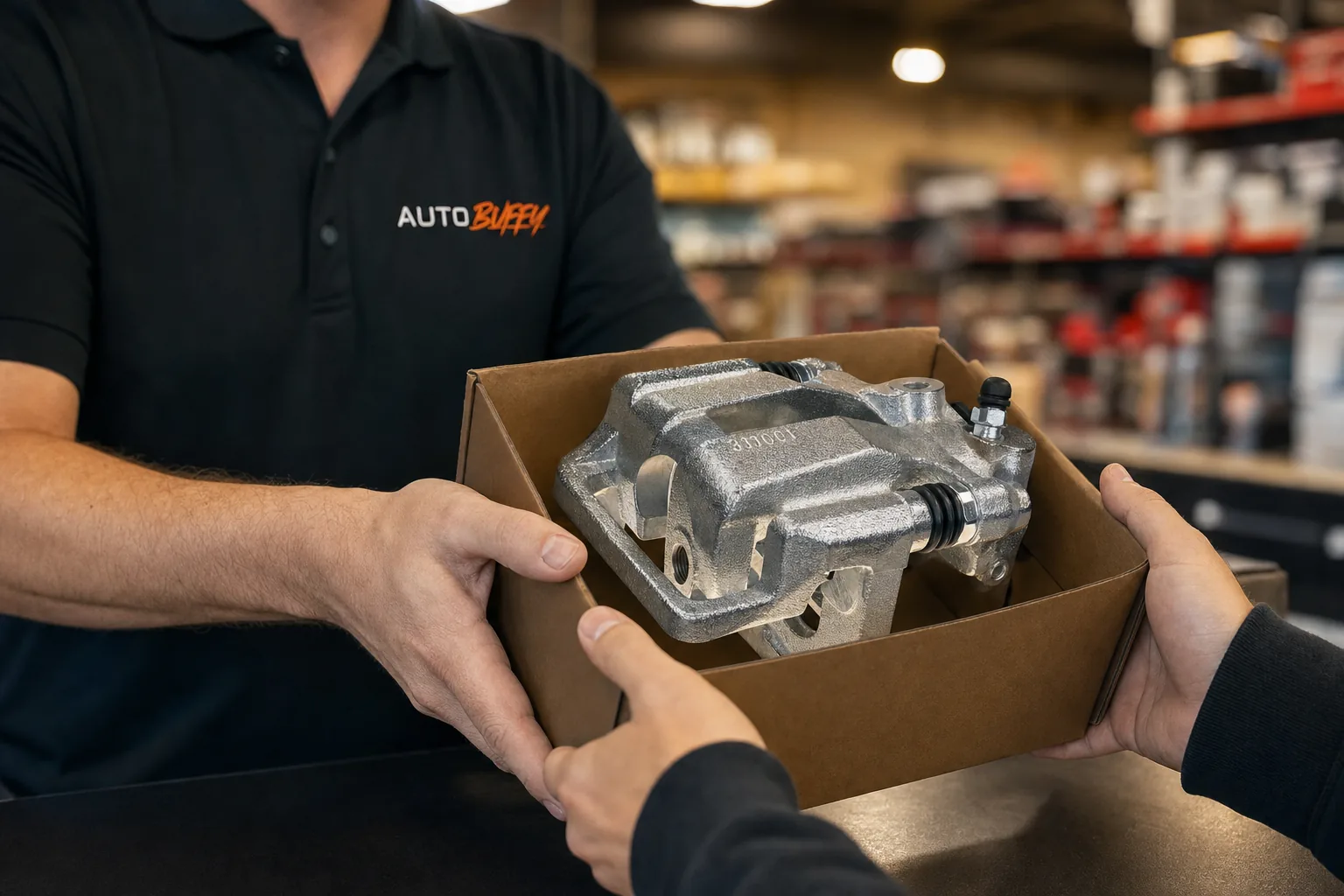
For most daily drivers, a quality remanufactured caliper is a perfectly sensible choice — the bore is inspected, the piston seal and boots are replaced, and the cost savings are real. For high-mileage vehicles where corrosion is already extensive, or for trucks that see heavy towing, a new OE-equivalent caliper gives you more confidence. Either way, make sure the replacement includes new hardware (slide pins, clips, boots) and that your brake fluid is flushed if it's been more than two years — contaminated fluid accelerates seal degradation and you'll be back doing this job again sooner than you want.
Use the part finder below to match a caliper to your exact vehicle — year, make, model, and trim all matter for fit.
Sources
Find the right part for your vehicle
Guaranteed fit, ships free
FAQ / People Also Ask
The most common signs are the car pulling to one side during braking, a stuck or dragging brake that causes the vehicle to feel sluggish, uneven brake pad wear, a spongy or hard brake pedal, visible brake fluid leaks near a wheel, grinding or squealing noises, and a burning smell after normal driving. Any one of these warrants a brake inspection.
Comments
Loading comments...
Comments are moderated by the AutoBuffy team.