

Bad Control Arm Symptoms: Clunks, Wander, and Uneven Tire Wear Explained
Clunking over bumps, wandering steering, or scalloped tires? Learn the exact symptoms of a failing control arm and when to replace it.
The Short Answer
A bad control arm most often announces itself with a clunking noise over bumps, steering that wanders or pulls to one side, and uneven tire wear — symptoms that get worse quickly and shouldn't be ignored.
| Symptom | Likely Culprit | Urgency |
|---|---|---|
| Clunk or knock over bumps | Worn bushing or loose ball joint | High — inspect within days |
| Steering wander / loose feel | Upper arm wear or ball joint play | High |
| Uneven/scalloped tire wear | Camber shift from worn arm or bushing | Medium-High |
| Vibration through wheel or floor | Loose ball joint or bushing failure | High |
| Car pulls to one side | Control arm geometry shifted | Medium-High |
| Creaking during slow turns | Dry or cracked bushing | Medium |
Typical 2026 replacement cost: $300–$750 per side (parts + labor), plus $80–$120 for a required wheel alignment.
What a Control Arm Actually Does
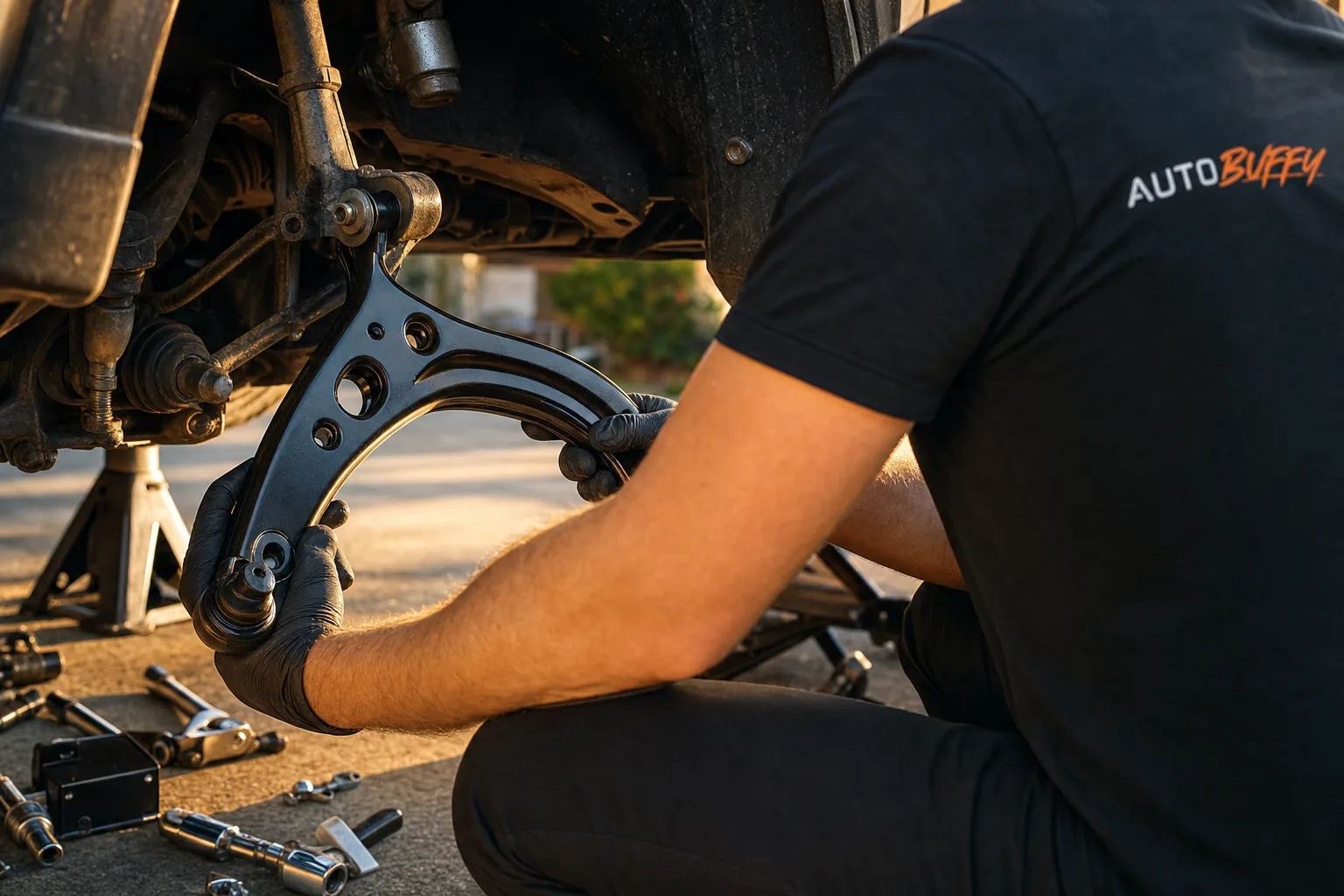
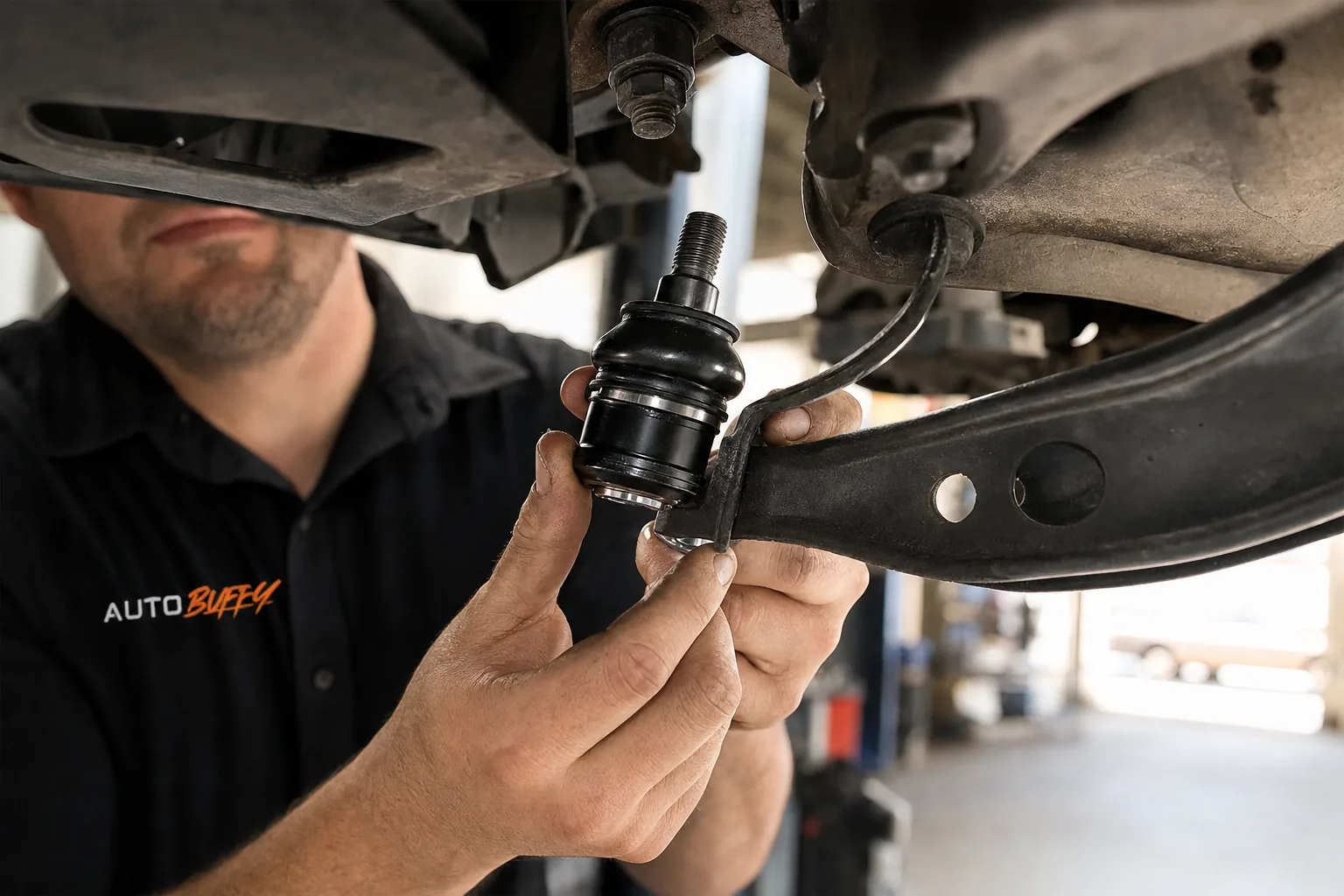
Before diagnosing the problem, it helps to understand what you're diagnosing. A control arm is the rigid link that connects each front wheel (and on many vehicles, the rear wheel) to the vehicle's frame or body structure. It pivots up and down on rubber or polyurethane bushings at the frame end, and attaches to the wheel hub through a ball joint at the other end. That assembly — body, bushing, ball joint — handles every bump, pothole, and cornering load your suspension sees. Control arms can be made of iron, steel, or aluminum depending on the application. They're engineered to last the entire life of the vehicle, and many do exceed 100,000 miles without issue. But the bushings and ball joints that make up the assembly? Those wear out first, and when they do, you'll know it. ---
The 6 Bad Control Arm Symptoms (In Order of How Obvious They Are)
1. Clunking or Banging Noise Over Bumps
This is the symptom most people notice first, and it's usually the loudest. When a bushing deteriorates — rubber cracks, loses flexibility, and tears from constant movement and temperature cycling — the metal sleeve inside starts knocking against the control arm bracket. Hit a pothole or a speed bump, and you get a distinct clunk or bang from under the front end. Lower control arm failure is more likely to produce this kind of clunking noise compared to upper arm wear. If the noise is louder going over speed bumps than on a smooth highway, the bushing is the prime suspect. ### 2. Steering That Wanders or Feels Vague
Your steering wheel should feel connected to the road. When it starts to feel like you're constantly making small corrections to keep the car in your lane — especially at highway speeds — a worn control arm is a real possibility. Upper control arm wear tends to produce this kind of steering vagueness and instability more than lower arm issues. The geometry that tells your wheels where to point gets corrupted by play in the arm, and the wheel literally doesn't know exactly where it's supposed to be. ### 3. Uneven or Rapid Tire Wear
Control arms maintain the precise angles — camber and caster — at which your tires contact the road. When a bushing or ball joint wears, those angles shift. The tire starts scrubbing against the pavement at the wrong angle, wearing the inner or outer edge faster than the center. You might also see a scalloped, cupping pattern. If you're replacing tires more often than you should be, and the alignment shop says camber is constantly drifting, the control arm is worth a close look. ### 4. Vibration Through the Steering Wheel or Floor
A failing ball joint allows the wheel to move in directions the suspension never intended. That movement translates into vibration — sometimes subtle, sometimes significant. You'll often feel it at highway speeds first, or when braking from higher speeds. Some people describe it as the steering wheel "shaking" or a shimmy in the seat. Don't confuse this with a tire balance issue, which also causes vibration. The difference: control arm vibration usually gets worse under braking or cornering load, not just at a specific speed. ### 5. Car Pulls to One Side
When the geometry of one side shifts because the control arm is worn, your car will pull toward that side. This can feel like you have to hold the wheel to keep straight. A wheel alignment appointment will often reveal the camber or caster is out of spec on the problem side. Worth noting: a pull can also come from uneven tire pressure, a stuck brake caliper, or a bad tie rod. But if alignment can't be corrected to spec, the control arm is almost certainly involved. ### 6. Creaking or Squeaking During Low-Speed Turns
This one gets overlooked because it seems minor. Dry, cracked bushings that haven't failed completely yet will creak, especially during slow parking-lot maneuvers when the full weight of the car pivots through the bushing. It sounds a lot like a rusty door hinge. It's not dangerous yet — but it's telling you wear is progressing. ---
Why Bushings Fail: The Real Cause
Rubber and polyurethane bushings break down for predictable reasons: constant movement, temperature extremes, road chemicals (salt, oil, ozone), and time. Polyurethane bushings resist chemical degradation better, but they can transmit more road noise into the cabin. Rubber is quieter but more vulnerable to the environment. Vehicles in northern states that see road salt every winter, or trucks that spend time off-road, will chew through bushings faster than a highway commuter in a mild climate. That's not a design flaw — it's just physics. ---
Upper vs. Lower Control Arm: Does It Matter Which One? Yes, and the symptoms differ enough that it's worth knowing. - **Lower control arm failure** most commonly causes clunking noises over bumps and produces the most noticeable tire wear issues. The lower arm carries more of the suspension load on most vehicles. - **Upper control arm wear** tends to produce steering vagueness, instability, and that unsettling floating sensation at highway speeds. Both can cause a vehicle to pull. Both require a wheel alignment after replacement. Your mechanic will inspect both arms when diagnosing, so knowing which symptoms you're seeing helps point them in the right direction. ---
What Replacement Actually Costs in 2026
At an independent shop, control arm replacement runs $300–$750 per side — that covers both parts and labor, and the range is wide because vehicle type matters a lot. A compact sedan sits at the lower end; a full-size 4WD truck or a European luxury vehicle runs higher. Don't forget the alignment. Replacing a control arm changes the wheel's camber and caster settings. A wheel alignment ($80–$120) is always required afterward — it protects your new parts and your tires. Shops that skip it are doing you a disservice. ### Should You Replace Just the Bushing or the Whole Arm? If the arm itself is straight and the ball joint is in good shape, replacing just the bushing is a legitimate option. But the labor to press out the old bushing and press in a new one isn't trivial — and if the ball joint is also worn, you're paying for two separate jobs. Most mechanics will recommend a complete arm assembly because a new arm comes with fresh bushings and ball joint already installed. You pay once, and you're done for another 100,000 miles. ### Consider a Suspension Kit for High-Mileage Vehicles
If your vehicle has significant mileage and you're already replacing control arms, it often makes sense to replace the tie rod ends and ball joints at the same time. Complete front suspension kits bundle these components together — you address everything in one alignment appointment, pay the labor cost once, and get matched components from the same manufacturer. For fleet vehicles or trucks that see hard use, this approach is particularly practical. ---
How to Confirm It's the Control Arm (Before You Spend Anything)
A quick home check: with the car safely on jack stands, grab the wheel at the 12 and 6 o'clock positions and try to rock it. Then try 9 and 3 o'clock. Play at 12/6 typically indicates a ball joint issue; play at 9/3 usually points to a tie rod. Have a helper watch the control arm bushings while you do this — visible movement or tearing tells you exactly what's needed. Better yet, have a shop put it on a lift. A visual inspection of the bushings takes two minutes and costs nothing at most shops during a general inspection. ---
Find the right control arm for your vehicle
Guaranteed fit, ships free
FAQ / People Also Ask
The most common symptoms are clunking or banging noises over bumps, steering that wanders or feels loose, uneven or rapid tire wear (especially on the inner or outer edge), and a vibration you can feel through the steering wheel or floor. In severe cases the car may pull noticeably to one side.

Comments
Loading comments...
Comments are moderated by the AutoBuffy team.