

Bad Power Steering Pump Symptoms: Whine, Stiffness, and Leaks
Hear a whine when turning? Feel stiff steering? These are classic bad power steering pump symptoms—here's how to diagnose and fix them fast.
The Short Answer
A bad power steering pump almost always announces itself with a whining or groaning noise when you turn the wheel, paired with noticeably heavier steering effort and sometimes a visible reddish fluid leak under the car.
| Symptom | When It Happens | Urgency |
|---|---|---|
| Whining / groaning noise | Turning the wheel, especially at low speed | High |
| Stiff or heavy steering | Parking, low-speed maneuvers | High |
| Fluid leak (red/brown puddle) | Parked overnight | High |
| Steering wheel vibration | Highway speeds or during turns | Medium |
| Slow steering response | Any speed | Medium |
| Reservoir bubbling or foaming | Engine running | Medium |
If you're checking two or more boxes on that table, keep reading—your pump is trying to tell you something.
Why the Power Steering Pump Matters
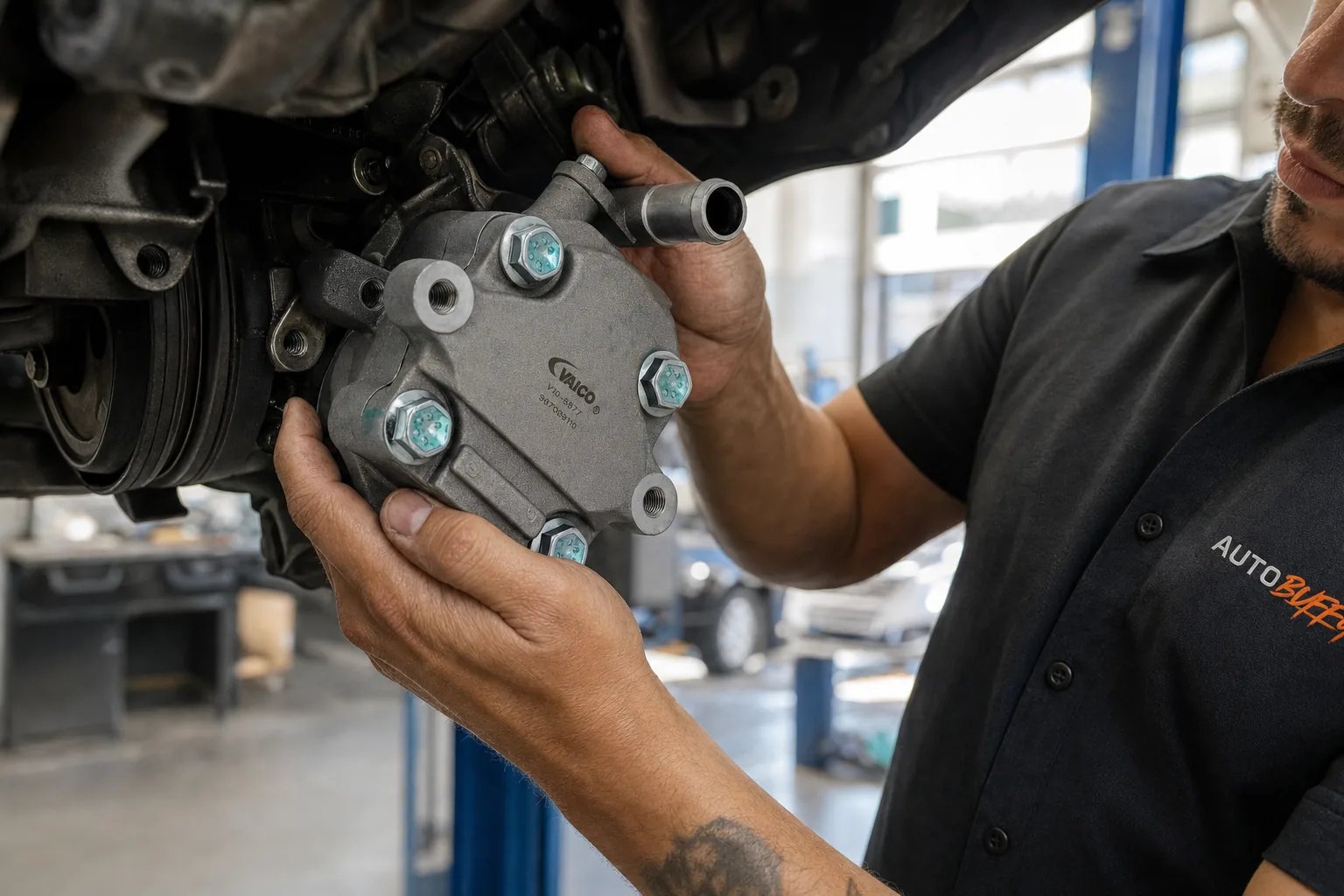
Your hydraulic power steering pump is belt-driven off the engine. It pressurizes fluid and sends it to the steering rack, multiplying the force of every input you make at the wheel. Without that pressurized fluid doing its job, turning a full-size truck in a parking lot feels like arm-wrestling. The pump doesn't fail all at once in most cases—it degrades, and the symptoms escalate in a pretty predictable order.
The 5 Warning Signs of a Failing Power Steering Pump
1. Whining Noise When Turning
This is the classic symptom. A worn pump struggles to maintain pressure, and the internal vanes cavitate—they essentially chew through air mixed with fluid instead of pure fluid. The result is a high-pitched whine or moan that's worst when the wheel is near full lock.
Important distinction: a whine that only happens when the fluid is cold and goes away after five minutes of driving could just be low fluid or a small air pocket. A whine that's present every time you steer, regardless of temperature, points to a pump that's genuinely worn out.
2. Stiff or Heavy Steering
Pressure loss in the system means you're doing more of the work yourself. You'll notice it most during slow-speed turns, parallel parking, or three-point turns. Some drivers describe the wheel as feeling "sticky" or requiring two hands when one used to do the job fine. Don't ignore this—it's a safety issue, not just an inconvenience.
3. Power Steering Fluid Leaks
Look underneath the front of the vehicle after it's sat overnight. A reddish or brownish puddle (power steering fluid is often dyed red, though some vehicles use clear or amber fluid) near the front axle is a red flag. The leak could be the pump's shaft seal, a high-pressure hose fitting, or the reservoir itself.
Check the fluid reservoir under the hood. If it's low with no obvious reason, you have a slow leak somewhere. Running a pump dry is one of the fastest ways to destroy it—the fluid lubricates the internal components.
4. Steering Wheel Vibration or Shudder
Some drivers feel a vibration through the wheel during turns rather than hear a noise. This usually means the pump is delivering inconsistent pressure—surging and dropping instead of flowing smoothly. At highway speeds it can show up as a subtle shimmy when you make slight lane-change inputs.
5. Slow or Delayed Steering Response
The wheel feels disconnected—you turn it and there's a lag before the car responds. This is particularly noticeable when changing lanes at speed. It's less common than the noise and stiffness symptoms, but when it shows up, the pump is usually far along in its failure.
How to Confirm the Pump Is the Problem
Before you buy a pump, do a quick five-minute check:
- Check the fluid level — Cold engine, locate the reservoir, check the dipstick or translucent markings. If it's low, top it off and see if symptoms improve.
- Inspect the belt — A slipping or glazed serpentine belt can mimic a bad pump. Look for cracking, fraying, or shiny spots.
- Check for leaks — Run the engine, turn the wheel lock-to-lock slowly, and have someone watch the hoses and pump body for drips.
- Listen carefully — Have a helper turn the wheel while you listen near the pump with the hood open. Noise coming directly from the pump body confirms it.
In my experience, roughly 70% of "noisy power steering" complaints that come into a shop turn out to be either a low fluid level or a leaking high-pressure hose—not a failed pump. Check the simple stuff first.
Pump vs. Rack: How to Tell the Difference
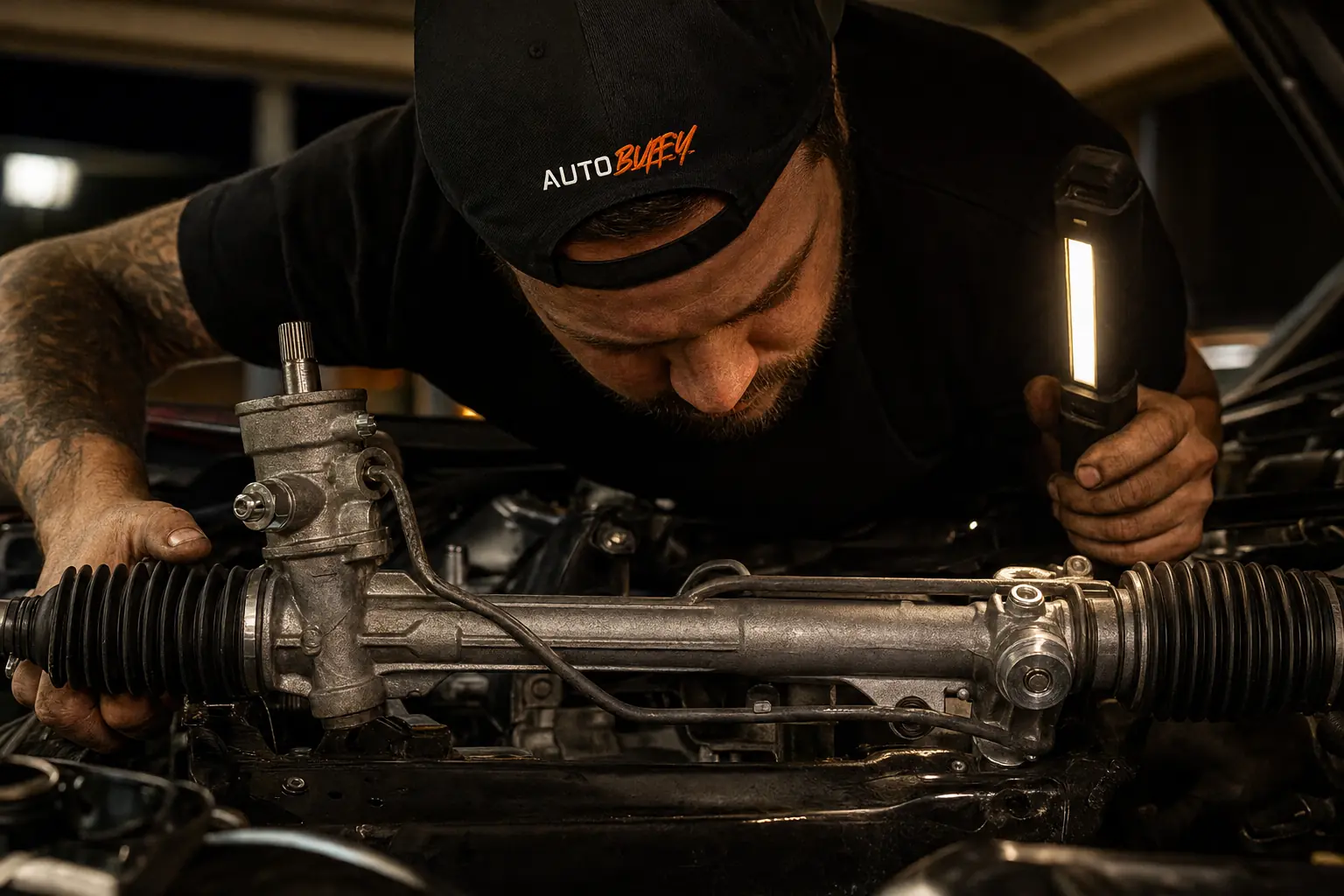
These two get confused all the time because both live in the steering system and both can cause heavy steering.
| Clue | Points to Pump | Points to Rack |
|---|---|---|
| Noise under all steering conditions | ✓ | |
| Noise only at specific wheel angles | ✓ | |
| Fluid low in reservoir | ✓ | Sometimes |
| Leak at steering gear/rack boots | ✓ | |
| Clunking or binding feel | ✓ | |
| Whine when wheel is straight | ✓ |
If the noise is there even when you're going straight (not turning), the pump is the more likely culprit. Racks usually only cause trouble during actual steering inputs.
What to Expect From Replacement
Replacing the pump is a mid-level DIY job. You'll need to:
- Remove the serpentine belt
- Disconnect the high-pressure and return hoses (have a drain pan ready—fluid will spill)
- Unbolt the pump from its bracket
- Transfer the pulley to the new pump if it doesn't come with one
- Reinstall, refill, and bleed the system
Bleeding is the step people skip and then wonder why the pump still groans. Cycle the wheel lock-to-lock at least 10–15 times with the engine off first, then again with it running. Top off the reservoir every few cycles until the level stabilizes and the noise is gone.
What a Replacement Pump Should Cost
Reman and new aftermarket pumps for most cars and trucks fall in the $80–$250 range for parts. Dealer-sourced units run higher. Labor at an independent shop typically adds $100–$250, putting most complete repairs in the $200–$500 window. Some imports and trucks with tight engine bays push toward the top of that range.
Choosing a Replacement Pump
Use the part finder below to confirm exact fitment for your year, make, and model before ordering.
Find the right part for your vehicle
Guaranteed fit, ships free
FAQ / People Also Ask
A failing pump almost always produces a whining or groaning noise that gets louder when you turn the wheel. Some drivers describe it as a screeching or moaning sound at low speeds or during parking maneuvers.

Comments
Loading comments...
Comments are moderated by the AutoBuffy team.