

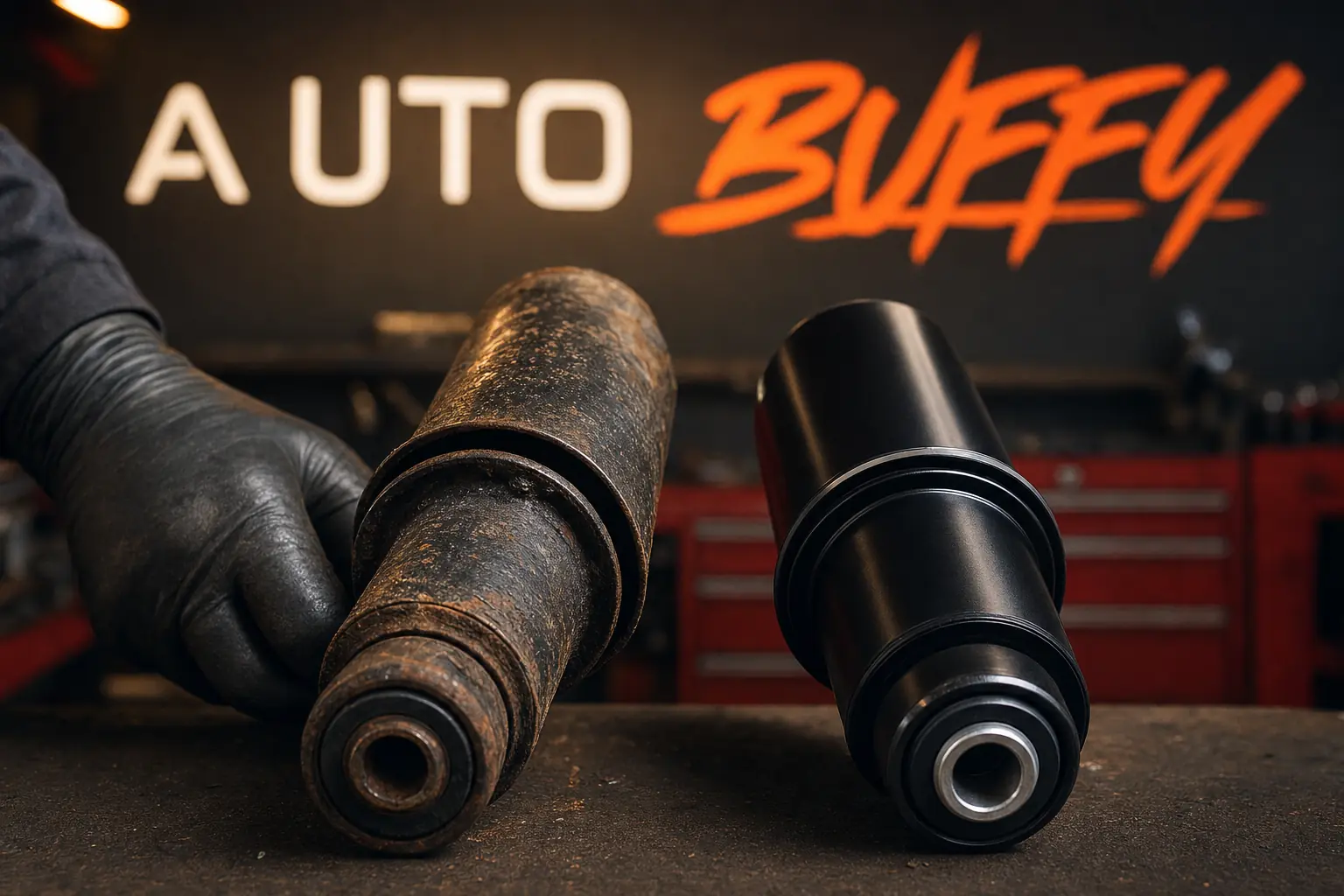
Bad Shock Absorber & Worn Strut Symptoms: 8 Warning Signs
Bouncy ride, nose-dive braking, uneven tire wear — learn the 8 clearest signs of bad shock absorbers before they become a safety problem.
The Short Answer
If your car bounces, nose-dives, wallows in corners, or shows cupped tire wear, those are textbook bad shock absorber symptoms — and ignoring them turns a $200 maintenance job into a $900 tire-and-alignment disaster.
Quick-Reference: Symptom Severity & Cost to Ignore
| Warning Sign | Severity | What Gets Damaged If You Wait |
|---|---|---|
| Excessive bouncing | Moderate | Tires, springs, bushings |
| Nose-dive under braking | High | Stopping distance increases up to 20% |
| Body roll in corners | High | Rollover risk on SUVs |
| Cupped/scalloped tire wear | Moderate | Tires ($150–$250 each) |
| Fluid leaking from shock body | High | Total shock failure imminent |
| Knocking or clunking noise | Moderate–High | Mounts, bump stops, control arms |
| Steering instability at speed | High | Loss of vehicle control |
| Uneven headlight aim | Low–Moderate | Failed inspection, reduced visibility |
Shock absorbers don't fail dramatically the way a timing belt does. They wear gradually, and your brain adapts to the degraded feel — until suddenly you're driving something that handles like a waterbed. Let's go through each symptom in detail.
Sign 1: The Car Keeps Bouncing After a Bump
This is the most obvious one, and there's a simple test for it. Push down firmly on the hood or trunk, then let go. The vehicle should settle in one — maybe two — controlled movements. If it bounces three or more times, the shock or strut isn't damping the spring properly anymore.
That extra oscillation isn't just annoying. It means the tire is intermittently leaving the road surface. Grip is literally going to zero for fractions of a second on every imperfection.
Sign 2: Nose-Diving During Braking
When you brake firmly, the front of the car should dip slightly and stop. With worn front shocks or struts, the nose dives aggressively and the rear lifts. Weight transfer goes haywire, and your stopping distance grows — studies on worn suspension have shown increases of 15–20% in braking distance. That's a terrifying number when you're 40 feet from the car ahead of you on the highway.
Sign 3: Excessive Body Roll in Corners
A little body lean in a corner is normal. A lot of it is a worn shock problem. The shock absorber controls how quickly the spring compresses and rebounds when cornering loads shift weight to the outside wheels. When it can't do that job, the body wallows and the outside tires get overloaded. SUVs and trucks are especially sensitive to this — a tall center of gravity makes worn shocks a genuine rollover risk on sharp evasive maneuvers.
Sign 4: Cupped or Scalloped Tire Wear
Run your hand around the circumference of a tire. Feel rhythmic high and low spots? That's cupping, and it's almost always caused by a worn shock bouncing the wheel off the pavement repeatedly. You'll see shallow scoops worn into the tread every few inches around the tire.
This pattern ruins tires and also causes a low-frequency thumping noise at highway speed that a lot of people misdiagnose as a wheel balance problem. If balancing doesn't fix the thump, look at your shocks.
Sign 5: Fluid Leaking from the Shock Body
Shock absorbers use hydraulic fluid inside a sealed cylinder. When the piston seal wears out, that fluid migrates out and coats the outside of the shock body in a greasy film. This isn't a "keep an eye on it" situation. Once the fluid is out, the shock has no damping capacity. Replacement is due immediately.
Don't confuse light surface oiliness on an older shock with active leaking. If you can wipe it clean and it comes back wet within a week or two, the seal is gone.
Sign 6: Knocking or Clunking Over Rough Roads
A clunk when you hit a pothole usually points to one of two things: a worn shock mount (the rubber bushing at the top of the shock/strut that absorbs the last bit of impact) or a shock that's bottoming out because the internal valving is shot. Either way, the shock isn't doing its job. Worn mounts are cheap to fix when caught early. Let them go and you're looking at damaged strut towers or bent control arms.
Sign 7: Steering That Feels Vague or Wanders at Highway Speed
Front struts are structural. They don't just dampen — they're part of the steering pivot. When a strut wears out, the geometry it's supposed to maintain starts shifting under load. You'll feel it as a vagueness in the steering wheel at 60–70 mph, or a tendency to drift that requires constant small corrections. It gets worse in crosswinds. My honest opinion: this symptom alone is worth a shop visit immediately, because steering vagueness at speed is dangerous in a way that a bouncy low-speed ride simply isn't.
Sign 8: Headlights That Seem to Aim at the Treetops
This one surprises people. If rear shocks are worn, the back of the vehicle sits lower than designed under load, which tilts the nose up and points your headlights above the road. It's a real-world safety issue at night, and it'll get you flagged at a safety inspection in states that check aim. It's also a subtle clue that the rear suspension is no longer maintaining proper ride height.
What Kind of Replacement Shock Do You Actually Need?
For most daily drivers, a quality OEM-spec replacement is all you need. Motorcraft makes solid direct-fit shocks for Ford applications — built to the same specs as what came on the vehicle originally, which matters when you just want reliable, predictable handling back.
If you drive a truck, tow regularly, or want better-than-stock performance, Bilstein's 46mm monotube design is worth serious consideration. Monotube shocks use a single tube with a high-pressure gas charge instead of the twin-tube design most OEM shocks use. They run cooler under sustained stress — like long descents with a loaded trailer — and resist fade better. For vehicles with factory air suspension, Bilstein also offers complete air spring modules that combine the air spring and monotube shock into one assembly, which simplifies replacement significantly.
Mopar OEM shocks cover Chrysler, Dodge, Jeep, and Ram applications with factory-correct fit, which matters for vehicles where ride tuning is calibrated tightly to the OEM damper spec.
The right choice really comes down to your vehicle, your use case, and your budget. Use the part finder below to see what fits your exact year/make/model and compare live pricing.
How to Confirm the Diagnosis Before Buying Parts
- Bounce test — described under Sign 1 above. Fast, free, reasonably accurate.
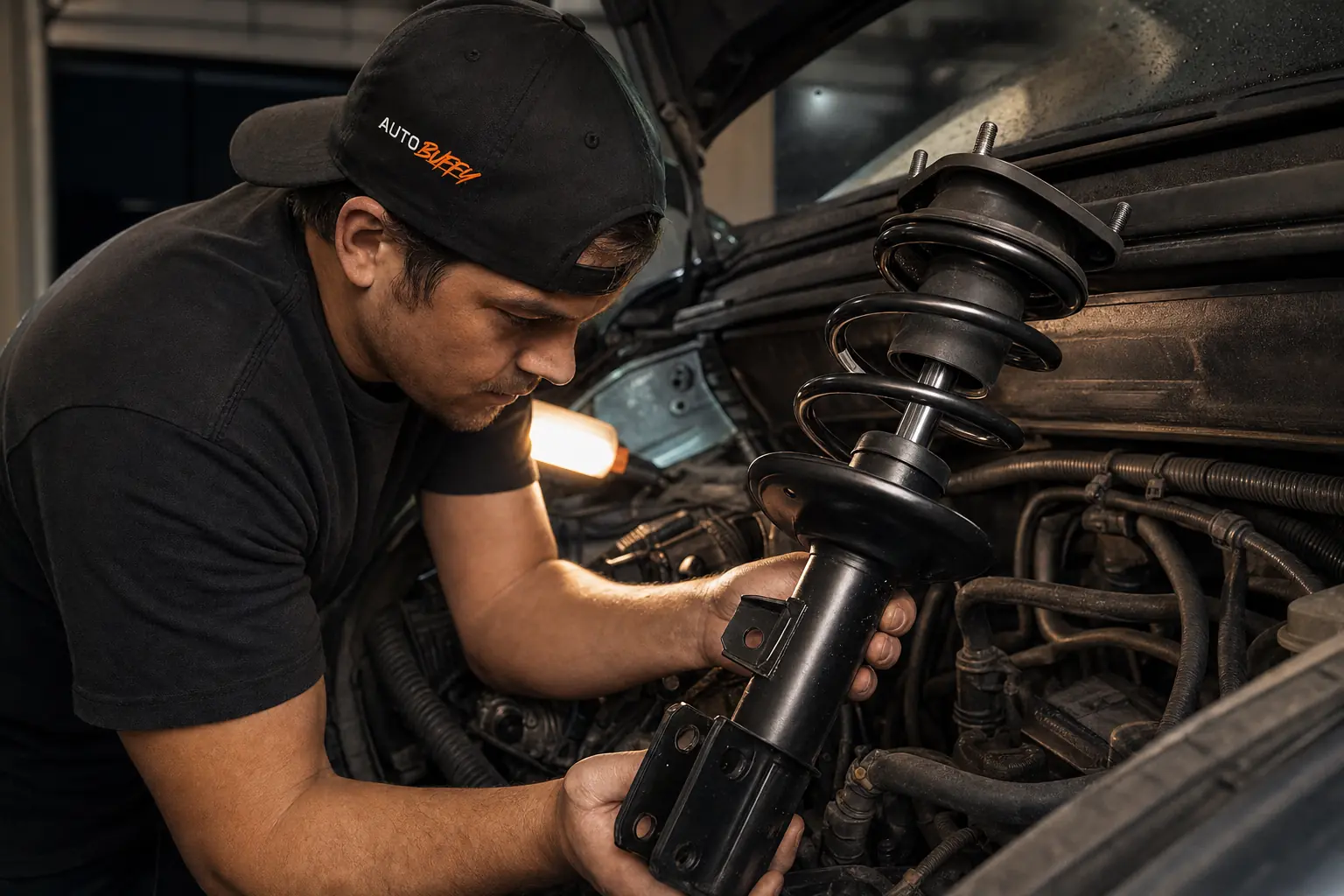
- Visual inspection — look for fluid weeping on the shock body and check the mount bushings for cracking or separation.
- Road test — pay attention to braking dive, highway wander, and that cupped-tire thump.
- Professional inspection — if you're unsure, most shops will inspect suspension components for free or low cost during a tire rotation.
Replace shocks in axle pairs. Always. Putting one fresh shock next to one worn shock creates a handling imbalance that's harder to predict than just having two worn shocks.
Find the right part for your vehicle
Guaranteed fit, ships free
FAQ / People Also Ask
The most common symptoms include excessive bouncing after hitting a bump, nose-diving during braking, body roll in corners, uneven or cupped tire wear, fluid leaking from the shock body, and a knocking or clunking noise over rough roads.

Comments
Loading comments...
Comments are moderated by the AutoBuffy team.