

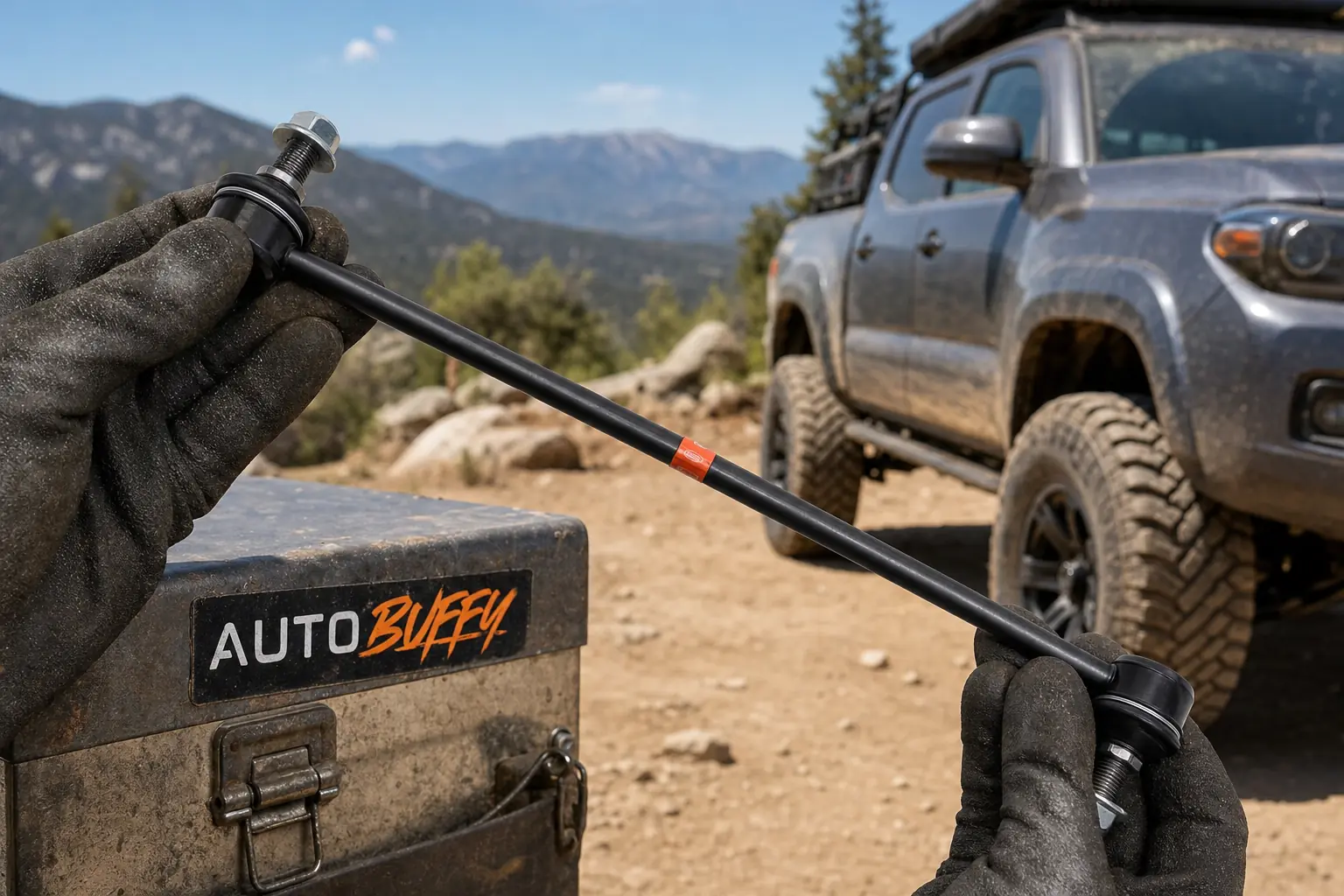
Bad Sway Bar Link Symptoms: The Clunk You Hear Over Bumps
That rattling clunk over bumps could be a failing sway bar link. Here's how to diagnose it, what it costs to fix, and when to act.
The Short Answer
A bad sway bar link most commonly causes a sharp clunking or knocking noise from the front corners of your vehicle when driving over bumps, and it can also cause increased body roll, loose steering feel, and uneven tire contact during cornering.
| Symptom | When You Notice It | Urgency |
|---|---|---|
| Clunking / knocking noise | Over bumps, dips, rough roads | Medium-High |
| Rattling at low speeds | Parking lots, slow maneuvers | Medium |
| Increased body roll | Turns, lane changes | High |
| Loose or wandering steering feel | Highway driving | High |
| Squeaking or creaking | Slow turns, parking | Low-Medium |
| Visual damage (cracked boot, loose stud) | During inspection | Replace now |
Typical repair cost: $70–$230 total (parts + labor), depending on vehicle and whether you DIY.
What Is a Sway Bar Link, Anyway?
Before you can spot the symptoms, it helps to know what you're dealing with. The sway bar — also called a stabilizer bar or anti-roll bar — is a metal rod that connects the left and right sides of your suspension. When you corner, it resists the tendency of the body to lean (roll) to one side.
Sway bar links are the short connecting rods that attach each end of that bar to the suspension strut or lower control arm. They're small, they're cheap, and they take a beating every single mile. Each link typically uses ball-joint-style ends or rubber-bushed studs that eventually wear out from constant movement, road grit, and moisture.
The Classic Symptom: That Clunk Over Bumps
Here's what actually happens mechanically. When the ball joint or stud inside a worn link has excessive play, the link rattles around in its socket instead of staying tight. Hit a pothole or a speed bump and — clunk. The loose joint slams against its limits.
The noise tends to come from one corner of the vehicle, usually front-left or front-right. A few things that tell you it's likely the sway bar link rather than something else:
- The sound is sharp and metallic, not a dull thud (that's more likely a strut mount or control arm bushing)
- It happens over bumps but not necessarily during smooth cornering
- The noise location matches up to one specific wheel corner
- You can reproduce it by pushing down hard on that corner of the bumper in a driveway
That last test is one of the simplest DIY checks you can do. Press down firmly and release. If you hear or feel a clunk from that corner, the link is a prime suspect.
Other Symptoms That Point to Sway Bar Links
Rattling at Low Speeds
This one surprises people. You'd expect suspension noise at highway speed, but a loose link can rattle like a tin can at 10 mph in a parking lot. The reason is simple — slow speeds over irregular surfaces (think painted bumps, parking curbs, or cracked asphalt) create the same angular motion that makes the loose joint knock.
Increased Body Roll in Corners
This is the safety-critical symptom. If both links are worn — or one has failed completely — the stabilizer bar can't do its job. You'll feel the vehicle lean noticeably more than usual during lane changes or highway on-ramps. It doesn't feel dramatic at first, but if you've driven the car for years and suddenly notice it feels "soft" or "floaty" in corners, check the links.
I'd argue this symptom gets ignored more than it should. People adapt to the gradual change. In my experience, most drivers who finally replace worn links are genuinely surprised how much sharper the car feels afterward — even drivers who weren't sure there was a problem.
Steering That Feels Vague or Wandering
A sway bar link doesn't directly connect to your steering system, but it contributes to suspension stability. When the bar is effectively disconnected on one side, weight transfer during steering inputs doesn't feel controlled. You may find yourself making small corrections constantly on a straight highway — that's a handling problem that can come from more than one source, but worn links are worth ruling out.
Squeaking or Creaking During Turns
This is different from the clunk. A squeak usually points to the rubber boot or bushing portion of the link drying out or cracking rather than the joint itself being loose. It's an earlier warning sign — the link isn't destroyed yet, but it's heading there. Addressing it now is cheaper than waiting for a full failure.
How to Confirm the Diagnosis
Raise the vehicle safely on jack stands. Grab the sway bar link at its midpoint and try to move it in multiple directions. There should be minimal play. If it moves around sloppily, or if the boot is cracked and you can see grease has escaped (or grit has gotten in), it's time to replace it.
Also check that both mounting points — where the link attaches to the strut and where it attaches to the bar — are secure and free of corrosion. A rusted-out stud or a stripped nut can cause the same symptoms even if the link itself is fine.
Should You Replace One or Both Links?
Always replace both sides at once. They wear together, they fail together, and the labor time difference between replacing one versus two is minimal. Replacing a single link and leaving a worn one on the other side is a short-term fix at best — you'll be back under the car within a few months.
What to Look for in a Replacement Link Set
For exact fitment, compatibility, and current pricing, use the finder below — that information changes with vehicle applications and inventory, and you want to be sure you're getting the right part.
How Long Does the Repair Take?
A straightforward sway bar link replacement takes 30–60 minutes per side for an experienced DIYer. The main variable is corrosion — in rust-belt states, seized studs can turn a simple job into a multi-hour battle with penetrating oil and a torch. Budget extra time if your vehicle lives where roads get salted in winter.
The Bottom Line
That clunk over bumps isn't something to tune out. Sway bar links are among the most affordable suspension repairs you can make, and a failed link has real consequences for vehicle stability — especially at highway speeds. Diagnose it with a simple push test, confirm it visually when you're under the car, and replace both sides while you're at it.
Find the right part for your vehicle
Guaranteed fit, ships free
FAQ / People Also Ask
A worn sway bar link typically produces a clunking, rattling, or knocking noise when you drive over bumps, dips, or rough pavement. The sound often comes from the front corners of the vehicle and can mimic other suspension noises, which is why a physical inspection matters.


Comments
Loading comments...
Comments are moderated by the AutoBuffy team.