


Bad Tie Rod End Symptoms: How to Check Inner and Outer Tie Rods Before They Fail
Loose steering, clunking, or uneven tire wear? Learn the real bad tie rod symptoms, how to test inner vs. outer tie rods, and when to replace them.
The Short Answer
A bad tie rod end most commonly shows up as loose or wandering steering, a clunking noise from the front end, uneven tire wear, or steering-wheel vibration — and the definitive check is a simple hands-on shake test with the vehicle on jack stands.
| Symptom | Likely Culprit | Urgency |
|---|---|---|
| Loose / wandering steering | Outer or inner tie rod | High — inspect immediately |
| Clunk or knock over bumps | Outer tie rod end | High |
| Steering wheel shimmy (highway) | Outer tie rod or wheel balance | Moderate — diagnose soon |
| Feathered or angled tire wear | Toe change from worn tie rod | Moderate |
| Pull to one side | Toe shift, worn tie rod | Moderate |
| Sudden play or "loose" feeling | Failing or separated joint | Critical — stop driving |
What Tie Rod Ends Actually Do
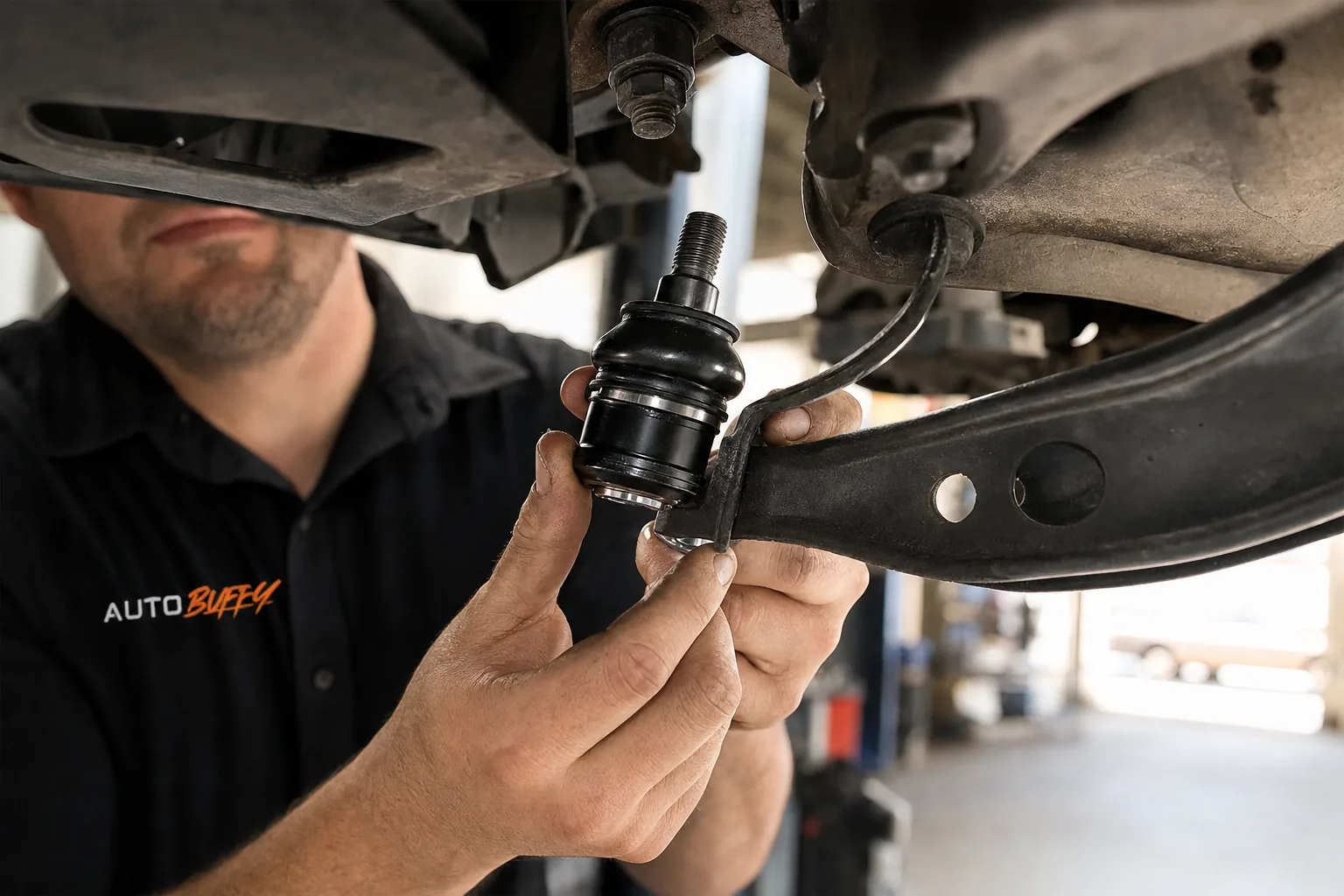
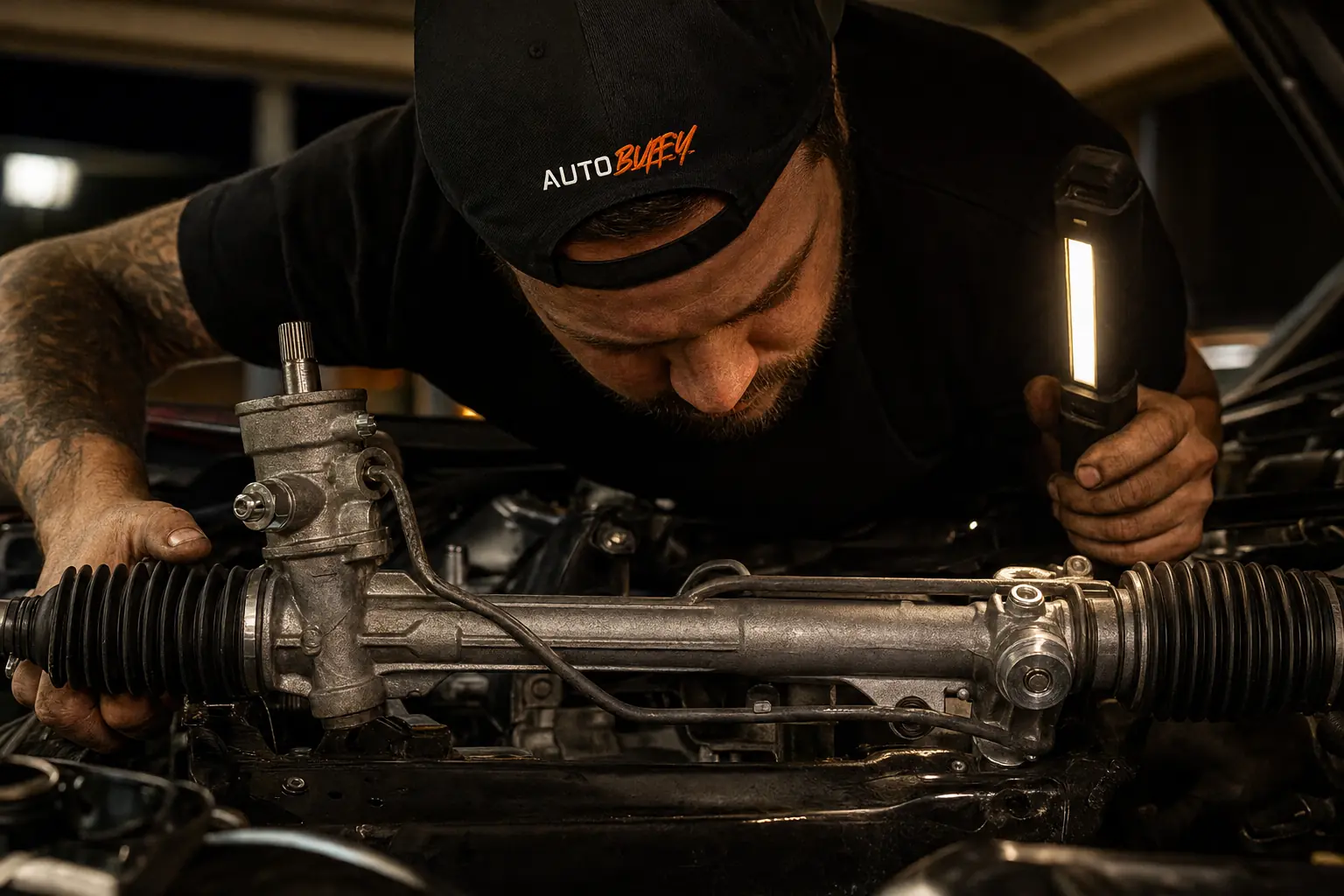
Every front wheel has two tie rod ends: an inner and an outer. The inner connects to the steering rack (or center link on older trucks with recirculating-ball steering). The outer connects the inner rod to the steering knuckle — the hub assembly the wheel bolts to. When you turn the steering wheel, the rack pushes and pulls those rods, and the outer ends pivot to swing the wheels left or right. Both joints are ball-and-socket designs with a grease-packed housing. They flex through every turn, absorb road shock, and do it all while spinning and articulating through tens of thousands of miles. Something has to give eventually. Outer tie rod ends fail more often than inners. They're fully exposed to road grit, standing water, and direct impact from potholes, and they go through a wider arc of motion on every steering input. Inners are tucked behind the rubber steering rack boot, so they're somewhat sheltered — but they're not immune. Typical service life under normal conditions is 70,000–100,000 miles. Rough roads, lifted suspensions, and aggressive driving can cut that down considerably. ---
The 5 Real Bad Tie Rod Symptoms (And What Else Could Cause Them)
This is the part most articles skip: every single tie rod symptom is shared by at least one other front-end component. You can't diagnose this by feel alone — you need a physical check. ### 1. Loose or Wandering Steering
The steering feels vague, like you're constantly making small corrections to hold a straight line. A worn outer tie rod end allows micro-movement at the knuckle, so driver input doesn't translate cleanly to the wheel. Also caused by: worn ball joints, loose steering rack, worn strut bearings. ### 2. Clunking or Knocking from the Front End
You hear (or feel) a knock when hitting a bump, a pothole, or even a tar strip on the highway. That's the worn ball socket rattling inside its housing. Also caused by: worn ball joints, loose sway bar end links, damaged strut mounts. ### 3. Steering Wheel Vibration
A shimmy that shows up at speed — often between 55 and 75 mph — and may back off at higher or lower speeds. A loose tie rod end lets the wheel oscillate enough to feed vibration back up the column. Also caused by: out-of-balance tires, worn wheel bearings, bent wheel. ### 4. Uneven or Feathered Tire Wear
A worn tie rod end shifts the toe angle at that corner. Run a few thousand miles that way and you'll see the inside or outside edge of the tire wearing faster than the rest, or a "feathered" pattern across the tread blocks. Also caused by: misalignment from any source, worn bushings, incorrect inflation. ### 5. Vehicle Pulling to One Side
If one tie rod end is significantly worn, the toe on that corner changes, and the car tracks crooked. It might feel like a mild pull or a more persistent drift toward one lane. Also caused by: uneven tire pressure, brake drag, wheel alignment, camber issues. ---
How to Check Inner and Outer Tie Rod Ends: The Right Way
This test takes about 10 minutes. You need a floor jack, two jack stands, and a flashlight. ### Tools You'll Need
- Floor jack
- Two jack stands rated for your vehicle
- Flashlight or work light
- A helper (optional but useful)
Step 1 — Get the Wheel Off the Ground
Lift the front of the vehicle and set it on jack stands under the frame or subframe. The wheel needs to hang freely — don't let it rest on the ground or you won't feel movement in the joints. ### Step 2 — Check the Outer Tie Rod End
Grip the tire at the 9 and 3 o'clock positions (both hands on the sides). Try to rock it firmly back and forth horizontally. Then grab it at 12 and 6 and try vertical movement. > The rule: An outer tie rod end should not move vertically. Any up-and-down play in the joint means the ball socket is worn out. Horizontal play at this position is more likely a wheel bearing or ball joint issue — but anything that feels loose warrants a closer look. ### Step 3 — Check the Inner Tie Rod End
Reach behind the outer tie rod end toward the steering rack. You'll find the rubber accordion boot. Without puncturing it, try to feel the inner rod and push it horizontally — toward and away from the rack. > The rule: An inner tie rod end should not move horizontally. If you feel any give or hear a knock as you push, the inner joint is worn. If you can see the boot, also check it for cracks, tears, or grease leaking out. A torn boot lets in dirt and water, and the inner joint deteriorates fast once that happens. ### Step 4 — Have a Helper Turn the Wheel
With the vehicle still on stands, have someone slowly turn the steering wheel lock-to-lock while you watch both tie rod ends from underneath. Look for any wobble, play, or movement that shouldn't be there. A loose inner tie rod will sometimes only reveal itself under this kind of load. ---
When to Replace: Both at Once, or One at a Time? Honest answer: **replace the inner and outer on the same side together**, and strongly consider doing both sides at the same appointment if either is close to the wear range. Here's the practical reason. If the outer is worn out at 90,000 miles, the inner has lived exactly the same life under the same conditions. You'll likely be back in six months for the other one — and you'll pay for another alignment. Doing both at once means one alignment bill, one shop visit. MOOG offers front-end suspension kits that bundle tie rod ends with control arms into a single matched set — a practical option when you're already deep into a front-end refresh and multiple components are at the wear threshold. ---
Do You Always Need an Alignment After Replacing Tie Rod Ends? **Yes. Every single time.** Tie rod ends are threaded into the tie rod sleeve, and their position directly controls front toe — the angle at which your tires point. Even if you count threads carefully during installation, the toe will be off enough to accelerate tire wear and affect handling. A proper four-wheel alignment after the job is not optional. Budget for it. Most shops charge $80–$150 for an alignment. It's cheap insurance on a job that can run $300–$600 in parts and labor for a full pair. ---
Which Brands Are Worth Considering? For tie rod ends, **MOOG** is the name that comes up most consistently among working technicians. The brand has been focused on suspension and steering components for a long time, and their Problem Solver designs — with features like greaseable fittings on joints that were originally sealed — have a strong reputation for lasting. MOOG kits that pair tie rod ends with control arms are available here and make sense when you're doing a more complete front-end job. **ACDelco** is the OE-spec choice for GM vehicles. ACDelco is a GM subsidiary, and their OE parts are the exact components installed at the factory on GM vehicles. For Chevy, GMC, Buick, and Cadillac owners who want factory-spec fit and feel, ACDelco tie rod ends are a logical, honest choice. For most other vehicles, MOOG is a safe, well-documented pick. Use the part finder below to confirm fitment for your specific year, make, and model — and check today's pricing there rather than relying on any number in this article. ---
Find the right tie rod end for your vehicle
Guaranteed fit, ships free
FAQ / People Also Ask
The most common symptoms are loose or wandering steering, vibration in the steering wheel, clunking or knocking noises from the front end, uneven or feathered tire wear, and sudden changes in wheel alignment. Keep in mind these symptoms overlap with ball joints, wheel bearings, and other front-end components, so a hands-on check is essential before replacing anything.

Comments
Loading comments...
Comments are moderated by the AutoBuffy team.