

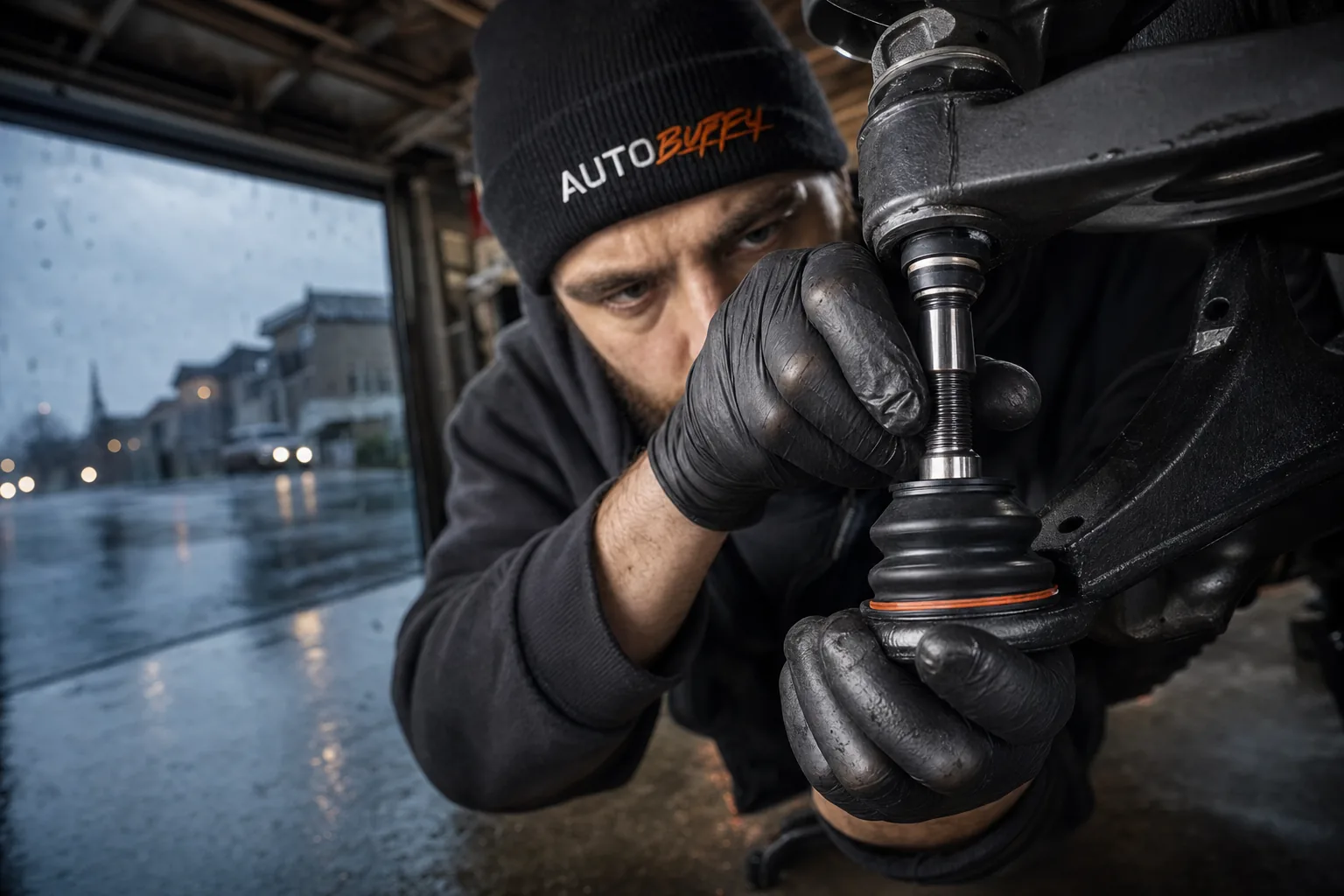
Ball Joint Replacement Cost and Symptoms: What Every Driver Should Know
Learn the real cost of ball joint replacement, spot the warning signs early, and find out which brands actually hold up.
The Short Answer
Ball joint replacement typically costs $150–$400 per joint at an independent shop, or $350–$650+ at a dealership, and ignoring the warning signs — clunking, loose steering, uneven tire wear — can turn a routine suspension repair into a dangerous blowout.
| Factor | Typical Cost Range |
|---|---|
| Parts only (per joint) | $30–$150 |
| Labor (per joint) | $100–$300 |
| Full replacement (one joint, shop) | $150–$400 |
| Full replacement (one joint, dealership) | $350–$650+ |
| Post-replacement alignment | $80–$150 |
| Both lower joints replaced together | $300–$700 |
What Exactly Is a Ball Joint?
A ball joint is a pivot point — think of it like a human hip socket — that connects your wheel hub and steering knuckle to the control arm. It lets the wheel move up and down with the road while still allowing the steering to turn left and right. Most front-suspension setups use at least two ball joints per side: an upper and a lower. Some designs only use one per side.
The lower ball joint takes the brunt of the abuse. It's a load-bearing joint, meaning it supports the weight of the vehicle. That's why lower joints wear out first and cost more to replace.
Ball Joint Symptoms You Shouldn't Ignore
Ball joints don't announce failure with a dashboard light. You have to know what to listen and feel for.
Clunking or Popping Noise
This is the first symptom most drivers notice. A hollow clunk when you hit a pothole, go over a speed bump, or turn at low speed usually points to a worn ball joint. The socket is loose inside the housing, and the movement creates that distinctive knock. Don't confuse it with a worn sway bar link — both make similar sounds, but a ball joint clunk tends to be louder and more pronounced during suspension travel.
Wandering Steering
If your car drifts or floats between lanes without obvious input, a worn ball joint is a real possibility. The looseness in the joint introduces play into the whole steering system. You'll notice the steering wheel feels vague or you're constantly making small corrections to hold a straight line.
Uneven Tire Wear
A bad ball joint throws off your suspension geometry, which changes how the tire contacts the road. Excessive wear on the inner or outer shoulder — especially when it appears suddenly — deserves a full suspension inspection, not just a tire rotation.
Vibration Through the Wheel or Floor
As a ball joint deteriorates further, the vibration can migrate from the wheel up through the steering column. Some drivers describe it as a shimmy at highway speeds. By this stage the joint is genuinely urgent to address.
The Visual Check
If you're under the car, look at the rubber boot covering the ball joint. A torn or cracked boot means the grease has escaped and dirt and water have gotten in. That joint's days are numbered even if it hasn't started clunking yet.
What Affects the Total Cost?
Several variables push the price up or down, and they're worth understanding before you call around for quotes.
Vehicle type matters a lot. A front-wheel-drive sedan with bolt-in ball joints is a straightforward job. A four-wheel-drive pickup with pressed-in ball joints that require a hydraulic press and potentially new control arms? That's a half-day job or longer.
Labor rate in your area is often the biggest single factor. Shops in major metro areas charge $120–$180 per hour. Rural shops might be $75–$100. Always ask for the flat-rate hours quoted, not just a total.
OE vs. aftermarket parts also splits the bill. Dealership OEM parts carry a premium. Quality aftermarket joints — particularly from suspension specialists — often match OE specs at a lower price point without sacrificing durability.
Alignment is not optional. Any shop that replaces ball joints and doesn't recommend an alignment afterward is cutting corners. Budget for it. Skipping alignment will cost you in tire wear within months.
Choosing the Right Ball Joint Brand
This is where it's worth being specific rather than just grabbing whatever's cheapest on the shelf.
My honest opinion: on any vehicle I'm putting back on the road for more than a year, I'd pay $20–$30 more for a joint from a brand that treats suspension as their core business. That's a rounding error compared to the labor cost already on the table.
DIY vs. Professional Replacement
Ball joints are not a beginner job. Here's a realistic breakdown:
When DIY Makes Sense
- You have a hydraulic press or access to a shop press (for pressed-in joints)
- You're comfortable with a torque wrench and cotter pin installation
- The vehicle uses a bolt-in design (simpler, more common on older imports)
- You can bring the car in for an alignment after the work
When to Pay a Shop
- The vehicle has pressed-in joints requiring special tooling
- It's a 4WD or AWD platform with complex geometry
- You've never done suspension work before
- The lower control arm is showing wear too (sometimes cheaper to replace the arm with the joint already installed)
Saving $150–$250 in labor on a DIY job makes sense when you have the tools and experience. Saving that same amount and then getting a joint torqued to the wrong spec — or skipping the cotter pin — is not a trade-off worth making on a safety component.
How to Extend Ball Joint Life
- Keep up with wheel alignments every 12,000–15,000 miles or after any significant impact
- If you have greaseable joints, actually grease them — every oil change takes about two minutes
- Inspect the rubber boots at every tire rotation; a torn boot means the joint is already compromised
- Avoid aggressive curb strikes; even a single hard hit at speed can damage a ball joint that would otherwise last years longer
When Is It an Emergency?
A ball joint that's noticeably clunking but still has no measurable play? You have some time, but schedule the repair within a few weeks. A joint with significant play or one that's visibly cracked, torn at the boot, or has a separated stud? That's a tow-truck situation. A failed ball joint can fold the wheel under the car. It's not dramatic language — it genuinely happens, and it happens fast.
If a shop puts your car on the lift and tells you a ball joint is about to separate, that's not an upsell. That's the one time you should listen without much negotiating.
Use the part finder below to match the correct ball joint to your exact year, make, model, and trim — fitment on suspension parts is non-negotiable, and the finder pulls current pricing automatically.
Find the right ball joint for your vehicle
Guaranteed fit, ships free
FAQ / People Also Ask
Typical ball joint replacement runs $150–$400 per joint at an independent shop, including parts and labor. Dealerships often charge $350–$650 or more per joint. Four-wheel-drive trucks and SUVs with pressed-in joints tend to land at the higher end.
Comments
Loading comments...
Comments are moderated by the AutoBuffy team.