

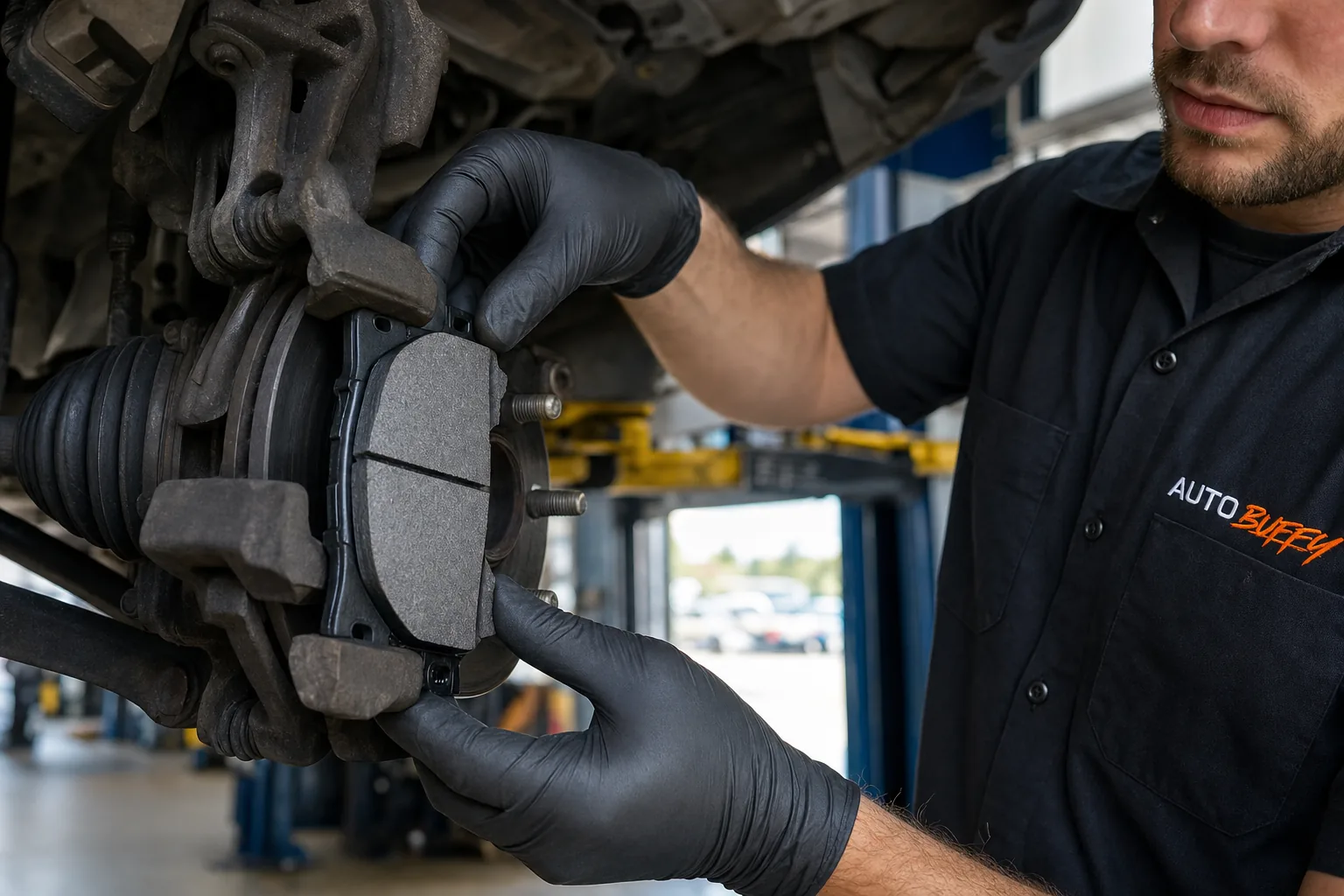
Best Brake Pads 2026: Ceramic, Semi-Metallic, and Kit Picks
Ceramic or semi-metallic? We break down which brake pad type fits your driving style, budget, and vehicle—plus what to look for in 2026.
The Short Answer
For most daily drivers in 2026, ceramic brake pads are the best all-around choice—quieter, cleaner, and easier on rotors—while semi-metallic pads remain the stronger pick for trucks, trailers, and high-heat driving.
| Pad Type | Best For | Typical Cost (per axle) | Noise Level | Rotor Wear |
|---|---|---|---|---|
| Ceramic | Daily commuting, sedans, light SUVs | $45–$110 | Low | Low |
| Semi-Metallic | Trucks, towing, performance driving | $30–$90 | Moderate | Moderate |
| Organic (NAO) | Older vehicles, light use | $20–$60 | Very low | Very low |
| Performance/Track | High-heat track use | $80–$200+ | High | Higher |
Why Brake Pad Choice Actually Matters in 2026
The brake pad market has gotten crowded. Walk into any parts store or search online and you'll find dozens of options at wildly different price points. The problem is that cheap pads on the wrong application—say, a budget organic set on a three-quarter-ton truck—won't fade gracefully. They'll fade dangerously.
At the same time, spending top dollar on a track-compound pad for a minivan that never sees anything spicier than a school pickup line is just wasted money. Matching the compound to your actual driving matters more than brand loyalty.
Ceramic vs. Semi-Metallic: Which Type Should You Buy?
Ceramic Brake Pads
Ceramic pads use a dense, non-metallic friction compound embedded with ceramic fibers. They're the dominant choice for passenger cars and crossovers right now, and the reason is simple: they work well across a wide temperature range without making your wheels look like they were dipped in charcoal.
Key advantages:
- Significantly less brake dust on alloy wheels
- Quieter operation during normal driving
- Gentler on brake rotor surfaces over time
- Stable friction coefficient from cold start through moderate heat
The honest limitation: ceramics can feel slightly less aggressive at very high temps. If you're towing a boat every weekend or running mountain descents, you'll push past their comfort zone. For everyone else, they're genuinely excellent.
Semi-Metallic Brake Pads
Semi-metallics contain anywhere from 30% to 65% metal content—steel wool, copper fibers, iron powder—bonded with resin. That metal content is what gives them their heat-handling edge. They pull heat away from the rotor quickly and maintain friction bite when temperatures climb.
Key advantages:
- Superior heat dissipation under heavy load
- Better initial bite in cold conditions
- Lower cost per set in most cases
- Long-proven reliability in trucks and commercial applications
The trade-off: they're noisier, especially when cold, and the metal content is harder on rotor surfaces. You'll likely resurface or replace rotors more often if you run semi-metallics for years.
My honest take: if your vehicle is a half-ton pickup or larger, or if you tow anything regularly, semi-metallic pads are the right call. The heat management alone justifies it. For everything else? Ceramic, without much hesitation. That recommendation covers roughly 70% of vehicles on the road today.
What About Organic (NAO) Pads?
Organic or non-asbestos organic (NAO) pads are made from materials like rubber, Kevlar, and glass. They're very soft, very quiet, and very easy on rotors. They're also not suitable for most modern vehicles because they wear quickly and fade early under any serious heat.
They still have a place: low-mileage second cars, older economy cars, light-duty applications where replacement cost matters more than longevity. But for a primary vehicle, the value math rarely works out.
Should You Buy a Brake Pad Kit?
Short answer: yes, whenever the option exists. Here's why.
Brake hardware—the clips, shims, and anti-squeal components—wears out alongside the pads. When you drop new pads onto old, rusty hardware, you get rattles, uneven seating, and often that infuriating squeal that makes passengers think something's wrong even when the brakes work fine.
A complete kit that bundles pads with hardware isn't just convenient. It's the professional way to do the job. Many shops won't warranty a brake job if the customer supplied pads without hardware, and there's a good reason for that.
Front vs. Rear Brake Pads: Do They Differ?
Yes, and this trips up a lot of DIYers. Front brakes handle roughly 60–70% of stopping force on most front-wheel-drive and all-wheel-drive vehicles, so front pads see more heat and wear faster. Rear pads typically have a softer compound and last longer.
This means you should check both axles when inspecting, but don't assume both need replacement at the same time. On many vehicles, you'll do two or three front replacements for every rear replacement.
Electric and Hybrid Vehicles: A Special Case
If you drive a hybrid or EV, your brake pads live a strange life. Regenerative braking handles most deceleration, so the friction pads barely get used—until you need a hard stop. This infrequent use can cause the pads and rotors to develop surface rust and glazing faster than on a conventional car.
Some manufacturers now offer compounds specifically tuned for this low-engagement pattern. If you drive a hybrid or EV and notice roughness or noise despite low mileage on your pads, glazing is likely the culprit, not wear.
How to Know When Your Brake Pads Need Replacement
- Squealing or squeaking during normal braking (wear indicator making contact)
- Grinding metal-on-metal sound (pad material fully worn, rotor contact)
- Longer stopping distances compared to normal feel
- Pulsation or vibration through the brake pedal under moderate pressure
- Visual inspection shows less than 3mm of pad material remaining
Most shops check pad thickness during any oil change or tire rotation. It takes about thirty seconds with a flashlight and costs nothing to ask.
What to Look for When Buying Brake Pads in 2026
- OE-equivalent or OE-specification friction rating — confirms the compound matches your vehicle's design intent
- Chamfered and slotted edges on the pad itself — reduces noise during initial contact
- Included shims and hardware — essential for a clean, quiet installation
- Warranty coverage — reputable pads come with at least a 12-month or 12,000-mile coverage; many cover much longer
- Application-specific formulation — a pad labeled for light trucks isn't the same as one designed for a compact crossover, even if the dimensions look identical
Find the right brake pads for your vehicle
Guaranteed fit, ships free
FAQ / People Also Ask
It depends on how you drive. Ceramic pads run quieter, produce less dust, and are gentler on rotors—great for daily commuting. Semi-metallic pads handle higher heat better and cost less upfront, making them the smarter pick for trucks, towing, or spirited driving.


Comments
Loading comments...
Comments are moderated by the AutoBuffy team.