

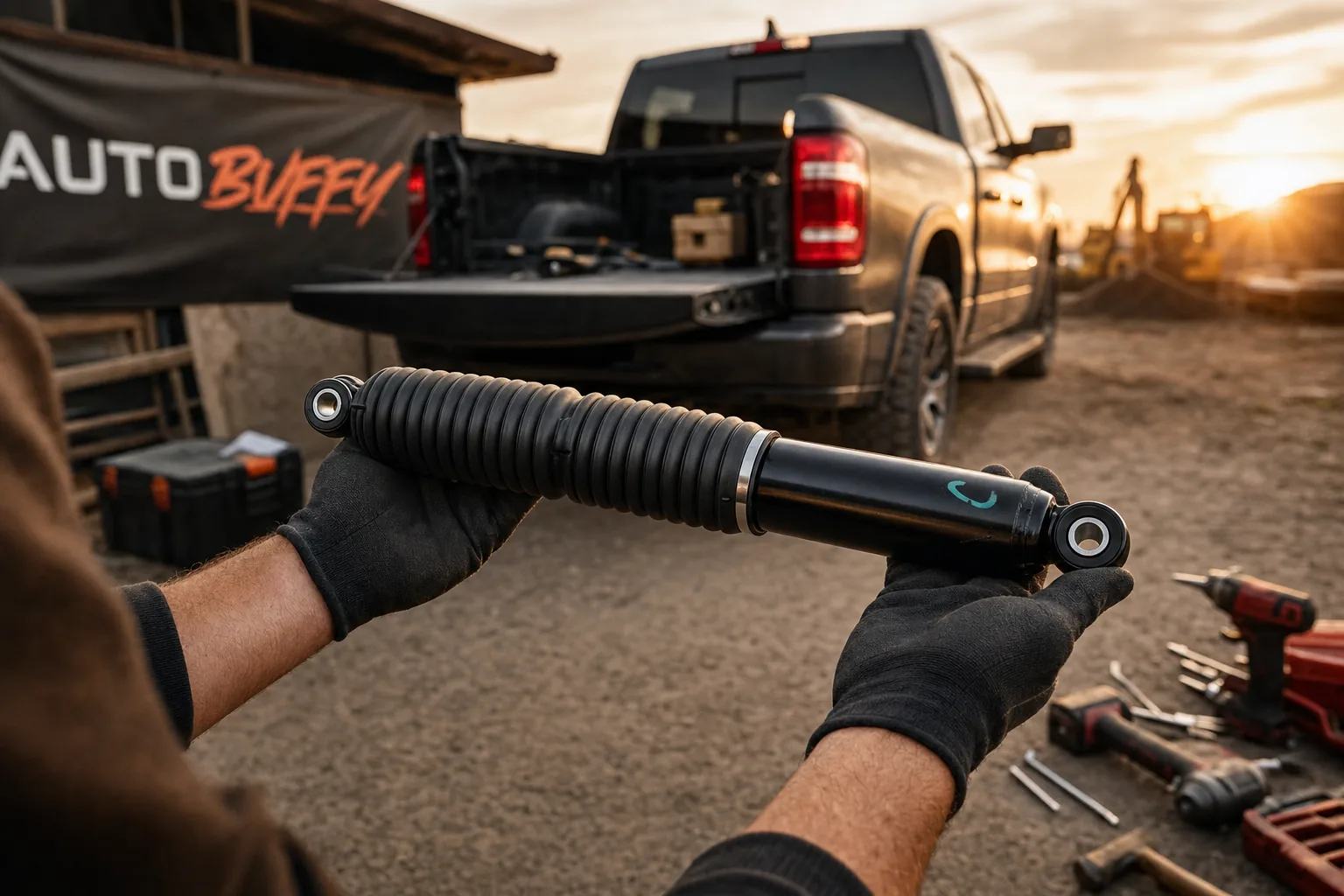
Best Shocks for the RAM 1500: What Actually Works (and Why It Matters)
Upgrading shocks on your RAM 1500? Here's what separates a smooth daily driver from a bouncy, worn-out truck — and which shock types to target.
The Short Answer
The best shocks for your RAM 1500 depend on how you use the truck — but for most owners, a quality gas-charged twin-tube or monotube shock will outperform a worn factory unit and cost less than you'd expect.
| Use Case | Shock Type to Target | Typical Cost Per Shock (Part Only) |
|---|---|---|
| Daily driver / commuter | OEM-equivalent twin-tube | $80–$120 |
| Towing / hauling | Heavy-duty monotube or gas-charged twin-tube | $100–$175 |
| Off-road / mild lift | Lifted-application monotube | $130–$200+ |
| Performance street driving | Performance monotube | $150–$200+ |
| Air suspension trim | Air-suspension-specific replacement | $90–$160 |
Why Shocks Matter More on a RAM 1500 Than You Might Think
The RAM 1500 is a half-ton truck that moonlights as a family hauler, a tow rig, and in some trims, a genuinely comfortable long-distance cruiser. That's a wide range of jobs for one suspension setup to handle — and shocks are doing a huge share of the work.
When a shock absorber wears out, it stops controlling spring oscillation effectively. On a light car, that means a bouncy ride. On a full-size truck that might be hauling 1,500 lbs in the bed or pulling a 8,000-lb trailer, it means instability, brake dive, trailer sway, and tires that aren't staying firmly planted on the road. RepairPal notes that worn shocks are a common culprit in unpredictable truck handling that owners often blame on tires or alignment.
The RAM 1500's independent front suspension and coil-spring rear (on most trims) mean it rides better than older solid-axle trucks — but that also means the shocks are working harder to manage wheel travel. Don't ignore them.
RAM 1500 Suspension Generations: Know What You Have
Before you buy a single shock, know which RAM 1500 platform you're working with. The fit and even the shock design changes significantly between generations.
2009–2018 (DS Platform)
This generation uses an upper and lower control arm setup up front with a separate coil spring and shock absorber. The rear uses a five-link coil suspension. Shocks are traditional bolt-in units front and rear. This is the most common platform you'll find on used trucks and the one with the widest aftermarket selection.
2019–Present (DT Platform)
The current-generation RAM 1500 moved to a front coilover design — meaning the spring and shock are integrated into one assembly. If you have a 2019+, you're replacing a coilover cartridge up front, not just a shock. Rear replacements are still separate shocks. Always confirm before ordering.
Air Suspension Trims (Any Year)
RAM has offered an optional air suspension across multiple generations. These trucks replace the coil springs with air bladders. The shocks are still separate, but they're calibrated for a different ride height and travel range. Using a standard shock on an air-suspension RAM is a fitment mistake that'll cause noise, handling issues, and early wear.
Twin-Tube vs. Monotube: Which One Does Your RAM Need?
This is the most common question, and the honest answer is: it depends on your use.
Twin-tube shocks have an inner working cylinder surrounded by an outer reserve tube. They're well-suited for road driving, generally less expensive, and provide a comfortable everyday ride. Most factory shocks are twin-tube designs, so a quality twin-tube replacement will feel natural and familiar.
Monotube shocks use a single cylinder with a high-pressure gas charge separating the oil from a floating piston. They run cooler under heavy use, respond faster to inputs, and handle heat better — which is why they're preferred for towing, off-road driving, and spirited driving. The tradeoff is a slightly firmer ride on smooth roads and a higher price tag.
For a RAM 1500 that sees occasional towing and regular highway miles, a good monotube is probably worth the extra $30–$50 per corner. For a truck that strictly does city and suburban driving, a quality OEM-grade twin-tube is honestly all you need — and I'd rather see someone buy a solid twin-tube than a cheap monotube any day.
What to Look for When Shopping RAM 1500 Shocks
Fitment First
This sounds obvious, but it trips people up constantly. Confirm your year, cab style, bed length, drivetrain (2WD or 4WD), and whether you have the factory air suspension or a lift kit already installed. A shock that's even half an inch off in extended length will bottom out or not fully compress correctly.
Load Rating
If you tow or haul regularly, look for shocks rated for your truck's GVWR or labeled "heavy-duty." Standard shocks aren't designed to manage the extra weight cycling through the suspension when you're pulling a boat or loading the bed with material.
Warranty
Quality shock brands stand behind their products. A one-year warranty is the minimum you should accept; two or three years is common on mid-tier and performance shocks. Lifetime warranties exist on some lines — those are worth paying attention to if you plan to keep the truck long-term.
Sold as Pairs or Singles
Some listings sell individual shocks; others sell axle pairs. Always replace shocks in matched pairs on the same axle. Mixing old and new on the same axle creates handling imbalance that's immediately noticeable and potentially unsafe.
Lifted RAM 1500s: Don't Cheap Out Here
If your truck is sitting on a 2-inch or 4-inch lift, standard-length shocks will likely be fully extended or severely compressed throughout the suspension travel. That kills ride quality, blows out shock seals faster, and reduces your wheel control.
Lift-specific shocks are built with longer travel to match the new geometry. When shopping, match the shock to your actual lift height — not just any "off-road" shock. A shock labeled for a 2-inch lift won't perform correctly on a 4-inch lift, even if it physically bolts in.
NHTSA consistently flags improper suspension modifications as a factor in rollover and handling incidents. Getting the fitment right isn't just a performance issue — it's a safety one.
How Long Do RAM 1500 Shocks Last?
Under normal driving — mostly highways and city roads, no regular towing — a good set of shocks should last 75,000 to 100,000 miles. Tow frequently, hit dirt roads regularly, or live somewhere with brutal road conditions (looking at you, northern states with frost-heave roads), and 50,000 miles is a more realistic lifespan.
The inspection test is simple: push down hard on each corner of the truck and release. The truck should return to level and stop. If it bounces more than once, those shocks are done. KBB recommends making this a part of your regular maintenance checks, especially past the 60,000-mile mark.
Installed Cost: What to Budget
Parts alone for a complete four-shock replacement on a RAM 1500 typically run $320–$800 depending on the type and brand. Add shop labor — usually $150–$350 for a full set — and you're looking at a total installed cost of roughly $500–$1,100 at most independent shops. Dealers typically charge more.
If you're comfortable with basic hand tools and have a floor jack and jack stands, rear shocks are a genuine DIY job on most RAM 1500 generations. Front replacements are more involved, especially on 2019+ trucks with the coilover front end. If you're not confident with spring compressors, pay a shop for the fronts.
Sources
- RepairPal — Shock Absorber Replacement Cost
- Kelley Blue Book — Shock and Strut Replacement Guide
- NHTSA — Vehicle Safety & Modifications
Find the right part for your vehicle
Guaranteed fit, ships free
FAQ / People Also Ask
Watch for nose dive under braking, excessive body roll in corners, a bouncy or floaty ride over bumps, and uneven tire wear. If the truck takes more than one bounce to settle after hitting a pothole, the shocks are likely past their useful life.


Comments
Loading comments...
Comments are moderated by the AutoBuffy team.