

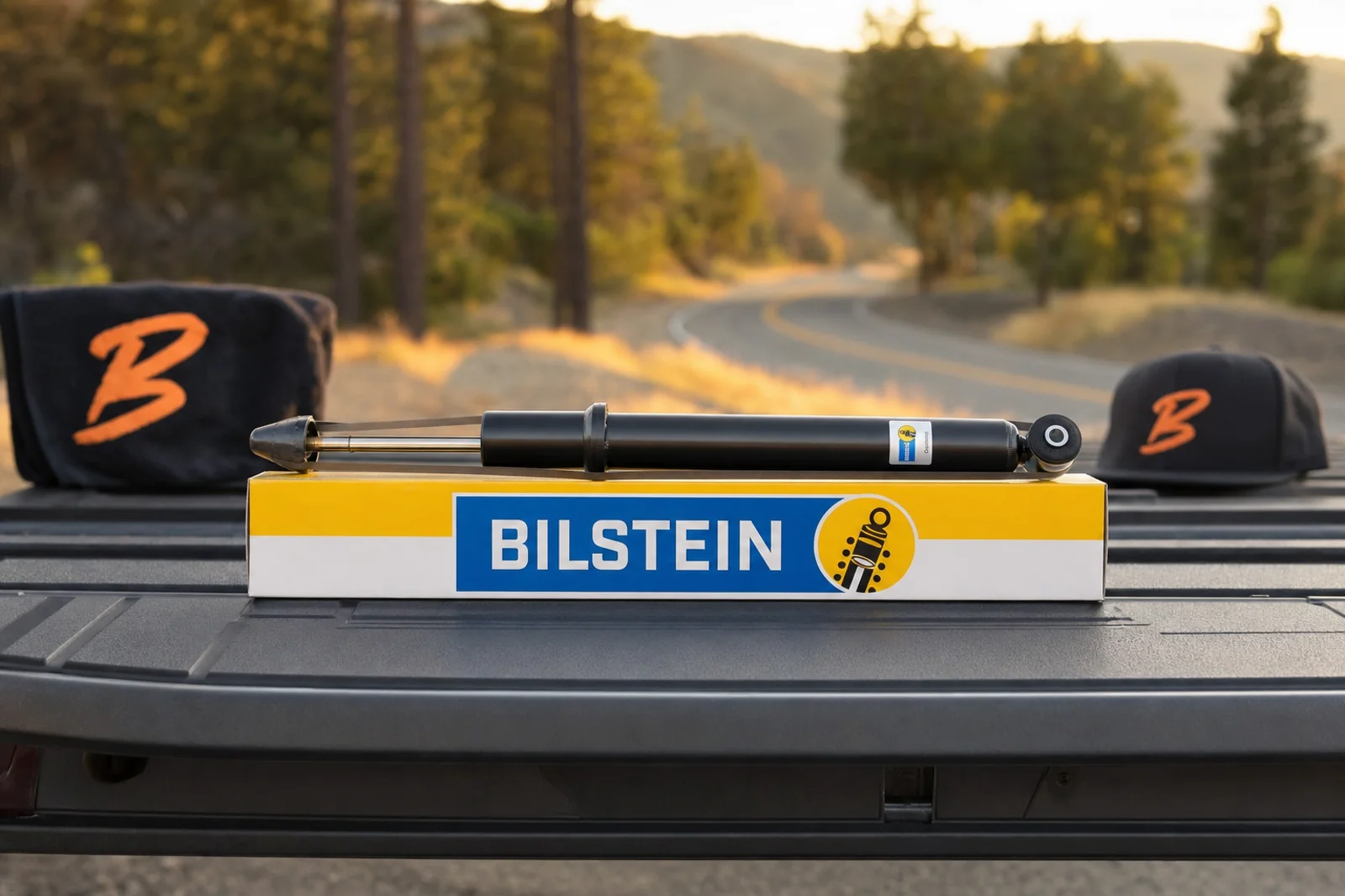
Bilstein Shocks Guide: B4 vs B6 vs 5100 — Which Should You Buy?
B4, B6, or 5100? We break down every Bilstein shock series so you can pick the right one for your car, truck, or lifted rig.
The Short Answer
The Bilstein B4 is for stock-height OEM replacement, the B6 is for performance street driving at stock height, and the 5100 is built for trucks and SUVs running a lift or needing adjustable ride height.
| Series | Best For | Typical Ride Height | Approximate Street Price (per shock) | Valving Style |
|---|---|---|---|---|
| B4 | OEM replacement, comfort-first | Stock | $60–$130 | Soft OEM match |
| B6 | Sport street, loaded vehicles | Stock | $90–$180 | Firm sport |
| B8 | Track/autocross | Stock or lowered | $120–$220 | Very firm |
| 5100 | Trucks/SUVs, mild lift | 0–2.5 in. lift | $100–$200 | Firm, adjustable |
| 5160 | Off-road, heavy use | Lifted | $200–$380 | Remote reservoir |
Use the table above as your quick-reference guide. The rest of this article explains the *why* behind each choice.
What Makes Bilstein Different From Other Shock Brands
Bilstein builds every shock in their lineup around a monotube design. That matters more than it sounds. A conventional twin-tube shock mixes oil and gas in a way that causes the oil to aerate — foam up — under repeated hard compressions. Foamy oil doesn't damp well. A monotube keeps the gas and oil separated by a floating piston, so the damping stays consistent whether you're on your third speed bump or your three hundredth.
The practical result: Bilstein shocks resist fade during spirited driving far better than most budget or even mid-tier twin-tube units. That's not marketing — it's physics. Independent tests have shown monotube shocks can run 30–40°F cooler under sustained use than comparable twin-tube designs, and heat is the main enemy of consistent damping.
They also do vehicle-specific valving. A Bilstein B6 for a BMW 3 Series is not the same internal tune as one for a Jeep Wrangler. That specificity is exactly why they command a price premium.
Bilstein B4: The Daily Driver Replacement
The B4 is Bilstein's answer to the OEM shock. It's engineered to match factory ride quality as closely as possible while offering better build quality and longevity than most dealer-supplied replacements.
If your car is stock and your priority is restoring the original ride feel after worn shocks are ruining your commute, the B4 makes complete sense. It's not a performance upgrade — it's a quality restoration.
Who should skip it: anyone who wants improved handling, carries heavy loads regularly, or is upgrading from worn shocks and wants to notice the difference.
Bilstein B6: The Sweet Spot for Most Drivers
Honestly, if I had to recommend one Bilstein series to the widest range of drivers, it's the B6. Bilstein's own data puts it at approximately 10% stiffer valving than the B4, which translates to noticeably less body roll and dive without making the ride punishing on rough pavement.
It's still a stock-height shock, so it fits without any suspension modifications. It works especially well on vehicles that are carrying extra weight — a wagon with a roof box, a sedan that regularly has four passengers, or a crossover towing a small trailer.
The B6 won't transform a family sedan into a sports car. But it will make the car feel more planted and confident in a way that most drivers can feel within the first week.
Bilstein 5100: For Trucks, SUVs, and Lifted Rigs
The 5100 is where things get interesting for truck owners. It's designed to work at factory height *and* with lifts up to about 2.5 inches depending on application. The front shocks have multiple ride-height settings that you adjust before installation — once set, they're fixed.
At zero lift, the 5100 rides noticeably firmer than stock. That's fine for a work truck or an off-road rig, but some daily drivers find it too harsh on highway expansion joints. If your F-150 or Tacoma is sitting at stock height and you want a comfortable ride, the B6 is a better match. If you're running a leveling kit or a 2-inch lift, the 5100 is the correct tool.
5100 vs 5160: Do You Need the Remote Reservoir?
The 5160 adds a remote reservoir that holds extra fluid volume, giving it even better fade resistance during sustained off-road abuse. It's overkill for a weekend trail truck. If you're doing serious rock crawling, desert racing, or heavy overlanding, spend the extra money. For everyone else, the 5100 covers it.
Bilstein B8: Skip It Unless You Track Your Car
The B8 is tuned for lowered, performance-oriented street cars and light track use. The valving is significantly stiffer than even the B6. On a daily driver at stock height it can feel crashy on rough pavement. Unless you're running a coilover setup or a dedicated sport suspension kit, the B8 is probably not your answer.
How Much Should You Budget for New Shocks?
For a complete four-shock replacement with Bilstein, budget roughly:
- B4 (sedan/wagon): $250–$520 in parts
- B6 (sedan/wagon/crossover): $360–$720 in parts
- 5100 (truck/SUV): $400–$800 in parts
Labor, if you're not doing it yourself, typically runs $150–$350 at an independent shop depending on vehicle complexity. Luxury SUVs with air suspension or complex rear multi-link setups can push labor higher.
Always replace shocks in axle pairs. Installing one new shock next to a worn one creates uneven damping side-to-side, which affects braking stability and straight-line tracking.
The Verdict: Which Bilstein Series Should You Buy?
- Commuter car at stock height, comfort is priority: B4
- Stock-height car or crossover, want better handling: B6
- Truck or SUV with a leveling kit or mild lift: 5100
- Lowered sport car or occasional track use: B8
- Serious off-road rig or desert running: 5160
The 5100 gets the most attention online, but the B6 is probably the right answer for more drivers than realize it. It fits stock suspension, it's meaningfully better than a budget replacement, and the price difference over a B4 is usually $30–$60 per shock — well worth it if you actually drive the car.
For exact fitment and current pricing on shock absorbers for your specific vehicle, use the finder below.
Find the right part for your vehicle
Guaranteed fit, ships free
FAQ / People Also Ask
The B4 is a direct OEM replacement tuned for factory ride quality. The B6 uses the same monotube gas-pressure design but with a stiffer valving that improves body control and handling without dramatically harshening the ride. The B6 is the better choice if you drive enthusiastically or carry loads regularly.


Comments
Loading comments...
Comments are moderated by the AutoBuffy team.