

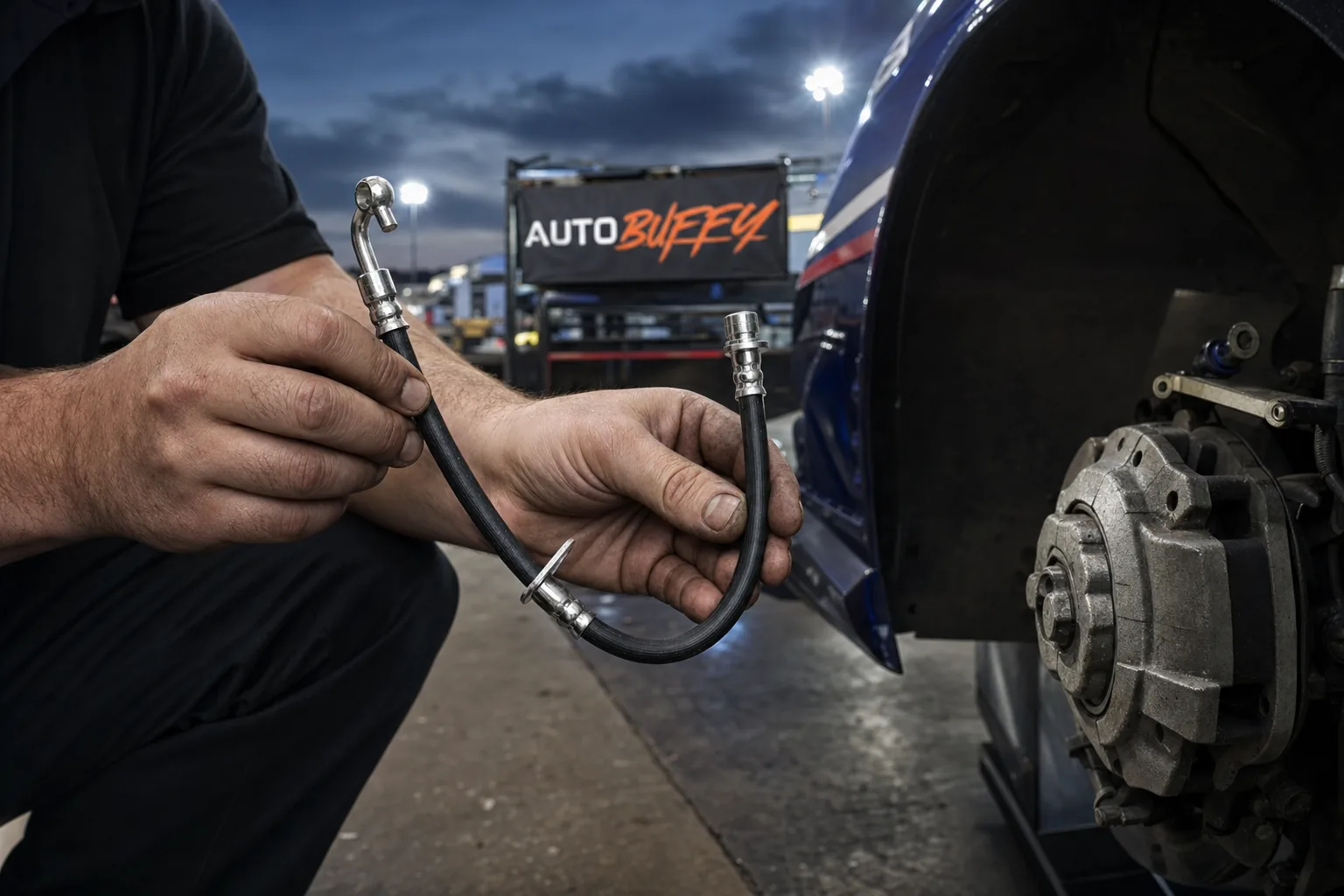
Brake Line Replacement Cost and Why You Never Ignore a Leak
Brake line replacement typically costs $150–$650. Here's what drives the price, why a leak is a safety emergency, and when to DIY vs. pay a shop.
The Short Answer
Brake line replacement costs between $150 and $650 for most vehicles, with complex or heavily corroded jobs reaching $800 or more — and ignoring even a small leak is a genuine safety emergency, not a monitor-it situation.
| Repair Type | DIY Parts Cost | Shop Total (Parts + Labor) |
|---|---|---|
| Single flex hose (front or rear) | $15–$60 | $150–$300 |
| Single rigid steel line | $20–$80 | $200–$500 |
| Full rear line section | $40–$120 | $350–$650 |
| Full system (all lines + hoses) | $150–$400 | $600–$1,200+ |
| Corroded fittings / seized nuts (extra) | N/A | $75–$200 added |
What Actually Makes Up the Cost
Break the invoice down and you will usually find three buckets: parts, labor, and a fluid bleed charge.
Parts are almost never the big number. A rubber brake hose for a common domestic sedan might cost $15–$40. Stainless-braided performance hoses run $30–$80 each. Prefabricated steel lines for popular applications are $20–$80. The material matters more than the sticker price. Copper-nickel alloy lines resist corrosion far better than plain steel and are worth the modest upcharge if you live somewhere roads get salted.
Labor is where the real money goes, especially on older vehicles. A shop charging $100–$160 per hour will bill 30 minutes for a clean hose swap and 2–4 hours if they are fighting a rusted pickup that has not had its lines touched in a decade. Budget accordingly.
Bleeding is non-negotiable after any brake line work. Fluid must be purged of air or the pedal stays soft. Most shops charge $30–$75 for a proper four-corner bleed.
Why a Brake Fluid Leak Is Never a Watch-and-Wait Problem
Hydraulic brake systems work on pressure. The moment fluid escapes through a cracked hose, a rusted-through line, or a loose fitting, that pressure drops. A soft, spongy pedal is the first warning. A pedal that goes to the floor with nothing stopping you is where this ends if you ignore it.
Brake fluid is also hygroscopic, meaning it absorbs moisture from the air. Over time, even sealed systems see the boiling point of their fluid drop, which causes vapor lock under hard braking. A leaking system accelerates this because it draws fresh, moisture-laden air in as fluid escapes.
"I have seen drivers top off the reservoir every week thinking they were managing the problem. They were not — they were just delaying a very bad day."
If you see a small puddle of amber or brown fluid under your car, or notice the brake warning light flickering on, get under there with a flashlight before you drive another mile. Check every hose for cracking, swelling, or weeping at the fittings.
Brake Hose vs. Brake Line: Which One Failed?
These two terms get used interchangeably, but they are different components with different failure modes.
Rigid brake lines are metal tubes that run along the chassis from the master cylinder to a distribution point near each wheel. They are fixed in place and fail primarily from corrosion, physical damage from road debris, or vibration fatigue from improper routing.
Flexible brake hoses are short rubber or braided sections that bridge the gap between those rigid lines and the moving suspension components. They flex thousands of times a year as your wheels travel up and down. They fail from age-related cracking, abrasion, and internal deterioration. That last one is worth knowing: a hose can collapse internally and act like a one-way valve, causing brakes to drag or feel inconsistent with no visible external leak.
Knowing which one failed helps you get an accurate estimate before the car goes on a lift.
The Rust Belt Tax: Why Older Trucks Cost More
If you own a pickup or SUV that has worked through several northern winters, you already know this math. Salt accelerates corrosion on steel brake lines and, more critically, on the fittings. A fitting that should spin off in 30 seconds instead rounds, snaps, or requires a torch and penetrating oil to free. Some shops charge flat labor rates for this scenario; others bill time and materials. Either way, a job quoted at $250 can become $450 once the car is in the air.
If your vehicle is more than 8–10 years old and lives in a salt-heavy region, be upfront with your shop. Ask them to inspect fitting condition before committing to a price. Most will.
Can You Do This Yourself?
A flexible hose replacement is genuinely approachable for a DIYer who is comfortable with basic mechanical work. You need a flare-nut wrench set (regular open-end wrenches will round the fittings), a way to plug the line temporarily so you do not lose all your fluid, and the ability to bleed brakes afterward.
Rigid line replacement is a step up. You will need a tubing cutter, a flare tool that matches your vehicle spec (most domestic vehicles use double-flare; some imports use bubble-flare — get this wrong and the fitting will leak), and enough patience to work in tight spaces.
One honest take: most home mechanics underestimate how long rigid line work takes and overestimate how good their first flare will be. The parts are cheap. The cost of a bad flare is a leak you might not notice until the pedal goes soft on the highway. In my experience, that combination — low parts cost, high consequence of error — is exactly when paying a professional is worth every dollar.
Choosing the Right Brake Hose
Not all brake hoses are built the same, and the spec matters.
- OEM rubber hoses meet factory standards and work fine for most daily drivers. Quality varies by brand, so stick with reputable suppliers that specialize in brake components.
- Stainless braided hoses have a woven stainless exterior over a PTFE inner core. They resist expansion under pressure, giving a firmer pedal feel. Popular on performance and off-road builds.
- FMVSS 106 compliance is the federal standard all brake hoses sold in the US must meet. If a hose does not mention it, walk away.
When to Replace the Whole System
Sometimes one failed line is the warning shot, not the whole story. If your vehicle is older and has original lines, replacing just the leaking one makes sense — but inspect the others closely. Rust that has eaten through one section has usually been working on the adjacent sections too.
Some shops offer a full system re-line using prefabricated or custom-bent copper-nickel lines. It is a bigger upfront cost, typically $600–$1,200 at a shop, but it restores the entire hydraulic system and eliminates the cycle of replacing one line at a time over the next several years. On a vehicle you plan to keep, that math often works out.
Find the right brake hose for your vehicle
Guaranteed fit, ships free
FAQ / People Also Ask
Most drivers pay between $150 and $650 for a single brake line or hose replacement at a shop. Complex jobs involving multiple lines, specialty vehicles, or corroded fittings can run higher — sometimes $800 or more.

Comments
Loading comments...
Comments are moderated by the AutoBuffy team.