

Brake Master Cylinder Replacement Cost and Failure Symptoms
Learn what a brake master cylinder replacement costs, the warning signs it's failing, and how to avoid a dangerous brake failure.
The Short Answer
Brake master cylinder replacement typically costs between $250 and $650 total — parts plus labor — though that range climbs for European or luxury vehicles.
| Cost Factor | Typical Range |
|---|---|
| Replacement part (aftermarket) | $50 – $200 |
| Replacement part (OE-quality) | $100 – $300 |
| Labor (1–2 hours) | $100 – $200 |
| Brake system bleeding | $50 – $100 |
| Total estimated cost | $250 – $650 |
If your shop is quoting you outside that range, ask for a breakdown. High-end SUVs, trucks with integrated ABS modules, and European makes can legitimately push toward $800 or beyond.
What Does the Brake Master Cylinder Actually Do?
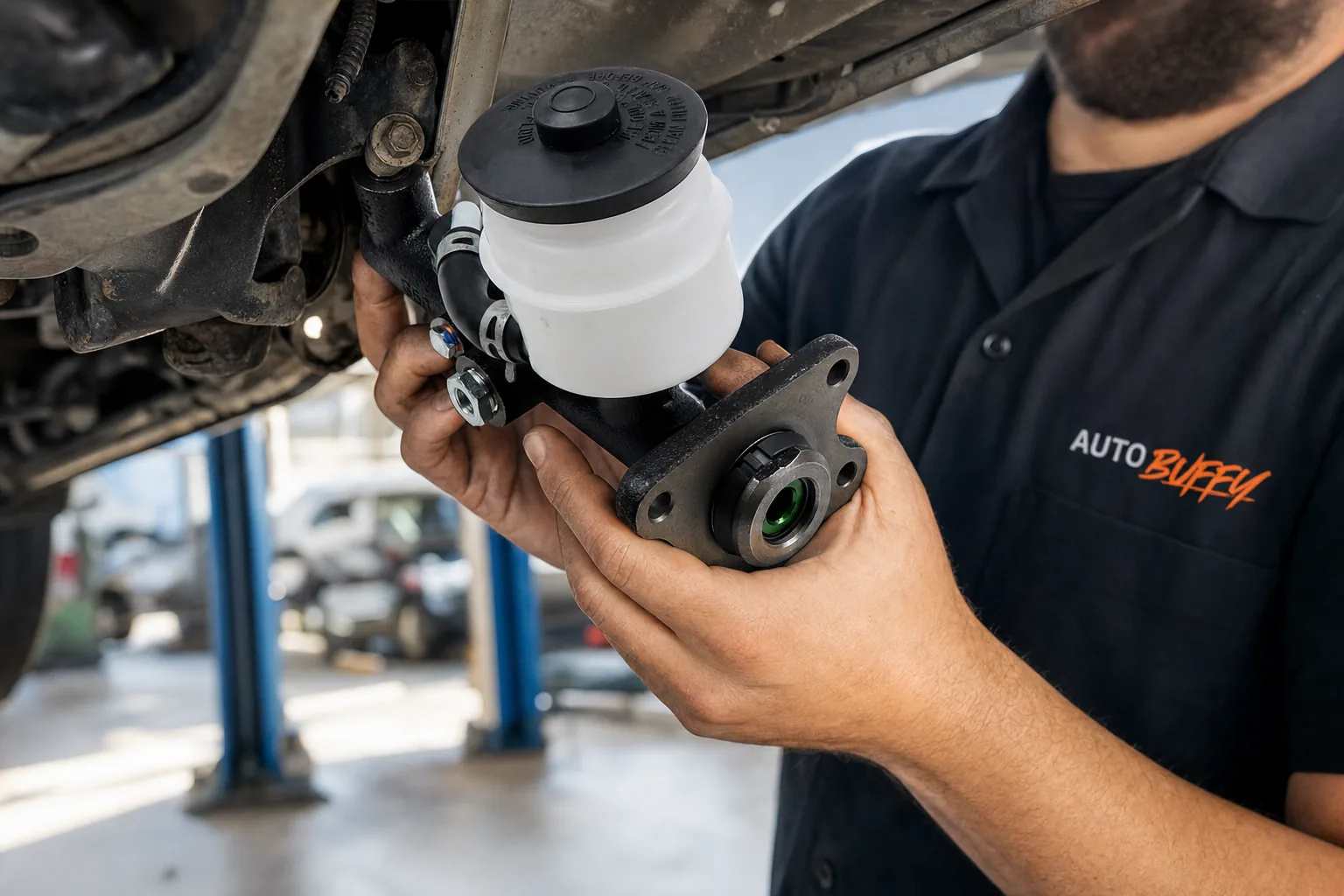
The master cylinder is the hydraulic heart of your brake system. When you press the pedal, it converts that mechanical force into hydraulic pressure and sends it through the brake lines to your calipers or wheel cylinders at each corner. Without it working correctly, stopping the car becomes a real problem.
It sits on the firewall, mounted directly to the brake booster, and holds a small reservoir of brake fluid on top. That fluid level is your first daily clue about system health. If it keeps dropping without explanation, start suspecting the master cylinder.
5 Symptoms of a Failing Brake Master Cylinder
1. Sinking or Spongy Brake Pedal
This is the big one. If the pedal slowly sinks toward the floor when you hold steady pressure at a stoplight, internal seals have likely worn out. The cylinder can't maintain pressure, and it's letting fluid bypass internally. A spongy feel that wasn't there before is almost always air in the system or seal deterioration — both often trace back here.
2. Brake Fluid Leaking Near the Firewall
Look for wet spots or fluid streaks on the firewall directly behind the master cylinder, or on the brake booster. External seal failure lets fluid escape to the outside of the unit. You might also notice the brake fluid reservoir emptying faster than it should.
3. Contaminated Brake Fluid
Pop the reservoir cap and look at the fluid. Fresh brake fluid is nearly clear to light amber. If yours looks dark brown, black, or has a milky tint, the internal rubber seals are breaking down and contaminating the system. At that point, you're replacing the master cylinder and flushing every drop of fluid in the system.
4. Brake Warning Light
A lit brake warning light doesn't automatically mean master cylinder, but low fluid caused by a leak inside or outside this component will trigger it. If the light comes on alongside any of the other symptoms here, treat it seriously.
5. Uneven Braking or the Car Pulling
If one side of your braking circuit loses pressure due to a dual-circuit master cylinder fault, you may feel the car pull to one side under braking. Modern master cylinders have two separate hydraulic circuits for safety — front and rear, or diagonal. If one fails, you still have partial braking, but the imbalance is unmistakable.
Safety note: Any combination of two or more symptoms above means you shouldn't drive the vehicle. Brake failure is not a schedule-it-for-next-week situation.
What Affects Brake Master Cylinder Replacement Cost?
Vehicle Type
A domestic sedan or half-ton truck sits at the lower end of the range. European makes typically need OE-spec parts that cost more, and labor rates at a European specialist shop are higher too. Full-size trucks with integrated trailer brake controllers add complexity that can push the total up.
Part Quality
This is one area where skimping genuinely matters. The master cylinder is not a wear item you swap out every 30,000 miles — it needs to last. Quality remanufactured units from established brake-specialty brands use fresh seals, machined bores, and go through pressure testing. Cheap off-brand units sometimes arrive with pre-worn seals or poor bore tolerances. Paying $40 more for something you trust behind your pedal is worth it.
Labor and Geographic Location
Shop labor rates vary widely — $80 per hour in rural areas, $160 to $180 per hour at dealerships in major cities. The job itself is 1 to 2 hours of work, but if brake lines are corroded and fittings won't budge, that estimate climbs fast. Bench-bleeding the new master cylinder before installation, which any good tech will do, adds 20 to 30 minutes but saves you a callback visit.
Brake Bleeding
Every master cylinder replacement requires a full brake bleed afterward. Some shops bundle this into the job price; others line-item it. Ask before you approve the repair order.
Choosing the Right Replacement Part
For the master cylinder, you want a part that matches your vehicle's original bore diameter, reservoir position, and port configuration exactly. Even small deviations affect pedal feel and pressure output.
For most daily drivers, a quality aftermarket unit from a brand that specializes in brake hydraulics is the practical choice. It fits correctly, carries a real warranty, and costs less than a dealer part without cutting corners on seal quality. For vehicles with complex integrated ABS systems, an OE or OE-equivalent part may be the cleaner call.
Use the part finder below to confirm the exact fit for your year, make, and model before ordering. Getting the wrong bore size or a reservoir that doesn't clear your hood is a headache nobody needs.
Can You Replace a Brake Master Cylinder Yourself?
If you're comfortable with basic brake work and have done a fluid flush before, it's a doable Saturday project. The steps are:
- Bench-bleed the new master cylinder before installation — don't skip this
- Disconnect the brake lines carefully and cap them to prevent spills
- Unbolt the old unit from the brake booster
- Install the new unit and reconnect the lines
- Bleed the entire brake system starting at the farthest wheel from the master cylinder
- Test pedal feel before moving the vehicle
The part where people go wrong is skipping the bench bleed or rushing the system bleed. Air in the lines means a soft pedal, and a soft pedal means a car that won't stop the way you expect. Take your time or let a shop handle it.
How Long Will a New Master Cylinder Last?
A quality replacement unit should last 100,000 miles or more with normal use. The best thing you can do to extend its life is flush your brake fluid every 2 to 3 years. Brake fluid is hygroscopic — it absorbs moisture from the air over time, which accelerates seal degradation and causes internal corrosion. Fresh fluid is cheap insurance.
Find the right brake master cylinder for your vehicle
Guaranteed fit, ships free
FAQ / People Also Ask
Total replacement cost typically falls between $250 and $650, depending on the vehicle, the part itself, and local labor rates. Luxury and European vehicles often run higher.

Comments
Loading comments...
Comments are moderated by the AutoBuffy team.