

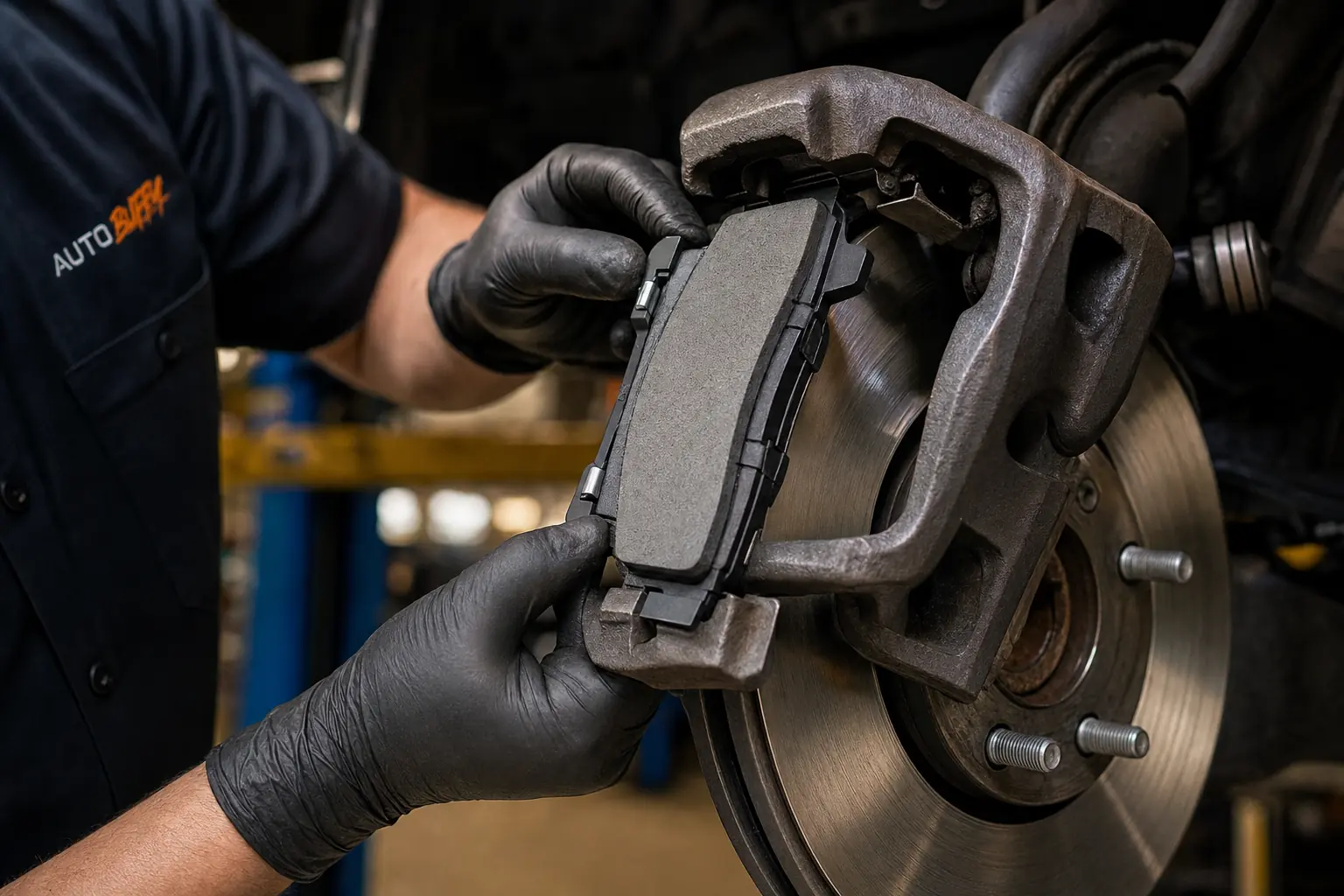
Brake Pad Replacement Cost (2026): What You'll Actually Pay
Brake pad replacement typically costs $100–$300 per axle at a shop. Here's exactly what drives that number—and how to avoid overpaying.
The Short Answer
Brake pad replacement costs $100–$300 per axle at most repair shops in 2026, with parts running $25–$100 and labor making up the rest.
Here's how that breaks down across vehicle types and service options:
| Scenario | Typical Cost (Per Axle) |
|---|---|
| DIY – economy pads | $25–$50 |
| DIY – mid-grade / ceramic pads | $50–$80 |
| Independent shop – economy car | $100–$175 |
| Independent shop – truck / SUV | $150–$250 |
| Dealership – mainstream vehicle | $200–$350 |
| Dealership / shop – luxury or performance | $300–$500+ |
Keep in mind: "per axle" means both wheels on the same end of the car. Most shops price brake work this way. If your fronts and rears both need work, you're potentially doubling the bill.
What's Actually Included in a Brake Pad Replacement?
When a shop quotes you a brake pad replacement, here's what should be in that price:
- New brake pads (one axle, both sides)
- Labor to remove the wheel, caliper, and old pads
- Brake caliper lubrication on slider pins
- Brake system inspection — rotors, calipers, brake fluid level
What's *not* automatically included: rotor resurfacing, rotor replacement, brake fluid flush, or caliper replacement. These are add-on services that shops may recommend based on what they find. Always ask for an itemized quote before any work starts.
How Labor Costs Break Down
Labor is typically the biggest slice of the bill, and it varies by shop type:
| Shop Type | Typical Labor Rate |
|---|---|
| Independent / local mechanic | $75–$130/hr |
| National chain (Midas, Firestone, Pep Boys) | $90–$150/hr |
| Dealership | $130–$200/hr |
A pad swap on a standard car takes roughly one hour per axle. That means a $100/hr labor rate adds $100 to your bill before parts. Dealers often add a shop supply fee on top of that—small, but worth watching for.
According to RepairPal, the national average for brake pad replacement lands between $150 and $300 per axle for most vehicles, which tracks with what independent shops across the country are actually charging.
Brake Pad Material: How It Affects Cost (and Performance)
The type of pad matters more than most people realize—both for your wallet and your stopping distance.
Organic / Non-Asbestos Organic (NAO)
The cheapest option. Soft, quiet, and easy on rotors. They wear faster and aren't great under heavy heat. Fine for light-duty commuter use.
Semi-Metallic
A good middle ground. More heat resistance, better stopping power, slightly more rotor wear. Most trucks and SUVs come with these from the factory. Mid-range price.
Ceramic
Longer life, less brake dust, quieter. The National Highway Traffic Safety Administration (NHTSA) doesn't mandate pad material for consumer vehicles, but many performance-safety-minded drivers prefer ceramics for consistent feel. They cost $10–$40 more per axle on the parts side—money well spent for most people.
Performance / Track Pads
High-friction, high-heat compounds designed for aggressive driving. These are significantly more expensive ($80–$200+ per axle in parts alone) and are overkill for everyday use.
When Brake Pads and Rotors Need to Be Replaced Together
Here's the thing shops sometimes gloss over: if your rotors are below the minimum thickness spec (which varies by vehicle—check your owner's manual or ask the shop to measure them), they *must* be replaced, not just resurfaced. Driving on pads too long is usually how rotors get destroyed.
Adding rotor replacement to a pad job changes the math significantly:
| Service | Typical Cost (Per Axle) |
|---|---|
| Pads only (shop) | $100–$300 |
| Pads + rotor resurfacing (shop) | $150–$350 |
| Pads + new rotors (shop) | $250–$500 |
That's why the old advice stands: don't ignore the squealing. Catching pads early keeps the job cheap. Let them go metal-to-metal, and you're buying rotors too.
DIY Brake Pad Replacement: Is It Worth It?
Honestly? For someone reasonably handy, yes. Brake pads are one of the more approachable DIY jobs on a modern car. You need a floor jack, jack stands, basic hand tools, a C-clamp or caliper piston tool, and about two hours of patience the first time.
Parts cost $25–$80 per axle depending on material and vehicle. That's a real saving of $75–$200 per axle over shop labor. On a full four-wheel brake job, you could pocket $300–$400.
The honest caveat: if your rotors need attention or your calipers are seized, the job gets more complex fast. And if you skip steps—like failing to properly seat the caliper piston or skipping bed-in procedure—brake performance suffers. The EPA's vehicle safety resources and vehicle-specific forums are useful starting points, but always cross-reference your repair manual for torque specs.
5 Ways to Avoid Overpaying for Brake Pads
- Get at least two quotes. Labor rates vary by 30–50% in the same city. A quick call to two shops takes five minutes.
- Ask what pad brand and compound they're using. "Economy" pads from some shops are genuinely bottom-tier. You can request a mid-grade or ceramic upgrade—it usually adds $20–$40 to the parts cost, not the labor.
- Don't reflexively go to the dealer. OEM pads are fine, but quality aftermarket pads often match or exceed them for less money. The key is the brand and compound, not whether it came in a dealer box.
- Check for coupons. National chains like Firestone and Midas run brake specials constantly. Just read the fine print—"starting at" prices often exclude the inspection fee.
- Buy your own pads and ask the shop to install them. Some shops allow this; many don't (they lose the parts markup). Worth asking if you've found a good deal on quality pads.
How to Know Your Brake Pads Are Actually Due
Watch for these signs:
- Squealing or squeaking when braking (most pads have a wear indicator that does this intentionally)
- Grinding or metal-on-metal sound — this is urgent; pad material is gone
- Brake warning light illuminated on your dash
- Longer stopping distances or a softer brake pedal feel
- Visible pad thickness through the wheel spokes — less than 3mm means it's time
Most manufacturers recommend inspection at every oil change. Kelley Blue Book's maintenance guides also suggest visual inspection any time tires are rotated, since wheels come off anyway.
Sources
- RepairPal – Brake Pad Replacement Cost Estimator
- NHTSA – Vehicle Safety
- Kelley Blue Book – Car Maintenance
- EPA – Vehicle Resources
Find the right part for your vehicle
Guaranteed fit, ships free
FAQ / People Also Ask
Most drivers pay $100–$300 per axle for brake pad replacement at a shop, including parts and labor. Luxury or performance vehicles can push that to $400 or more per axle.
Comments
Loading comments...
Comments are moderated by the AutoBuffy team.