

Brake Rotor Replacement Cost (2026): What You'll Really Pay
Brake rotor replacement costs $150–$700 for most vehicles. Here's what drives the price—and how to avoid overpaying in 2026.
The Short Answer
Brake rotor replacement costs $150–$700 for most passenger vehicles when done at a shop, or $60–$250 in parts alone if you're doing it yourself.
| Scenario | Typical Cost Range |
|---|---|
| Economy car, both front rotors + pads (shop) | $150–$300 |
| Midsize sedan or crossover, front axle (shop) | $250–$450 |
| Truck or SUV, front axle (shop) | $350–$700 |
| All four rotors + pads, any vehicle (shop) | $500–$1,100+ |
| DIY parts only (per axle, quality mid-grade) | $60–$200 |
| Rotor resurfacing (per axle, if eligible) | $20–$60 |
Prices reflect parts and labor at an independent shop. Dealerships typically run 20–40% higher. These are ballpark ranges — use the part finder below for exact pricing on your specific vehicle.
What Actually Drives the Price Up (or Down)
Four things move the needle on what you'll pay more than anything else.
1. Vehicle type. A Honda Civic and a Ford F-250 are not even close. Larger vehicles need physically bigger rotors with more raw material, and those components carry a higher price tag. According to RepairPal, brake rotor replacement on a full-size truck or performance SUV can easily exceed $600 at a franchise shop.
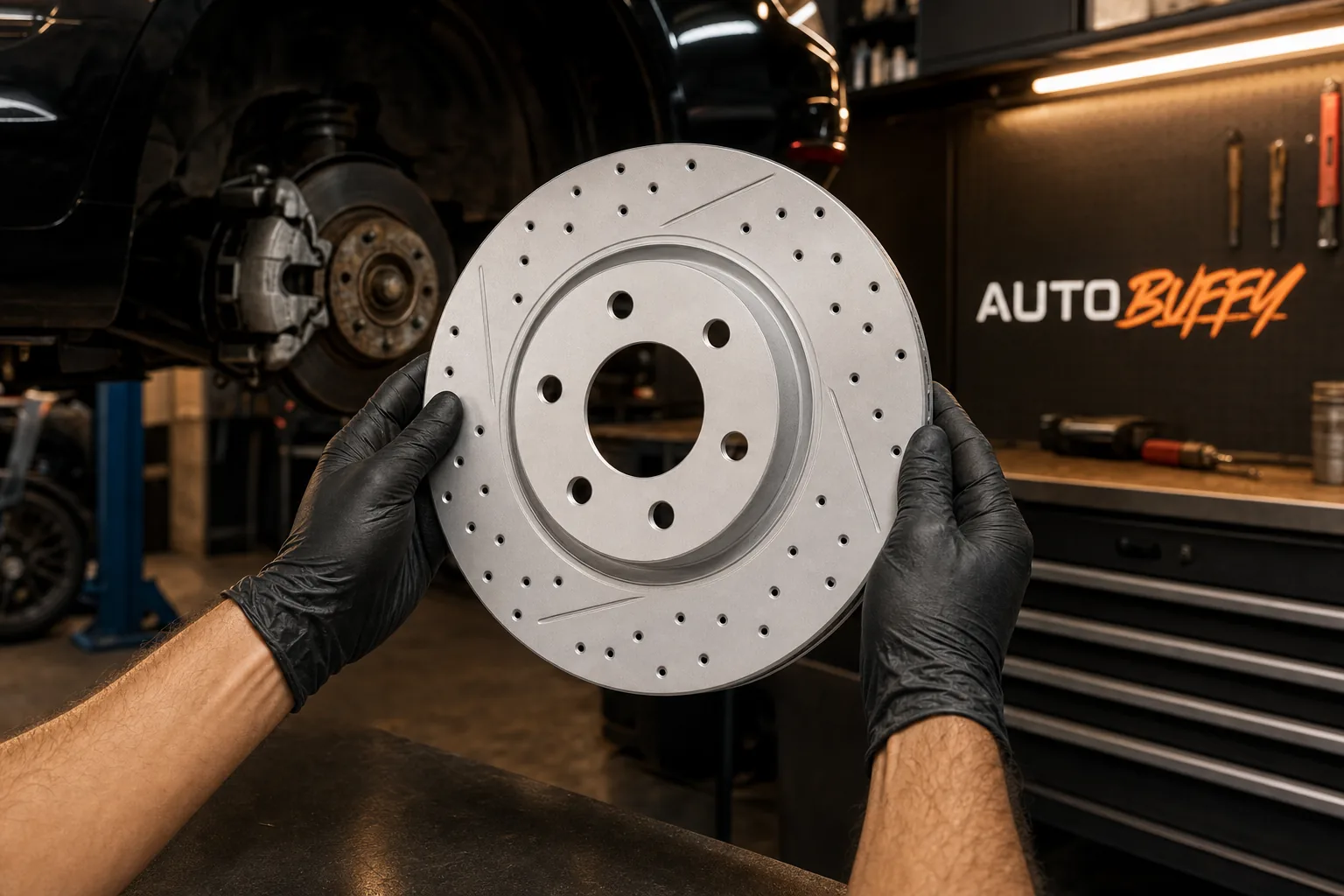
2. Rotor quality tier. Rotors come in three general tiers: economy (bare minimum specs, often used in high-volume fleet work), OE-equivalent (matches the original factory specification), and performance (drilled, slotted, or coated for better heat handling). Economy rotors are cheap up front but can warp within a year on heavier vehicles. I'd honestly skip economy-grade rotors on any vehicle over 3,500 lbs — the callback headache isn't worth the $15 savings.
3. Pads replaced at the same time. You almost always should. New pads need a smooth, flat surface to bed properly. If you drop fresh pads onto worn or grooved rotors, you're shortening the pads' life and leaving braking performance on the table. Most shops bundle rotors and pads together, which is sensible — but it does increase the invoice.
4. Labor rate in your area. Shop labor averages roughly $80–$150 per hour nationally, according to AAA's auto repair cost data. A front rotor job typically takes 1–2 hours per axle. That adds up fast in high cost-of-living areas, and dealerships compound it further with their own rate premiums.
DIY vs. Shop: When to Do It Yourself
Replacing brake rotors is one of the more accessible DIY brake jobs. If you can safely lift your vehicle, have a torque wrench, and can follow a service manual for your specific model, the front rotors on most sedans and crossovers are a straightforward Saturday project.
When DIY makes sense:
- You're comfortable with basic mechanical work
- Your vehicle has a straightforward front disc setup (no electronic parking brake integration)
- You want to save $80–$200 in labor per axle
When to let a shop handle it:
- Rear rotors with integrated electronic parking brakes — these require a scan tool to retract the caliper piston, which adds complexity most home garages can't easily handle
- Any signs of caliper seizing, warped hats, or damaged wheel bearings found during disassembly
- You're unsure about torquing wheel lug nuts to spec — undertorqued or overtorqued lugs cause real safety problems
If you go DIY, always use a torque wrench on both the caliper bracket bolts and the lug nuts. NHTSA brake safety guidance emphasizes proper fastener torque as a critical safety factor in brake service.
Resurfacing vs. Replacing: Which Is Right?
"Turning" a rotor — shaving it flat on a brake lathe — used to be the default recommendation. That's shifted over the last 15 years. Here's why.
Modern rotors are often designed closer to minimum thickness from the factory to save weight and cost. After resurfacing, many fall below or dangerously near the discard spec, leaving almost no thermal mass to handle braking heat. A thin rotor warps faster and can crack under sustained hard braking.
Resurfacing still makes sense when:
- The rotor is only lightly scored or has minor surface rust
- The measured thickness after machining will remain at least 1–2mm above the stamped minimum
- The vehicle is older and the rotor is otherwise in good structural shape
When in doubt, ask the shop to measure first and show you the numbers. Any reputable tech will do this without being asked.
Front vs. Rear Rotors: Does Position Matter for Cost?
Front rotors handle roughly 70% of total braking force, so they wear faster and are replaced more often. They're also simpler to service on most vehicles, which keeps labor time down.
Rear rotors are replaced less frequently but can cost more to service when they include an integrated drum-style parking brake or an electronic parking brake actuator. On many modern crossovers and sedans, the rear caliper piston must be wound (not just pushed) back into the bore, and some require a scan tool to put the electric parking brake into service mode. Budget an extra 30–60 minutes of shop labor if your vehicle has this setup.
Signs You Need Rotor Replacement Now
Don't wait until you hear metal-on-metal grinding. These are the earlier red flags:
- Pulsating brake pedal — you feel a rhythmic push-back through the pedal when stopping. Classic warped rotor symptom.
- Vibration through the steering wheel under braking — usually points to front rotor problems specifically.
- Deep grooves or scoring visible on the rotor face when you look through the wheel spokes.
- Squealing that continues even after new pads were installed — the new pads may be riding on damaged rotor surfaces.
- Rotor thickness below minimum spec — always have this measured during any brake inspection.
Per NHTSA, brake system issues are among the leading mechanical causes of crash-related fatalities in the U.S. If you're seeing any of the above, don't defer the inspection.
How to Avoid Overpaying
A few practical moves that save real money:
- Get at least two quotes. Shop rates vary 20–40% for identical work within the same city.
- Buy your own parts. Some shops allow customer-supplied parts. Sourcing quality rotors through an online retailer and bringing them in cuts the parts markup shops typically add.
- Bundle the job. If you're already paying for rotor labor, adding pads at the same time is almost always cheaper than a separate pad appointment later.
- Ask about warranty. Quality rotors come with at least a 12-month/12,000-mile warranty. Shops that use economy-grade parts with no warranty should prompt a follow-up question.
- Check for coupons. National chains like Midas, Meineke, and Firestone run brake service specials regularly — though their base labor rates can be higher than independents.
Sources
- RepairPal – Brake Rotor Replacement Cost Estimator
- AAA – Auto Repair Cost Data
- NHTSA – Vehicle Brake Safety
Find the right part for your vehicle
Guaranteed fit, ships free
FAQ / People Also Ask
Most drivers pay $150–$700 total for a two-rotor replacement at a shop. The wide range reflects vehicle type, rotor quality tier, and whether pads are replaced at the same time.

Comments
Loading comments...
Comments are moderated by the AutoBuffy team.