

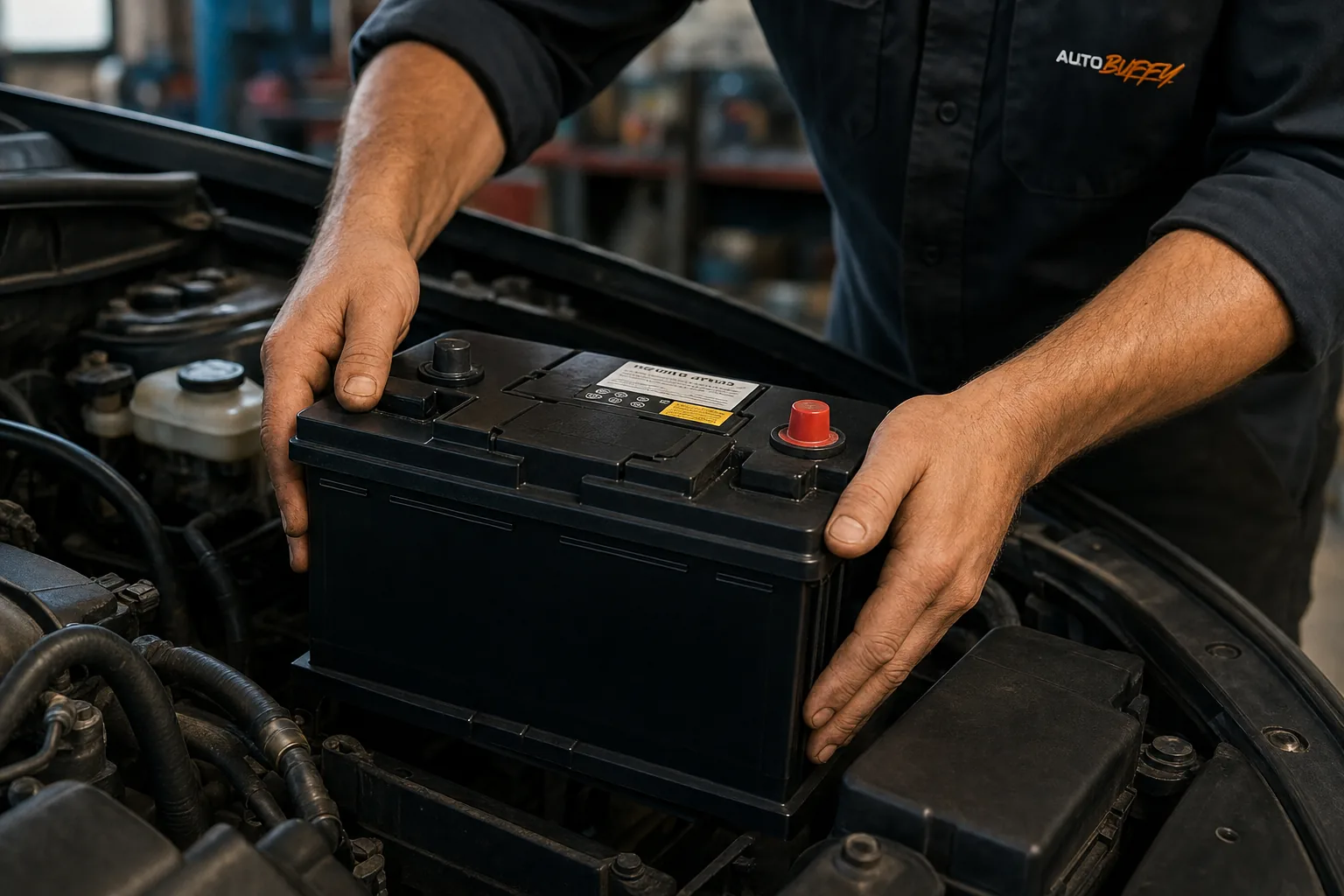
Car Battery Replacement Cost (2026): What You'll Actually Pay
Car battery replacement typically costs $150–$400 at a shop, or $80–$250 if you do it yourself. Here's exactly what drives the price.
The Short Answer
Car battery replacement costs $150–$400 at a shop (parts + labor) or $80–$250 if you buy the battery yourself and swap it at home.
| Scenario | Typical Cost Range |
|---|---|
| DIY — budget flooded battery | $80–$130 |
| DIY — mid-range flooded battery | $130–$200 |
| DIY — AGM battery | $180–$300 |
| Shop — parts + labor, standard battery | $150–$300 |
| Shop — parts + labor, AGM battery | $250–$450 |
| Dealership — OE-spec replacement | $300–$500+ |
| Auto parts store install (battery purchased there) | Often free install |
These are real-world ranges based on what drivers are paying across the U.S. in 2026. Where you land depends on your car, your location, and which battery technology you need — all of which we'll break down below.
What Actually Drives the Price Up (or Down)
Battery Type and Technology
This is the biggest variable. There are two main types you'll encounter:
- Flooded lead-acid — the traditional battery, cheaper to make, widely available. Fine for older vehicles or simple electrical systems. Typical retail: $80–$180.
- AGM (Absorbent Glass Mat) — required by most vehicles built after 2015 that use start-stop technology, regenerative braking, or have heavy electronics loads. More expensive to produce, but more durable and better at handling deep discharge cycles. Typical retail: $150–$300.
Putting a flooded battery in a vehicle that calls for AGM isn't just a performance downgrade — it can shorten the replacement battery's life significantly and stress your alternator. Always match the technology your vehicle requires.
Group Size
Batteries are standardized into "group sizes" (like Group 35, Group 48, Group 65) that define physical dimensions and terminal placement. A larger group size usually means more capacity and a higher price. Some luxury and European vehicles use proprietary sizes that cost more simply because there's less competition for them.
Cold Cranking Amps (CCA)
CCA measures how much current the battery can deliver at 0°F for 30 seconds. Higher CCA costs more. If you're in Minnesota, paying extra for 800 CCA vs. 600 CCA is worthwhile insurance. If you're in Phoenix, you can save a little by not over-specifying — heat is your bigger enemy anyway.
Labor and Where You Get It Done
- Independent shop: $25–$75 for installation. Straightforward job; most good shops won't overcharge for it.
- Dealership: $50–$120 for labor, sometimes more if a battery management system reset is required. This is the right call if your vehicle has a proprietary battery monitoring system that needs to be re-initialized.
- Auto parts retailer (AutoZone, O'Reilly, Advance, etc.): Many offer free installation when you buy in-store. Confirm before you go — some vehicle designs (bateries under the seat, in the trunk, or behind a wheel well) may be excluded.
- Mobile service (AAA, YourMechanic, etc.): Convenient but you'll pay a premium, typically $50–$100 more than a shop for the at-home visit.
Does Your Car Need a Special Battery?
Some vehicles add cost and complexity beyond the battery itself:
Start-stop systems: Vehicles equipped with automatic engine start-stop (common on most modern cars for fuel economy) require AGM or EFB (Enhanced Flooded Battery) chemistry. A standard battery will fail prematurely — sometimes within months.
Battery management systems (BMS): BMW, Mercedes-Benz, Audi, and some domestic vehicles track the battery's charge history. When you replace the battery, the BMS needs to be registered to the new unit, or the charging system won't work correctly. This usually requires a scan tool and adds $30–$80 to the job at a shop. It's one time when paying dealer or specialist labor rates is genuinely justified.
Trunk or under-seat mounted batteries: Some manufacturers (Cadillac, BMW, Dodge Charger/Challenger, certain Subaru models) put the battery in an unusual location to improve weight distribution. Access takes more time, which means more labor cost — typically an extra $20–$50.
How to Tell Your Battery Is Actually the Problem
Before you spend money, make sure the battery is the culprit. A slow crank on a cold morning is the classic symptom, but also watch for:
- Electrical gremlins — flickering lights, slow power windows, infotainment resets
- Battery warning light on the dash
- Swollen or leaking battery case (replace immediately if you see this)
- Battery age over 4–5 years, even without obvious symptoms
A free battery and charging system test at any auto parts store takes about 5 minutes and tells you whether the battery, alternator, or starter is at fault. RepairPal's battery diagnosis guide is a good reference if you want to understand what the numbers mean.
DIY vs. Shop: An Honest Take
Honest opinion: for a conventional battery on a standard domestic or Japanese vehicle, DIY is genuinely easy and saves real money. I've seen people pay $120 in labor for a 15-minute job. On a straightforward swap, that's hard to justify.
That said, if your car has a BMS that requires registration, skip the DIY and go to a shop or dealer. The risk of a misregistered battery — premature charging system wear, incorrect charge voltages — costs more to fix than the labor you'd save. About 30% of modern vehicles sold in the U.S. now require some form of post-replacement battery registration, according to data from AAA.
If you do go DIY, the process is simple:
- Turn off the ignition, remove the key
- Disconnect the negative (black, –) cable first
- Disconnect the positive (red, +) cable
- Remove the hold-down clamp and lift out the old battery
- Place the new battery in, secure the clamp
- Connect positive first, then negative
- Check that all connections are tight and corrosion-free
Use a memory saver plugged into the OBD-II port if you want to preserve radio presets and window calibration settings during the swap.
Which Battery Brand Should You Buy?
You'll see a lot of brand names on the shelf. A few honest notes:
- Optima has a strong reputation for AGM batteries, particularly in performance and high-demand applications.
- Interstate is widely distributed and consistently well-reviewed for conventional flooded batteries.
- DieHard (sold at Advance Auto) covers a broad range of group sizes and technologies.
- OEM/dealer batteries are often the same chemistry as aftermarket brands but carry a higher price for the badge. Worth it only if your BMS is unusually sensitive to spec variations.
For most people, a mid-tier battery with a 3-year free replacement warranty from a reputable brand is the right call. Don't cheap out on the warranty — it tells you something about how the manufacturer expects the product to perform.
Use the part finder below to match the right battery to your exact vehicle — group size, CCA, and technology type all need to match.
How to Save Money Without Cutting Corners
- Buy during sales events. Battery prices dip noticeably around Black Friday and during spring promotions.
- Use the core credit. When you return your old battery, most retailers credit you $10–$22 back. Don't skip this.
- Check your warranty. If your current battery is under 3 years old, it may still be under a free replacement warranty. Bring your original receipt to the retailer.
- Don't ignore a slow crank. Replacing a marginal battery before it fails completely costs the same as replacing it after — but the "after" scenario sometimes means a tow truck and an emergency service call.
Sources
- RepairPal — Battery Replacement Cost
- AAA Newsroom — Automotive Research
- U.S. Department of Energy — Vehicle Battery Technologies
- NHTSA — Vehicle Safety & Electrical Systems
Find the right part for your vehicle
Guaranteed fit, ships free
FAQ / People Also Ask
Most drivers pay $150–$400 at a shop, including parts and labor. DIY replacement with a battery you buy yourself typically runs $80–$250 depending on your vehicle's group size and battery technology.
Comments
Loading comments...
Comments are moderated by the AutoBuffy team.