

Catalytic Converter Replacement: Cost, Symptoms, and Legal Requirements by State
Real catalytic converter replacement costs, the symptoms that mean it's failing, and the federal and state legal requirements you need to know before replacing one.
The Short Answer
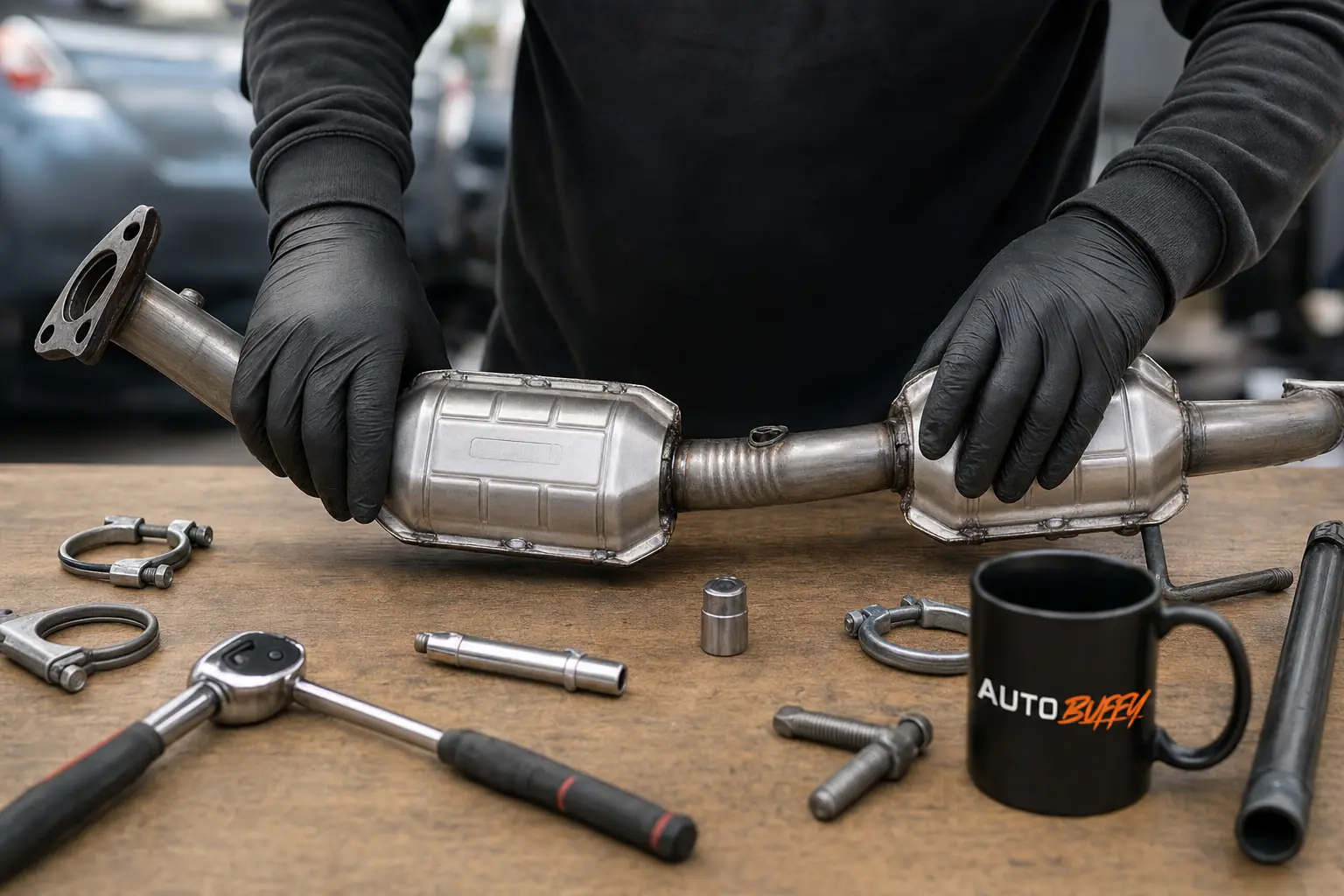
Catalytic converter replacement typically costs $800 to $2,500+ per converter, with the part itself running roughly $300 to $1,500 depending on the vehicle and how many precious metals (platinum, palladium, rhodium) the converter needs to meet emissions standards for that specific engine. Walker is one of the largest aftermarket exhaust and emissions brands on the market, and replacing a catalytic converter is federally regulated — it's not a repair you can legally do however you want, in every state.
Why the Price Swings So Much
The catalytic converter is, dollar for dollar, one of the most metals-dependent parts on a car. Its core is coated with precious metals that trigger the chemical reactions that clean up exhaust gas, and those metal prices move independently of the rest of the auto parts market. That's why:
- Vehicle-specific converters cost more than universal-fit converters, because they're engineered and certified to meet that engine's exact emissions output.
- Vehicles with tighter emissions standards (many newer vehicles, and anything sold new in California or a CARB state) require converters with more precious-metal loading, which raises part cost directly.
- Converters with an integrated exhaust manifold — where the converter and the manifold are one welded assembly instead of two separate parts — cost more than a standalone converter because you're buying two components in one, but they're the correct replacement on engines designed that way.
RepairPal's and CarMD's published repair-cost data both land in a broadly similar range to the figures above for a typical single-converter replacement, and multi-converter vehicles (some V6 and V8 engines use two) obviously multiply that cost.
Symptoms of a Failing Catalytic Converter
- A rattling noise from underneath the car, especially on startup or over bumps — usually the ceramic honeycomb substrate inside has broken apart and is loose in the housing.
- Check Engine light with a catalyst-efficiency code (P0420 or P0430 are the two most common), which means the converter isn't cleaning exhaust gas efficiently enough anymore, even if it isn't physically broken.
- A sulfur or "rotten egg" smell from the exhaust, which usually means the converter isn't processing hydrogen sulfide correctly.
- Reduced engine power or poor acceleration, especially if the converter is clogged rather than just inefficient — a clogged converter restricts exhaust flow the engine needs to breathe.
- Failed emissions/smog test, which in many states is the first time a driver finds out there's a problem at all, since a moderately inefficient converter often doesn't trigger any noticeable driving symptom.
- Worse fuel economy with no other obvious cause, tied to the same airflow-restriction issue as reduced power.
A rattling noise plus a P0420/P0430 code together is close to a confirmed diagnosis; either symptom alone is worth a proper exhaust and emissions inspection before assuming the converter itself is the problem, since some upstream issues (like a failing oxygen sensor or an engine burning oil) can damage a converter and will just wreck the replacement part too if not fixed first.
The Legal Side: This Isn't Just Another Exhaust Part
Federal law treats catalytic converter removal or tampering as an emissions-control violation, not a customization choice. Under the Clean Air Act, it's illegal to remove, disable, or replace a catalytic converter with a non-compliant part on a vehicle that's required to have one — this applies nationwide, regardless of state.
On top of the federal baseline, several states layer stricter requirements:
- California requires any replacement converter sold or installed in the state to be a CARB-approved converter with a specific Executive Order (EO) number, which is stricter than the federal EPA standard that applies elsewhere.
- States with mandatory emissions/smog testing (a list that includes many Northeastern, mid-Atlantic, and West Coast states, among others) will fail a vehicle at inspection if the installed converter isn't the correct emissions-compliant part for that vehicle, even if the engine runs fine.
- Universal-fit converters are legal to install in most states as long as they meet EPA standards for the vehicle's model year and engine, but they are frequently not legal for sale or installation in California and CARB-aligned states without that state-specific approval — always confirm what your state and your specific vehicle require before buying a universal-fit part.
This is also directly connected to catalytic converter theft, which spiked sharply in recent years because of the resale value of the precious metals inside — several states responded with laws requiring scrap-metal buyers to verify seller identity and vehicle ownership specifically for converters, on top of the existing emissions-tampering laws.
Why Walker Specifically
Walker's catalytic converter catalog reflects the vehicle-specific nature of this part directly — rather than one generic converter, the lineup includes both standard catalytic converters and converters with an integrated exhaust manifold for engines that require that combined design. Buying by exact part number for your vehicle, not a "universal fit" converter, is the more reliable path to both a correct emissions repair and a converter that passes inspection in states with mandatory testing.
Is Catalytic Converter Replacement a DIY Job?
Mechanically, yes, for anyone comfortable working with exhaust fasteners (which are often rusted and require penetrating oil and patience) and basic hand tools. Legally, the more important step is confirming the exact converter your vehicle and your state require before buying anything — a universal-fit part that's cheaper upfront but not legal in your state, or not correct for your engine's emissions certification, can mean redoing the job or failing inspection.
Find the right catalytic converter for your vehicle
Guaranteed fit, ships free
FAQ / People Also Ask
A catalytic converter replacement typically costs $800 to $2,500+ per converter, with the part itself running $300 to $1,500 depending on the vehicle's emissions requirements and precious-metal loading, per RepairPal and CarMD cost data. Vehicles with two converters, or converters with an integrated exhaust manifold, cost more.
Comments
Loading comments...
Comments are moderated by the AutoBuffy team.