

Clunking Over Bumps: How to Find the Bad Part
That clunk over every bump isn't always the part you think. Here's how to diagnose the real culprit — and when sway bar links are the fix.
The Short Answer
A clunking noise over bumps most commonly points to worn sway bar end links, which typically fail between 50,000 and 100,000 miles — but ball joints, control arm bushings, struts, and even non-suspension parts like loose exhaust hangers can produce an identical sound.
Before you order parts, spend ten minutes narrowing it down. Here's exactly how. ---
Quick Diagnosis Reference
| Suspected Part | Noise Trigger | Urgency | Typical Repair Range |
|---|---|---|---|
| Sway bar end link | Bumps, cornering | Low–Moderate | $70–$230 (parts + labor) |
| Control arm bushing | Bumps, braking | Moderate | $150–$400 per arm |
| Ball joint | Bumps, turning | HIGH — stop driving | $200–$600 per joint |
| Strut / shock | Bumps, weight transfer | Moderate | $250–$700 per axle |
| Brake hardware | Bumps + braking | Moderate | $40–$150 |
| Exhaust hanger / heat shield | Bumps + throttle | Low | $20–$80 |
Real-world note: In northern states where road salt is heavy, sway bar link bolts corrode to the point where the "repair" becomes a 90-minute extraction job even on a 60,000-mile car. Don't assume mileage tells the whole story. ---
Start Here: The Bounce Test
Before you crawl under the car, try this in the driveway. Push down hard on each front corner of the vehicle and release. If you hear a clunk or creak on the way up — particularly at one corner — you've already pointed yourself at the front suspension on that side. If both corners clunk, start with the sway bar links. They're the cheapest and most common fix. Now drive slowly over a speed bump or a known rough patch. Ask yourself:
- Does the clunk happen on both bumps and cornering? → Sway bar link is likely. - Does it happen on bumps and when you hit the brakes? → Check brake hardware first. - Is there a clunk plus a wandering steering feel? → Ball joint or control arm bushing. - Does the noise change when you blip the throttle in neutral? → Look at engine mounts and exhaust hangers before touching suspension. That last one catches a lot of people off guard. Non-suspension parts — loose exhaust hangers, rattling heat shields, worn engine mounts — genuinely mimic suspension clunks. The tell is that their noise shifts with engine load, not just road input. ---
How to Check Sway Bar Links (The Most Common Fix)
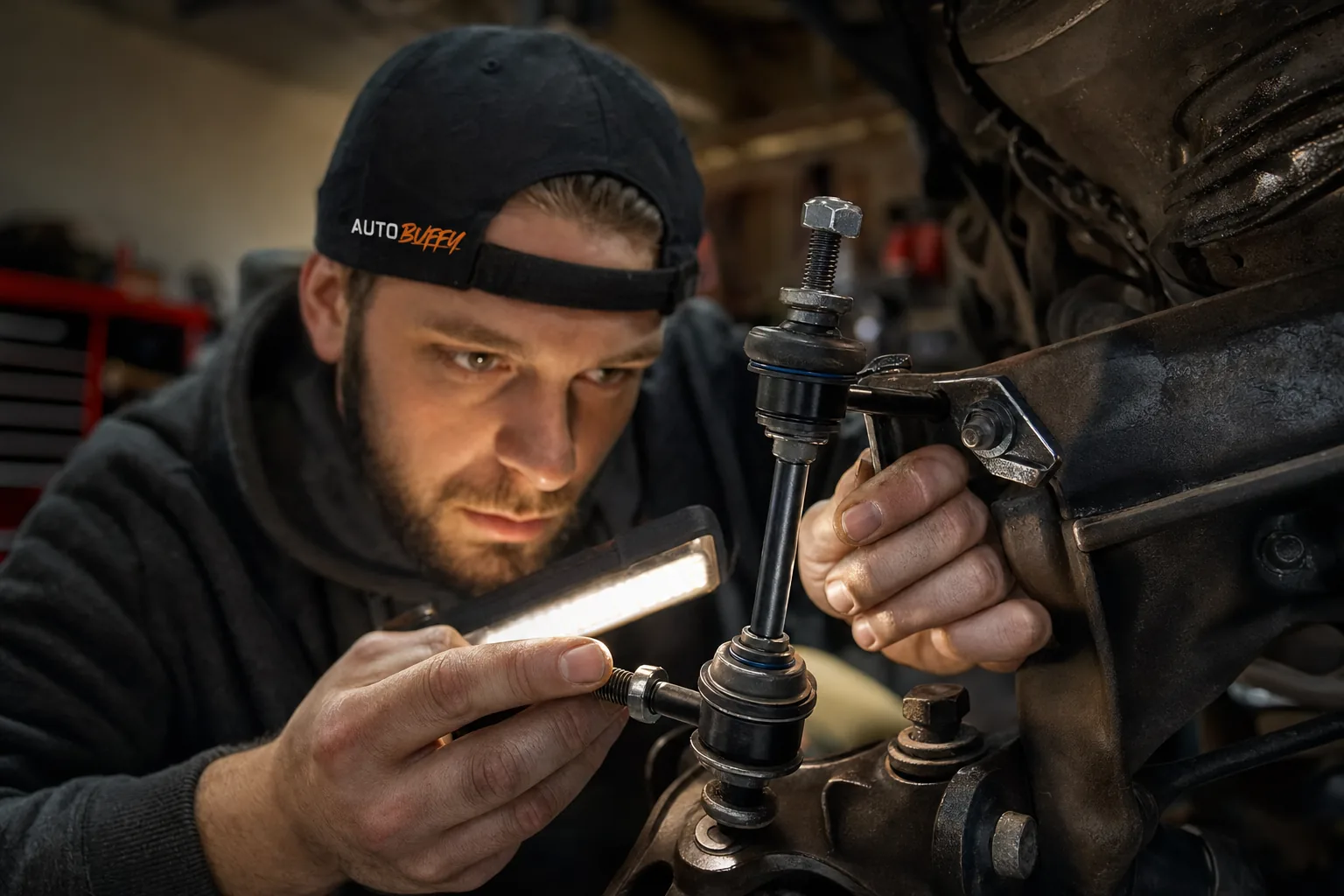
The sway bar (also called a stabilizer bar) runs side to side across the front axle. End links connect each side of that bar to the strut or control arm. They're small, they're cheap, and they take a beating on every single corner and pothole. To check them:
- Safely lift and support the front of the vehicle. 2. Grab each end link and try to move it by hand — side to side, up and down. 3. Any visible play in the ball stud, or a dry/cracked rubber boot, means the joint is worn. 4. Look for rust streaks around the ball socket — that's moisture intrusion after the boot tears. If you find play, replace both sides. They wear at roughly the same rate, and doing one side now only means coming back for the other side in a few months. MOOG — a brand under the DRiV portfolio within Tenneco — makes individual replacement links as well as bundled suspension kits that pair sway bar links with front control arms. If your bushings or ball joints are borderline anyway, a kit install makes the labor cost-efficient since you're already under the car with everything apart. ---
Ball Joints: Don't Guess on This One
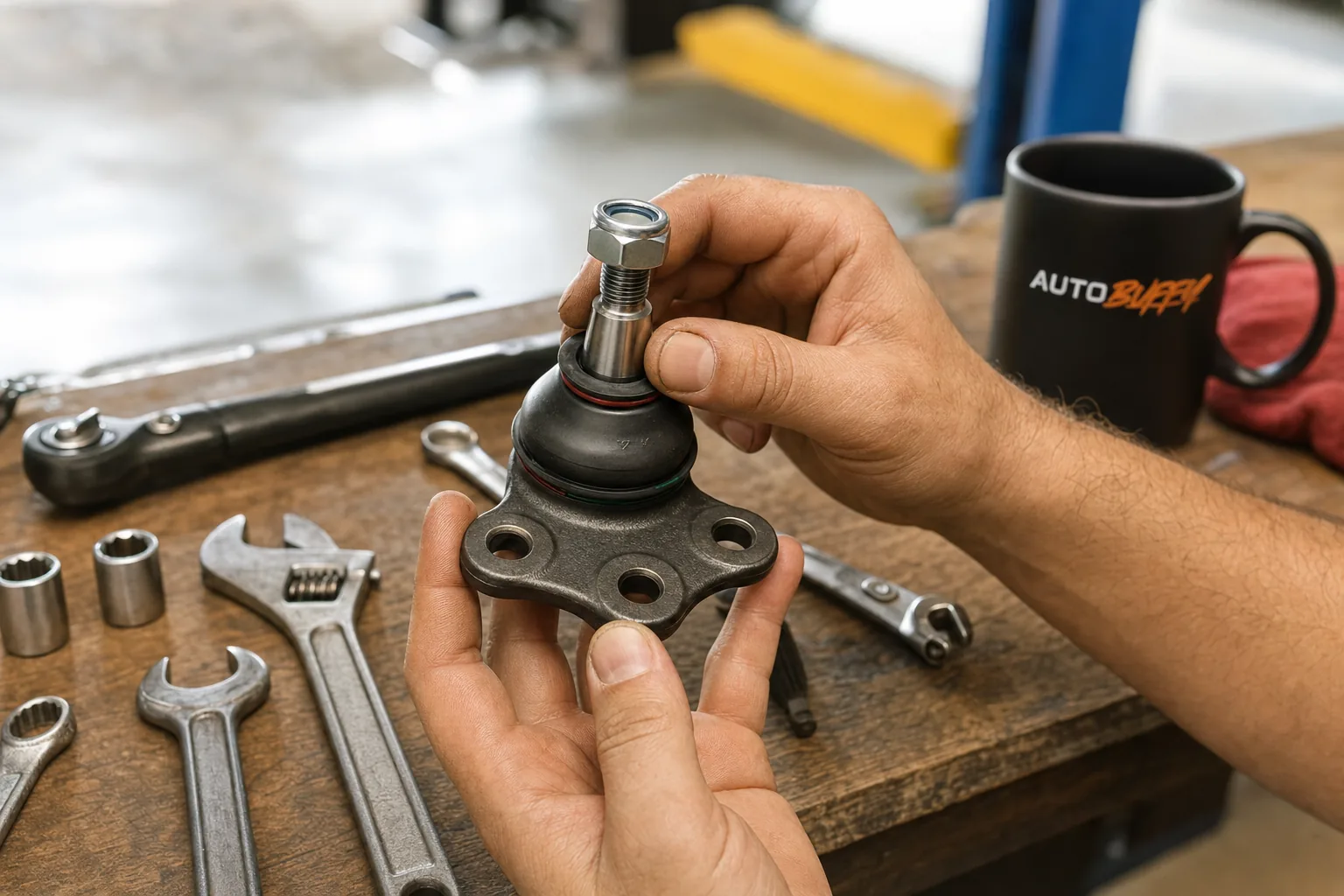
Ball joints connect the steering knuckle to the control arm and let the wheel move through its range of motion. When they wear out, you get a clunk — sometimes a groan — over bumps and through turns. Here's the thing: a failed ball joint can cause the wheel to separate from the suspension entirely, without warning. That's a catastrophic failure, not a "I'll get to it next month" situation. If you push down on the car and feel a sharp clunk from one corner, or if your tire has visible vertical play when lifted, get it inspected before driving the vehicle again. Checking ball joints properly requires lifting the wheel off the ground and watching for play with a pry bar. It's worth having a second set of eyes — or a shop — confirm the diagnosis here. ---
Control Arm Bushings: The Sneaky One
Control arm bushings are rubber (or polyurethane) sleeves that cushion the control arm's pivot point against the subframe. When they deteriorate, you get a thud or knock under hard braking and over rough pavement. They don't fail as dramatically as ball joints, but badly worn bushings change the geometry of your suspension enough to cause uneven tire wear and vague steering. If you're already replacing control arms as part of a kit, you're getting fresh bushings as part of the deal — that's a real advantage of going with a complete kit over individual parts. ---
Struts and Shocks: The Long Game
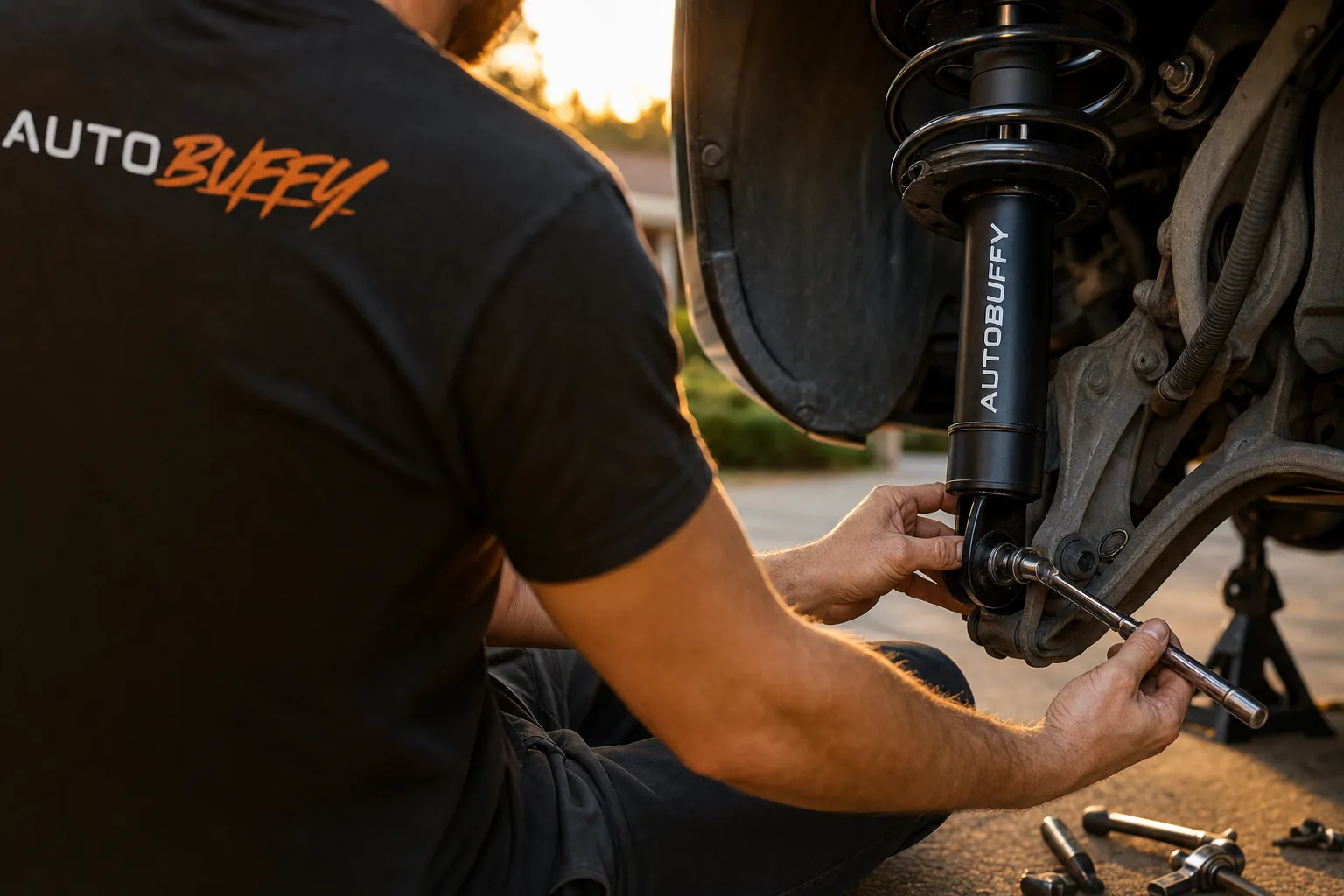
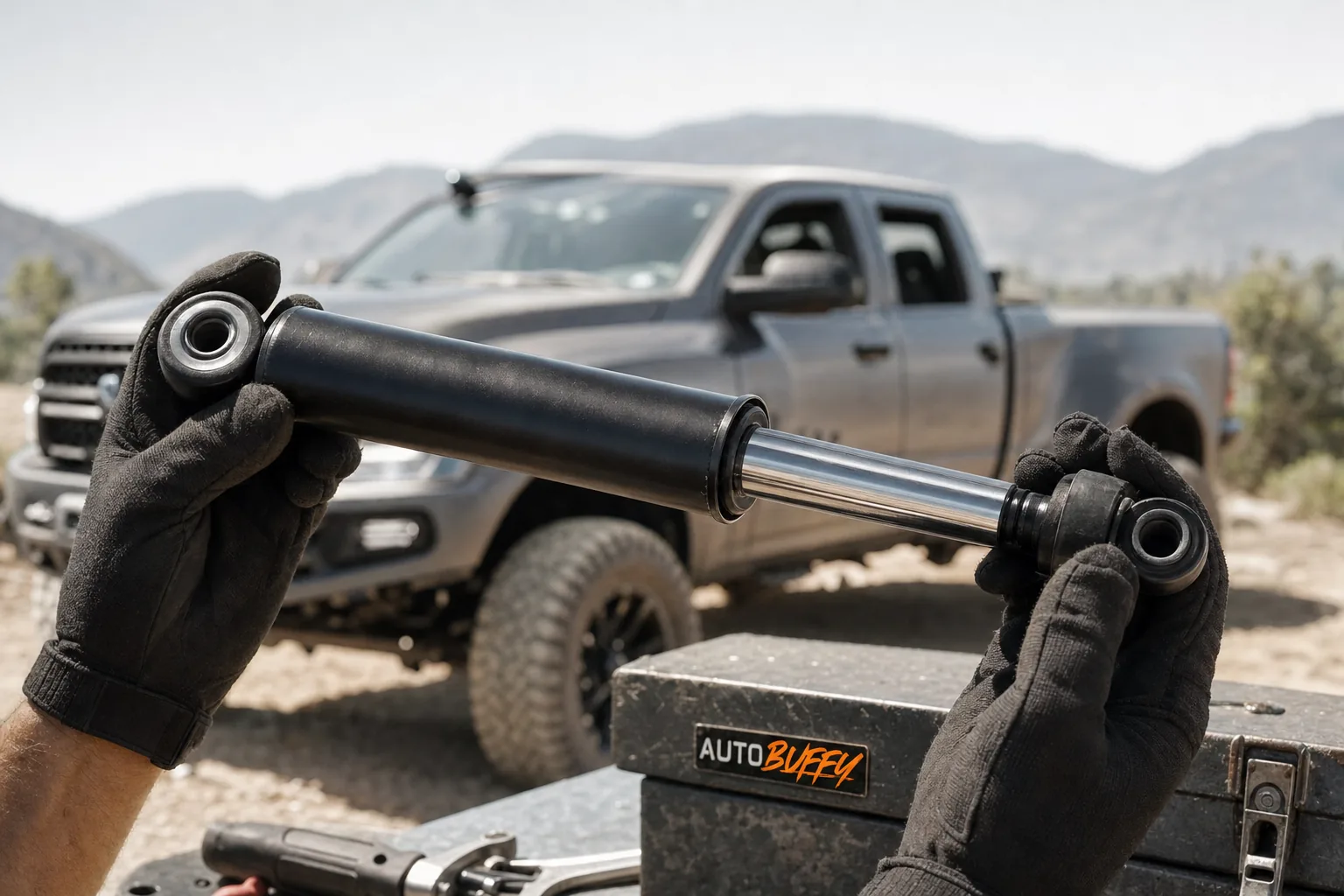
Worn struts and shocks produce a slower, more wallowing clunk rather than a sharp knock. The car feels "floaty" over bumps and takes more than one body oscillation to settle. On high-mileage vehicles, this is worth inspecting alongside the links and bushings — they often go together. ---
Brake Hardware: Frequently Overlooked
Loose caliper bolts, worn caliper slide pins, and loose brake pad retaining clips all clunk over bumps. The diagnostic clue here is that the noise appears both over bumps and when you apply the brakes. If your suspension checks out clean, don't skip the brake hardware inspection before condemning parts that aren't actually bad. ---
How to Narrow It Down in 15 Minutes
- Bounce test each corner — localize the noise to a side and axle. 2. Drive over a bump, then brake hard in a parking lot — if braking changes the noise, check brake hardware. 3. Lift the vehicle, grab each sway bar link — check for play and boot condition. 4. Check for vertical tire play — pry bar under the tire, watch the ball joint. Any movement is too much. 5. Rev the engine in neutral — if the clunk appears or changes with RPM, look at mounts and exhaust before suspension. You don't need a shop to do steps 1 through 3. A floor jack, jack stands, and ten minutes of hands-on time will rule out or confirm the most common culprit before you spend anything. ---
Buying Parts: What to Look For
For sway bar links specifically, look for:
- Pre-assembled ball studs (no separate hardware to source)
- Greaseable fittings if you want to extend service life
- OE-spec thread size and stud length — a link that doesn't fit the knuckle bracket correctly won't torque down properly
MOOG offers front sway bar link and control arm suspension kits that cover a wide range of vehicles, which is a practical option when multiple components need replacement at once. Use the part finder below to see what's available for your specific year, make, and model — fit and pricing varies by application.
Why buy from AutoBuffy
- Fitment check: add your vehicle and we confirm the part fits before you buy. If it doesn't fit because of our listing, you get a free return and a full refund, including original shipping.
- 24-month limited warranty on new parts bought on autobuffy.com.
- Real reviews: rated 4.9 by 19,069 verified customers.
- 30-day returns on unused parts in the original packaging.
- Free shipping on orders $50+. Orders placed before 12:00 PM ET (Mon-Fri) ship the same business day.
- Questions about an order? Call 888-477-2530 or email help@autobuffy.com.
Find the right part for your vehicle
Guaranteed fit, ships free
FAQ / People Also Ask
Sway bar end links are the most frequently diagnosed culprit. They typically wear out between 50,000 and 100,000 miles and produce a distinct knock or rattle over bumps and during cornering.
Comments
Loading comments...
Comments are moderated by the AutoBuffy team.