

Coolant Flush Cost: What It Is and When Your Car Really Needs One
A coolant flush typically costs $100–$200 at a shop. Here's what drives the price and when your car actually needs one.
The Short Answer
A coolant flush typically costs $100–$200 at a shop, though the real price depends on your vehicle, coolant type, and whether anything in the cooling system actually needs attention.
| Factor | Typical Range |
|---|---|
| DIY coolant flush (parts only) | $20–$50 |
| Independent shop flush | $100–$150 |
| Dealership flush | $150–$200+ |
| Flush + thermostat replacement | $200–$400 |
| Flush + new radiator (if needed) | $350–$800+ |
Most of that spread comes down to labor rates in your area and what type of coolant your car needs. Long-life OAT or HOAT coolants cost more per gallon than traditional green antifreeze. Trucks and SUVs with larger coolant capacities also push the cost up slightly.
What Is a Coolant Flush, Exactly?
A coolant flush is a full drain-and-refill of your vehicle's cooling system — not just a top-off. The tech drains out all the old coolant, typically runs a cleaning solution or distilled water through the system, then refills it with fresh antifreeze mixed to the proper concentration (usually 50/50 coolant and water).
Some shops use a machine that connects to the cooling system and forces out virtually all the old fluid, including what's trapped in the heater core and engine passages. Others do a simple gravity drain. The machine method is more thorough, but both work if done properly.
The reason you can't just top off your coolant indefinitely is chemistry. Coolant contains corrosion inhibitors that deplete over time. Once they're gone, the fluid becomes mildly acidic and starts attacking metal components from the inside out — your radiator, water pump, heater core, and engine passages are all vulnerable.
How Often Does Your Car Actually Need One?
This question trips up a lot of people because the answer genuinely depends on the coolant type in your vehicle, not just the calendar.
Traditional Green Antifreeze (IAT)
- Interval: Every 2 years or 30,000 miles
- Most older vehicles and some budget new cars still use this
- It works fine but depletes inhibitors faster than modern formulas
Orange/Red Long-Life Coolant (OAT)
- Interval: Every 5 years or 150,000 miles
- Common in GM, Toyota, and many European vehicles
- Organic acid technology holds up much longer between services
Yellow/Gold or Pink Coolant (HOAT)
- Interval: Every 5 years or 150,000 miles (some formulas vary)
- A hybrid of IAT and OAT chemistry
- Common in Chrysler, Ford, and some Asian brands
Check your owner's manual first — it'll tell you exactly what coolant spec your car needs and the recommended interval. That's not a suggestion you can skip. Using the wrong coolant type, or mixing types, can cause gel formation that clogs passages and wrecks components fast.
Warning Signs Your Cooling System Needs Attention Now
Don't wait for a scheduled interval if your car is showing any of these:
- Brown or rusty coolant in the overflow reservoir — corrosion is already happening
- Milky or foamy coolant — this often means engine oil is mixing in, which points to a head gasket or other serious issue
- Sweet smell from the heater vents — coolant is leaking somewhere into the cabin
- Temperature gauge running higher than normal — could be low coolant, a failing thermostat, or a compromised radiator
- Visible white deposits or scale around hose connections or the reservoir cap
If the coolant looks milky, don't just flush it and move on. That's a symptom, not the problem. Get a leak-down test before you spend money on a flush.
What a Flush Won't Fix
This is where shops occasionally oversell the service. A coolant flush restores fluid quality. It won't:
- Fix a radiator that's leaking, corroded internally, or has blocked tubes
- Repair a cracked hose, bad thermostat, or failing water pump
- Resolve an overheating issue caused by a clogged radiator core
About 30% of radiator replacements I've seen follow years of neglected coolant maintenance — the corrosive old fluid did its damage slowly. By the time the car starts overheating, the radiator's internal tubes are partially blocked or pitting is already through the core walls. A flush earlier in that timeline could have bought years of additional life.
If your car is overheating or losing coolant without an obvious external leak, the radiator itself deserves a close inspection before and after any flush.
DIY vs. Shop: Which Makes Sense?
If you're mechanically comfortable, a coolant flush is one of the more approachable DIY jobs. You'll need:
- The correct coolant for your vehicle (check the owner's manual — seriously)
- Distilled water for mixing
- A drain pan large enough for 1.5–2 gallons of fluid
- Basic hand tools to access the drain petcock or lower radiator hose
The main risk with DIY is improper disposal. Coolant is toxic to animals and can't go down the drain. Many auto parts stores accept used coolant for recycling at no charge.
Where a shop earns its labor cost is in catching things you might miss — a weeping hose, a corroded clamp, a radiator that's soft where it should be firm. If your car has higher mileage, having a tech look over the full cooling system while it's already drained is genuinely worthwhile.
The Radiator Connection
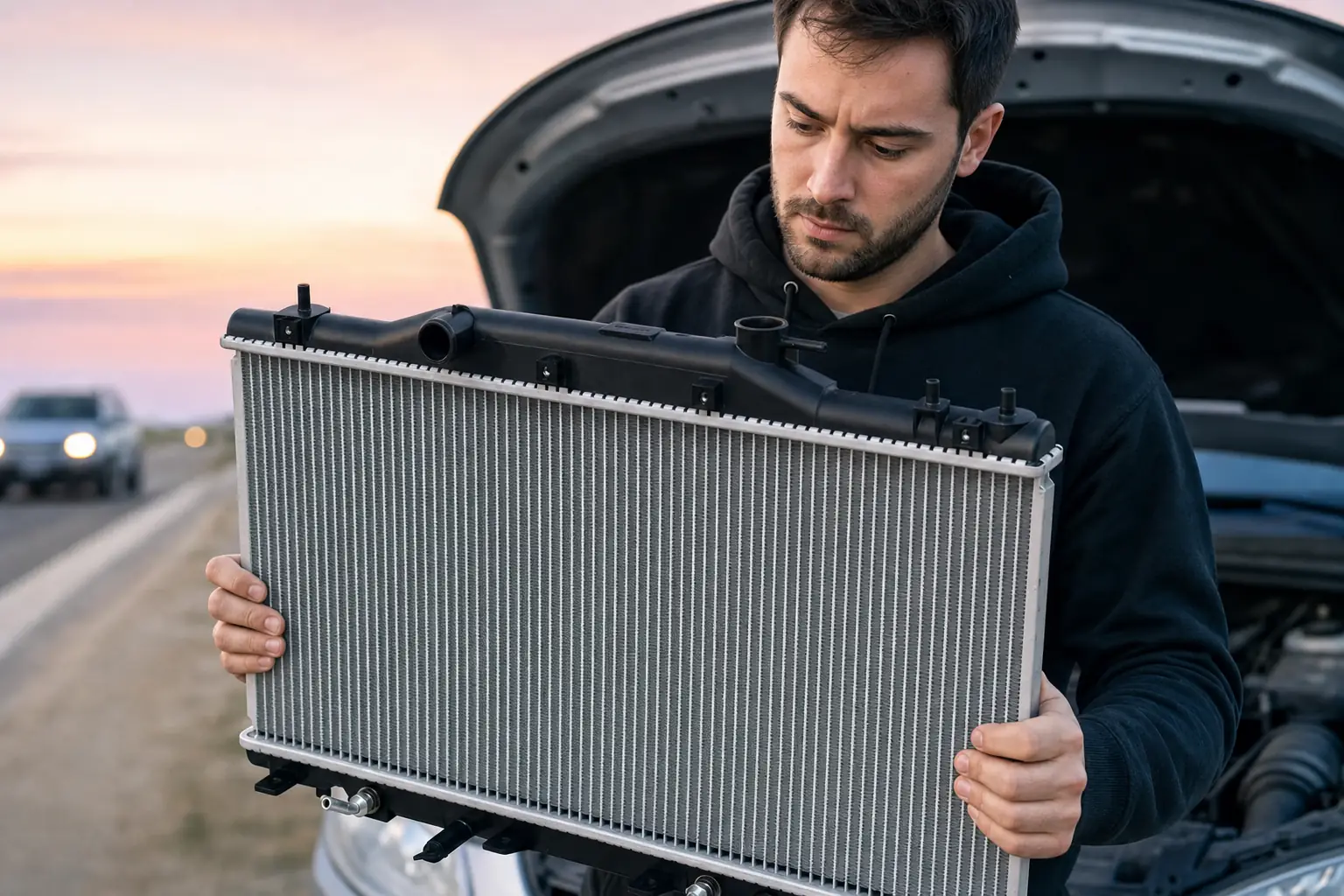
Your radiator sits at the center of this whole system. It's where coolant dumps the heat it absorbed from the engine back into the air. A radiator that's working with degraded coolant for years accumulates internal scale and corrosion deposits that reduce its efficiency — you'll notice the engine running a little warmer, especially in traffic or on hot days.
When a flush isn't enough and the radiator itself needs replacement, costs climb into the $350–$800+ range depending on the vehicle. That's not an argument to panic, but it is a solid reason to stay on top of fluid maintenance before the hardware suffers.
If you're already looking at cooling system repairs, use the part finder below to check radiator options for your exact vehicle — fit matters a lot here, and so does getting the right spec for your engine and transmission cooler configuration.
Quick Coolant Flush FAQ
Can I mix different coolant colors?
No. Different colors indicate different chemistry (IAT, OAT, HOAT). Mixing them can cause a gel-like reaction that blocks passages. Always flush completely before switching coolant types.
Does the coolant-to-water ratio matter?
Yes. A 50/50 mix is the sweet spot for most climates — it gives you freeze protection to about -34°F and boil-over protection to about 265°F. Pure coolant actually has worse freeze protection than a proper mix, so more isn't better.
Should I add a coolant flush additive?
For a system in good shape, distilled water rinse is usually enough. For a system with visible rust or scale, a dedicated flush cleaner can help loosen deposits before refilling. Follow the product instructions and rinse thoroughly before adding fresh coolant.
Find the right radiator for your vehicle
Guaranteed fit, ships free
FAQ / People Also Ask
Most drivers pay between $100 and $200 at an independent shop or dealership. The range depends on your vehicle type, the coolant used, and local labor rates. DIY flushes can be done for $20–$50 in parts if you're comfortable with the job.


Comments
Loading comments...
Comments are moderated by the AutoBuffy team.