


Death Wobble: What Causes It and How to Fix It
Death wobble is terrifying — and misunderstood. Here's what actually causes it, which parts to inspect first, and how to fix it for good.
The Short Answer
Death wobble is not a single broken part — it's a violent steering oscillation caused by accumulated wear across multiple front-end steering and suspension components, and it won't go away until every worn piece is identified and replaced.
| Quick-Reference: Death Wobble at a Glance | |
|---|---|
| Who gets it | Solid front axle vehicles (Jeep Wrangler, Jeep XJ, Ford F-250/F-350, some Ram trucks) |
| When it happens | Typically above 50 mph, often triggered by a road imperfection |
| Root cause | Cumulative play in tie rod ends, ball joints, track bar, control arm bushings, wheel bearings |
| Does a steering stabilizer fix it? | No — it masks the symptom only |
| Typical repair cost (parts + labor) | $150–$400 for individual tie rods; $1,500–$3,500+ for a full front-end rebuild |
| Most common mistake | Replacing one part and calling it done |
What Exactly Is Death Wobble? The name is dramatic, but the experience matches it. You're cruising down the highway — usually above 50 mph — you hit a small bump or an expansion joint, and suddenly the front end shakes so violently that you can barely grip the wheel. The whole truck feels like it's trying to shake itself apart. Then, as you slow down, it stops. That's death wobble. And if you've felt it once, you don't forget it. It's specifically a solid front axle problem. Vehicles with independent front suspension — your typical car or half-ton truck like the Ford F-150 — don't experience death wobble the same way. The solid axle connects both front wheels into one rigid unit. When that axle starts to oscillate, both wheels go with it, and there's no independent suspension geometry to absorb or interrupt the motion. ---
Why Solid Axle Vehicles Are Vulnerable
The solid front axle relies on a track bar (also called a Panhard bar) to locate the axle laterally. Coil spring suspension keeps it planted vertically. The steering geometry — your tie rods, drag link, and ball joints — all work together to keep the axle pointed straight and allow controlled steering input. Here's the thing: every one of those joints has a tolerance. New, they're tight. But after 70,000 miles of road vibration, off-road abuse, and thermal cycling, each joint develops a tiny amount of play. Individually, none of it causes a problem. Together, that accumulated slop gives the solid axle just enough freedom to start oscillating — and once it starts, the geometry of the solid axle actually *amplifies* the shake rather than dampening it. That's why you can replace one tie rod end and still have death wobble. The remaining worn components still provide enough combined looseness to let the axle do its thing. ---
The Parts You Need to Inspect (In Order of Likelihood)
1. Tie Rod Ends
Tie rod ends are the most common culprits and usually the most worn — they're small ball-and-socket joints at each end of the steering linkage, exposed to road debris, water, and constant load. Check for play by grabbing the rod and trying to move it. Any clunking or looseness is a fail. ### 2. Track Bar and Its Bushings
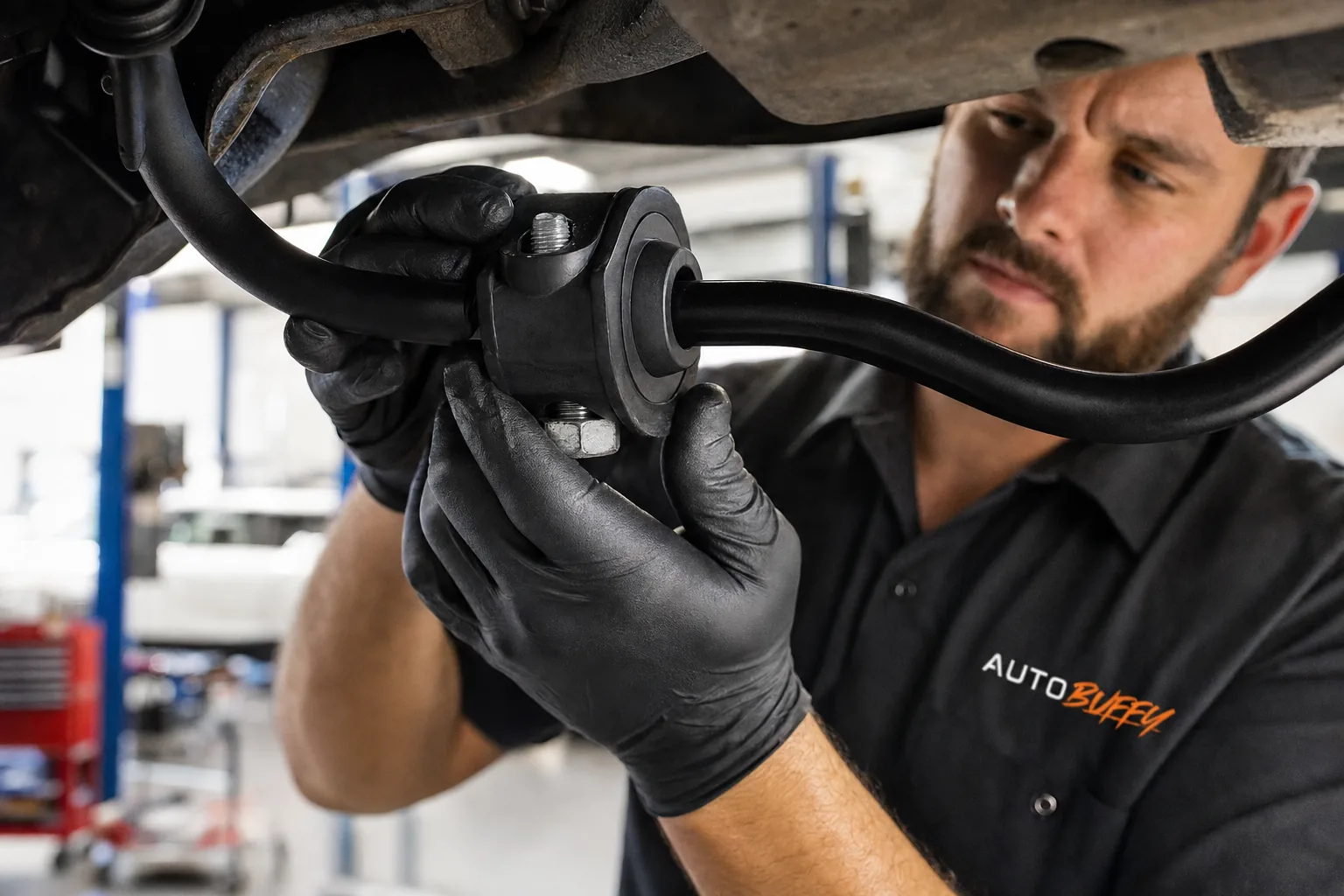
The track bar bushing is notorious for causing or contributing to death wobble. Even minor slop in this bushing allows the axle to shift laterally under load. Upgraded heavy-duty track bar ends are a popular fix on lifted Jeeps and Super Duty trucks. ### 3. Ball Joints
Upper and lower ball joints connect the axle knuckle to the control arms. Worn ball joints add play to the steering geometry and can be genuinely dangerous — a failed ball joint can cause a wheel to fold under the vehicle. Don't overlook these. ### 4. Control Arm Bushings
Control arm bushings are rubber (sometimes polyurethane on aftermarket units) and degrade with age, heat, and load. Cracked or collapsed bushings let the control arm pivot slightly in directions it shouldn't, adding to the overall slop problem. ### 5. Wheel Bearings
A loose or worn wheel bearing adds rotational play at the wheel itself. Not always the primary death wobble trigger, but it absolutely contributes — and a failing wheel bearing has its own safety implications independent of death wobble. ---
The Steering Stabilizer Myth
This one comes up constantly, so let's be direct: replacing your steering stabilizer will not fix death wobble. A steering stabilizer is essentially a shock absorber for your steering linkage. A fresh one will dampen the oscillation and might make the shaking less severe or harder to trigger — but the underlying worn components are still there, still loose, and the stabilizer is now fighting them every mile. Installing a new stabilizer and declaring the problem solved is the most common mistake owners make. Six months later, the wobble is back, sometimes worse. Fix the worn parts first. Replace the stabilizer if it's also worn, but don't treat it as the solution. ---
How to Diagnose It Properly
Safe diagnosis requires getting the front end in the air on a proper lift or quality jack stands — never crawl under a vehicle on a floor jack alone. With the vehicle lifted:
- Grab each front tire at the 9 and 3 o'clock positions and try to move it in and out. Play indicates loose tie rod ends or wheel bearings. 2. Grab each tire at the 12 and 6 o'clock positions and try to rock it. Play here points to ball joints or wheel bearings. 3. Locate the track bar and check both ends for movement while a helper turns the wheel slightly. 4. Visually inspect control arm bushings for cracking, tearing, or compression. Be honest with yourself during this inspection. "A little play" is still play, and on a solid axle, a little play from five components adds up to a lot of wobble. ---
The Ford Super Duty Situation
It's worth noting that death wobble isn't just a Jeep problem. Ford F-250 and F-350 Super Duty trucks have a well-documented history with it. In fact, a class action lawsuit covering 2005–2007 and 2017–2019 F-250 and F-350 models was sent back to district court in March 2026 after a ruling from the U.S. Court of Appeals for the Ninth Circuit. The complaint describes the issue as "a violent shaking or wobbling that occurs while driving, generally at speeds above 50 miles per hour" — which is exactly the experience owners report. The lawsuit's trajectory is still developing, but it signals how widespread and serious the issue is on the Super Duty platform. If you own one of those model years and experience death wobble, document it and consult with a qualified shop. ---
What a Real Fix Looks Like
Genuine resolution means replacing every component that shows play or wear — not just the worst offender. In practice, that usually means:
- Both outer and inner tie rod ends (replace in pairs, both sides)
- Track bar with heavy-duty ends, or at minimum new bushings
- Ball joints (upper and lower if applicable)
- Control arm bushings — a full control arm replacement kit is often more practical than pressing in new bushings alone
- Wheel bearing hub assemblies if there's any roughness or play
For comprehensive front-end jobs, MOOG offers complete control arm and tie rod end suspension kits that bundle the most commonly replaced components together — a practical approach when multiple parts need to go at once. Detroit Axle also produces outer tie rod ends for specific platforms like the Ram 1500. Use the part finder below to see what fits your exact vehicle and get current pricing. After any front-end parts replacement, get a professional alignment immediately. New components installed without alignment will wear unevenly and may not fully resolve the handling problems. ---
One Honest Opinion
In my experience, the biggest waste of money in a death wobble diagnosis is replacing parts one at a time over six months. You spend more on labor across three separate visits than you would have on a single comprehensive rebuild — and you drive an unsafe vehicle in between each attempt. If two or more front-end components show any play at all, do the full job at once. The data backs this up: most technicians who deal with chronic death wobble report that it takes an average of 2–3 repair attempts before the vehicle is actually fixed, almost always because the first repair was incomplete. ---
Why buy from AutoBuffy
- Fitment check: add your vehicle and we confirm the part fits before you buy. If it doesn't fit because of our listing, you get a free return and a full refund, including original shipping.
- 24-month limited warranty on new parts bought on autobuffy.com.
- Real reviews: rated 4.9 by 19,069 verified customers.
- 30-day returns on unused parts in the original packaging.
- Free shipping on orders $50+. Orders placed before 12:00 PM ET (Mon-Fri) ship the same business day.
- Questions about an order? Call 888-477-2530 or email help@autobuffy.com.
Find the right tie rod for your vehicle
Guaranteed fit, ships free
FAQ / People Also Ask
Death wobble is a violent, uncontrollable oscillation of the front end that typically occurs above 50 mph — often triggered by a bump or groove in the road. It's most common on vehicles with a solid front axle and coil spring suspension that uses a track bar.


Comments
Loading comments...
Comments are moderated by the AutoBuffy team.