
Dodge Charger / Chrysler 300 Rack and Pinion (2011–2023): RWD vs AWD Fitment Guide
RWD and AWD Chargers use completely different rack and pinion units — and the years don't overlap the way you'd expect. Here's the full fitment breakdown.
The Short Answer
The Dodge Charger and Chrysler 300 use at least three distinct rack and pinion assemblies across the 2011–2023 generation — and ordering the wrong one by year or drivetrain is one of the most common (and expensive) mistakes on these cars.
| Drivetrain | Model(s) | Years | Rack Type |
|---|---|---|---|
| RWD (Hydraulic) | Charger, 300 | 2011–2015 | Hydraulic power steering |
| RWD (Electric) | Charger, 300, Challenger | 2015–2023 | Electric power steering (EPS) |
| AWD | Chrysler 300 | 2011–2014 | AWD-specific hydraulic |
| AWD | Dodge Charger | 2011–2015 | AWD-specific hydraulic (different part) |
Critical fitment note: The AWD rack for the Chrysler 300 and the AWD rack for the Dodge Charger are NOT the same part, even within overlapping years. Confirm your exact model and drivetrain before you order anything. ---
Why This Fitment Is So Confusing
Dodge and Chrysler are both owned by Stellantis N.V. (NYSE: STLA), and both the Charger and 300 share the same rear-wheel-drive LX/LD platform. That shared DNA is exactly why so many people assume the parts are always interchangeable — and why they end up with the wrong rack sitting on their workbench. The reality is that steering system changes happened at different points for each model, and the AWD variants complicate things further. Let's break it down properly. ---
The Three Rack and Pinion Systems You Need to Know
1. RWD Hydraulic Rack (2011–2015 Charger and 300)
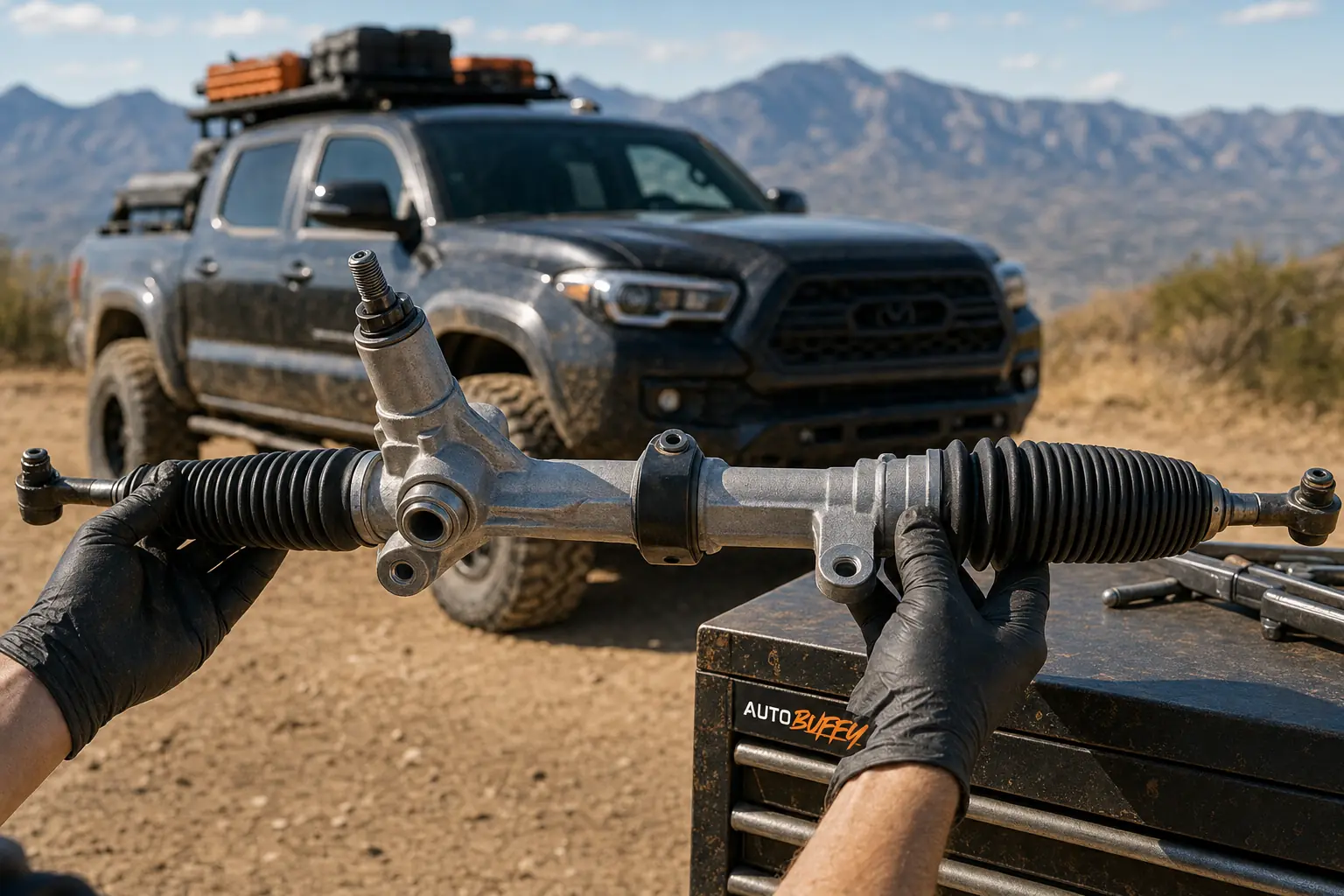
Early RWD cars in this generation relied on a conventional hydraulic power steering rack. It's a well-understood design, and failures usually announce themselves clearly: fluid leaks at the rack boots or steering shaft seals, groaning under low-speed maneuvers, and a pulling sensation on straight roads. These racks see real stress on the Charger platform, especially on higher-trim cars like the R/T and Scat Pack that get driven enthusiastically. If you're seeing inner tie rod play or a persistent fluid leak at the rack itself, the whole assembly is often the smarter repair over trying to reseal an aging unit. ### 2. RWD Electric Rack (2016–2023 Charger, 2015–2023 300 and Challenger)
Starting in 2016, RWD Chargers switched to an electric power steering rack — no pump, no fluid, no belt-driven hydraulics. The Chrysler 300 RWD made this transition a year earlier, at 2015. The Dodge Challenger RWD shares this same electric unit from 2015 onward as well. This is worth knowing because the electric rack failure mode is different. You won't see fluid leaks. Instead, you'll get a steering warning light, inconsistent assist (sometimes heavy, sometimes light with no real pattern), and occasionally a clunk when the rack's internal motor or sensor goes. Dorman produces a remanufactured electric rack assembly for these applications — worth considering if OEM pricing puts you off. ### 3. AWD-Specific Racks (and Why They're Different)
Here's where things get genuinely tricky. The Chrysler 300 AWD rack fits 2011–2014 only. The Dodge Charger AWD rack fits 2011–2015 only. These are distinct parts. They are not cross-compatible, and they are not the same as the RWD hydraulic rack from the same years. The AWD system's front differential and axle shafts change the steering geometry and packaging requirements enough that Chrysler engineered a separate rack for these configurations. If you own a 2014 Chrysler 300 AWD and you accidentally order a 2014 Charger AWD rack, it won't fit correctly. And if you order the RWD unit thinking "same year, should be fine" — it definitely won't work. ---
How to Confirm Your Fitment Before Ordering
- Check your door jamb sticker — it lists the axle/drivetrain code. 2. Use your VIN — any reputable parts retailer can decode it down to drivetrain. 3. Look at your steering pump — if you have a belt-driven pump under the hood, you have a hydraulic rack. No pump? You have an electric unit. 4. Don't trust "fits Charger 2011–2023" listings — that's a red flag. No single rack fits that full range. ---
Which Brand Should You Buy? This depends on your priorities, and there's no single answer that works for everyone. **Mopar** is the OEM route. If your car is still under any form of warranty, or if you simply want a factory-spec part with documented fitment, Mopar is the straightforward call. OEM Dodge Charger rack and pinion parts are sold under the Mopar brand, covering all Charger fitments in this generation. It's typically the most expensive option, but you're getting an exact replacement with no adaptation concerns. **Dorman** produces a remanufactured front rack and pinion assembly for the Charger/300 platform. Dorman's approach is to address known failure points in the original design — they've been doing this long enough that their reman units on this platform are a legitimate alternative. I'd put Dorman ahead of generic offshore assemblies on an electric rack specifically, because the internal motor and sensor calibration matter more on an EPS unit than on a purely mechanical hydraulic rack. **Detroit Axle** offers another aftermarket option that covers several related platforms and is worth pricing out, especially for budget-conscious repairs on older, higher-mileage cars. My honest take: on a 2016–2023 RWD Charger with the electric rack, I wouldn't go bargain-hunting on the cheapest possible unit. The EPS rack does more than just steer — it communicates with the stability control and lane-keep systems on equipped cars. A reman unit from a name brand with a real warranty is worth the extra spend. On a 2011–2015 hydraulic rack, the stakes are lower and a quality aftermarket unit is perfectly reasonable. ---
What the Replacement Job Actually Involves
Swapping the rack on a Charger or 300 is a real job — not a driveway afternoon project for most people. Plan for:
- Removing both front wheels and tie rod ends
- Disconnecting the intermediate steering shaft (on hydraulic cars, also disconnecting the pressure and return lines)
- Dropping the subframe partially on some configurations for clearance
- On electric racks: potentially needing a scan tool to recalibrate the steering angle sensor after installation
- A four-wheel alignment — non-negotiable after any rack replacement
Labor at an independent shop typically runs $200–$500 depending on region and whether any additional work (tie rod ends, alignment) is bundled in. ---
Key Takeaways
- There are at least three different rack and pinion assemblies across this generation — RWD hydraulic, RWD electric, and AWD-specific. - The AWD racks for the 300 and the Charger are separate parts with different year coverage. - The electric rack transition happened in 2015 for the 300 and 2016 for the Charger. - The Challenger shares the RWD electric rack with the Charger and 300 from 2015–2023. - Always verify drivetrain via VIN or door jamb code before ordering. - A post-installation alignment is required every time.
Why buy from AutoBuffy
- Fitment check: add your vehicle and we confirm the part fits before you buy. If it doesn't fit because of our listing, you get a free return and a full refund, including original shipping.
- 24-month limited warranty on new parts bought on autobuffy.com.
- Real reviews: rated 4.9 by 19,069 verified customers.
- 30-day returns on unused parts in the original packaging.
- Free shipping on orders $50+. Orders placed before 12:00 PM ET (Mon-Fri) ship the same business day.
- Questions about an order? Call 888-477-2530 or email help@autobuffy.com.
Find the right part for your vehicle
Guaranteed fit, ships free
FAQ / People Also Ask
No. The RWD and AWD racks are completely different parts and cannot be swapped. Always confirm your drivetrain before ordering.
Keep Reading
F-250 Super Duty Front-End Rebuild Kit Guide: Everything You Need to Know
7
Silverado / Sierra 2500HD (2001-2010) Front-End Rebuild: The Parts List a Shop Actually Needs
7
Comments
Loading comments...
Comments are moderated by the AutoBuffy team.