

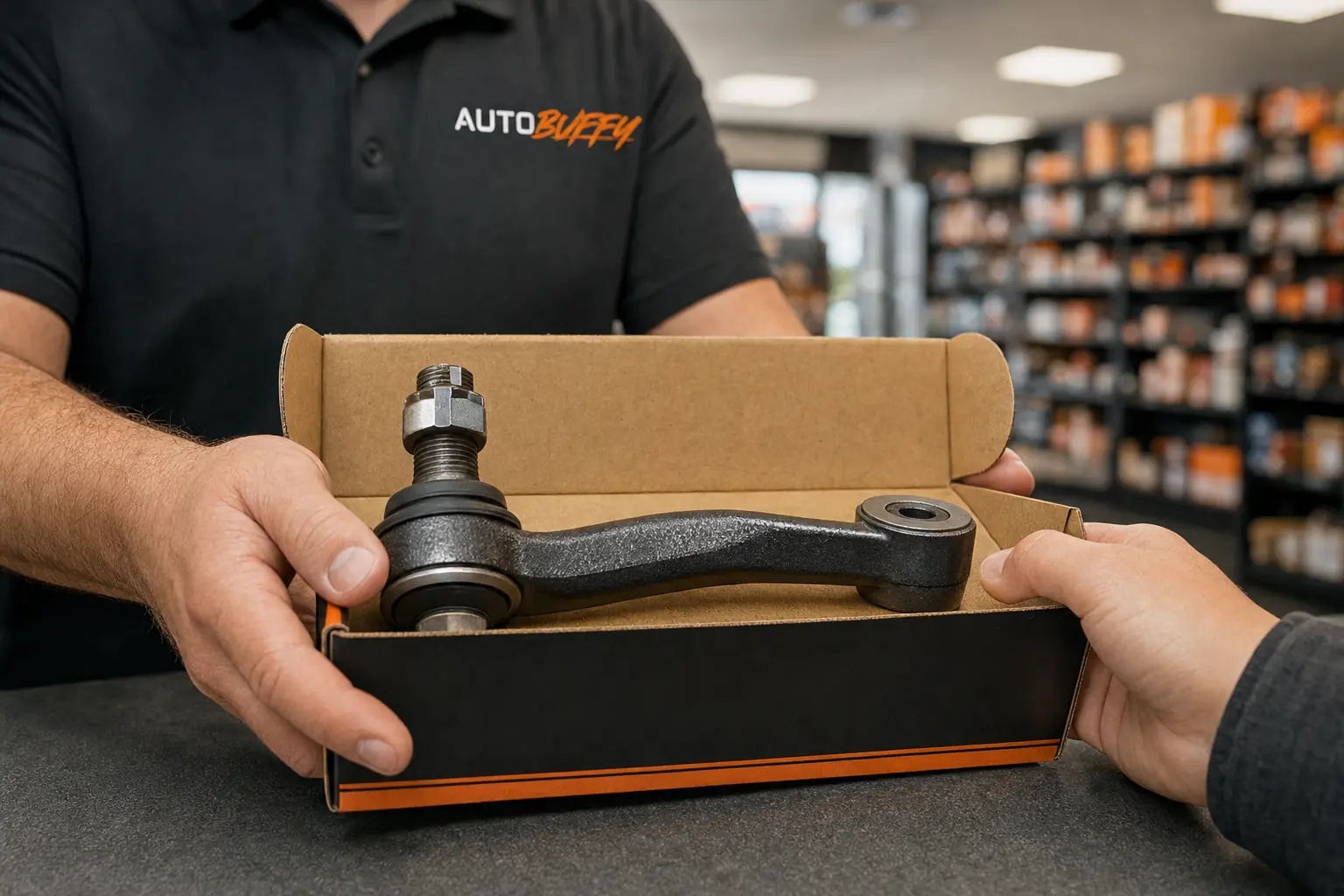
Drag Link: What It Does and When to Replace It on Super Duty, Ram and GM HD Trucks
Learn what a drag link does, how to spot a worn one, and when to replace it on Ford Super Duty, Ram HD, and GM HD trucks before it becomes a safety issue.
The Short Answer
The drag link is the steel rod that physically carries your steering input from the gearbox across the front axle to the wheels—when it wears out, steering goes vague, shimmies, or wanders, and it needs to be replaced before it becomes a safety issue.
| Symptom | Likely Cause | Urgency |
|---|---|---|
| Steering wanders or feels loose | Worn drag link ball sockets | High — fix soon |
| Shimmy or vibration at 55–70 mph | Loose drag link or tie rod | High |
| Clunk over bumps or turning | Failed drag link end | High |
| Uneven front tire wear | Toe shift from worn drag link | Medium — alignment soon |
| Steering wheel off-center | Drag link length shifted | Medium |
Typical repair cost (parts + labor + alignment): $350–$750 depending on the truck and whether you're replacing just the drag link or the full steering linkage set. ---
What Exactly Is a Drag Link? On a heavy-duty pickup—whether it's a Ford Super Duty, a Ram HD, or a GM HD like the Silverado HD or Sierra HD—the steering system doesn't work the way it does on a small car. There's no rack-and-pinion. Instead, you've got a recirculating-ball steering gearbox bolted to the frame, a pitman arm that swings off the gearbox output shaft, and then a long rod that runs across the axle to the passenger-side steering knuckle (or to the tie rod on some setups). That long rod is the drag link. Think of it as a push-pull rod. Turn the wheel left, the gearbox rotates, the pitman arm swings, the drag link pushes the passenger knuckle, the tie rod carries that motion to the driver's knuckle. It's a chain. Every link matters. The reason HD trucks use this layout is strength. A recirculating-ball gearbox and solid linkage can handle the forces of towing 20,000 lbs or running 35-inch tires in a way that a rack-and-pinion simply can't. ### How the Drag Link Connects to the Idler Arm
On many older HD truck platforms—particularly older GM trucks and some Ford applications—the steering system uses a parallelogram linkage where an idler arm mirrors the pitman arm on the passenger side of the frame. The drag link runs between the pitman arm and the idler arm, and a center link (or relay rod) spans between them, with tie rods branching out to each knuckle. This is why idler arm kits often bundle with drag links, pitman arms, and tie rods. If you're shopping for steering components, you'll almost always see them sold as a set—because worn idler arm bushings cause exactly the same loose, wandering symptoms as a worn drag link. ---
How to Tell Your Drag Link Is Worn
You don't need a lift to do a basic check. Park on a level surface, set the parking brake, and have a helper wiggle the steering wheel back and forth about an inch each direction while you watch the drag link joints. Any visible slop—movement at the joint before the knuckle moves—is wear you need to address. On-road symptoms to watch for:
- Steering wheel shimmy between 55 and 70 mph. This is the classic sign. It often feels like the front end is shaking your hands off the wheel. - "Death wobble" on lifted trucks. If you've lifted your Super Duty, Ram HD, or GM HD and get a violent oscillation after hitting a bump at speed, a worn drag link (or tie rod) is almost always part of the cause. - Vague, disconnected steering feel. Like the truck takes a half-second to respond to your inputs. - Wandering on the highway. You're constantly making small corrections to hold a lane. - Clunking over railroad tracks or parking lot dips. That's a worn ball socket knocking at its limit. If you're experiencing two or more of these symptoms together, don't wait. This is steering—it's directly tied to vehicle control. ---
Ford Super Duty Drag Link Specifics (F-250, F-350, F-450)
Ford's Super Duty line—introduced in 1999 and covering the F-250 through F-450—uses a solid front axle with a traditional drag link and tie rod arrangement. The drag link runs from the pitman arm on the driver's side to the passenger-side tie rod end or knuckle depending on the year and configuration. Heavy towing cycles, aggressive front-axle loads, and the sheer weight of these trucks accelerate wear on the drag link ball sockets. If your Super Duty is past 80,000 miles and you tow regularly, it's worth inspecting the drag link even if you haven't noticed symptoms yet. Ford Super Duty steering component kits—including drag links, tie rods, and associated hardware—are available from MOOG and Mevotech with coverage across the Super Duty generations. ---
Ram HD Drag Link Specifics (2500 and 3500)
Ram operates as a standalone brand within Stellantis's North American division. The Ram 2500 and 3500 (Ram was separated from Dodge in 2009) share the same basic solid front-axle steering architecture as the Super Duty. The drag link is a common wear item, especially on trucks that have been lifted or run heavier tires. One thing worth noting on Ram HDs: the steering dampener (a small shock absorber mounted inline with the drag link) can mask drag link wear by absorbing some of the slop. Don't let a functional dampener fool you into skipping a drag link inspection. MOOG and Mevotech both offer pitman arm and idler arm kits that cover Ram HD applications—check the part finder for your specific year and configuration. ---
GM HD Drag Link and Idler Arm Specifics (Silverado HD / Sierra HD)
General Motors produces both the Chevrolet Silverado HD and GMC Sierra HD—GMC is a division of GM positioned as a premium truck brand above the mainstream Chevrolet line. Older GM HD platforms (pre-2011) used a classic parallelogram steering setup with a pitman arm, idler arm, center link, and tie rods. The idler arm on these trucks is a known wear point, and its failure produces nearly identical symptoms to drag link wear. On these trucks, replacing just the idler arm without inspecting the center link, pitman arm, and tie rods is a waste of a shop visit. Do the whole system at once. For GM HD applications, you have three solid options in the inventory:
- GM Genuine Parts idler arms give you OEM-spec fit and are the right choice when you want to match original engineering exactly. - MOOG steering kits offer broad coverage and are well-regarded for longevity—their full pitman and idler arm kits cover multiple GM HD platforms. - Mevotech kits, including the Supreme line, bundle control arms and sway bar links alongside the steering components, which makes sense if you're doing a more thorough front-end refresh. - Detroit Axle offers gearbox and idler arm kits (including coverage for older Chevy Express platforms) at a lower price point when budget is a priority. > *My honest take: On a high-mileage GM HD that's been used for real work, springing for a MOOG or Mevotech Supreme kit that covers pitman arm, idler arm, and tie rods in one shot saves more money long-term than buying individual pieces twice. The labor to go back in isn't worth the initial savings.*
Replacement: What to Expect
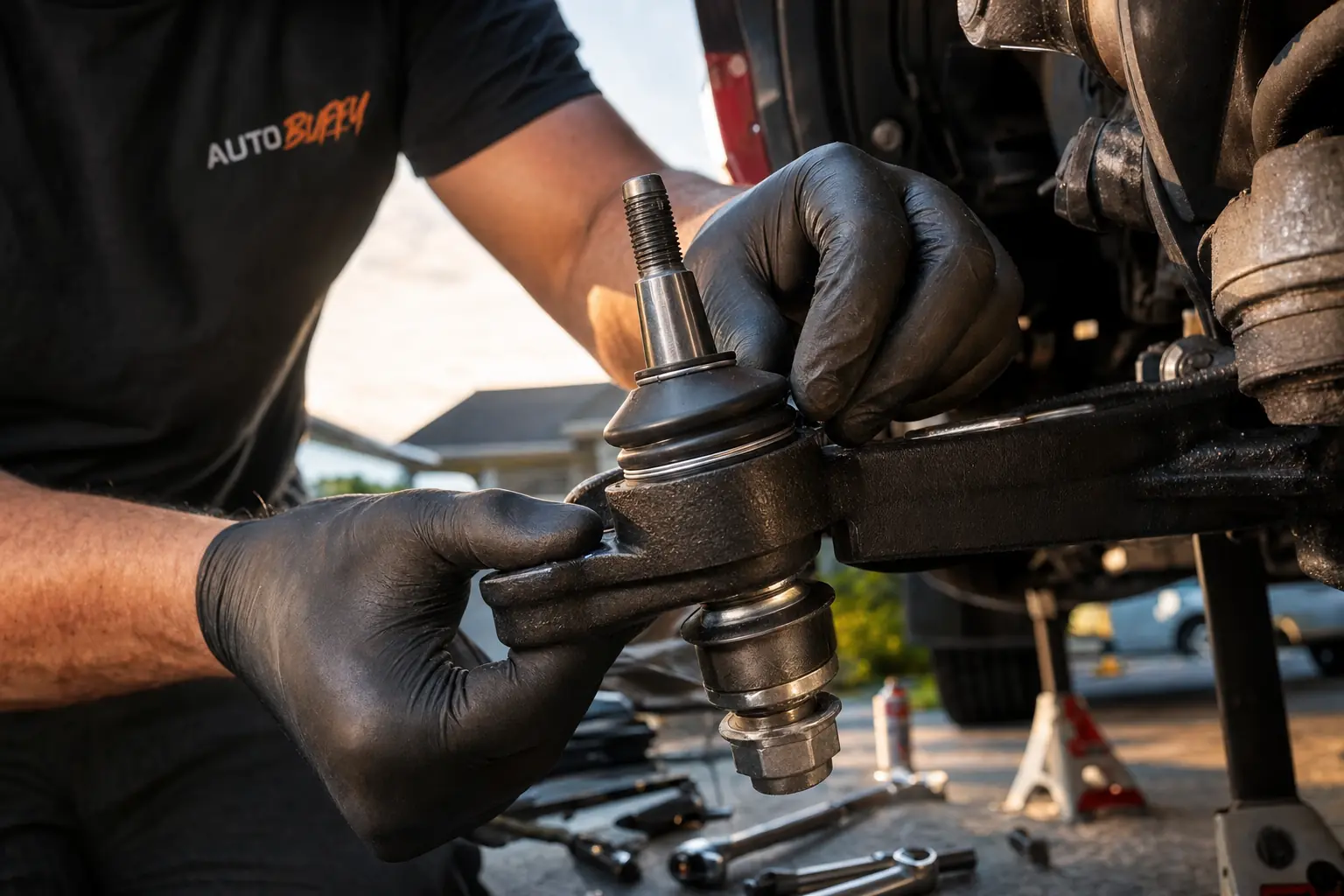
Tools You'll Need
- Floor jack and jack stands (always use stands—never work under a vehicle on a jack alone)
- Pickle fork or ball joint separator
- Torque wrench
- Basic hand tools
The Key Step Most DIYers Miss
Before you remove the old drag link, count the number of turns it takes to unthread the adjusting sleeve at each end. Write it down. Threading the new drag link to the same count gets your toe setting close enough that the alignment shop can finish the job without major surprises—and it keeps you from driving to the shop with the toe wildly out of spec. ### Always Get an Alignment After
This isn't optional. The drag link directly controls toe, and worn components almost certainly let it drift over time. A fresh alignment after replacing steering linkage is the only way to confirm the repair is complete. Budget $100–$175 for a front-end alignment, or $150–$200 for a full four-wheel alignment if your truck is equipped for it. ---
Choosing the Right Parts: Brand Breakdown
| Brand | Best For | Notes |
|---|---|---|
| MOOG | Most HD truck applications | Broad fitment, strong reputation for longevity |
| Mevotech Supreme | Full front-end refresh kits | Includes control arms and sway bar links in some kits |
| Mevotech Original Grade | Budget-conscious full kit | Larger component sets at lower price |
| GM Genuine Parts | GM HD trucks | OEM-spec fit, direct replacement |
| Detroit Axle | Older GM platforms, budget kits | Multi-component bundles at lower cost |
Use the part finder below to confirm fitment for your specific year, make, and model—and to see today's pricing on the exact kit that covers your truck.
Why buy from AutoBuffy
- Fitment check: add your vehicle and we confirm the part fits before you buy. If it doesn't fit because of our listing, you get a free return and a full refund, including original shipping.
- 24-month limited warranty on new parts bought on autobuffy.com.
- Real reviews: rated 4.9 by 19,069 verified customers.
- 30-day returns on unused parts in the original packaging.
- Free shipping on orders $50+. Orders placed before 12:00 PM ET (Mon-Fri) ship the same business day.
- Questions about an order? Call 888-477-2530 or email help@autobuffy.com.
- Shop or fleet? Call 301-463-4380 for shop pricing.
Find the right steering components for your vehicle
Guaranteed fit, ships free
FAQ / People Also Ask
A drag link connects the pitman arm (attached to the steering gearbox) to the steering knuckle or tie rod on the passenger side. When you turn the steering wheel, the gearbox rotates the pitman arm, and the drag link physically carries that motion across the front axle to steer the wheels.

Comments
Loading comments...
Comments are moderated by the AutoBuffy team.