
Ford F-150 Ball Joints (1980–1996 4x4 TTB and 1997+): Which Set Fits Yours
F-150 ball joints aren't one-size-fits-all. Here's exactly which set you need for the TTB Dana 44 era vs. the later solid-axle and IFS trucks.
The Short Answer
The Ford F-150 has used at least two fundamentally different front suspension designs across its generations — and the ball joints for a 1980–1996 4x4 TTB truck are completely different from what a later or 2WD F-150 needs.
| Generation | Front Suspension Type | Ball Joint Style | 2WD vs. 4WD Same? |
|---|---|---|---|
| 1980–1996 4x4 | TTB / Dana 44 IFS | Press-in upper + lower | No — different parts |
| 1980–1996 2WD | Twin I-Beam | Press-in upper + lower | No — different parts |
| 1987–1997 (all) | Varies by config | Press-in style | No — must specify |
| 1997+ | Short-Long Arm (SLA) IFS | Press-in or bolt-in varies | No — must specify |
Getting the wrong joint is frustratingly easy on these trucks. The year alone isn't enough — you need the year, the drivetrain (2WD or 4WD), and sometimes the axle code. Let's break it down properly. ---
Understanding the 1980–1996 F-150 4x4: The TTB Dana 44 System
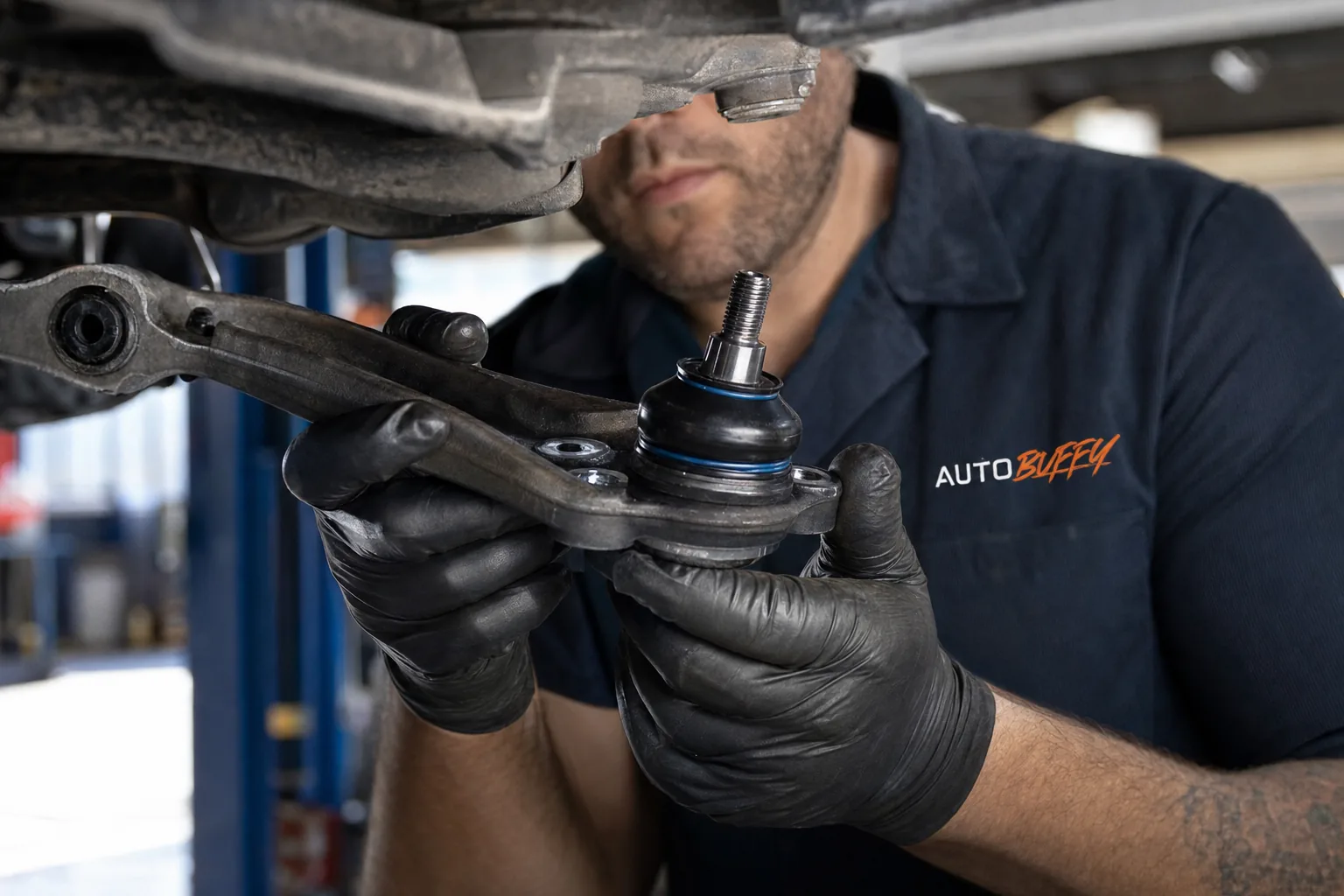
The older generation F-150 four-wheel-drive trucks used Ford's Twin-Traction Beam (TTB) front axle. Unlike a traditional solid front axle, the TTB is actually an independent front suspension design built around a Dana 44 front drive axle. Each wheel pivots on its own beam, and the ball joints — upper and lower — are what allow that articulation. A complete ball joint service on a 1980–1996 F-150 4x4 requires four joints total: two uppers and two lowers, covering both the driver and passenger sides. These are press-in style joints, meaning you need a ball joint press to get the old ones out and the new ones in. Don't try to improvise with a hammer and a socket — you'll damage the seat and be back at the parts store before sundown. ### Why the TTB Ball Joints Are a Specialty Item
The Dana 44 IFS setup on these trucks has a reputation for being hard on ball joints. The geometry puts a fair amount of load through those joints, especially if the truck's been used for actual work — towing, off-road, or loaded beds. Inspecting them is straightforward: grab the tire at 12 and 6 o'clock and try to rock it. Any clunk or visible movement at the joint itself means it's time. One thing worth knowing: replacement ball joints for these TTB trucks are specific to the Dana 44 IFS application. They're not interchangeable with the solid-axle parts some people assume these trucks used. If a supplier doesn't list "Dana 44 IFS" or "TTB" compatibility explicitly, verify before you buy. ### 2WD Trucks Are a Different Story
The 1980–1996 F-150 2WD used a Twin I-Beam suspension — similar name, different animal. Those trucks also use upper and lower ball joints, but the parts don't cross over with the 4WD TTB application. This is the single most common mix-up on this generation. Always specify 2WD or 4WD when ordering. Always. ---
The 1987–1997 F-150: Press-In Joints Across the Board
The 1987–1997 F-150 — which overlaps with the TTB era and extends into the early OBS body style — uses press-in style upper and lower ball joints on both drivetrains. The press-in design means a proper shop press is required for installation. It's a job most experienced DIYers can handle with a rented press, but it's not a weekend afternoon job if you've never done it before. If your joints are original and the truck has significant miles on it, seriously consider a control arm and ball joint kit rather than just the joints themselves. The arm bushings wear out on these trucks too, and replacing just the joints while leaving worn bushings behind is leaving money on the table. Kits that come with the control arm pre-assembled with the joint already pressed in save you labor at the press and give you fresh bushings at the same time. ---
1997 and Newer F-150: Short-Long Arm IFS
Starting with the 1997 model year, Ford moved the F-150 to a short-long arm (SLA) independent front suspension design. It's a more modern setup, and ball joint service on these trucks is more familiar to most shops. You still need to specify 2WD or 4WD — the parts are different — and you still want to replace in axle sets rather than one corner at a time. On higher-mileage examples of this generation, the same logic applies: if the control arm bushings are shot, a control arm + ball joint kit is often more cost-effective than pressing new joints into tired arms. ---
Which Brand Should You Buy? **MOOG** is a widely trusted name in the suspension aftermarket and has deep coverage across the F-150 lineup. The automotive MOOG suspension brand operates under Federal-Mogul Motorparts, which became part of Tenneco following Tenneco's acquisition of Federal-Mogul in October 2018. Their F-150 catalog includes both ball joint-only kits and full control arm + ball joint kits in configurations ranging from 6-piece to 12-piece sets, depending on how much of the front suspension you're refreshing. In my experience, buying a full control arm + ball joint kit on any truck with more than 120,000 miles is almost always the right call. Pressing new joints into worn arms is doing half a job. The kits cost more upfront, but you're not pulling the front suspension apart twice. For trucks with newer arms that are genuinely in good shape, a ball joint-only kit is perfectly appropriate and saves money without cutting corners. ---
What Does a Ball Joint Replacement Actually Cost? Parts costs vary by kit configuration and whether you're buying joints-only or a full control arm package:
- Ball joints only (full set, 4x4): typically $80–$250 in parts
- Control arm + ball joint kits: typically $300–$600+ depending on how many pieces are included
- Shop labor to press joints: roughly $150–$400, depending on your region and how seized the old joints are
If a shop quotes you significantly outside those ranges, get a second opinion. Labor time on these is well-documented, and a reasonable shop shouldn't be padding hours on a straightforward press job. ---
Signs Your F-150 Ball Joints Need Replacing
- Clunking or knocking noise over bumps or when turning
- Steering that wanders or feels vague at highway speed (especially noticeable on TTB trucks)
- Uneven front tire wear — particularly feathering on the inner or outer edge
- Visible play when you grab the tire at 12 and 6 o'clock and push/pull
- Front end that pulls to one side under braking
Any one of these symptoms warrants an inspection. Two or more and you're probably already overdue. ---
Don't Skip the Alignment
After any ball joint replacement, an alignment is mandatory. It's not optional and it's not something you can put off. Ball joints are part of the geometry that sets your caster, camber, and toe. Change them and the geometry changes with them — even if only slightly. Skip the alignment and you'll be buying tires sooner than you should. > Budget $80–$150 for a front alignment when you're pricing out the full job. It's the cheapest part of the repair and the one people most often try to skip. ---
How to Order the Right F-150 Ball Joints
You need at minimum:
- Exact model year
- 2WD or 4WD (this changes the part — every time, no exceptions)
- Engine size (some kits vary by engine due to packaging differences)
For TTB-era trucks, also confirm whether your front axle is the Dana 44 IFS — that spec matters for the 4x4 application. Use the part finder below to match your exact truck and see what's available today.
Why buy from AutoBuffy
- Fitment check: add your vehicle and we confirm the part fits before you buy. If it doesn't fit because of our listing, you get a free return and a full refund, including original shipping.
- 24-month limited warranty on new parts bought on autobuffy.com.
- Real reviews: rated 4.9 by 19,069 verified customers.
- 30-day returns on unused parts in the original packaging.
- Free shipping on orders $50+. Orders placed before 12:00 PM ET (Mon-Fri) ship the same business day.
- Questions about an order? Call 888-477-2530 or email help@autobuffy.com.
Find the right ball joints for your F-150
Guaranteed fit, ships free
FAQ / People Also Ask
The 1980–1996 F-150 4x4 uses a Twin-Traction Beam (TTB) front axle built around a Dana 44 Independent Front Suspension setup. A complete kit for both sides includes two front upper and two front lower ball joints — four pieces total. These are press-in style joints and are specific to the 4x4 application; 2WD trucks use different parts.


Comments
Loading comments...
Comments are moderated by the AutoBuffy team.