


Ford F-250 / F-350 Death Wobble Fix: The Shop Checklist
Death wobble on your Super Duty? Here's the mechanic's checklist — from track bar to ball joints — to find and fix it for good.
The Short Answer
Death wobble on the Ford F-250 and F-350 is almost always caused by worn or loose suspension components — most often the track bar, ball joints, or steering stabilizer — and fixing it requires a systematic inspection, not just swapping one part.
| Component | Likelihood of Causing DW | Typical Part Cost (Range) | DIY Difficulty |
|---|---|---|---|
| Track bar / bushings | Very High | $150–$400 | Easy–Moderate |
| Ball joints | High | $80–$300 per side | Moderate–Hard |
| Steering stabilizer | High (lifted trucks especially) | $50–$200 | Easy |
| Tie rod ends | Moderate | $60–$180 per end | Moderate |
| Damper bracket | Moderate | $30–$100 | Easy |
| Wheel balance / tires | Lower (but quick to rule out) | $20–$80 | Easy |
What Actually Happens During Death Wobble
If you've felt it, you don't forget it. You hit a bump or a dip at highway speed — usually over 45 mph — and suddenly the whole front end starts shaking violently. The steering wheel wrenches in your hands. The truck feels like it's about to come apart. Slowing down eventually kills it, but the next bump can bring it right back. The F-250 and F-350 run a solid front axle. That design is tough and capable, but it also means that any play — in any single component — can resonate through the entire axle. Small amounts of wear that wouldn't matter on an independent suspension setup can be enough to start the oscillation on a solid-axle truck. This isn't a new problem, and it's not a fixed one either. Ford documented affected vehicles as recently as the 2023–2026 model years, so even relatively new Super Dutys can be on the list. ---
Is There a Recall? What Ford Has (and Hasn't) Done
There is no official Ford recall for death wobble. Ford has not issued one despite a significant volume of consumer complaints. What they did issue is Customer Satisfaction Program 20N04 — a program covering a redesigned steering linkage damper for vehicles exhibiting sustained steering oscillation at speeds typically above 45 mph. The program applies for 10 years or 150,000 miles from the original warranty start date. If your truck is still within that window, call your Ford dealer before spending money on parts. You may qualify for a repair at no cost. > Pro tip: Even if you don't qualify for 20N04, ask the dealer to document your complaint in their system. It creates a paper trail if the situation escalates. ---
The Suspension Inspection Checklist
Work through this list in order. The goal is to find the actual worn component, not just throw parts at the problem. Death wobble is almost always a combination of factors, and fixing just one might reduce it without eliminating it entirely. ### 1. Track Bar and Bushings (Start Here)
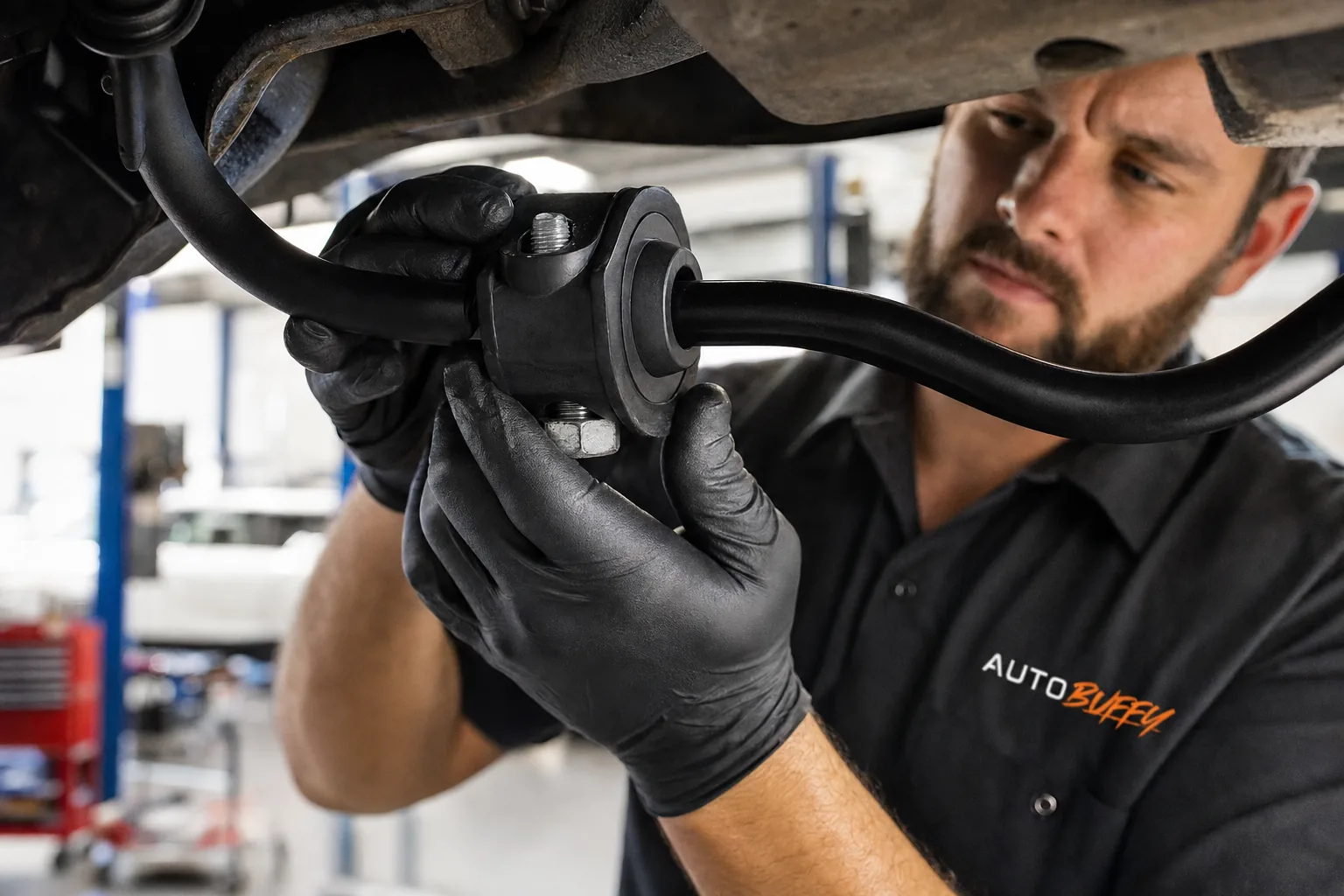
This is your first stop. The track bar controls lateral movement of the solid front axle — when its bushings or end joints wear out, the axle can shift sideways under load and start the wobble chain reaction. How to check it:
- Park on level ground. Don't lift the truck yet. - Have a helper grab the front tire at the 3 and 9 o'clock positions and push/pull laterally. - Watch the track bar at both the axle-side and frame-side mounts. - Any visible movement at the bushing, or slop at the mounting bolt, means it needs attention. Replacement track bars are available from brands like Dorman, MOOG (which offers combination kits pairing a track bar with a drag link), and Detroit Axle. Use the part finder below to match your year, trim, and lift height — a lifted truck often needs a different length bar than stock. ### 2. Ball Joints
Worn ball joints are a major death wobble contributor. The solid front axle relies on them for controlled movement, and once they develop play, the whole axle starts hunting for a stable position — which it won't find at speed. How to check:
- Lift the front of the truck with the wheel hanging free. - Grab the tire at the 12 and 6 o'clock positions and push/pull vertically. - Compare the feel to spec — any noticeable clunk or movement beyond a few thousandths of an inch is a fail. Ball joint replacement typically requires a press and is best left to a shop if you don't have one. Don't skip this step just because it's harder. ### 3. Steering Stabilizer
On lifted Super Duty builds specifically, the OEM steering stabilizer is one of the most frequently cited causes of death wobble. The stock unit isn't built for the added stress and altered geometry that a lift creates. Even on stock-height trucks, a worn stabilizer can let the wobble start rather than damping it out. Replacing it is one of the easier jobs on this list — it's a bolt-on swap in most cases. A new stabilizer alone won't fix death wobble if there's underlying joint wear, but it absolutely belongs in the repair sequence. ### 4. Tie Rod Ends and Drag Link
Any looseness in the tie rods or drag link gets amplified through the solid axle. Check the tie rod ends by grabbing each one and trying to move it by hand — there should be zero perceptible play. A MOOG drag link and track bar kit can address both components in one purchase if both need replacing. ### 5. Damper Bracket
Ford's Customer Satisfaction Program 20N04 specifically addresses the damper bracket and steering linkage damper. If the bracket is cracked, bent, or poorly torqued, even a brand-new stabilizer won't stay effective. Inspect it visually and check that all mounting bolts are tight and torqued to spec. ### 6. Tire Balance and Condition
Rule this out quickly — it's cheap and easy. An out-of-balance tire can amplify any existing suspension slop into a full wobble event. Before replacing anything, get a fresh balance and look for uneven wear patterns that might indicate an alignment or camber issue. ---
After the Repair: Alignment Matters
Any time you replace a track bar, tie rod, or drag link, get a front-end alignment immediately after. Changed component geometry will throw your alignment off, and driving out of spec will wear your new parts faster — and can contribute to steering instability all over again. ---
Honest Verdict on Parts
You don't need to buy the most expensive option to solve death wobble. A quality track bar from Dorman or a MOOG combo kit covers most needs for a stock or mildly modified truck. If you're running significant lift and want the geometry correction built in, look for an adjustable or extended bar rated for your lift height. Use the part finder below to narrow down what fits your specific truck — the year, engine, axle ratio, and lift all matter here.
Why buy from AutoBuffy
- Fitment check: add your vehicle and we confirm the part fits before you buy. If it doesn't fit because of our listing, you get a free return and a full refund, including original shipping.
- 24-month limited warranty on new parts bought on autobuffy.com.
- Real reviews: rated 4.9 by 19,069 verified customers.
- 30-day returns on unused parts in the original packaging.
- Free shipping on orders $50+. Orders placed before 12:00 PM ET (Mon-Fri) ship the same business day.
- Questions about an order? Call 888-477-2530 or email help@autobuffy.com.
- Shop or fleet? Call 301-463-4380 for shop pricing.
Find the right track bar for your F-250 or F-350
Guaranteed fit, ships free
FAQ / People Also Ask
Death wobble is caused by cumulative play in the solid front axle suspension system. The most common culprits are a worn track bar or track bar bushing, loose ball joints, a failed steering stabilizer, worn tie rod ends, or a damaged damper bracket. Any one of these — or a combination — can trigger the oscillation once you hit a bump or dip above about 45 mph.


Comments
Loading comments...
Comments are moderated by the AutoBuffy team.