

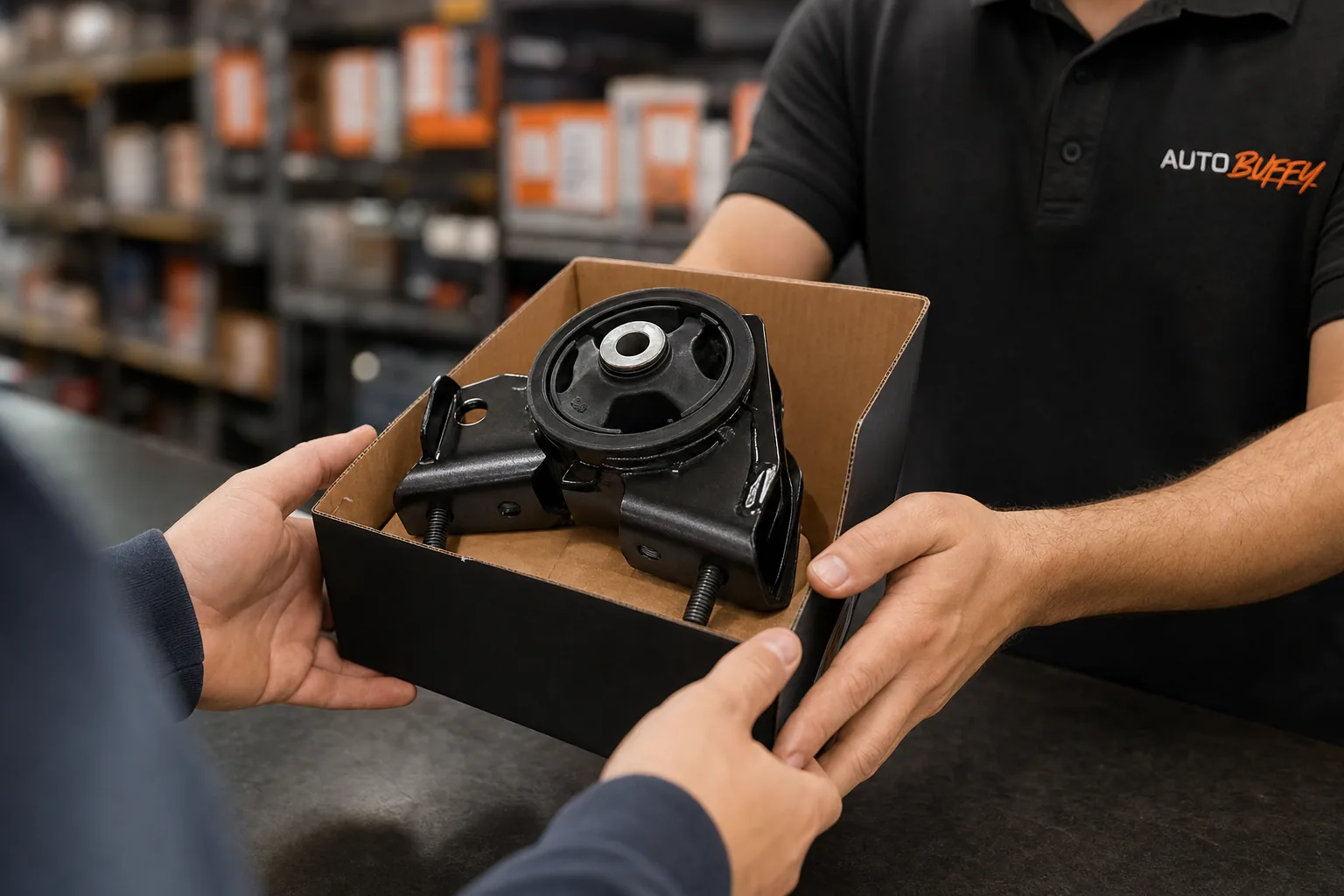
Ford Explorer Motor Mount Symptoms and Replacement Cost
Ford Explorer motor mount symptoms, how many mounts your generation has, which years fail most, and what a complete replacement kit costs.
The Short Answer
A worn Ford Explorer motor mount most commonly reveals itself as a thudding noise when shifting gears, cabin vibration at idle, or a sharp knock under EcoBoost acceleration — and a complete replacement kit typically runs $290–$400 in parts alone.
| Symptom | Likely Cause | Urgency |
|---|---|---|
| Thud felt through the floor when shifting D/R | Failed front or rear mount | High |
| Steering column buzz at idle | Worn rubber insert, vibration bypassing mount | Medium |
| Sharp firewall knock under hard acceleration | Torque strut mount collapsed | High |
| Engine rocks visibly when drivetrain is loaded | Multiple mounts failing | High |
| Coolant or charge-air hoses pulling tight | Severe mount failure, engine shifting position | Fix immediately |
Ford Explorer mount layout: what's actually under the hood
Westar makes five distinct mount types for the Explorer — each with a different job and a different failure signature. Here's how they map to this specific vehicle:
| Mount Type | Where It Sits on the Explorer | What It Does | How It Usually Fails |
|---|---|---|---|
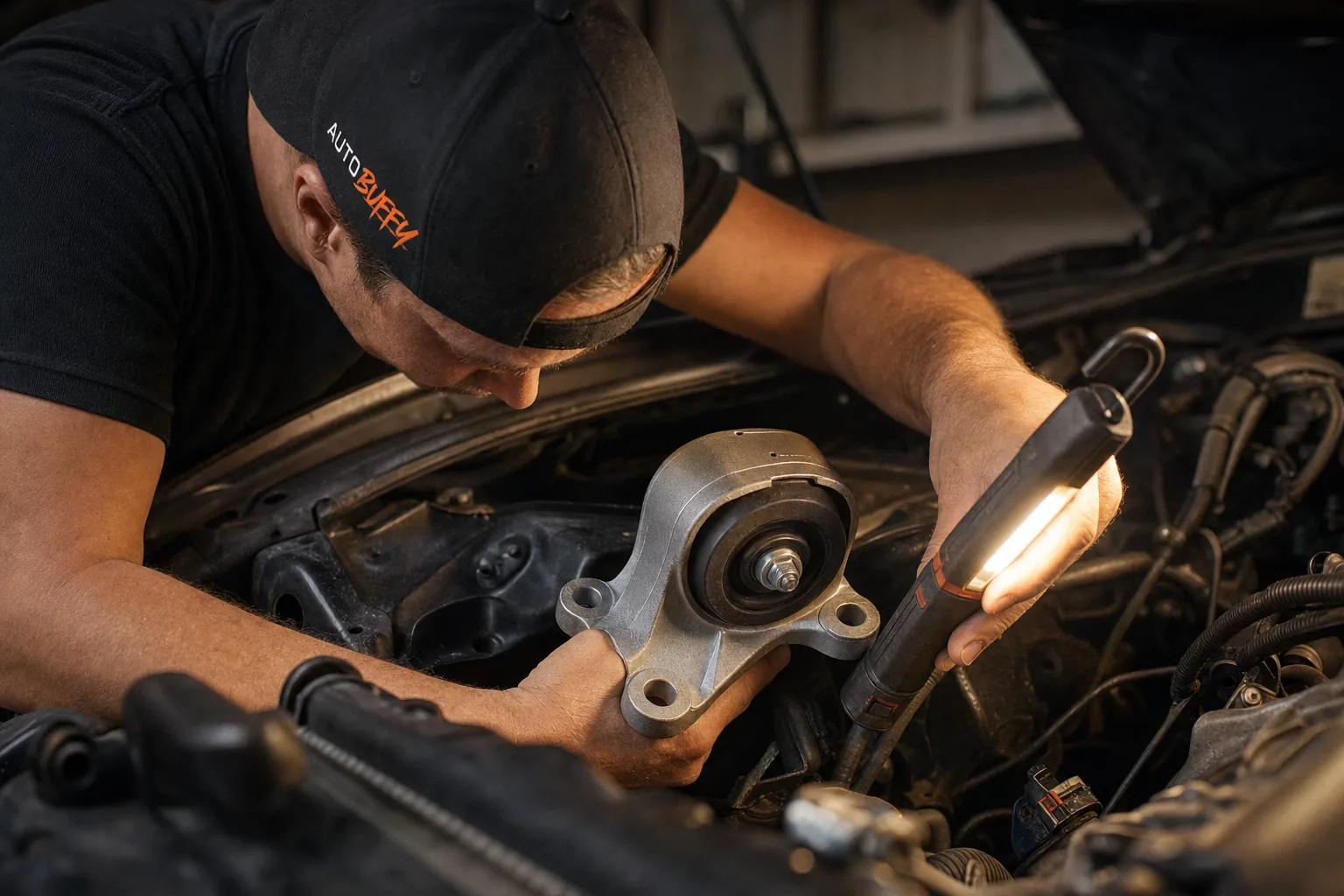
| Engine Mount | Left or right side of the engine block, between block and subframe | Carries the static weight of the engine; controls side-to-side movement | Rubber slowly hardens and cracks; engine begins rocking under load |
| Engine Mount Kit | Bundled set of the mounts needed for a given year/engine combo | Covers all load-bearing positions in one purchase | Individual mounts fail at different rates; kit addresses all at once |
| Automatic Transmission Mount | Below the transmission case, between trans and crossmember | Supports the rear of the powertrain; controls transmission movement during shifts | Rubber tears or compresses flat; shift clunks and driveline lurch follow |
| Engine Torque Strut Mount | Front of engine bay, controlling fore-aft pitch | Resists engine rotation under acceleration and braking torque | Tears under sudden high-torque inputs (especially EcoBoost turbo spike); sharper, impact-like noise |
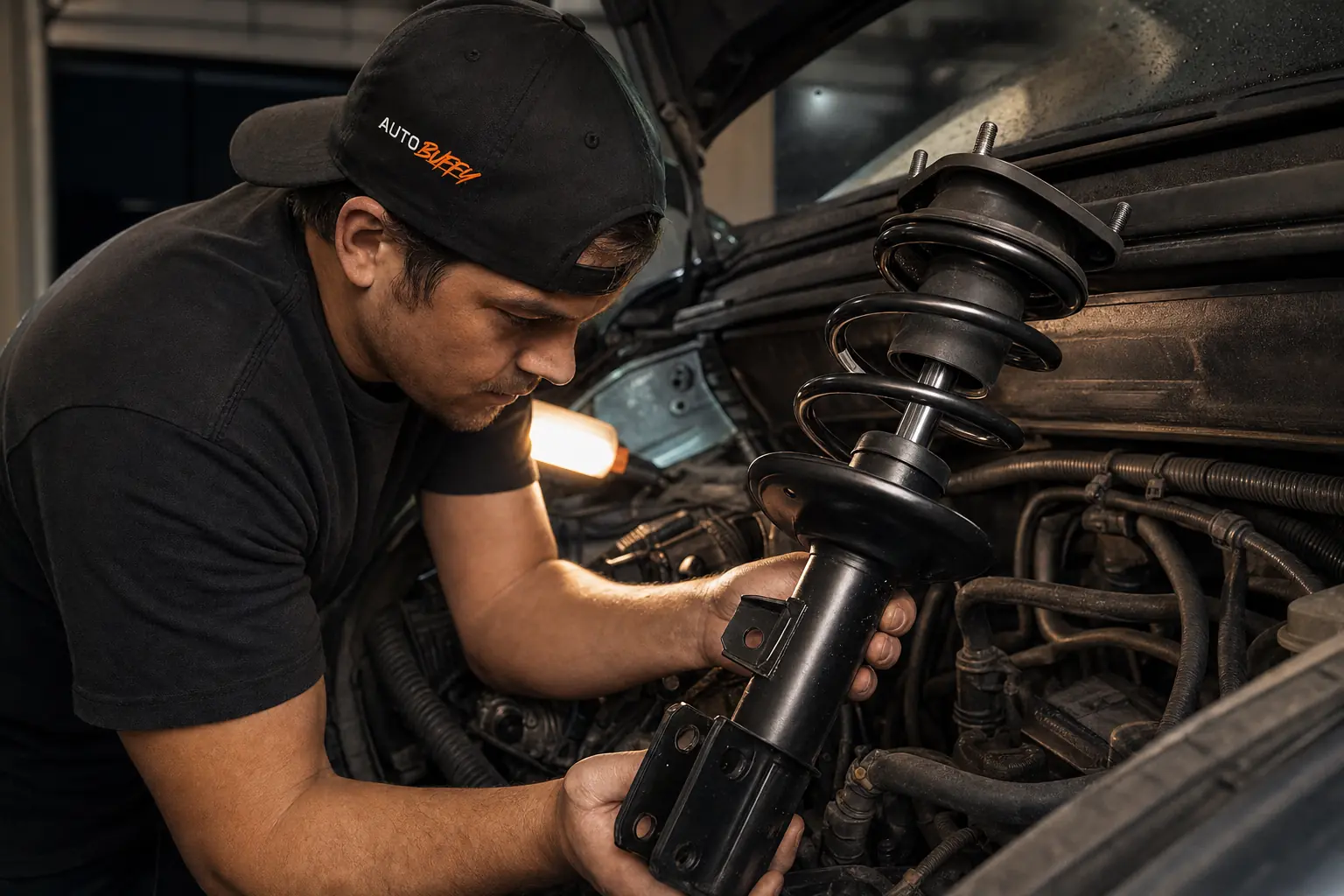
| Suspension Strut Mount | Top of the strut tower (upper mount) | Isolates suspension movement from the body; also affects steering feel | Bearing wears or rubber collapses; clunking over bumps and vague steering |
Which Ford Explorer years and engines fail most
The Explorer has gone through six distinct generations, and mount durability varies meaningfully across them.
Third generation (2002–2005): The 4.6L V8 in these body-on-frame Explorers put more torque through the rear mount than the rubber was really built for over the long haul, especially on trucks used for towing. Rear mount failure is the most common complaint on high-mileage examples.
Fourth generation (2006–2010): Still body-on-frame, with the 4.0L V6 and 4.6L V8. Mount life on these tends to be reasonable, though the rear mount remains the first to go on tow-heavy vehicles. Nothing unusual stands out for this generation.
Fifth generation (2011–2019): This is where demand gets heavy — and it shows up clearly in the catalog data, with 2013, 2014, 2016, 2017, 2018, and 2019 carrying the deepest Westar coverage. The switch to a unibody platform and the introduction of EcoBoost four-cylinder and 3.5L twin-turbo engines changed the stress profile entirely. Turbocharged torque arrives in a sudden spike rather than a gradual build, which is harder on rubber — particularly the torque strut mount. The 2.0L EcoBoost and 3.5L EcoBoost Explorers from this era see torque strut failures relatively early, sometimes before 80,000 miles on higher-mileage drivers.
Sixth generation (2020–2023): The move to a rear-wheel-drive-based platform and the 10-speed automatic changed the mount architecture again. It's a younger generation, so long-term failure patterns are still developing. Westar covers it, but if you're unsure whether a pattern has emerged for your specific setup, say so honestly to your shop — "I don't know yet" is a fair answer for a platform this new.
In general: if you have a fifth-gen EcoBoost Explorer with over 80,000 miles and you tow or drive aggressively, the torque strut mount should be your first check.
The 5 most common Ford Explorer motor mount symptoms
1. Thud through the floor when you shift from Park into Drive or Reverse
In the Explorer's longer wheelbase and heavier curb weight, a failed mount makes gear changes feel like a small collision rather than a smooth transition. You'll feel it in the front floorboard and sometimes the lower dash. This is different from a drivetrain shudder — it's a single, distinct impact every time.
2. Low-frequency buzz in the steering column and front seats at idle
Sitting at a light, if you feel a persistent vibration that travels up through the seat bolsters and into the steering wheel, a mount has stopped absorbing the engine's idle pulse. On the Explorer's unibody construction, that vibration travels efficiently through the structure. The engine itself may be running perfectly — the mount is just no longer doing its job.
3. Sharp knock from the firewall under EcoBoost hard acceleration
If you have a 2.0L or 3.5L EcoBoost, hard acceleration produces a torque spike that hits the torque strut mount suddenly. A worn torque strut lets the engine pitch forward and snap back, producing a knock that sounds like it's coming from the firewall or front crossmember. It's easy to mistake for a suspension noise, but it's load-dependent — it happens under power, not over bumps.
4. Visible engine rocking when the drivetrain is loaded
Have a helper hold the brake, put the Explorer in Drive, and ease off slightly to load the drivetrain while you watch the engine from the front. A healthy engine barely moves. More than about an inch of visible pitch means a mount is gone. On the 3.5L V6 models you can see this clearly from the engine bay — the engine will lurch toward the firewall.
5. Coolant hoses or EcoBoost charge-air piping pulling tight
On turbocharged Explorer variants, the charge-air piping between the turbochargers and the intercooler runs close to the engine. When a mount fails completely and the engine shifts position, that piping can pull taut, kink, or — in bad cases — partially disconnect. If you see any kinking or wear marks on the intercooler pipes or upper radiator hose, check the mounts before anything else.
Ford Explorer motor mount replacement cost
Here's an honest breakdown for this vehicle specifically. The Explorer's unibody (fifth and sixth gen) requires engine support during mount replacement, which adds time compared to a simpler application. Body-on-frame third and fourth gen models are generally more straightforward.
| Cost Component | DIY | Shop |
|---|---|---|
| Complete mount kit (parts) | $290–$400 | $290–$400 |
| Labor (unibody, full kit) | $0 | $200–$450 |
| Labor (body-on-frame, simpler layout) | $0 | $150–$300 |
| Total estimated range | $290–$400 | $440–$850 |
A 3-piece kit for a simpler configuration runs toward the lower end of the parts range. A full 6-piece kit for a 2016–2019 EcoBoost Explorer with multiple mount positions covered runs higher. Labor quotes vary a lot by region — getting two estimates before authorizing work is worth the phone calls.
Why a complete kit beats replacing mounts one at a time
If one mount on your Explorer is gone, the others have accumulated the same miles and heat cycles. The argument for a complete kit is partly about money (parts and labor together), but it's also about avoiding a second shop visit three months later when the next one goes.
Westar's Explorer kits are built by a brand that focuses specifically on mounts — it's not a side category for them. Their kits are matched to OE durometer specs, which matters on a vehicle that can tow 5,000 pounds and has turbocharged engines that hit peak torque suddenly. The coverage from 1991 through 2023 with 67 distinct SKUs means they've worked through the quirks of every Explorer generation, not just the most recent one.
Use the part finder below to match the right kit to your year, engine, and trim. That's the only reliable way to confirm you're getting every mount your specific configuration needs.
Can you DIY Ford Explorer motor mounts?
Yes, with the right setup. You'll need a floor jack, two jack stands, and a second jack or engine support bar to hold the engine while a mount is out. The torque strut mount is typically the most accessible. Lower mounts and rear mounts on the unibody generations require more patience and sometimes some turbo plumbing to move out of the way on the EcoBoost models.
Budget 3–5 hours for a complete kit if you're doing it for the first time. Torque all mount bolts to spec — not just "tight." The Explorer's powertrain generates enough torque and vibration that under-torqued mount bolts can back out, and you'll be right back where you started. A torque wrench is non-negotiable here.
Sources
- Westar Industries Ford Explorer mount catalog (1991–2023; 67 SKUs, 5 mount types)
- Ford Motor Company Explorer specifications (tow ratings, engine output figures)
- General market labor rate data for motor mount replacement
Find the right motor mount kit for your Ford Explorer
Guaranteed fit, ships free
FAQ / People Also Ask
Most Ford Explorer configurations use between 3 and 6 mounts depending on the generation and engine. Earlier body-on-frame Explorers (1991–2001) typically have a simpler layout, while the 2011-and-newer unibody platform with transversely or longitudinally mounted engines can carry more mount positions — including front, rear, upper, torque strut, and suspension strut mounts. Always confirm the count for your specific year and engine before ordering.

Comments
Loading comments...
Comments are moderated by the AutoBuffy team.