

Fuel Pump Replacement Cost 2026: What You'll Actually Pay (Parts + Labor)
Real fuel pump replacement cost ranges, what drives them, Delphi's fuel pump catalog explained, and the symptoms that mean it's time to replace yours.
The Short Answer
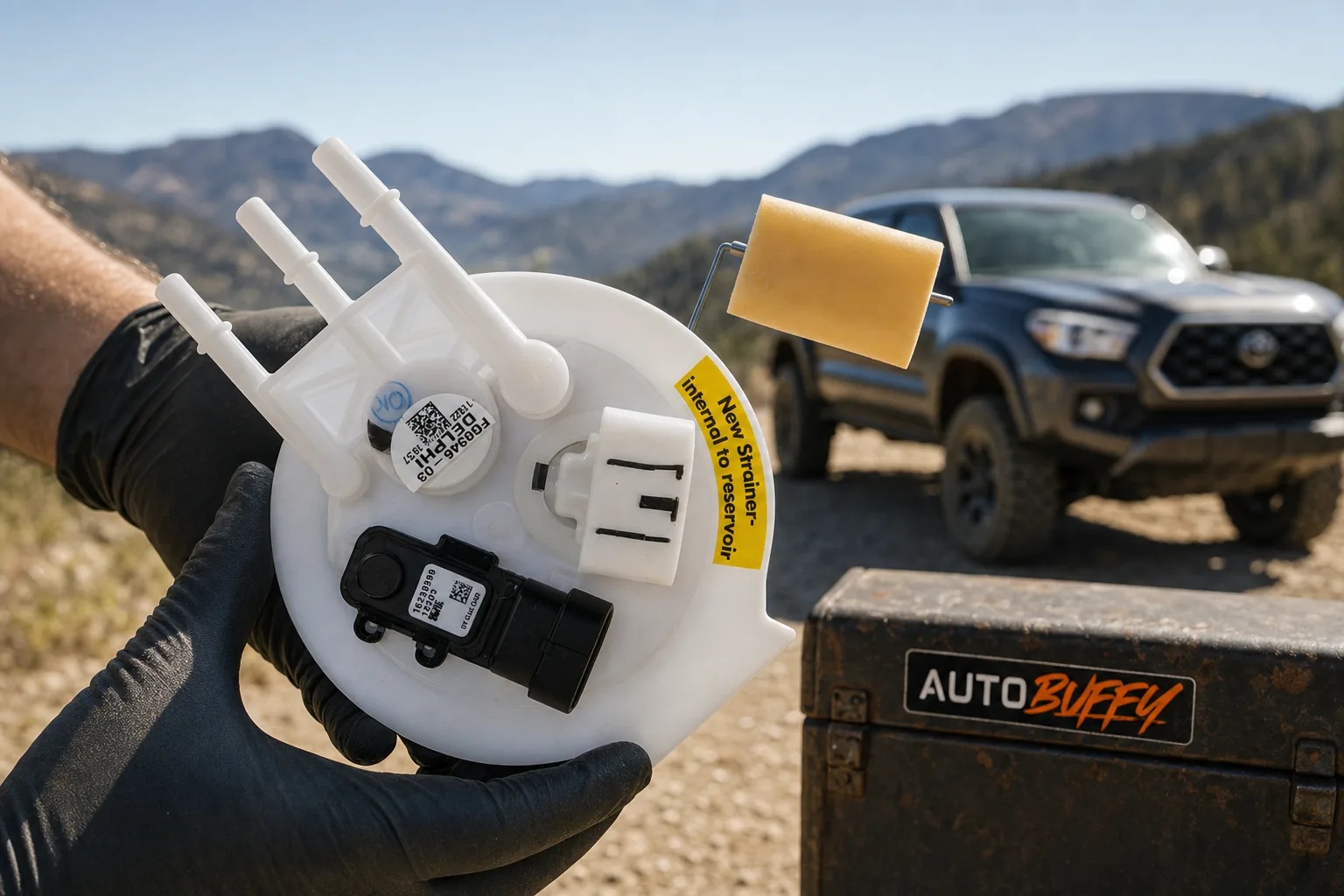
Fuel pump replacement typically costs $400 to $900 total (parts and labor) for the most common job — an in-tank electric fuel pump module on a modern gasoline vehicle — with Delphi among the most widely fitted OE-and-aftermarket fuel pump brands on the road. The part itself usually runs $150–$350, and labor runs 2 to 4 hours because the fuel tank typically has to come down (or the bed lifted, on some trucks) to reach it. Older mechanical fuel pumps on carbureted or early fuel-injected engines are a much simpler, cheaper job.
Why the Range Is So Wide
Three variables move the total cost more than anything else:
- Pump type. A modern in-tank "fuel pump module assembly" — the pump, sending unit, fuel level sensor, and strainer combined into one sealed unit — costs more than a standalone mechanical pump bolted to the outside of an older engine block, because it's a more complex, higher-precision part.
- Access. If the fuel tank has to be dropped to reach the pump, that's the majority of the labor time right there. Some vehicles have an access panel under the rear seat or trunk floor that skips tank removal entirely, which noticeably lowers labor cost.
- Vehicle class and fuel system pressure. Direct-injection systems run at much higher pressure than older port-injection systems, and the pumps built for that pressure are more expensive parts.
RepairPal's cost guide and YourMechanic's completed-job data both put a typical in-tank electric fuel pump replacement in a comparable range to what's described above once you add parts and labor together — the part-only price you see on a shelf is never the whole story for this particular job.
What Delphi's Catalog Actually Covers
Delphi's fuel pump lineup breaks into a few genuinely different products, not one generic "fuel pump" SKU:
- Fuel Pump Module Assembly / Fuel Pump Assembly — the complete in-tank unit most modern vehicles need: pump, sending unit, and strainer in one sealed housing. This is the highest-volume category in Delphi's fuel pump catalog by a wide margin.
- Fuel Pump Hanger Assembly — similar to the module assembly but built around the specific mounting/hanger design some vehicles use.
- Mechanical Fuel Pump — for older carbureted and early fuel-injected engines that use a cam-driven, non-electric pump.
- Electric Fuel Pump — a standalone electric pump for applications where the full module assembly isn't the correct replacement path.
- Fuel Pump Strainer / Fuel Pump and Strainer Set — the "sock" filter on the pump inlet. This is a genuinely cheap wear part, often replaced alongside a pump (or on its own, much earlier, if a car is showing early fuel-starvation symptoms and the pump itself tests fine).
- Fuel Pump Tank Seal — the gasket that seals the pump module against the tank; replacing this every time the tank is opened, even if you're reusing the old pump, prevents a comeback leak.
That last point matters for anyone doing the job themselves: reusing an old tank seal to save a few dollars is one of the most common reasons a fuel pump job has to be redone.
Symptoms of a Failing Fuel Pump
- Engine sputters or hesitates at highway speed, especially under load or going uphill — the pump can't maintain pressure when demand is highest.
- Hard starting or a long crank before the engine catches, because pressure has bled off and the system needs a few extra seconds to rebuild it.
- A loud whining noise from the tank area that gets louder as the tank runs low on fuel — this is one of the more reliable early-warning signs.
- Engine stalls, especially when hot, then may restart after cooling — a classic symptom of a pump that's failing thermally.
- Reduced fuel economy or power with no other obvious cause.
- Check Engine light with a fuel-trim or fuel-pressure-related code (P0087, P0171, P0172, and similar codes often point back to fuel delivery).
If more than one of these shows up together, especially the whining noise plus hesitation under load, a fuel pressure test (not just a code scan) is the right next diagnostic step before buying a part.
Should You Replace the Whole Module or Just the Pump?
On most modern vehicles the honest answer is: replace the whole module assembly, not just the internal pump motor. The sending unit, fuel level float, and strainer are all wear items too, and they're sealed into the same housing as the pump on most designs — trying to service just the motor inside an assembly that wasn't designed to be opened usually costs more in labor than it saves in parts. Delphi's catalog reflects that reality: the module/assembly category dramatically outsells the standalone electric pump category for exactly this reason.
Is It Worth Doing Yourself?
Dropping a fuel tank safely (fuel line disconnects, evaporative emissions lines, electrical connector, and physically supporting a tank that may still have fuel in it) is a job that rewards having the right tools and a lift or jack stands rated for the work — it's mechanically straightforward but unforgiving of shortcuts around a full tank of gasoline. If you're comfortable with that, the labor savings versus a shop are real; if not, the labor charge on this particular job is buying genuine access difficulty, not just wrench-turning time.
Find the right fuel pump for your vehicle
Guaranteed fit, ships free
FAQ / People Also Ask
A full fuel pump replacement typically costs $400 to $900 total for parts and labor on a modern in-tank electric pump, per RepairPal and YourMechanic cost data. The part itself is usually $150-$350; the rest is labor, which runs 2-4 hours because most vehicles require dropping the fuel tank to access the pump.


Comments
Loading comments...
Comments are moderated by the AutoBuffy team.