


GM 1500 Lower Ball Joint (2007-2014 Silverado, Sierra, Tahoe, Suburban): Press-In or Whole Arm?
Should you press in a new lower ball joint or replace the whole arm on your 2007-2014 GM 1500 truck or SUV? Here's the honest answer.
The Short Answer
On 2007-2014 GM 1500 trucks and SUVs, the lower ball joint is a press-fit unit—meaning you can replace just the joint—but swapping in a complete lower control arm assembly is often the smarter, more practical move for a DIYer.
| Decision Factor | Press-In Ball Joint Only | Full Lower Control Arm Kit |
|---|---|---|
| Parts cost (per side) | ~$30–$80 | ~$150–$350 |
| Labor cost (per side, shop) | ~$100–$200 | ~$120–$250 |
| Tools needed | Ball joint press + adapters | Basic hand tools |
| Arm condition assessed? | No | Yes (new arm included) |
| Alignment required? | Yes | Yes |
| Best for | Fresh arm, tight budget | High mileage, DIY-friendly |
What Platform Are We Talking About? The 2007-2014 GMC Sierra 1500 rides on GM's GMT900 platform—the same bones used in the Chevrolet Silverado 1500, Tahoe, Suburban, Yukon XL, Avalanche, and Cadillac Escalade EXT/ESV from roughly the same years. That's good news for parts availability: the lower ball joint is widely sourced, competitively priced, and covered by most major suspension brands. GMC is a brand (division) of General Motors, one of GM's four core U.S. brands alongside Chevrolet, Buick, and Cadillac. GM is an independent, publicly traded company (NYSE: GM), with no corporate parent—relevant here because it means ACDelco, which *is* a GM subsidiary, produces genuinely OEM-spec parts for this truck. ---
How the Lower Ball Joint Is Designed on These Trucks
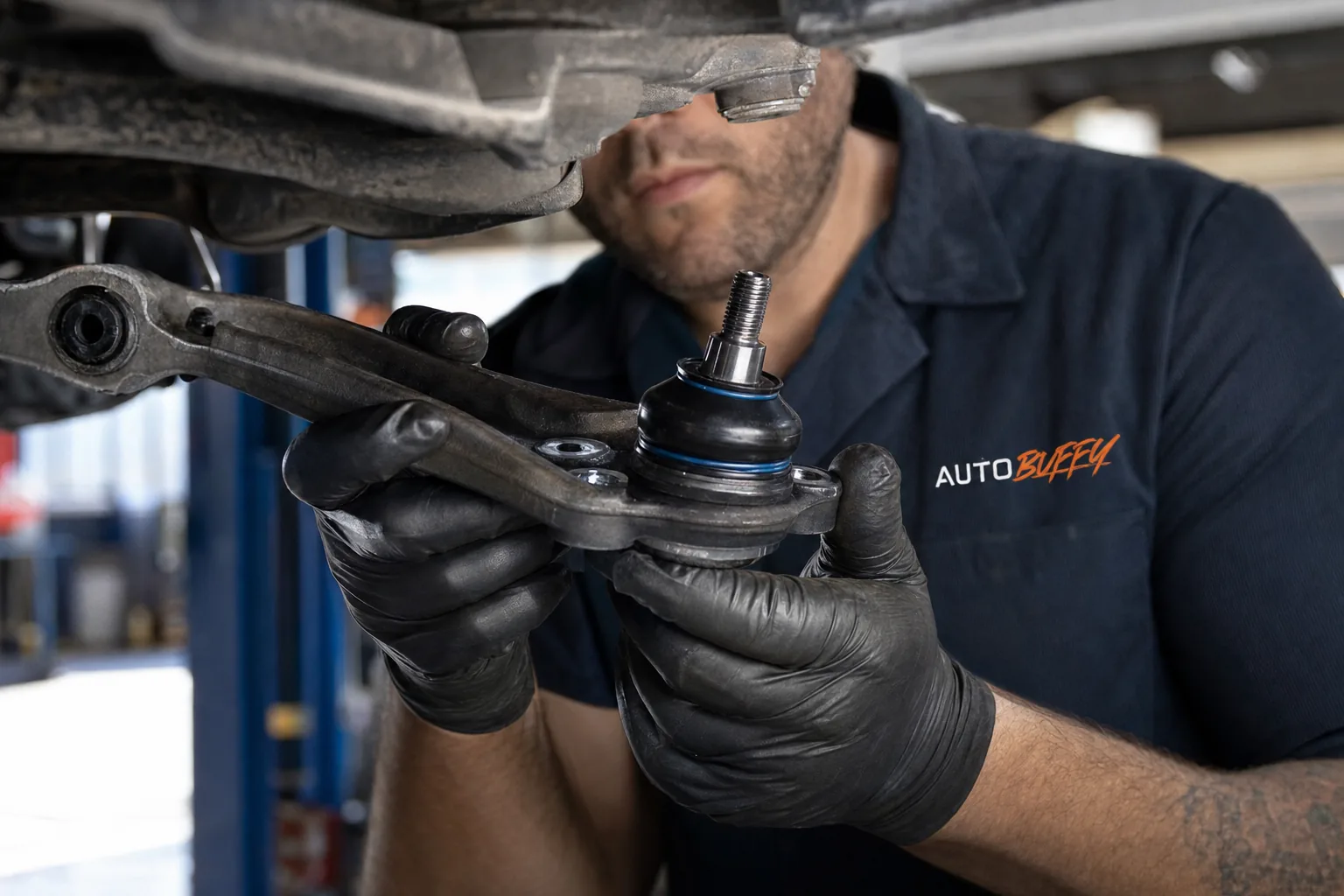
The lower ball joint presses into a socket in the lower control arm. There's no bolt flange like you'd find on some older trucks—it's held in place by an interference fit, retained with a snap ring. Pressing it out requires a dedicated ball joint press with the correct adapters for the GMT900 arm diameter. The upper ball joint situation is different and worth knowing: upper ball joints on this platform are not independently serviceable. If the upper ball joint is bad, you're replacing the whole upper control arm. The lower, at least, gives you a choice. ---
Signs Your Lower Ball Joint Is Failing
Don't wait for a clunk to become a catastrophic failure. Here's what to watch for:
- Clunking or popping over bumps, especially at low speed on rough pavement
- Wandering or vague steering — the truck doesn't track straight without constant correction
- Uneven front tire wear, particularly on the inner or outer edge
- Visible play when the suspension hangs free — lift the front end, grab the tire at 6 and 12 o'clock, and rock it. Any movement with a clunk means it's time
A worn ball joint that separates at speed is a serious safety event. If you're seeing more than one of these symptoms together, don't defer the repair. ---
Press-In Ball Joint vs. Whole Lower Control Arm: The Real Decision
Here's the honest breakdown of how to pick your path:
When Pressing In Just the Ball Joint Makes Sense
If your lower control arm is in good shape—no cracks, no worn bushings, no physical damage—pressing in a new ball joint is the more economical repair. It makes sense when:
- The truck has under 100,000 miles and the arm looks clean
- You have access to a ball joint press (or a shop doing the labor)
- You're replacing one side due to a specific failure, not general wear
The catch: you *do* need a press. Attempting to hammer a ball joint in or out without the proper tool is a good way to crack the arm housing or install the joint cocked at an angle. If you're renting a press from your local parts store, make sure you have the right GM adapter cups—the generic kit sometimes doesn't include them. ### When the Full Control Arm Kit Is the Better Call
For most DIYers, and for any truck over 120,000 miles, the full lower control arm with ball joint pre-installed is genuinely the easier job. Reasons to go this route:
- The ball joint is already pressed in at the factory—no special tools needed at home
- You assess (and replace) the arm bushings at the same time
- Total job time is often shorter than pressing a joint alone
- On high-mileage trucks, bushings are usually shot anyway
My honest opinion: on a truck with 130,000+ miles, buying a ball-joint-loaded control arm is the right call about 80% of the time. Bushings at that mileage are almost always cracked or collapsing. You'll end up replacing the arm six months later anyway if you don't. ---
Which Brands Are Worth Buying? ### MOOG
MOOG's Problem Solver series is the go-to for GM 1500 lower ball joints. Their joints for this platform feature a greaseable fitting (a big deal on trucks that see mud, water, and road salt), an extended wear indicator, and a reinforced housing. MOOG offers both standalone ball joints and complete control arm kits with ball joints pre-installed—which makes them especially useful if you're going the whole-arm route. Their coverage on the GMT900 platform is solid for both 2WD and 4WD applications. ### ACDelco
ACDelco is a GM subsidiary, so their parts are engineered to OEM specifications for this platform. They offer ball joints under both their Professional (gold, premium) and Advantage (silver, value) lines. If you want factory-level fit and materials without sourcing a dealer part, ACDelco Professional is a reliable choice. The greaseable version is worth seeking out over the sealed unit. ### Dorman
Dorman Products is an independent American aftermarket manufacturer (Nasdaq: DORM). They produce ball joints for the GMT900 platform and are generally a solid value option. Dorman's strength is parts availability and fitment breadth—they cover a wide range of vehicle configurations. For a budget-conscious repair where the arm is in good condition, their ball joints are a reasonable pick. ---
How to Do the Job: Key Steps
Whether you're pressing in a ball joint or swapping the whole arm, the sequence is similar:
- Loosen the lug nuts while the truck is still on the ground
- Lift and support the truck on jack stands—never work under a vehicle on a floor jack alone
- Remove the wheel, then unbolt the brake caliper and rotor if needed for clearance
- Disconnect the lower ball joint from the steering knuckle (typically a castle nut and cotter pin)
- Remove the control arm bolts from the frame mounts
- Press out the old ball joint (if reusing the arm) or remove the whole arm
- Press in the new joint (if applicable), install the arm, torque everything to spec
- Reinstall the wheel, torque the lug nuts, and schedule a four-wheel alignment immediately
Torque specs for this platform: the ball joint castle nut typically runs 81 ft-lbs (with up to 1/6 turn additional to align the cotter pin slot). Control arm bolts vary—check a factory service manual or a trusted source for your exact year and configuration. ---
Don't Skip the Alignment
Every single time you replace a front suspension component on this truck, you need a wheel alignment. No exceptions. The ball joint's position directly affects caster and camber. Even if everything looks straight when you're done, the geometry will be off enough to wear through a set of front tires in 15,000 miles if you skip it. Budget $80–$120 for a four-wheel alignment and fold it into the total job cost from the start. ---
Why buy from AutoBuffy
- Fitment check: add your vehicle and we confirm the part fits before you buy. If it doesn't fit because of our listing, you get a free return and a full refund, including original shipping.
- 24-month limited warranty on new parts bought on autobuffy.com.
- Real reviews: rated 4.9 by 19,069 verified customers.
- 30-day returns on unused parts in the original packaging.
- Free shipping on orders $50+. Orders placed before 12:00 PM ET (Mon-Fri) ship the same business day.
- Questions about an order? Call 888-477-2530 or email help@autobuffy.com.
Find the right ball joint for your vehicle
Guaranteed fit, ships free
FAQ / People Also Ask
It's pressed in. The lower ball joint on the 2007-2014 GMC Sierra 1500 (and the rest of the GMT900 platform) is a press-fit unit that sits in the lower control arm. You can press in a new joint without replacing the arm, but many shops replace the whole arm assembly for ease and long-term reliability.

Comments
Loading comments...
Comments are moderated by the AutoBuffy team.