

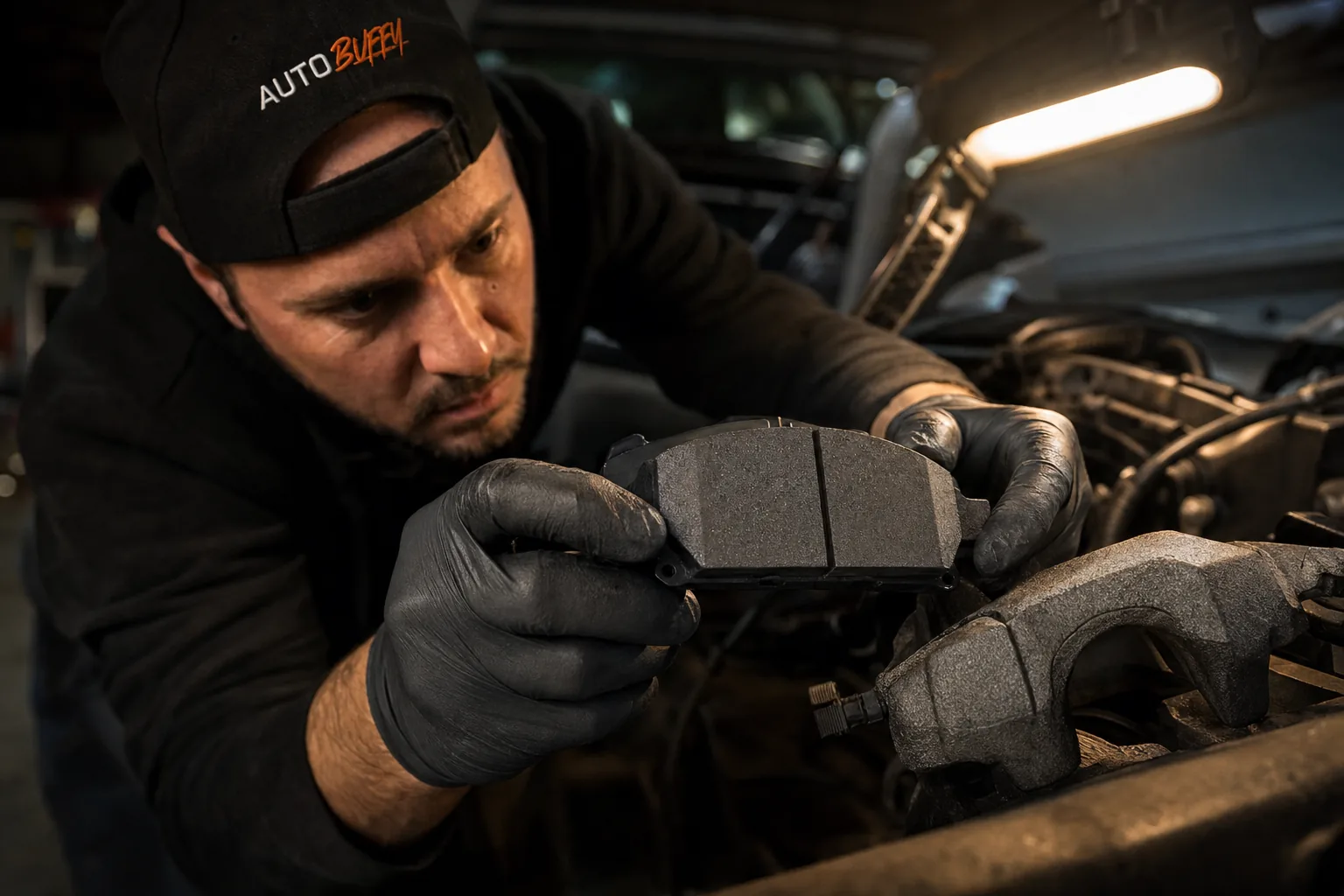
How Long Do Brake Pads Last? Real Mileage by Driving Style
Brake pad life ranges from 25,000 to 70,000 miles depending on your driving style, pad material, and vehicle weight.
The Short Answer
Brake pads last anywhere from 25,000 to 70,000 miles, and the single biggest variable is how — and where — you drive.
| Driving Style | Typical Pad Life | Key Factor |
|---|---|---|
| Aggressive city / performance | 20,000–35,000 miles | Frequent hard braking, heat cycles |
| Mixed city / highway | 35,000–50,000 miles | Moderate wear, average conditions |
| Mostly highway, gentle braking | 50,000–70,000 miles | Low brake frequency, cooler pads |
| Towing or heavy loads | 20,000–40,000 miles | Extra vehicle weight per stop |
That range probably seems frustratingly wide. It is — but it's honest. Let's break down exactly what pushes your pads toward one end or the other.
That range lines up with what major brake-service providers publish - Firestone and AutoZone both put typical pad life at roughly 25,000-65,000 miles depending on driving style and pad material.
Why Driving Style Matters More Than the Pads Themselves
The physics here aren't complicated. Every time you press the brake pedal, your pads clamp against spinning rotors and convert kinetic energy into heat. More stops, harder stops, and heavier vehicles all mean more heat — and heat is what eats pads.
A city commuter making 50 stops per mile in rush-hour traffic stresses their pads far more than a highway driver who might go 10 minutes between light braking events. Over 40,000 miles, that's a staggering difference in total braking events and heat cycles. I've seen the same pad set pulled off two identical sedans with nearly 30,000 miles' difference in wear because one owner drove a suburban highway route and the other ran daily errands in urban traffic.
The Hard-Braking Penalty
This one catches people off guard. Braking from 60 mph to a full stop generates significantly more heat than braking from 40 mph. It's not a linear relationship — kinetic energy scales with the *square* of velocity. So that driver who always waits until the last second and brakes hard from highway speed is torching their pads at an outsized rate compared to someone who coasts and brakes gently from the same starting speed.
Pad Material: The Spec That Sets the Ceiling
Even perfect driving habits can't make an organic pad last 70,000 miles — the material puts a ceiling on how long they can last.
Organic (Non-Asbestos Organic)
- Life range: 20,000–40,000 miles
- Soft, quiet, gentle on rotors
- Wears faster, less heat tolerance
- Common on economy cars and older applications
Semi-Metallic
- Life range: 30,000–50,000 miles
- Better heat management, stronger bite
- Can be noisier, harder on rotors at high wear
- Good for trucks, towing, performance driving
Ceramic
- Life range: 45,000–70,000 miles
- Long life, low dust, quieter operation
- Slight reduction in cold-weather bite
- The best all-around choice for most daily drivers
For most people driving a standard sedan or crossover on mixed roads, ceramic pads are worth the modest price premium. The longer service interval alone tends to offset the difference within the first replacement cycle.
Vehicle Weight: The Silent Pad Killer
A full-size pickup truck hauling a loaded trailer brakes far harder on its pads than a compact car traveling at the same speed, even with identical pedal input. More weight means more kinetic energy to scrub off, which means more heat, every single stop.
Owners of heavy trucks, three-row SUVs, and commercial vans should plan for the lower end of any mileage estimate — and budget accordingly. Upgrading to a semi-metallic or high-temperature ceramic compound specifically rated for heavier vehicles makes a measurable difference in longevity.
Signs Your Brake Pads Are Done — Don't Ignore These
Mileage estimates are useful, but your car will usually tell you directly when pads are due.
- Squealing on brake application — that's the wear indicator tab touching the rotor, designed to alert you.
- Grinding or scraping — metal-to-metal contact. Replace immediately, rotor damage may already be happening.
- Brake warning light — some vehicles have electronic wear sensors that trigger this.
- Longer stopping distances — if it takes noticeably more pedal travel or distance to stop, don't wait.
- Vibration through the pedal — can indicate worn pads combined with warped rotors from heat stress.
A quick visual check is also easy if you can see through your wheel spokes. The pad material should be at least 3mm thick against the rotor face. Less than that, you're due.
Front vs. Rear Pads: They Don't Wear at the Same Rate
In most front-engine, front-wheel-drive vehicles, front brakes handle roughly 70% of braking force. That means front pads almost always wear faster than rear pads — sometimes by a 2:1 ratio.
Check both axles when you inspect, but don't assume they need replacing at the same time. Many mechanics will replace fronts once, then fronts and rears together on the next cycle. That said, some newer vehicles with electric parking brakes or brake-by-wire systems distribute force differently, so check your owner's manual for what your specific car expects.
How to Actually Extend Your Brake Pad Life
You can meaningfully push toward the top of the mileage range with a few habits:
- Increase following distance so you're coasting more and braking less
- Anticipate traffic lights — lifting off the throttle 500 feet early takes a huge load off pads
- Avoid "two-foot driving" where the left foot rides the brake pedal
- Use engine braking on hills instead of holding the brake
- Keep your vehicle at a healthy weight — that roof rack full of gear you never take off adds rotating mass and braking load
These aren't dramatic life hacks. They're just physics working in your favor. Realistically, consistent smooth braking habits can add 10,000–15,000 miles to a set of pads. That's real money over the life of a vehicle.
When to Replace Rotors at the Same Time
New pads on worn or grooved rotors is a common mistake. The pads can't bed properly across an uneven surface, which reduces braking performance and accelerates uneven wear on the new pads.
Always measure rotor thickness against the minimum spec stamped on the rotor or listed in your service manual. If they're at or near minimum, replace them with the pads. If they're thick, smooth, and within spec, resurface or leave them — no need to spend money unnecessarily.
What Brake Pads Cost (Honest Ranges)
Parts for most passenger cars run $30–$100 per axle depending on pad type and vehicle. Add professional installation and you're typically looking at $150–$350 per axle at a shop, though this varies by region and vehicle complexity.
Performance pads for sports cars or heavy-duty compounds for trucks sit higher — sometimes $100–$200 just for parts. For your specific vehicle's fit and today's pricing, use the finder below.
Find the right part for your vehicle
Guaranteed fit, ships free
FAQ / People Also Ask
Most brake pads last between 25,000 and 70,000 miles. City drivers on the lower end, highway commuters on the higher end. The wide range comes down to driving habits, pad material, and vehicle weight.
Comments
Loading comments...
Comments are moderated by the AutoBuffy team.