

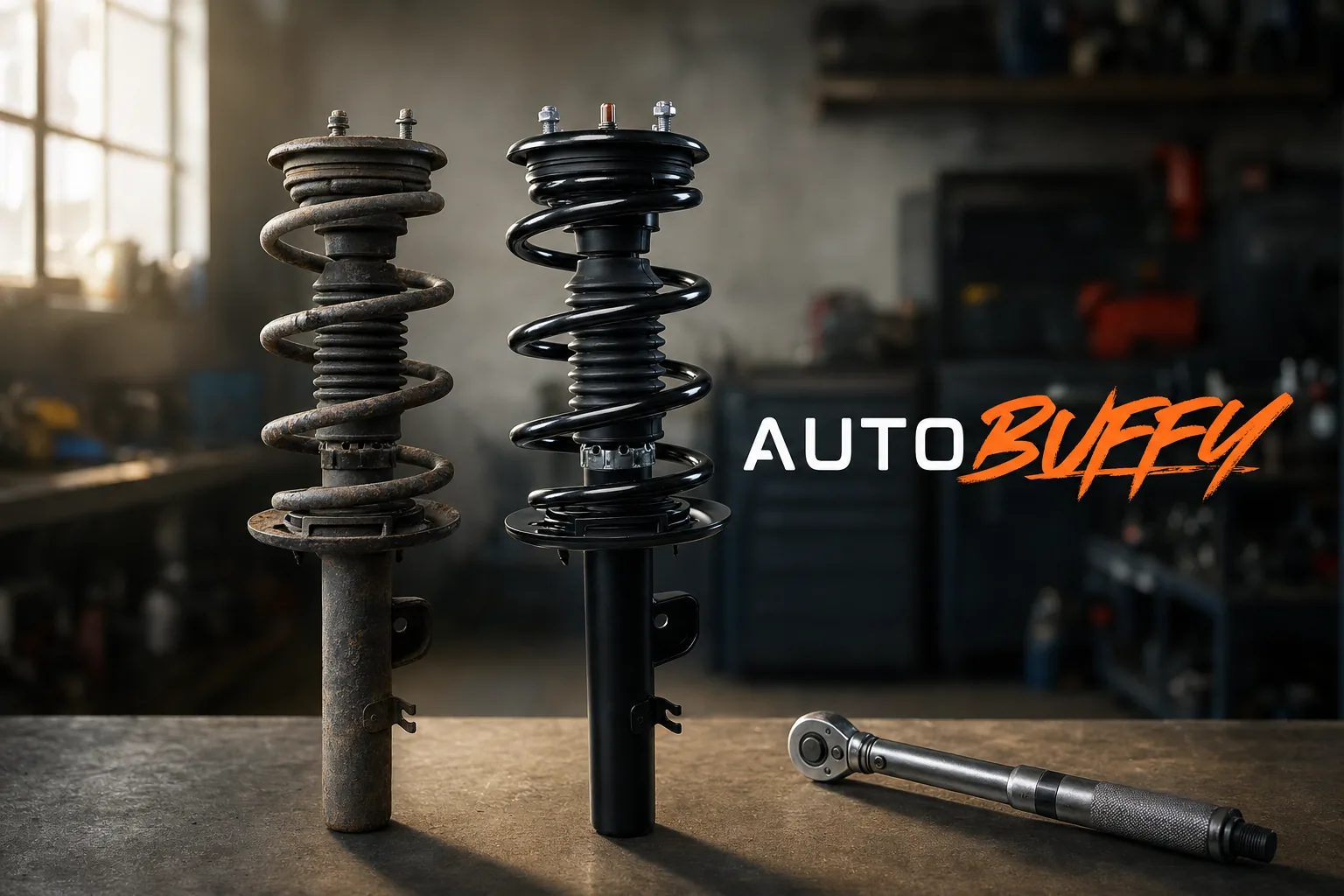
How Long Do Struts Last? (Mileage, Warning Signs & Replacement Cost)
Most struts last 50,000–100,000 miles, but driving conditions matter a lot. Here's how to know when yours are done and what replacement costs.
The Short Answer
Struts typically last 50,000–100,000 miles, but real-world lifespan depends heavily on road conditions, driving habits, and vehicle load — and worn struts are a genuine safety issue, not just a comfort problem.
| Factor | Expected Strut Lifespan |
|---|---|
| Mostly highway / smooth roads | 75,000–100,000 miles |
| Mixed city / highway driving | 60,000–80,000 miles |
| Frequent rough roads / potholes | 40,000–60,000 miles |
| Heavy loads or towing | 40,000–55,000 miles |
| Part cost (per strut) | $150–$350 |
| Labor cost (per side) | $100–$200 |
| Full front replacement (both sides) | $500–$900 at independent shop |
What Exactly Is a Strut (and Why Does It Wear Out)?
A strut isn't just a fancy shock absorber. It's a structural suspension component — it physically supports the vehicle's weight while also damping up-and-down movement. Inside, there's a piston rod moving through oil-filled chambers. Over tens of thousands of miles, the seals degrade, the oil thins out, and the damping force drops. The spring on the outside of the strut can also weaken or crack over time, especially in cold climates where road salt speeds up corrosion.
That's why struts don't fail suddenly like a blown tire. They wear gradually, and drivers often adapt to the worsening ride without noticing — until something makes them realize the car handles nothing like it used to.
What Shortens Strut Life the Most?
A few things accelerate wear faster than anything else:
- Rough road surfaces. Every pothole, speed bump, and gravel road puts stress on the strut's internal valving and seals. Drivers in northern states dealing with frost-heaved roads often see struts go at 50,000 miles or less.
- Overloading the vehicle. Struts are rated for a specific load range. Regularly hauling near or above the vehicle's GVWR compresses the struts more than they're designed for and wears the internals faster.
- Deferred maintenance. Worn strut mounts or torn boots allow contamination into the strut body, which destroys seals from the outside in.
- Aggressive driving. Hard cornering and braking put lateral and longitudinal stress on struts they weren't designed to absorb constantly.
According to RepairPal, shock and strut replacement is one of the more common suspension repairs shops perform, which tells you that most vehicle owners aren't getting anywhere near 100,000 miles out of their original struts.
Warning Signs Your Struts Need Replacement
Don't wait for a number on the odometer. These symptoms mean your struts are past their useful life:
1. Excessive Bouncing After Bumps
The classic test: push down on a corner of the vehicle and let go. It should settle in one motion. If it bounces twice or more, the strut is no longer damping properly.
2. Nose-Diving Under Braking
If the front of your car dips sharply when you brake moderately, front struts are likely worn. This also increases stopping distance — NHTSA research has shown that degraded suspension components can measurably reduce braking performance.
3. Body Roll in Corners
Worn struts let the vehicle lean excessively when turning, which shifts weight off the inside tires and reduces grip. You feel this as a floaty or vague steering sensation.
4. Uneven Tire Wear
Cupping or scalloping on your tires — a pattern of high and low spots around the tread — is a strong indicator the tires are bouncing rather than staying firmly planted. This is the strut's job failing in real time.
5. Clunking or Knocking Noises
A clunk over bumps often points to a worn strut mount rather than the strut body itself. Either way, it needs attention. The strut mount and bearing plate are usually replaced together with the strut during the job.
6. Fluid Leaks on the Strut Body
A light coat of oil on the outside of the strut housing means the internal seal has failed. The strut won't recover from this — it needs replacement.
Strut Replacement: What the Job Actually Involves
Strut replacement is more involved than swapping a shock absorber. Because struts are structural, the job requires:
- Removing the wheel and disconnecting the brake line brackets and ABS harness
- Unbolting the strut from the steering knuckle (lower) and strut tower (upper)
- Compressing the coil spring with a spring compressor (a specialized and genuinely dangerous tool if misused)
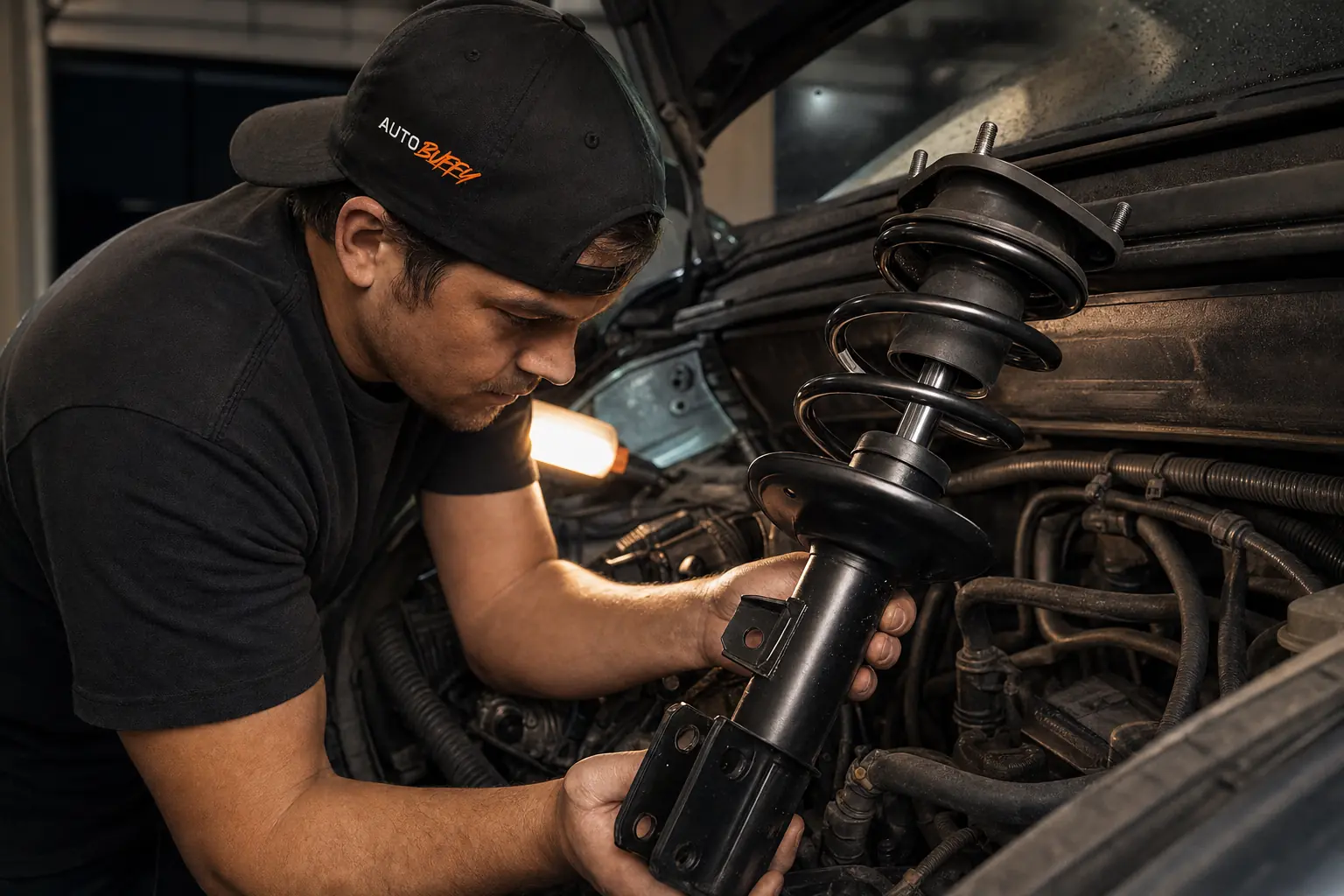
- Swapping the spring, mount, and bearing plate onto the new strut — unless you're using a loaded/quick-strut assembly that comes pre-built
- Reinstalling and torquing everything to spec
- Getting a wheel alignment before driving
That alignment step is non-negotiable. Strut replacement changes camber and caster angles, and driving on misaligned suspension will chew through new tires in a few thousand miles. Budget $80–$150 for a four-wheel alignment on top of the strut job.
Loaded Struts vs. Individual Strut Cartridges
A loaded strut (also called a quick-strut or strut assembly) comes with the spring, mount, and bearing plate already installed. You unbolt the old assembly and bolt in the new one — no spring compressor needed, and labor time drops significantly. For most daily drivers, this is the smarter choice. The part costs more, but total out-of-pocket is often comparable or lower when you account for reduced shop time.
Individual strut cartridges or bare struts make sense if your spring and mount are in good shape and a shop wants to save you money on parts. Just make sure those components get inspected before they go back on.
Should You Replace All Four Struts at Once?
At minimum, replace struts in axle pairs — both fronts or both rears together. Mismatched struts on the same axle cause the vehicle to pull and handle unpredictably.
Replacing all four at once makes sense if the rear struts are within 20,000 miles of the front ones. You'll already be paying for alignment anyway, and consolidating the labor into one visit saves money overall. Ask your technician to inspect the rears while the fronts are off — it takes two minutes.
How to Get More Life Out of Your Struts
You can't make struts last forever, but a few habits help:
- Avoid potholes when you safely can. Sounds obvious, but consciously routing around the worst roads adds real mileage to your suspension.
- Don't overload the vehicle. Check your owner's manual for payload ratings and stay within them.
- Get suspension inspections at every tire rotation. A technician can catch a torn boot or leaking seal before it destroys the strut body.
- Address worn tires promptly. Out-of-balance or badly worn tires put extra cyclic stress on struts.
"In my experience, the customers who ask about suspension at every oil change almost never need emergency strut replacements. It's the ones who ignore it until something clunks that end up with a bigger bill." — A sentiment shared by virtually every experienced service advisor.
Sources
- RepairPal – Shock Absorber & Strut Replacement Cost
- NHTSA – Vehicle Safety & Suspension Research
- KBB – Car Maintenance & Repair Advice
Find the right part for your vehicle
Guaranteed fit, ships free
FAQ / People Also Ask
Most struts last between 50,000 and 100,000 miles. Vehicles driven mostly on smooth highways often hit the higher end, while those driven on rough or unpaved roads may need replacement closer to 50,000 miles.

Comments
Loading comments...
Comments are moderated by the AutoBuffy team.