


Mitsubishi Outlander Struts: Replacement Cost, Signs of Failure & Best Brands (2025 Guide)
Worn struts on your Mitsubishi Outlander? Learn the real replacement cost, failure symptoms, brand comparisons, and how to choose the right strut for your year.
The Short Answer
Mitsubishi Outlander struts typically need replacement between 50,000–100,000 miles, with total repair costs averaging $1,144–$1,336 at a shop — and ignoring worn struts turns a ride-quality annoyance into a real safety problem.
| Factor | Typical Range |
|---|---|
| Total replacement cost (shop) | $1,144 – $1,336 |
| Labor estimate | $411 – $603 |
| Parts cost (conventional) | ~$734 |
| Air suspension strut sets | $1,700 – $2,200+ |
| DIY savings potential | $400 – $600 |
| Expected strut lifespan | 50,000 – 100,000 miles |
*Cost data sourced from RepairPal. Your actual cost varies by model year, trim, and local labor rates.*
Why Mitsubishi Outlander Struts Fail (And When to Expect It)
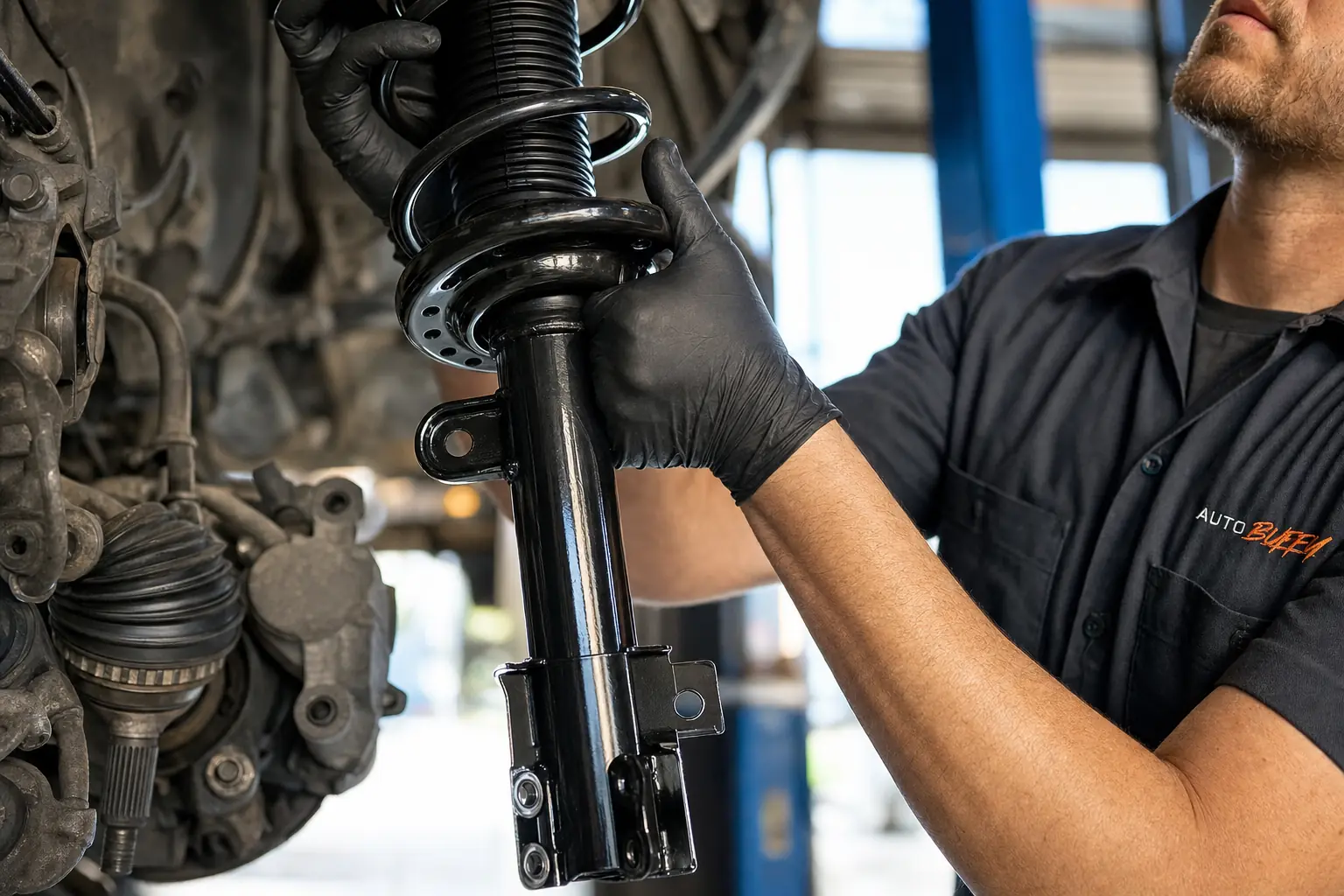
Struts aren't glamorous parts, but they're doing real work on every single drive. Each strut combines the shock-absorbing function with a structural role in the suspension — it's not just a damper, it's a load-bearing pivot point for the front suspension geometry. On the Outlander specifically, the front uses a MacPherson strut design, which is common on crossovers in this class. It's a sensible, well-understood setup, but it means the strut takes the full brunt of cornering loads, road impacts, and the weight of the vehicle whenever you brake hard. Most owners start noticing symptoms between 60,000 and 80,000 miles. If you're in a northern state where roads get salted and potholed every winter, you might see issues earlier. Southern highway drivers can often push past 90,000 miles without a problem. The Outlander also comes in a PHEV variant — and that battery pack adds meaningful weight over the rear axle, which tends to stress rear dampers more than the gas model. Don't assume the same service intervals apply to both. ---
6 Signs Your Outlander Struts Are Worn Out
Not sure if you actually need struts? Here's what to look for:
- Excessive bounce — push down on a corner of the vehicle and release. It should settle in one motion. If it bounces two or three times, the strut is done. 2. Nose-dive under braking — the front dips sharply when you brake at normal speeds. That's the strut losing its ability to manage load transfer. 3. Body roll in corners — more lean than you remember, or the vehicle feels "floaty" on sweeping highway ramps. 4. Clunking or knocking — especially over speed bumps or rough patches. This often means the strut mount bearing or the strut itself has worn through. 5. Uneven tire wear — cupping (scalloped patches across the tread) is a textbook worn-strut symptom. Your tires are bouncing instead of staying planted. 6. Steering wander — loose, vague steering on a straight road can trace back to worn front strut mounts affecting caster alignment. If you're seeing two or more of these, don't put it off. A wheel alignment check will also confirm whether your suspension geometry has drifted, which it almost certainly has if the struts are worn. ---
Outlander Suspension by Generation: What You're Working With
The Outlander has gone through significant changes across its generations, and the suspension setup matters a lot when you're buying replacement parts. First and Second Generation (early-to-mid 2000s through ~2012): These used fairly conventional MacPherson front struts and a multi-link rear setup with separate shock absorbers in the rear. Standard replacement struts fit the vast majority of these. Third Generation (2014–2021): Same general architecture, refined over time. The PHEV variant arrived in this era for U.S. markets, and parts don't always cross over between PHEV and gas trims — the suspension tuning is different. Fourth Generation (2022–present): Carries over the independent multi-link front and rear suspension. The 2026 Outlander introduces a 1.5-liter MIVEC DOHC Turbo inline-4 with a 48V mild-hybrid system producing 174 hp and 206 lb-ft of torque — a meaningful shift from the naturally aspirated 2.5L used in the 2025 model. The 2026 PHEV also gets a larger 22.7 kWh battery (up from 20 kWh). These powertrain changes could influence how suspension loads are distributed over time, so always verify fitment for 2026+ vehicles with a parts finder rather than assuming prior-gen parts carry over. ---
Conventional vs. Air Suspension Struts: Which Does Your Outlander Have? Most Outlander trims run conventional coil-spring struts — no air compressor, no electronic ride height adjustment, just a hydraulic damper and a spring doing their jobs quietly until they can't anymore. However, air suspension strut assemblies exist for certain premium trim levels and are also offered as aftermarket upgrades by brands like **ARNOTT** and **Dorman**. These use pressurized air bladders instead of coil springs to adjust ride height and compliance on the fly. ### Conventional Struts — What to Know
- Lower upfront cost
- Simpler to replace (no air lines, no compressor)
- Parts widely available across multiple brands
- No electronics to fail
Air Suspension Struts — What to Know
- Significantly higher parts cost ($1,700–$2,200+ for a set)
- Offer ride height adjustment and a noticeably softer, more adaptive ride
- Require a functioning air compressor and control module to work correctly
- ARNOTT uses Continental rubber in their air springs — a detail worth knowing since bladder material quality directly affects longevity
- Dorman offers air suspension strut sets as well, and their fitment coverage for specific year/trim combos is worth checking carefully
If your Outlander didn't come from the factory with air suspension, a conventional strut replacement is almost always the right call. Don't let anyone upsell you on an air conversion you don't need. ---
Brand Breakdown: Dorman vs. ARNOTT for Outlander Struts
Since this article covers the full picture honestly, here's a straightforward look at both brands available:
ARNOTT
ARNOTT specializes in air suspension — it's essentially their whole identity. They manufacture both new and remanufactured air strut assemblies, use Continental rubber in their air springs, and offer both front and rear sets. If your Outlander has air suspension or you're building out an air suspension system, ARNOTT is the specialist play. Their sets are sold in pairs, which is the right way to do the job anyway. ### Dorman
Dorman covers a wide range of vehicles and suspension applications, including air suspension strut sets for select Outlander configurations. They're a practical choice when you want a part that's engineered to OE specifications with good availability. Dorman's coverage tends to be broad across model years, so they're worth checking for older Outlander generations. My honest take: For a conventional strut swap on a standard gas Outlander, neither ARNOTT nor Dorman is primarily an air-suspension brand — so match the brand to your actual suspension type. Air suspension car? ARNOTT is the specialist. Conventional struts? Check Dorman and verify fitment by year and trim. Either way, buy in pairs and budget for an alignment after installation. That last part isn't optional — new struts change your suspension geometry. ---
DIY or Shop? The Real Tradeoff
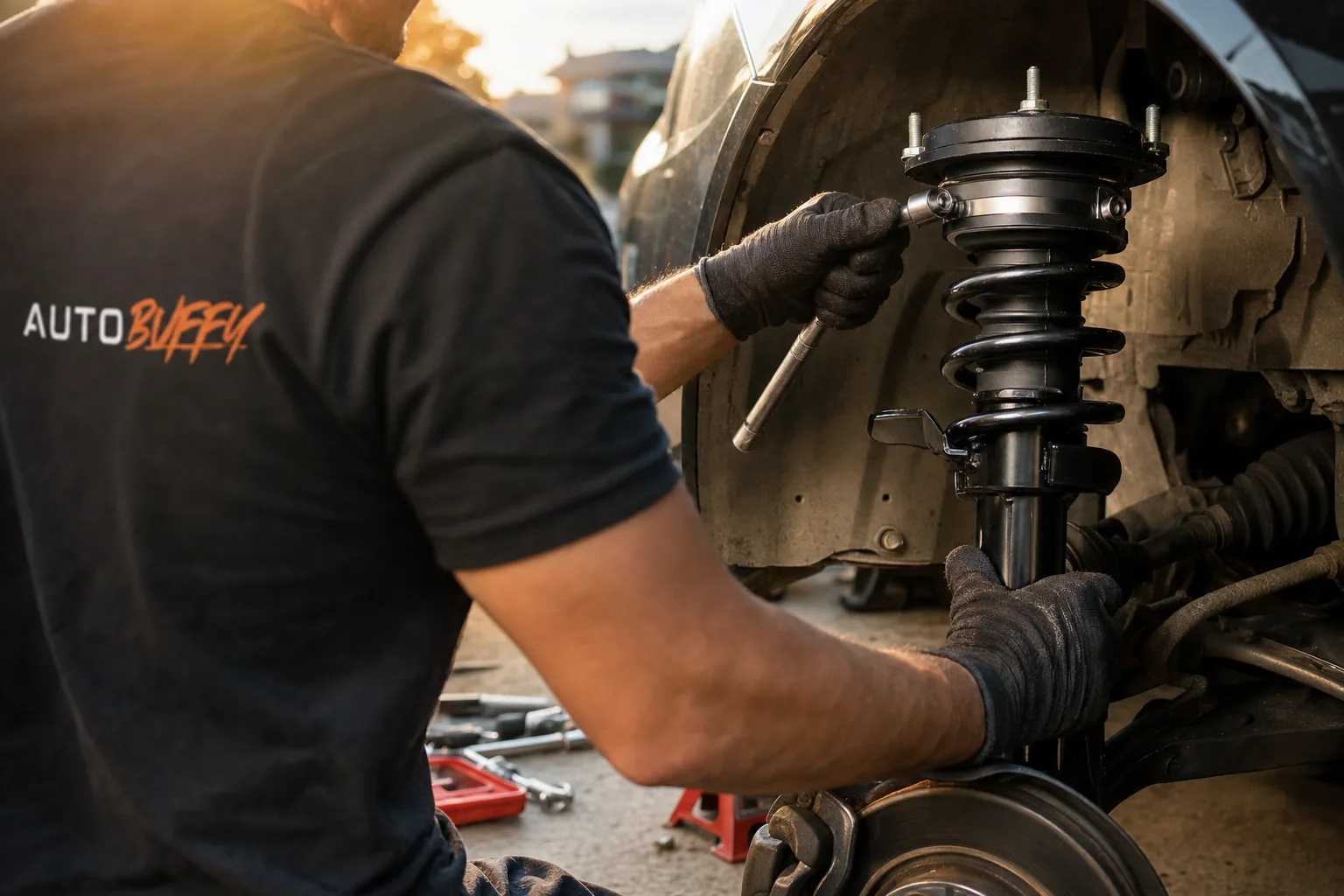
Front struts on the Outlander require compressing the coil spring, which is genuinely dangerous if you don't have the right tools or experience. A spring compressor is not optional, and using a low-quality one is how people get hurt. If you've done this before and have a proper compressor, the job is manageable. If you haven't, pay a shop to do the fronts. Rear shock absorbers (on trims that use them) are a more straightforward job — typically a couple bolts per side, no spring compression required. Confident home mechanics can usually handle those. One more thing: always do a four-wheel alignment after any strut replacement. Budget $100–$175 for this. Skipping it means you're driving on geometry that's no longer correct, and you'll eat through those new tires faster than you'd like. ---
Why buy from AutoBuffy
- Fitment check: add your vehicle and we confirm the part fits before you buy. If it doesn't fit because of our listing, you get a free return and a full refund, including original shipping.
- 24-month limited warranty on new parts bought on autobuffy.com.
- Real reviews: rated 4.9 by 19,069 verified customers.
- 30-day returns on unused parts in the original packaging.
- Free shipping on orders $50+. Orders placed before 12:00 PM ET (Mon-Fri) ship the same business day.
- Questions about an order? Call 888-477-2530 or email help@autobuffy.com.
Find the right strut for your Mitsubishi Outlander
Guaranteed fit, ships free
FAQ / People Also Ask
According to RepairPal, Outlander strut replacement averages $1,144–$1,336 total, with labor running $411–$603 and parts around $734. Air suspension-equipped models will cost more.

Comments
Loading comments...
Comments are moderated by the AutoBuffy team.