


Nissan Maxima Struts (2000–2023): What They Cost, When to Replace, and Which Brand to Buy
Everything Nissan Maxima owners need to know about strut replacement — symptoms, costs, generations, and the best brands to buy.
The Short Answer
Nissan Maxima struts typically need replacement every 50,000–100,000 miles, cost $776–$1,036 per axle installed professionally, and are best purchased as complete assemblies from brands like KYB, Monroe, or Bilstein depending on your ride preference.
| Factor | Details |
|---|---|
| Professional replacement cost | $776–$1,036 per axle (parts + labor) |
| DIY parts cost (per axle) | ~$150–$350 depending on brand/type |
| Typical replacement interval | 50,000–100,000 miles |
| Front suspension type | MacPherson strut (all 2000–2023) |
| Rear suspension type | Multi-link with separate shocks (most generations) |
| Alignment required after? | Yes — always |
| Generations covered | 5th gen (2000–2003) through 8th gen (2016–2023) |
A Quick Word on the Maxima Itself
The Nissan Maxima debuted as a 1981 model and ran for 42 years before Nissan officially pulled the plug. Production for the US and Canadian markets ended in July 2023, making 2023 the final model year. The last version of the car carried a 300-horsepower 3.5-liter VQ V6 — a fitting sendoff for a sedan that always punched hard. From 2004 onward, North American Maximas were assembled in Smyrna, Tennessee. Earlier models in our coverage range (2000–2003) came from Oppama, Japan. That's relevant for parts buyers because the 2004 model year marked a platform change, and strut fitment differs meaningfully across generations. Always confirm your year before ordering. ---
Nissan Maxima Generations and Strut Fitment (2000–2023)
The Maxima went through three distinct platform generations during this window. Struts are not interchangeable across them. ### 5th Generation (2000–2003)
Built in Japan on the older A33 platform. MacPherson struts up front, multi-link rear. These are still well-supported by the aftermarket, but fitment pools are smaller than later gens. Double-check part compatibility here. ### 6th Generation (2004–2008)
First Tennessee-built Maxima, riding on the A34 platform. This is probably the most common generation in independent shops today — wide parts availability, competitive pricing, and multiple brand options. ### 7th Generation (2009–2014)
A35 platform. Styling changed significantly but the front MacPherson strut layout carried forward. Rear multi-link with separate shocks remains the setup here too. Strong aftermarket support. ### 8th Generation (2016–2023)
The final platform, which ran essentially unchanged for eight model years. Good parts availability since the design was stable. The 2016–2023 Maxima has solid strut coverage across major brands. > Note: There was no 2015 Nissan Maxima. Nissan skipped that model year during the generational transition. ---
How to Tell Your Maxima Struts Are Worn Out
Don't wait for a catastrophic failure. Struts degrade gradually, which means many owners adapt to the worsening ride without noticing how far it's slipped. Here's what to watch for:
- Bouncy, floaty ride — especially after hitting a bump, the car keeps rocking instead of settling
- Nose-dive under hard braking — front end dips noticeably
- Excessive body roll in corners — the Maxima should feel composed; if it feels like a boat, struts are likely tired
- Cupped or uneven tire wear — worn struts can't keep tires planted consistently
- Clunking or knocking over bumps — could be a worn strut mount or top bearing, both of which come with a quality strut assembly
- Visible oil leak on the strut body — a clear sign the seal has failed
A simple test: push down hard on each corner of the car and let go. If it bounces more than once before settling, the strut isn't damping properly. ---
Strut Assembly vs. Bare Strut: Which Should You Buy? This is one of the most practical decisions you'll make. Here's the honest breakdown:
Bare strut (cartridge only):
- Lower upfront cost
- Requires reusing your existing spring, top mount, and bearing
- Needs a spring compressor — a specialized and potentially dangerous tool if misused
- Makes sense if your spring and mount are in good shape
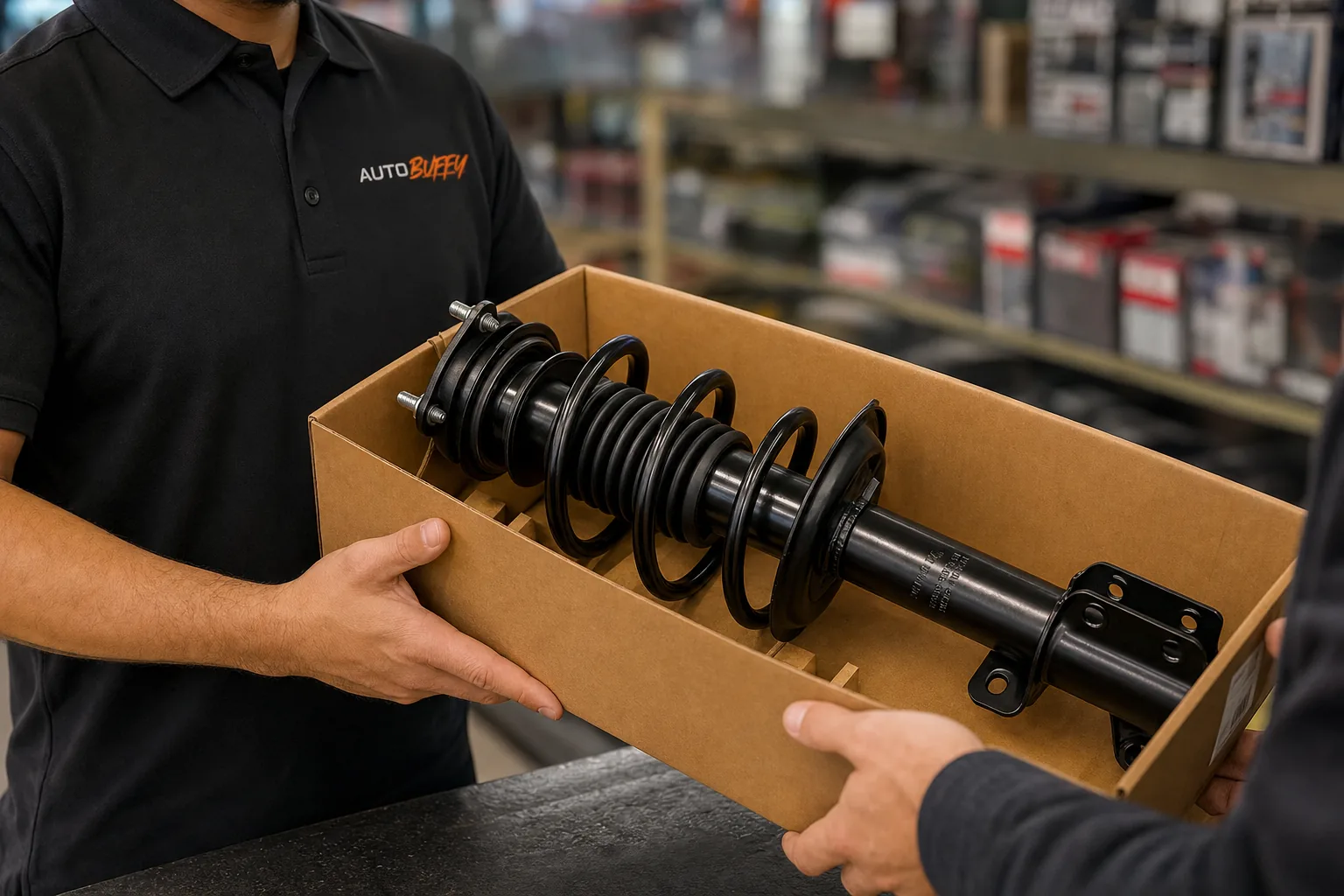
Complete strut assembly (loaded/quick-strut):
- Arrives pre-assembled with a new spring, mount, and bearing plate
- No spring compressor needed
- Faster installation — typically 30–60 minutes per side vs. a bare strut job
- Higher upfront cost, but often better value when you factor in labor or shop time
- The right call if your Maxima has 80,000+ miles, since mounts and bearings are likely worn too
For most Maxima owners replacing struts at high mileage, a complete assembly is the smarter buy. You're not just replacing a shock — you're refreshing the whole top-end of the suspension at once. ---
Which Strut Brand Is Right for Your Maxima? There's no single right answer here — it depends on what you're optimizing for. Here's an honest look at the main players:
KYB
KYB supplies struts to major automakers as original equipment, which gives their aftermarket parts strong credibility. Their Excel-G line matches OEM damping characteristics — if you want the car to feel like it did when new, this is the logical starting point. The Gas-a-Just line runs stiffer, which suits drivers who want more control and don't mind a firmer ride. KYB also offers Strut-Plus complete assemblies that make DIY straightforward. ### Monroe
Monroe's OESpectrum line uses what they call a variable valving system designed to adapt across different road conditions. Their Quick-Strut complete assemblies are popular for DIY installs because the fit and finish is consistent. Monroe tends to sit in a slightly softer tune than KYB, which some Maxima owners prefer for daily driving comfort. ### Bilstein
Bilstein uses a monotube design rather than the twin-tube setup common to most economy and mid-range struts. Monotube dampers handle heat better — they don't fade as quickly during spirited driving. If you're a more aggressive driver or want the Maxima to handle crisply rather than just ride smoothly, Bilstein is worth the premium. They're a legitimate upgrade from OEM, not just a replacement. ### Gabriel
Gabriel's Ultra struts offer a solid budget-to-quality ratio for commuter-focused Maxima owners who want reliable parts without stepping up to KYB or Monroe pricing. Not a performance choice, but a sensible everyday one. My honest take: For most daily-driven Maximas, KYB Excel-G complete assemblies hit the best balance of fit accuracy, ride quality, and price. If you care more about handling than comfort, step up to Bilstein. If budget is the primary driver, Monroe Quick-Strut assemblies are the dependable middle ground. ---
What to Expect From Installation
Whether you're DIYing or handing it to a shop, here's what the job involves:
- Lift the car and remove the wheel
- Disconnect the brake line bracket and ABS sensor wire from the strut
- Remove the lower strut-to-knuckle bolts (these can be stubborn on a high-mileage Maxima — penetrating oil helps)
- Remove the three top-mount nuts from inside the engine bay (front) or trunk/interior panel (rear)
- Install the new assembly and torque to spec
- Reinstall the wheel and repeat on the other side of the axle
- Get a 4-wheel alignment — this is non-negotiable
Budget $80–$150 for alignment. Skipping it will cost you more in tire wear than you saved. A DIY front strut job on a Maxima takes most competent home mechanics 3–5 hours for both sides using complete assemblies. Rear is generally easier. ---
Professional vs. DIY Cost Comparison
| Scenario | Estimated Cost |
|---|---|
| Shop (parts + labor, per axle) | $776–$1,036 |
| DIY with complete assemblies (per axle) | $150–$350 in parts |
| Alignment (always add this) | $80–$150 |
| DIY total (both axles + alignment) | $400–$850 approximate |
The DIY savings are real if you have the tools and time. If you're paying shop rates, ask if they'll use your supplied parts — many will, though they may reduce or eliminate their parts warranty. ---
Why buy from AutoBuffy
- Fitment check: add your vehicle and we confirm the part fits before you buy. If it doesn't fit because of our listing, you get a free return and a full refund, including original shipping.
- 24-month limited warranty on new parts bought on autobuffy.com.
- Real reviews: rated 4.9 by 19,069 verified customers.
- 30-day returns on unused parts in the original packaging.
- Free shipping on orders $50+. Orders placed before 12:00 PM ET (Mon-Fri) ship the same business day.
- Questions about an order? Call 888-477-2530 or email help@autobuffy.com.
Find the right struts for your Nissan Maxima
Guaranteed fit, ships free
FAQ / People Also Ask
According to RepairPal data from January 2026, professional replacement runs between $776 and $1,036 per axle (parts + labor). DIY with quality aftermarket struts typically brings that down to $150–$350 in parts per axle, depending on the brand and whether you buy a complete strut assembly or separate components.


Comments
Loading comments...
Comments are moderated by the AutoBuffy team.