

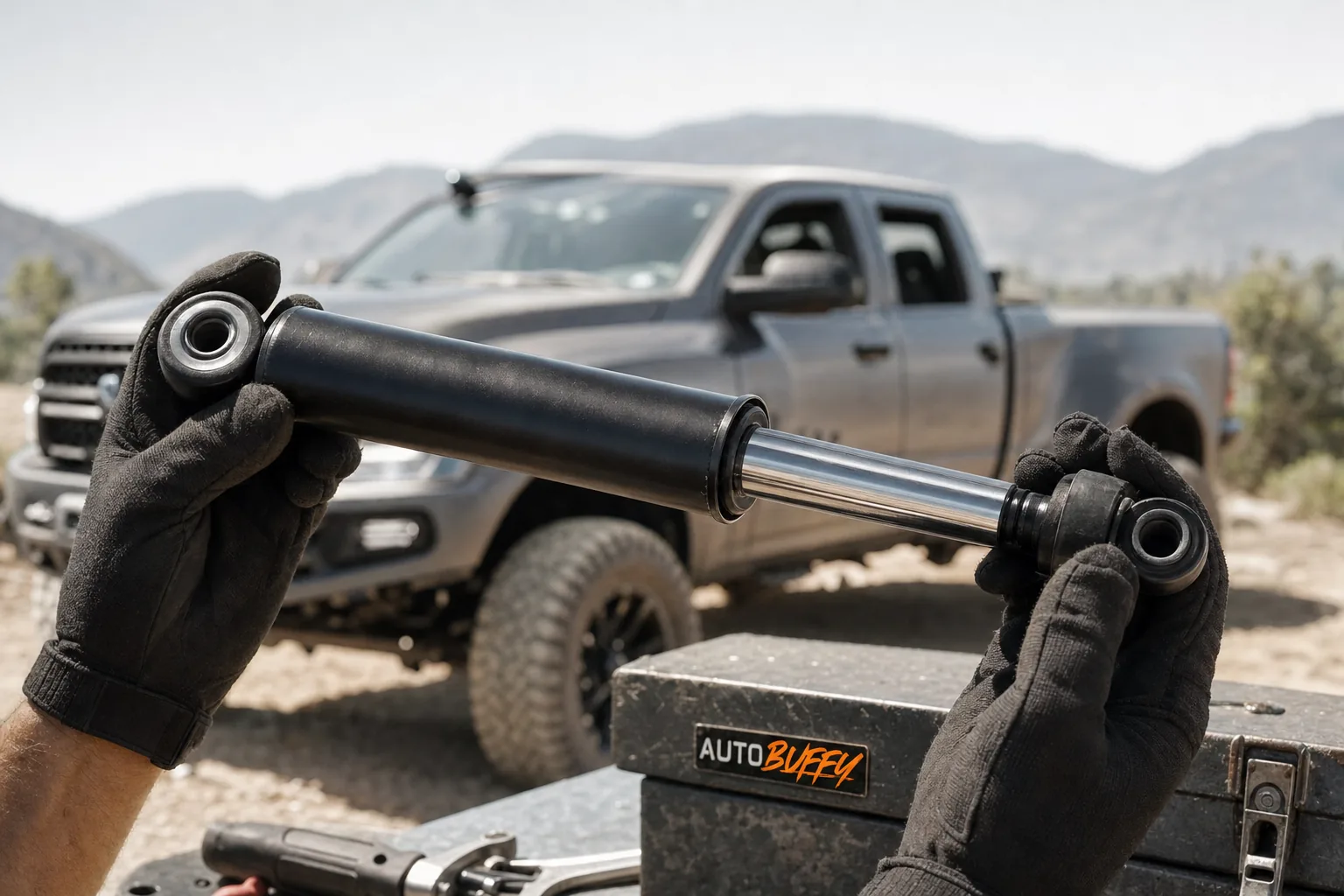
Peterbilt 379 Shocks Guide: Front, Rear, Cab & Steer Axle — What to Buy and Why
Everything you need to know about replacing shocks on a Peterbilt 379 — positions, part specs, brands, and costs — for the 1987–2007 legend.
The Short Answer
The Peterbilt 379 requires shock absorbers in four distinct positions — front, rear, steer axle, and cab — and choosing the right unit for each position is the difference between a truck that handles a 40-ton load confidently and one that wanders, bounces, and wears out tires prematurely.
| Position | Role | OEM Reference | Typical Market Range (per shock) |
|---|---|---|---|
| Front Shock | Steering response, road feel | B71-6009 | $400–$900 |
| Rear Shock | Load stabilization | 03-07423-2 | $400–$1,000+ |
| Cab Shock | Driver comfort, cab isolation | 29-02455 | $300–$800 |
| Steer Axle Shock | Front axle control | Varies by config | $400–$900 |
| Corner Module (front or rear) | Pre-assembled, bolt-in unit | — | $1,400–$1,850 |
*Prices reflect typical aftermarket market ranges as of 2024–2025. Use the part finder below for your exact fitment and current pricing.*
What Makes the Peterbilt 379 Suspension Unique
The 379 ran from 1987 to 2007 — a 20-year production run that made it one of the most recognized Class 8 trucks ever built. PACCAR, the same parent company behind Kenworth, built the 379 at its Denton, Texas facility. In 2024, that plant celebrated producing its 800,000th unit — a milestone that speaks to how deeply the platform is embedded in North American trucking. Because the 379 spans two decades of production, suspension specs aren't uniform across all years. A 1989 model and a 2005 model may share the same frame silhouette, but the shock mounting hardware, stroke length, and axle configuration can differ. Always confirm your exact year and axle setup before ordering. The 379 was replaced by the Peterbilt 389, which continues the long-hood legacy. If you're working on a 389, some fitment overlaps exist, but don't assume — verify. ---
The Four Shock Positions: What Each One Actually Does
Front Shocks
These are your primary handling shocks. They control nose dive under braking, limit wheel hop on rough pavement, and keep your steering predictable at highway speed. A worn front shock on a loaded semi isn't just uncomfortable — it's a safety issue. The OEM-equivalent reference for the 379 front shock is B71-6009, though aftermarket fitment for this position spans the 1986–2007 model range. ### Rear Shocks
Rear shocks work overtime on a loaded 379. They're managing the weight transfer of whatever's on that fifth wheel while trying to keep the rear axle in contact with the road. The OEM reference 03-07423-2 covers the rear position. For this spot, monotube gas-pressure designs handle heat buildup significantly better than basic twin-tube units — a real advantage when you're pulling loaded and hitting rough secondary roads. ### Steer Axle Shocks
These work alongside the front shocks on the steer axle to damp oscillations that would otherwise translate directly into steering wheel feedback. Drivers often feel the difference here most acutely: a good steer axle shock means less arm fatigue on long hauls. ### Cab Shocks
The cab shock is the one many owner-operators overlook. It isolates the cab from the chassis, and on a truck doing a million miles, it's doing a lot of work. The OEM reference 29-02455 covers the cab position. When cab shocks go soft, you'll notice the cab rocking independently from the frame — especially noticeable when shifting lanes at speed. ---
Which Brands Are in the Market and What to Know About Each
Bilstein
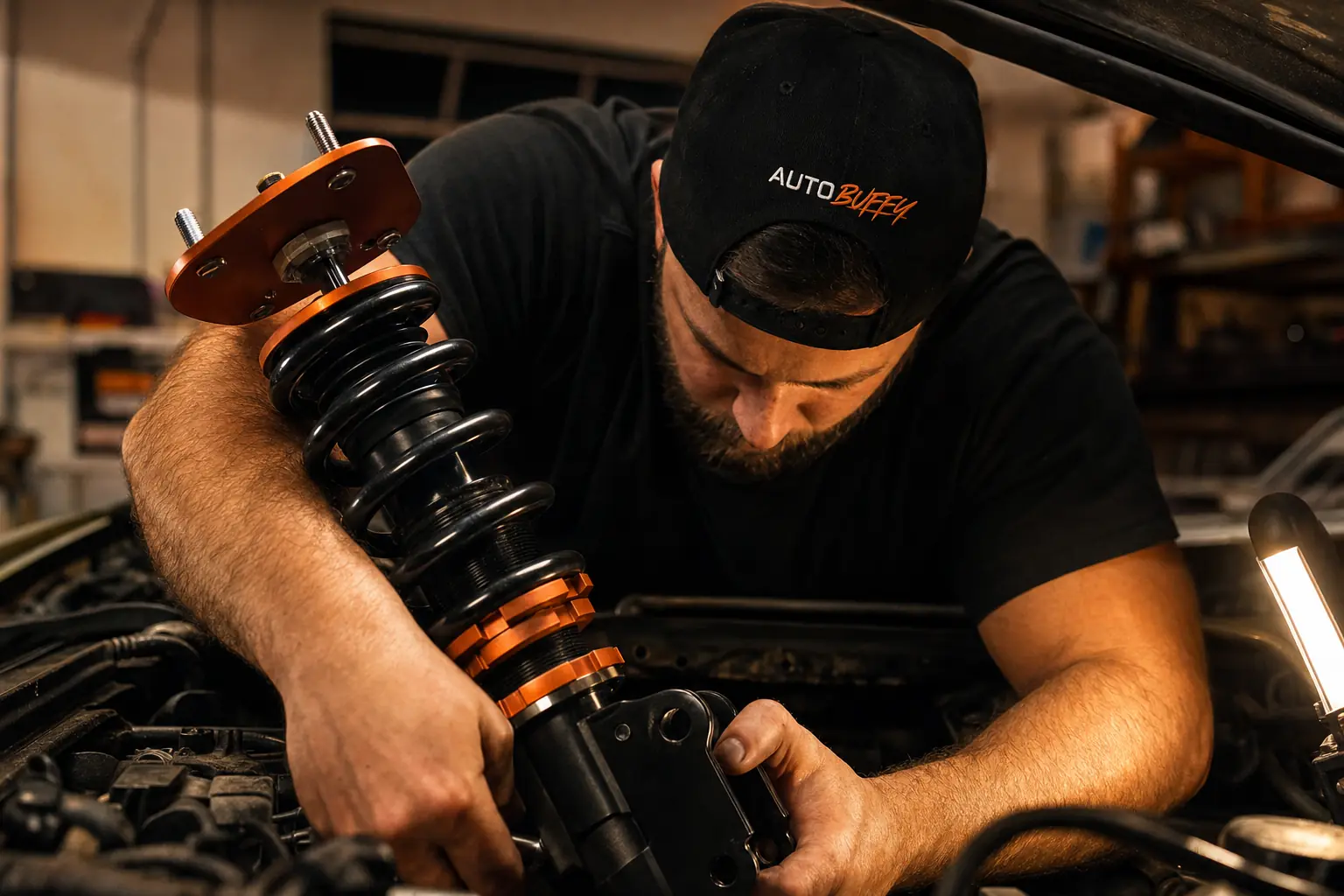
Bilstein's heavy-duty lineup for the 379 centers on their 60mm monotube design. The 60mm bore is a meaningful spec here — larger bore means more oil capacity and better heat dissipation, which is directly relevant to a truck that may be working at or near GVW for most of its life. Their catalog for the 379 covers corner modules (pre-assembled front and rear units) as well as individual shock bodies. Corner modules cost more upfront, but they reduce installation time and eliminate the guesswork of sourcing separate mounting hardware. If you're putting in the labor yourself or paying a shop by the hour, a corner module can actually be the more economical choice once you factor in shop time. In my honest experience reading through suspension failure data, monotube shocks on Class 8 trucks show measurably lower fade after extended downhill runs compared to equivalent twin-tube units. Bilstein's 60mm design is built around that reality. ### Dorman
Dorman takes a different approach — direct-fit OEM replacement rather than performance-upgrade. Their rear air shock set for the 379 is designed to swap in where the factory unit came out, with no modifications. For fleets or owner-operators who need reliable replacement without complexity, that's a genuinely useful product. Dorman sets for the rear position are available as a pair, which aligns with the best practice of replacing axle positions together. ### Motorcraft
Motorcraft is Ford's OEM parts brand, and their presence in the heavy-duty truck shock market is narrower. Their fitment for the 379 covers specific rear positions. If the Motorcraft unit fits your exact configuration, it's a credible OEM-quality option — Motorcraft parts are manufactured to OEM specifications. Confirm fitment carefully for this brand, as their catalog coverage for the 379 is more specific than Bilstein's or Dorman's. ---
How to Know Your 379 Shocks Need Replacing
Don't wait until something breaks. On a Class 8 truck, worn shocks have downstream consequences — accelerated tire wear, increased brake distances, and added stress on frame components that are expensive to repair. Watch for:
- Cab bounce that takes more than one or two cycles to settle after a bump
- Steering wander at highway speed, especially when lightly loaded
- Cupped or scalloped tire wear on the steer tires
- Visible oil on the shock body — that's a failed seal, and the shock is done
- Cab rock that feels disconnected from chassis movement (cab shock specific)
A rough field test: push down hard on a corner of the cab or bumper and release. If it bounces more than once or twice, the shock isn't damping correctly. ---
Installation Notes for the Peterbilt 379
Replacing shocks on a 379 isn't a driveway job for most people — you need a commercial lift or at minimum solid jack stands rated for the axle weight, and the right torque specs for the mounting hardware. Corroded mounting bolts are common on trucks that have seen salt-belt winters; plan for penetrating oil and extra time. Key points:
- Replace in pairs — both fronts or both rears at the same time. Mixing a new shock with a worn one on the same axle creates handling imbalance. 2. Torque to spec — the mounting bolts on the 379 have specific torque values. Undertorqued bolts will back out; overtorqued can crack the mount. 3. Check bushing condition — while you're in there, inspect the shock bushings. A new shock in a worn bushing will wear faster and won't perform as designed. 4. Cab shocks last — if you're doing a full replacement, leave cab shocks for last so you have a stable platform to work from. Shop labor for a commercial truck typically runs $100–$175/hour depending on region. A single shock replacement is roughly 1–2 hours; a full four-position job can run a full day. ---
Front vs. Rear: Where to Prioritize Your Budget
If budget forces you to choose, prioritize front shocks and steer axle shocks first. Steering control and brake stability are safety-critical. Rear shocks affect ride quality and load handling, but a degraded rear shock won't cause a loss of steering control the way a failed front unit can. That said, if your rear shocks are leaking or completely collapsed, don't delay. Rear axle hop under load puts stress on the driveline and frame that adds up to expensive repairs fast. ---
Why buy from AutoBuffy
- Fitment check: add your vehicle and we confirm the part fits before you buy. If it doesn't fit because of our listing, you get a free return and a full refund, including original shipping.
- 24-month limited warranty on new parts bought on autobuffy.com.
- Real reviews: rated 4.9 by 19,069 verified customers.
- 30-day returns on unused parts in the original packaging.
- Free shipping on orders $50+. Orders placed before 12:00 PM ET (Mon-Fri) ship the same business day.
- Questions about an order? Call 888-477-2530 or email help@autobuffy.com.
- Shop or fleet? Call 301-463-4380 for shop pricing.
Find the right shock absorber for your Peterbilt 379
Guaranteed fit, ships free
FAQ / People Also Ask
The 379 uses shocks in four positions: front (steering and road feel), rear (load stabilization), steer axle, and cab shocks (driver comfort). Each position may require a different shock specification, so always confirm by position before ordering.
Comments
Loading comments...
Comments are moderated by the AutoBuffy team.