


Pitman Arm vs Idler Arm: Why Shops Replace Both on GM and Ram Trucks
Confused about pitman arm vs idler arm? We break down what each does, why GM and Ram trucks wear them out fast, and why shops always replace both.
The Short Answer
On trucks with parallelogram steering — especially GM and older Ram platforms — the pitman arm and idler arm work as a matched pair, and replacing just one while leaving the other worn is a false economy that puts you right back in the shop.
| Pitman Arm | Idler Arm | |
|---|---|---|
| Location | Steering gear box to center link | Frame to opposite end of center link |
| Function | Drives the steering linkage | Supports and pivots the center link |
| Load type | Active (torque-driven) | Passive (pivot/support) |
| Common failure signs | Steering play, clunk, wander | Wander, cupped tires, loose feel |
| Typical parts cost (pair) | \$180–\$420 depending on kit | Included in combo kits |
| Replace together? | Yes — always recommended | Yes — always recommended |
What Each Arm Actually Does
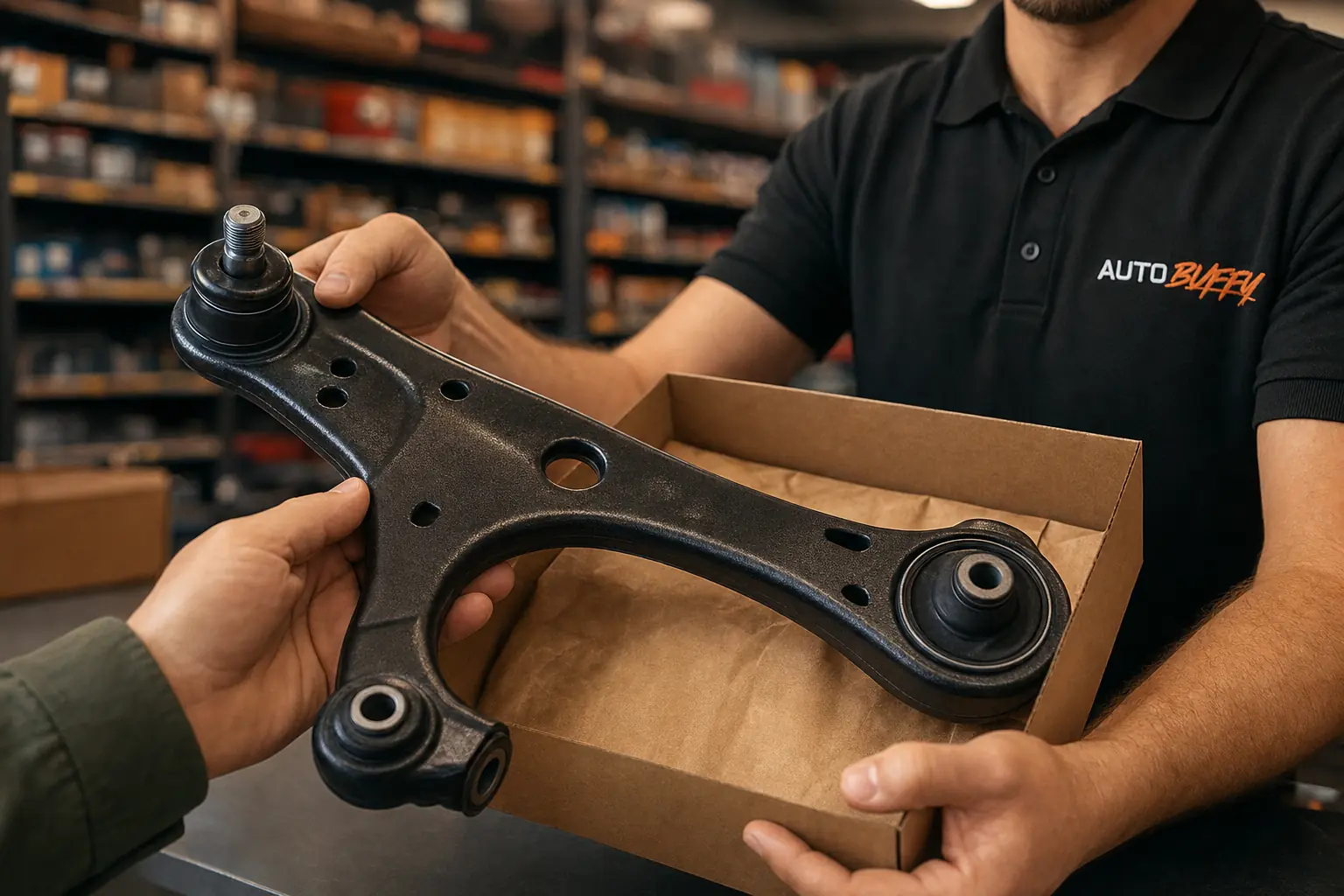
The steering system on a traditional body-on-frame truck isn't rack-and-pinion — it's a parallelogram linkage. That setup has four key moving pieces: the pitman arm, center link, idler arm, and two tie rod assemblies. Here's how it flows:
- You turn the steering wheel. 2. The steering gear box rotates. 3. The pitman arm — bolted to the gear box output shaft — converts that rotation into lateral (side-to-side) movement. 4. The pitman arm pushes or pulls the center link (sometimes called a relay rod or drag link). 5. The opposite end of the center link is held level by the idler arm, which pivots on a bracket bolted to the frame. 6. Both inner tie rods connect to the center link and push the front wheels left or right. The pitman arm is the *powered* side. The idler arm is the *support* side. Neither one functions correctly without the other. ### Why the Idler Arm Gets Overlooked
The idler arm isn't connected to the steering gear, so it doesn't feel like it's doing much. But it holds the center link at the correct height and angle. When the idler arm pivot joint wears loose, the center link can droop or wobble — and that translates directly into a steering wheel that feels vague, wandery, or sloppy even at low speeds. Because the idler arm is passive, drivers sometimes assume it's "fine" and replace only the pitman arm. It's a mistake. Both joints see constant motion and load every single time the steering wheel moves. ---
Why GM and Ram Trucks Are Especially Prone to This Wear
Pitman and idler arm wear is a truck problem, not a car problem — because most modern cars use rack-and-pinion steering and don't have these components at all. Full-size pickups and body-on-frame SUVs kept parallelogram linkage systems for decades. GM trucks — Silverado, Sierra, Tahoe, Suburban, Yukon — have carried this steering geometry through multiple generations. Shops that specialize in these platforms will tell you it's one of the most predictable wear items on the front end. Hard use, towing, payload, and even just high mileage on rough roads accelerates joint wear in both arms simultaneously. Ram trucks with older solid front axles (common on 2500 and 3500 heavy-duty models) use a pitman arm and drag link in a similar arrangement. Even some older Ram 1500s used this setup before the platform moved toward rack-and-pinion. If your Ram still has a steering gear box rather than a rack, it almost certainly has a pitman arm involved — and the drag link pivot wears in a similar fashion. The pattern across both brands is consistent: by the time one arm is visibly worn or testing loose on a drag test, the other is right behind it. ---
How to Tell If Yours Are Worn
You don't need a lift to catch early signs. The symptoms of worn pitman and idler arms are pretty telling:
- Steering wheel play — more than about an inch of free rotation before the wheels respond
- Highway wander — the truck drifts and requires constant correction
- Clunking over bumps — especially when turning, coming from the front-center of the truck
- Cupped or feathered tire wear — uneven wear patterns from inconsistent wheel tracking
- Pulling under braking — if the arms are bad enough, the geometry shifts under load
A proper inspection involves a helper moving the steering wheel while a technician watches the linkage on a lift. Any visible slop in the pitman or idler arm pivot = replacement time. > "Worn idler and pitman arms often create loose steering, front-end wandering, uneven tire wear, steering wheel play, and unstable handling." — confirmed wear symptom list
This isn't a "monitor it" situation. Sloppy steering linkage is a safety issue, full stop. ---
The Case for Replacing Both at the Same Time
The labor argument alone makes this a no-brainer. Dropping the center link to replace one arm means you're 80% of the way to replacing both. The extra parts cost on the second arm is almost always less than the additional labor you'd pay for a return visit. There's also a geometry argument. If you install a tight new pitman arm next to a worn idler arm, the steering still feels loose — because the center link is still flopping on one end. You won't know if the first repair fully solved the problem until you fix both. And by then you've paid labor twice. Shops that see a lot of these trucks replace both arms as a matter of policy. That's not upselling — it's just efficient repair practice. ---
Should You Include the Idler Arm Bracket? On some GM trucks, the **idler arm bracket** — the frame-mounted piece the idler arm pivots in — is a separate serviceable part. It can crack, strip its threads, or develop its own slop over time. MOOG's lineup for these applications includes combination kits that cover the pitman arm, idler arm, and bracket together. If your truck has high miles or you're seeing signs of bracket movement, opting for a full kit makes sense. Replacing the arm on a compromised bracket just transfers the problem. MOOG is a long-established steering and suspension brand under Tenneco's aftermarket portfolio — the same group that includes Monroe, Fel-Pro, and Walker, among others. Their idler and pitman arm kits are engineered for specific vehicle applications and cover a wide range of GM and other truck platforms. Use the part finder below to match the right kit to your year and model rather than guessing at part numbers. ---
What to Do After the Repair
Two things are non-negotiable after replacing steering linkage:
- Wheel alignment — toe changes any time you disturb the center link. Skip the alignment and you'll eat through tires in months. 2. Test drive on known roads — get a feel for how the steering response changed. A tight, responsive wheel with no wander is the target. If wander persists after new arms and an alignment, the center link or tie rod ends may also need attention. Budget realistically. Parts for a pitman and idler arm combo typically run in the \$180–\$420 range depending on your truck and whether you need the bracket. Shop labor commonly adds another \$150–\$300. A follow-up alignment is another \$80–\$150. Total project cost at a shop generally lands in the \$400–\$800 range — less if you're doing it yourself.
Why buy from AutoBuffy
- Fitment check: add your vehicle and we confirm the part fits before you buy. If it doesn't fit because of our listing, you get a free return and a full refund, including original shipping.
- 24-month limited warranty on new parts bought on autobuffy.com.
- Real reviews: rated 4.9 by 19,069 verified customers.
- 30-day returns on unused parts in the original packaging.
- Free shipping on orders $50+. Orders placed before 12:00 PM ET (Mon-Fri) ship the same business day.
- Questions about an order? Call 888-477-2530 or email help@autobuffy.com.
- Shop or fleet? Call 301-463-4380 for shop pricing.
Find the right part for your vehicle
Guaranteed fit, ships free
FAQ / People Also Ask
The pitman arm connects the steering gear box to the center link and is the driven side of the steering linkage — it pushes and pulls the center link as you turn the wheel. The idler arm connects the opposite end of the center link to the frame and acts as a pivot support. One moves the linkage; the other keeps it level and stable.


Comments
Loading comments...
Comments are moderated by the AutoBuffy team.