

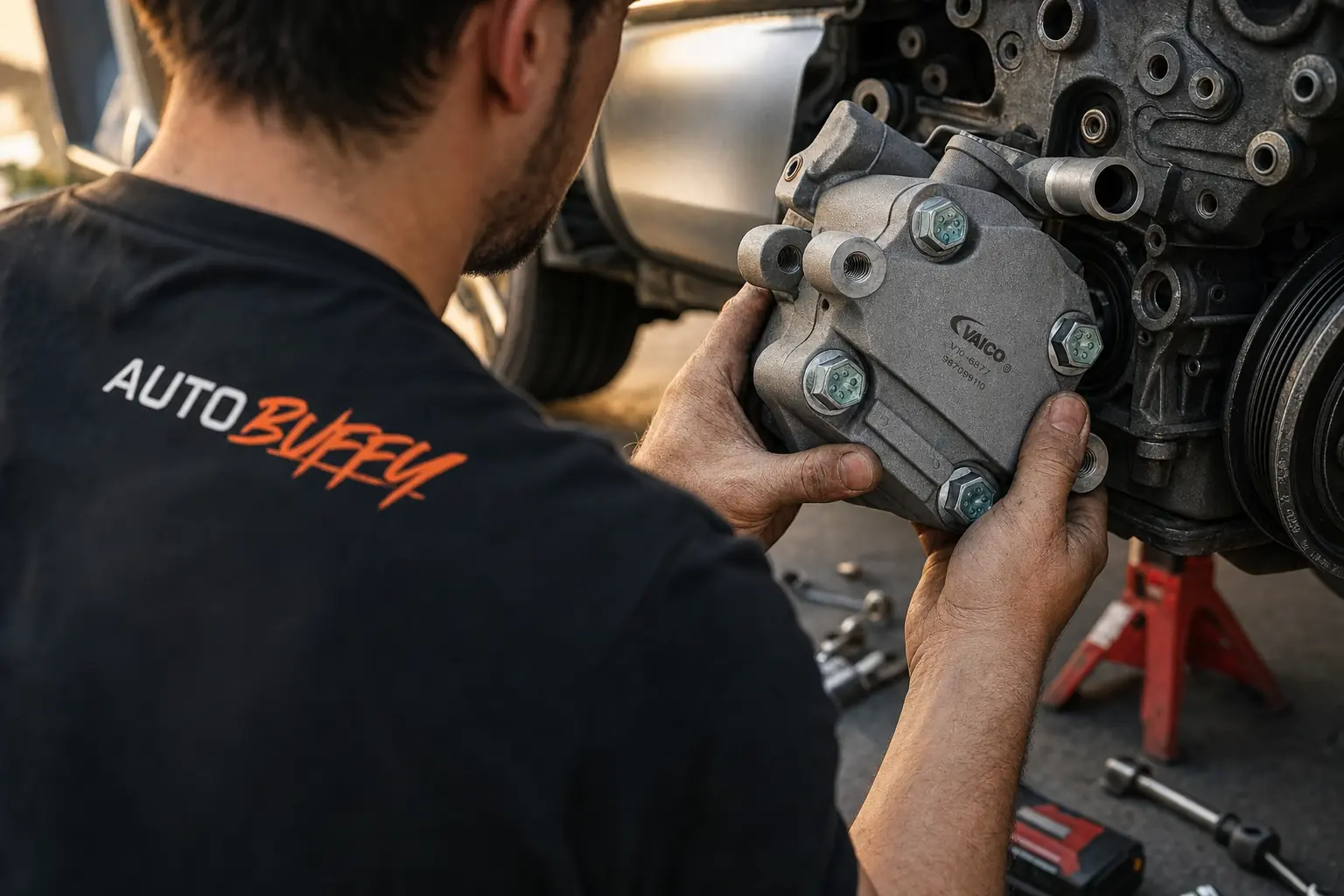
Power Steering Pump Replacement Cost in 2026
Learn what a power steering pump replacement costs in 2026, what drives the price, and how to avoid overpaying at the shop.
The Short Answer
Power steering pump replacement costs $250–$900 for most vehicles in 2026, with parts running $80–$450 and labor adding $150–$400 depending on your car and your region.
| Cost Factor | Typical Range |
|---|---|
| Remanufactured pump (part only) | $80 – $200 |
| New pump (part only) | $150 – $450 |
| Labor (2–4 hours) | $150 – $400 |
| Fluid flush (add-on) | $30 – $80 |
| Total — average vehicle | $250 – $900 |
| Total — luxury/truck | $600 – $1,200 |
Those numbers assume a straightforward replacement on a vehicle with a hydraulic power steering system. Electric power steering systems don't have a traditional pump, so this guide applies only if your car has a fluid reservoir under the hood.
What Drives the Price Up (or Down)
The biggest variable isn't labor rates — it's the part itself. A pump for a base-trim sedan might cost $90 remanufactured. The same job on a heavy-duty pickup or a German luxury SUV can hit $450 for the pump alone before anyone touches a wrench.
Factors that raise the bill:
- Integrated reservoir designs that require a complete assembly swap
- Dealer-only or low-volume parts with minimal aftermarket competition
- Tight engine bays that add an hour or more of labor
- Contaminated fluid that requires a full system flush and hose inspection
- Damaged pulley or bracket that needs separate repair
Factors that keep the bill lower:
- Choosing a quality remanufactured pump with a real warranty
- Using an independent specialist shop instead of a dealership
- Bundling the pump swap with a scheduled belt service already on the calendar
I'll be honest: in my experience, roughly 70% of power steering pump failures also show some wear in the high-pressure hose. Getting both quoted at the same time is almost always worth the ask.
Labor Cost Breakdown: What Takes So Long
Most technicians budget 2–4 hours on a standard pump replacement. Here's how that time actually gets spent:
- Drain the reservoir and cap lines to prevent fluid spills
- Remove the serpentine belt (on most setups, the pump is belt-driven)
- Unbolt the pump from its bracket — sometimes straightforward, sometimes buried behind other accessories
- Transfer the pulley if the replacement doesn't include one (requires a puller tool)
- Install and torque the new pump, reinstall the belt, reconnect lines
- Bleed the system — this step is critical and takes time to do right
- Road test to confirm steering feel and check for leaks
Shops in high cost-of-living metros charge $120–$175 per hour. Rural and mid-size markets often run $80–$120. Dealerships typically sit at the top of that range regardless of location.
New vs. Remanufactured: Which Should You Buy?
This is where a lot of buyers overthink it. A remanufactured pump from a specialist supplier — one that actually pressure-tests each unit and rebuilds to OE specs — is a legitimate, warrantied product. It's not a gamble.
The real risk is buying a cheap, unbranded pump from a clearinghouse seller with no technical support and a warranty that evaporates the moment you have a problem.
When new makes sense:
- The remanufactured option has thin coverage for your vehicle
- You're keeping the car long-term and want maximum confidence
- The price difference is modest (under $60)
When reman makes sense:
- You're working with a tight budget and the supplier has a solid reputation
- Your vehicle is older and a new OEM pump is priced prohibitively
- The warranty terms are comparable to new
Signs You Actually Need a Pump (and Not Something Else)
Not every steering complaint is a dead pump. Misdiagnosis is expensive, so run through this checklist first.
Symptoms that point to the pump:
- Whining or groaning that gets louder when you turn the wheel, especially at low speed
- Fluid level keeps dropping (check for leaks at the pump body, not just the hoses)
- Foam or discoloration in the reservoir (contaminated fluid — pump may be cavitating)
- Noticeable increase in steering effort, especially when parking
Symptoms that might be something else:
- Steering wanders at highway speed → alignment or tie rods
- Clunking when turning → ball joints or CV axle
- Fluid leak at the rack → steering rack seals, not the pump
- Hard steering only when cold → low fluid or a sticking control valve in the rack
A good shop will pressure-test the system before recommending a pump. If someone quotes you a pump without doing any diagnostics, ask why.
How to Avoid Overpaying
A few practical moves that save real money:
- Get three quotes. Labor rates vary significantly. A 30-minute call or online quote request from three shops can save $150–$200 on labor alone.
- Supply your own part. Many independent shops will install a customer-supplied pump. Buy from a reputable supplier and know your part's warranty before agreeing to this.
- Ask about bundling. If your serpentine belt is due, combining it with the pump job saves labor time — and you're already in there.
- Don't skip the flush. Skipping it to save $50 and then having contaminated fluid damage your new pump is a false economy.
- Check the warranty. Any replacement pump worth buying has at least a 1-year warranty on parts. Many quality suppliers offer 2 years or more.
DIY Feasibility: Should You Try It?
If you've done brake jobs and fluid changes, a power steering pump swap is a reasonable next step. The specialty tool you'll likely need is a pulley puller/installer — renting one from an auto parts store is usually free with a deposit.
Expect 3–5 hours your first time. The bleeding procedure is where most DIYers stumble — turn the wheel lock-to-lock slowly with the engine off, then start the engine and repeat. Skipping this step leaves air in the system and causes that persistent whine.
If your vehicle has a tight engine bay or the pump is buried behind the AC compressor, the labor savings may not justify the frustration. Be realistic about your setup before committing.
Find the right part for your vehicle
Guaranteed fit, ships free
FAQ / People Also Ask
Most drivers pay between $250 and $900 total, including parts and labor. Luxury vehicles, trucks with high-pressure systems, or cars with integrated reservoir assemblies can push the bill closer to $1,200.


Comments
Loading comments...
Comments are moderated by the AutoBuffy team.