

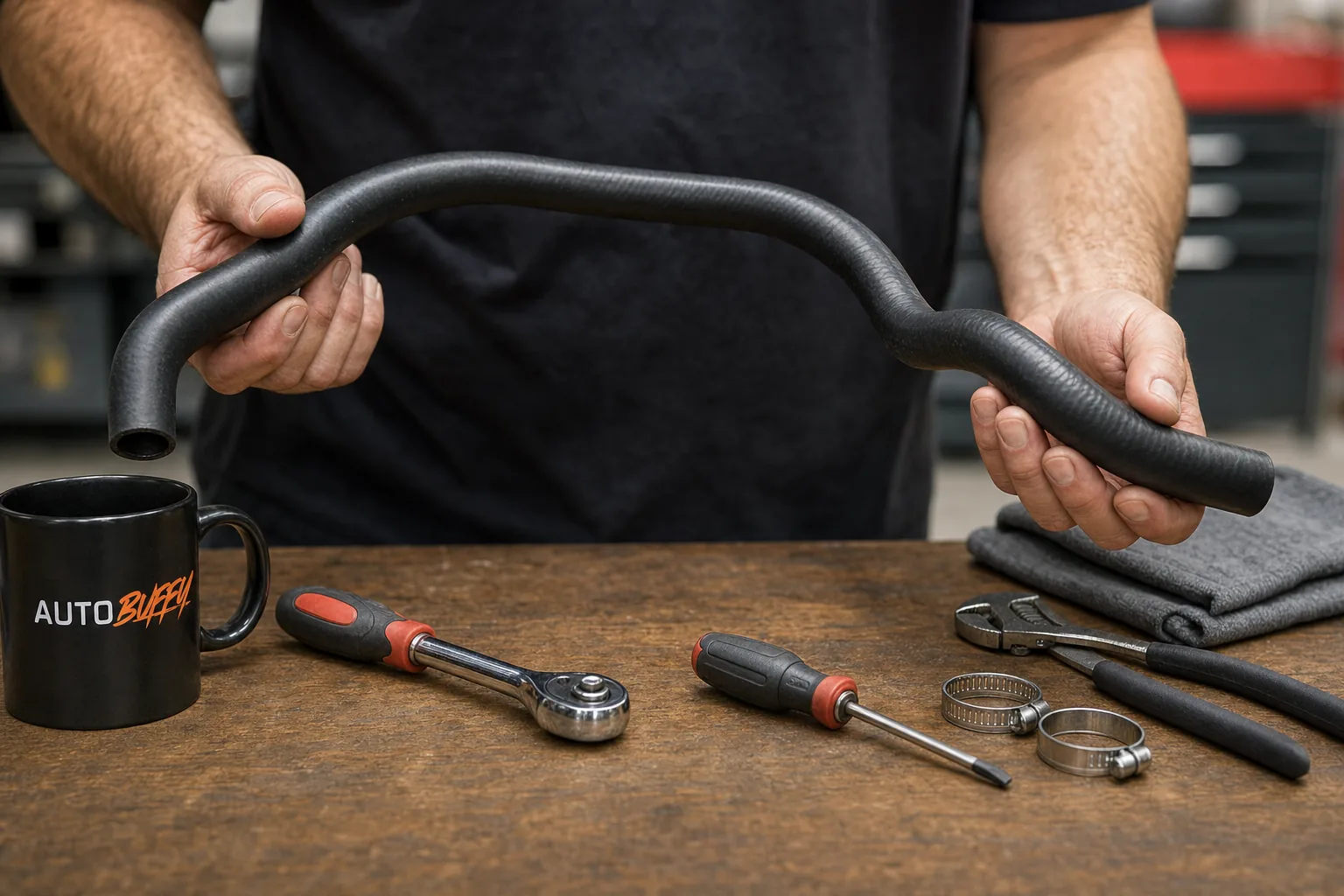
Radiator Hose Replacement Cost: Upper vs Lower Hose
Upper and lower radiator hose replacement costs differ. Here's what you'll actually pay, what affects the price, and when to DIY.
The Short Answer
Replacing a radiator hose costs $75–$250 at most shops, with the part itself running $15–$80 and labor adding $50–$175 depending on whether you're dealing with the upper or lower hose.
| Service | Part Cost | Typical Labor | Total Estimate |
|---|---|---|---|
| Upper radiator hose | $15–$60 | $45–$100 | $60–$160 |
| Lower radiator hose | $20–$80 | $60–$175 | $80–$255 |
| Both hoses (same visit) | $35–$130 | $90–$175 | $125–$305 |
| DIY (parts only) | $35–$130 | $0 | $35–$130 |
*Ranges reflect typical passenger vehicles. Trucks, European imports, and engines with tight packaging can push costs higher.*
Why the Upper and Lower Hose Cost Different Amounts
Both hoses do the same basic job — moving coolant between the engine and radiator — but they sit in different spots and handle different conditions.
The upper hose carries hot coolant from the engine to the radiator. It runs from the thermostat housing at the top of the engine down to the radiator inlet. On most vehicles it's easy to see, easy to grab, and easy to swap. Labor times run short: 30–45 minutes in most cases.
The lower hose carries cooled coolant back from the radiator bottom up to the water pump. It's located lower in the engine bay, often tucked behind the fan shroud, AC lines, or subframe bracing. Draining the system requires more care because gravity isn't working with you — coolant tends to trap in pockets. Bleeding air out of the system afterward takes extra time too. That's why shops charge more for the lower hose even when the part itself costs about the same.
On some compact engines or vehicles with transversely mounted motors, both hoses can be equally frustrating to reach. On a full-size truck with a longitudinally mounted V8, the upper hose is often almost trivially simple.
What Actually Drives the Final Price
Vehicle Type
This is the biggest variable. A domestic pickup truck with a pushrod V8 has a wide-open engine bay and hoses that practically replace themselves. A turbocharged European sedan with layers of ancillary components sitting in the way can turn a 45-minute job into a 2.5-hour job. Labor is sold by the hour.
Hose Design
Straight hoses are cheap. Molded hoses — the kind with bends engineered into them — cost more because they're vehicle-specific and require precision tooling. Some hoses also incorporate heater hose inlets or sensor bungs, which makes them more complex and more expensive to source.
Coolant and Flush
If your coolant looks brown or smells burned, most mechanics will recommend a full flush while the system is open. That adds $50–$120 but it's worth it — dirty coolant accelerates corrosion inside the block and heater core. Don't skip it if it's been more than 2–3 years since the last change.
Geography
Labor rates in San Francisco or Manhattan run 40–60% higher than in rural Tennessee. The part cost is nearly identical; the labor cost is not. That's just the reality of local shop economics.
Signs Your Hose Is Going Bad (Don't Wait Too Long)
Here's the thing about radiator hoses: they fail gradually, then suddenly. You get weeks of warning signs, then one day you're parked on the side of the highway watching steam pour out from under the hood.
- Soft or spongy feel when you squeeze the hose — it should feel firm like a garden hose, not mushy
- Surface cracking visible along the length of the hose
- Bulging near clamps — that's internal delamination and it's a ticking clock
- Coolant smell under the hood with no visible puddle beneath the car
- Low coolant level that keeps needing top-offs
- Temperature gauge fluctuating or running slightly high
My honest opinion: if your vehicle has more than 80,000 miles on original hoses and you haven't replaced them, you're rolling the dice. The hoses look fine from the outside long after they've started degrading inside. A $40 hose that saves you from a $1,500–$2,500 overheated engine repair is one of the easiest value propositions in automotive maintenance.
DIY vs. Shop: Which Makes Sense for You?
When DIY Works Well
If you have a domestic or Japanese vehicle with a conventional engine layout, basic tools (screwdriver, pliers, drain pan), and an afternoon, this is a legitimate beginner repair. The upper hose especially. Total time: 45–75 minutes for someone who's never done it before.
Steps are straightforward:
- Let the engine cool completely — 2+ hours minimum
- Drain coolant from the petcock or lower hose
- Loosen clamps, twist and pull the old hose free
- Clean the connection necks
- Slide on the new hose, seat the clamps
- Refill with fresh coolant and bleed the air out
- Run the engine to temp and check for leaks
When to Pay the Shop
If the lower hose is buried under a shroud and several ancillary components, or if your vehicle has a pressurized coolant system that requires specific bleeding procedures (common on European vehicles), pay the shop. Incorrect bleeding leads to air pockets, which leads to hot spots, which leads to the very overheating you were trying to prevent.
Choosing the Right Replacement Hose
Fit matters more than brand for hoses. A hose that's even slightly off in diameter or length won't seal properly under pressure. Molded hoses need to match your vehicle's routing exactly.
For sourcing, look for:
- OEM-spec dimensions — not generic universal hoses cut to fit unless your vehicle uses a straight section
- EPDM or silicone construction — both handle heat and coolant chemistry well; silicone costs more but lasts longer in high-heat applications
- Vehicle-specific fit guarantee — if the part finder says it fits your year, make, model, and engine, trust it over guessing at the parts counter
Use the finder below to confirm the right hose for your exact vehicle and get today's pricing.
Find the right part for your vehicle
Guaranteed fit, ships free
FAQ / People Also Ask
A single radiator hose replacement typically runs $75–$250 at a shop, depending on whether it's the upper or lower hose, your vehicle type, and local labor rates. The part itself usually costs $15–$80 for most passenger vehicles.


Comments
Loading comments...
Comments are moderated by the AutoBuffy team.