

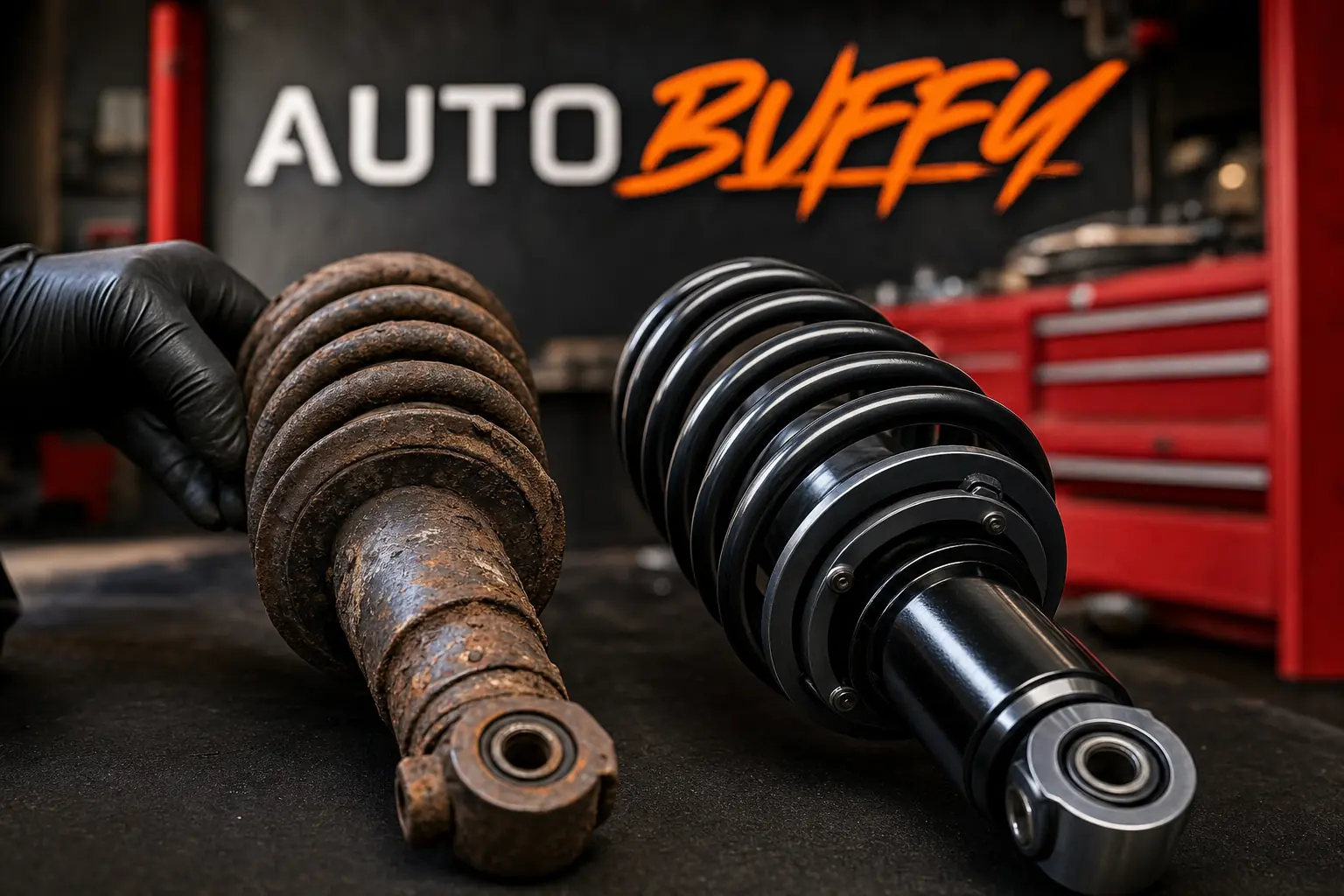
Shock Absorber Replacement Cost (2026): What You'll Really Pay
Shock absorber replacement costs $150–$900+ per axle in 2026. Here's the full breakdown by vehicle type, labor, and whether to DIY or go to a shop.
The Short Answer
Shock absorber replacement typically costs $150–$900 per axle in 2026, with the part itself running $40–$500+ and labor adding $75–$300 depending on your vehicle and where you take it.
Quick Cost Breakdown by Scenario
| Scenario | Part Cost (per axle) | Labor (per axle) | Total Estimate |
|---|---|---|---|
| Economy car, independent shop | $40–$120 | $75–$120 | $115–$240 |
| Truck/SUV, OEM part, dealer | $120–$280 | $150–$300 | $270–$580 |
| Performance vehicle, aftermarket | $180–$400 | $100–$200 | $280–$600 |
| Air suspension module (luxury/truck) | $350–$700+ | $200–$400 | $550–$1,100+ |
| Full vehicle (all 4 shocks), DIY | $160–$800 | $0 | $160–$800 |
Those ranges are honest — what you actually pay depends heavily on your specific vehicle and which brand of shock you choose. Let's break it down properly.
What Actually Drives the Cost
The Part Itself
This is usually the bigger variable. A basic twin-tube shock for a compact car might cost $40–$80. A premium monotube unit for a half-ton truck runs $150–$300 per shock. Air spring modules — which bundle the air bag and shock into one assembly — can run $400–$700 per corner.
Brand choice matters too. OEM parts (think Motorcraft for Ford trucks) are priced higher than economy aftermarket but offer guaranteed factory fit and calibration. Performance aftermarket brands like Bilstein sit at a similar or slightly higher price point to OEM but often deliver better damping characteristics, especially under load or on rough roads.
For reference, OEM-grade Motorcraft shock absorbers for Ford applications typically land in the mid-to-upper range of the price spectrum — these are genuine Ford parts, so you're paying for that factory-spec peace of mind. Bilstein's 46mm monotube complete kits and their air spring modules span a wide range depending on the application, from roughly $400 to over $600 per unit at retail. The Mopar shock option for Chrysler/Ram platforms sits in a similar mid-range territory.
If budget is the priority, there are economy options well below those figures. If you drive a truck hard, tow regularly, or want a noticeable handling improvement, stepping up to a monotube design is genuinely worth it. Personally, I'd spend the extra money on Bilstein or OEM before I'd put a $30 no-name shock on anything I drive daily — call that opinion number one.
Labor
Labor is the other big piece. Independent shops generally charge $75–$150 per axle for a standard shock swap. Dealers run $150–$300 per axle. Air suspension systems are more complex — figure on double the labor time, and some shops will quote a flat rate for the whole job.
Front shocks are often faster to replace than rears on trucks and body-on-frame SUVs. On unibody cars it can go either way. If you're getting all four done at once, most shops will give you a better per-unit labor rate.
Vehicle Type
A 2015 Honda Civic and a Ram 2500 Heavy Duty are completely different jobs. Larger vehicles have heavier components, more complex suspension geometry, and sometimes require specialty tools. Luxury vehicles with adaptive or air suspension add software calibration time on top of the physical swap.
OEM vs. Aftermarket: Which Should You Choose?
For most drivers who just want their vehicle to ride like it did when it was new, OEM is a completely solid choice. Motorcraft (for Ford) and Mopar (for Stellantis vehicles) parts are engineered to factory specs and come with manufacturer warranties.
If you're looking for improved performance, better handling under load, or you're putting your vehicle through more than normal daily driving, a quality aftermarket brand is worth considering. Bilstein has a strong reputation in the industry, particularly their monotube designs, which handle heat better and maintain consistent damping longer under hard use. Their air spring modules are popular on air-suspension-equipped trucks and SUVs as a direct OEM replacement that often outlasts the original.
The honest verdict: for a stock daily driver, OEM is rarely the wrong call. For a truck that tows, a vehicle you drive hard, or a higher-mileage platform where you want to upgrade rather than just restore, premium aftermarket earns its price premium.
DIY vs. Professional Installation
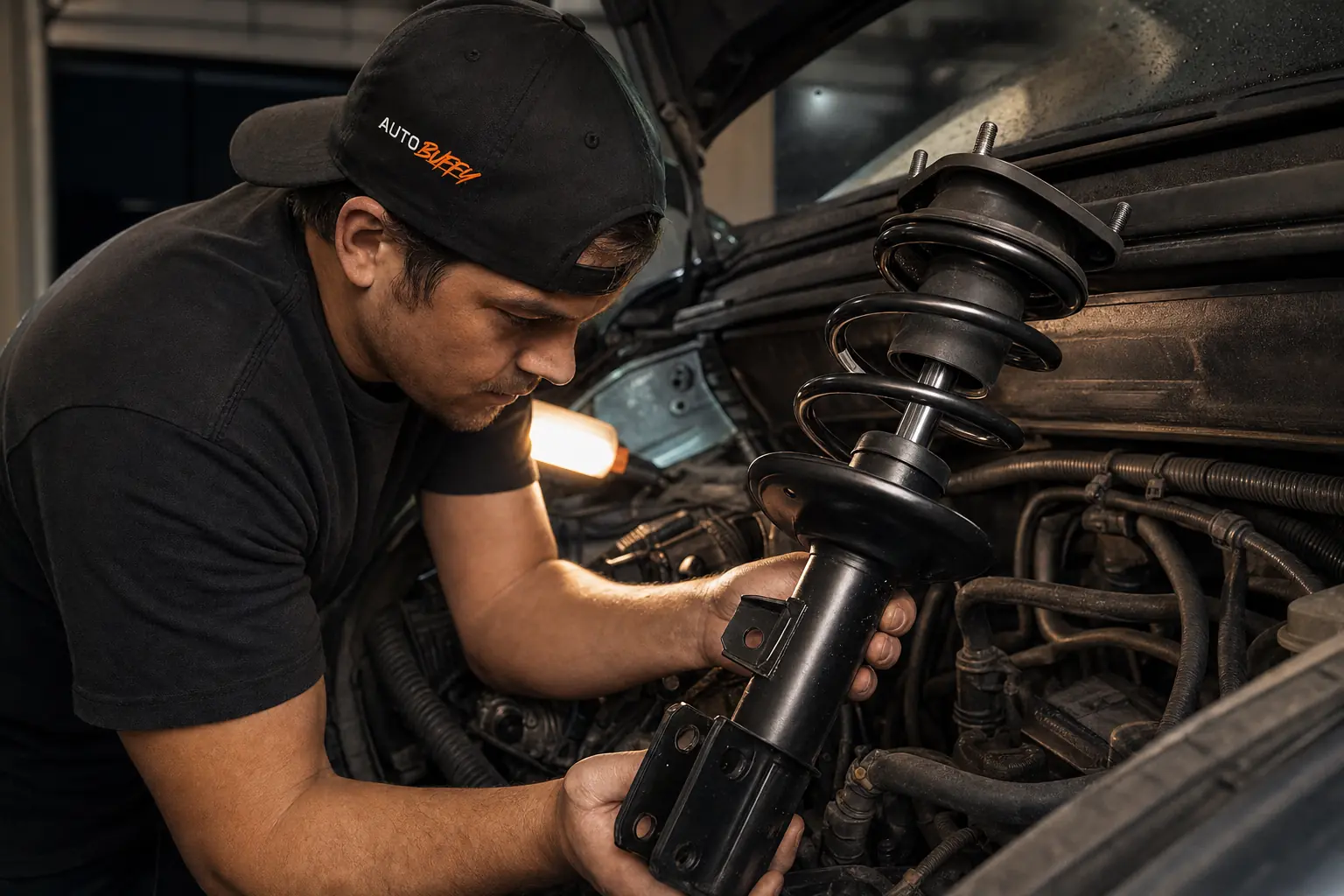
Replacing conventional shocks is one of the more approachable suspension jobs for a home mechanic. You need a floor jack, jack stands, a breaker bar, and some penetrating oil for stubborn fasteners. Most jobs take 1–3 hours per axle once you've done it a time or two.
A few things to know before you start:
- Coilover-style front struts are a different job than a simple shock swap — they involve a spring compressor and more risk.
- Air suspension modules should generally be left to a professional. The air system needs to be depressurized, and on some platforms the control module requires a recalibration after replacement.
- Torque specs matter. Over- or under-torquing shock mounting hardware causes early failure and can be a safety issue. Use a torque wrench.
- Check alignment after front suspension work. It's not always required, but it's cheap insurance.
If you're comfortable with basic mechanical work and your vehicle has conventional shocks (not struts, not air suspension), DIY is a legitimate way to save $150–$300 in labor costs.
When Do You Actually Need New Shocks?
Don't wait for a catastrophic failure. Common warning signs include:
- The vehicle bounces more than once or twice after hitting a bump
- Nose-diving when you brake hard
- Excessive body roll in turns
- Cupping or scalloping wear patterns on your tires
- Visible oil leaking down the shock body
- Steering feels vague or floaty at highway speeds
Most manufacturers recommend inspecting shocks at 50,000 miles and replacing as needed by 75,000–100,000 miles. If you're north of 80,000 miles and haven't touched them, it's worth a look.
How to Get an Exact Price for Your Vehicle
The numbers in this article are honest ranges, but your actual cost depends on your specific year, make, model, and trim — sometimes even which factory suspension package came on your vehicle. The only way to get a precise part match and current pricing is to use a fit checker with your VIN or license plate.
Find the right part for your vehicle
Guaranteed fit, ships free
FAQ / People Also Ask
Most drivers pay between $150 and $900 per axle for shock absorber replacement, depending on the vehicle, the brand of part, and whether you use a dealer or independent shop. High-end trucks, performance vehicles, and air suspension systems can push that number significantly higher.

Comments
Loading comments...
Comments are moderated by the AutoBuffy team.