

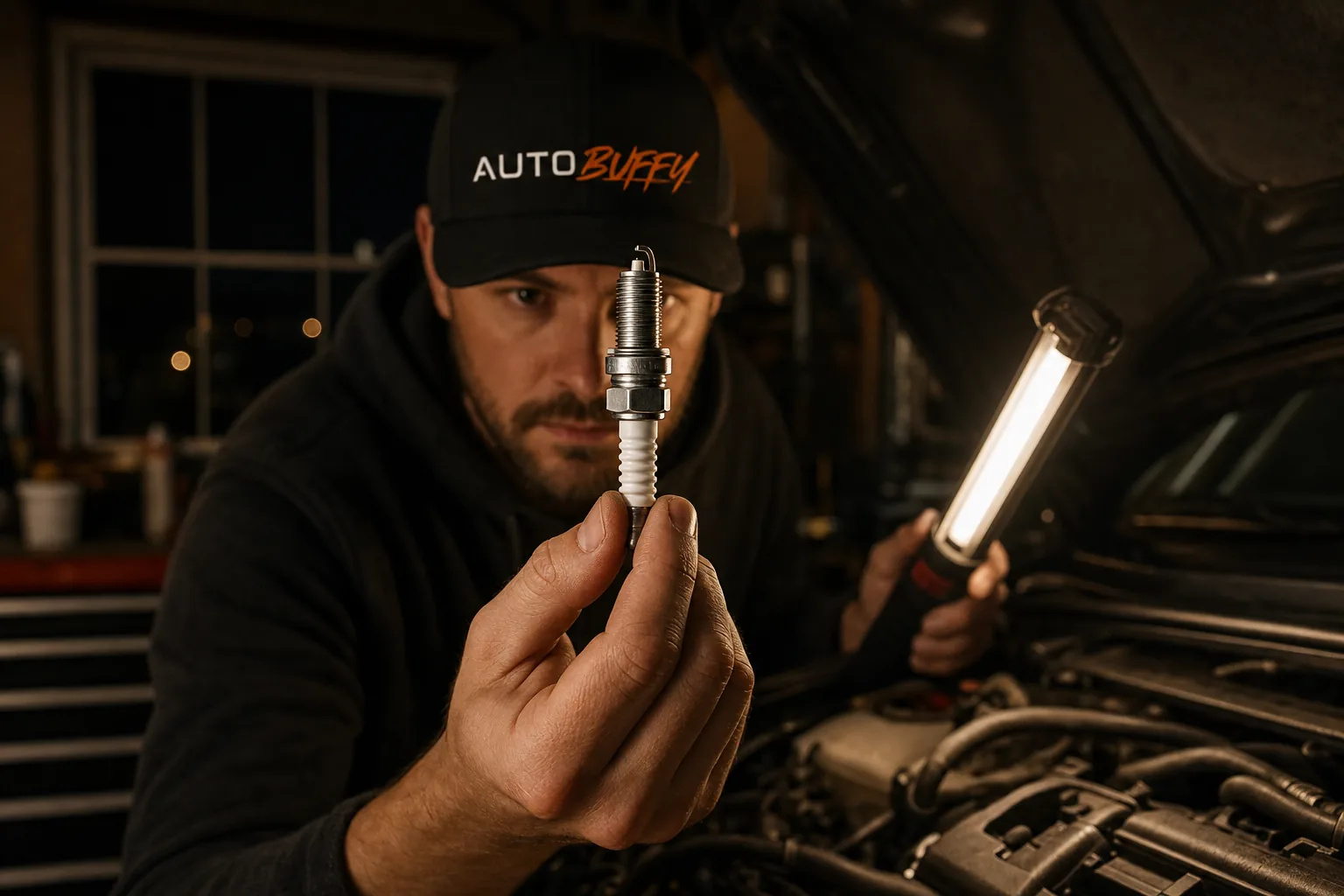
Spark Plug Replacement Cost in 2026: What You'll Really Pay (and When to Replace Them)
Spark plug replacement runs $40–$350 depending on engine type and plug material. Here's the real breakdown before you book a shop.
The Short Answer
Spark plug replacement typically costs $40–$350 in 2026, with most 4-cylinder vehicles landing in the $80–$150 range at a shop and as low as $20–$50 as a DIY job.
| Engine / Plug Type | DIY Parts Cost | Shop Total (Parts + Labor) |
|---|---|---|
| 4-cyl, copper plugs | $12–$24 | $80–$130 |
| 4-cyl, iridium plugs | $30–$60 | $110–$175 |
| V6, copper/platinum | $18–$42 | $130–$220 |
| V6, iridium (hard access) | $45–$90 | $200–$320 |
| V8, iridium | $60–$120 | $220–$350+ |
| Turbocharged engine | $40–$100 | $160–$350 |
Those ranges reflect 2026 national averages. Your actual quote depends on your city, dealership vs. independent shop, and how buried your plugs are.
What Actually Drives the Cost
Spark plugs themselves are cheap. The bill grows because of labor, not parts. A single iridium plug for a Honda Civic might cost $8–$12. For a Ford F-150 V8 with eight plugs, you're at $80–$100 in parts before a wrench touches anything.
Then labor kicks in:
- Easy access engines (most 4-cylinders, inline engines): 0.5–1.0 labor hours
- Transverse V6s with rear plugs near the firewall: 2–4 labor hours
- Coil-on-plug setups where each coil must be removed individually: adds time per cylinder
- Turbocharged engines: plugs run hotter and may require anti-seize treatment — adds a small amount of time and care
Shop labor rates in 2026 range from roughly $90/hr at a busy independent garage to $160–$180/hr at a franchise dealership. That spread explains why two shops can quote you $130 and $280 for the same job.
Dealership vs. Independent Shop vs. DIY
Dealerships charge more but have technicians trained on your specific vehicle. If your car is still under warranty or you have a complex setup, that's worth something. For a straightforward 4-cylinder with easy plug access, an independent shop or even a careful DIY job works perfectly well.
DIY is genuinely worth considering if you're comfortable with basic hand tools. The main risk? Over-tightening a plug and cracking the porcelain, or breaking one off in the head on a high-mileage engine. Use a torque wrench, follow the spec, and you'll be fine.
Spark Plug Types: Which One Does Your Car Need?
This isn't a choice you should make on price alone. Your engine is engineered for a specific heat range and electrode type. Running the wrong plug causes misfires, fouling, or pre-ignition.
Copper plugs have a pure copper core and a nickel-alloy electrode. They're great conductors, cheap, and wear fastest — typically 20,000–30,000 miles. Most older vehicles and budget applications use them.
Platinum plugs use a harder platinum tip that resists erosion. Service life extends to 60,000–75,000 miles. They're common in many 2000s and 2010s vehicles as OEM equipment.
Iridium plugs are the current high-water mark for most passenger vehicles. Iridium is six times harder than platinum. Fine-wire tips produce a stronger spark with less voltage demand. Expect 80,000–100,000 miles of service. The cost per plug runs $12–$25, but you're buying years of not thinking about plugs again.
Double platinum plugs are similar in life to iridium and are preferred in some distributor-based ignition systems. Always match what the manufacturer specified.
My honest take: if you're going to pay a shop for labor anyway, spend the extra $30–$60 on iridium plugs rather than copper. The labor is the same either way, and you won't be doing this again for 100,000 miles.
When to Replace Spark Plugs: The Real Signs
The maintenance interval in your owner's manual is the first answer. But plugs can fail before schedule, especially in engines with oil consumption problems or in vehicles that sit for long periods.
Watch for these symptoms:
- Rough idle — the engine stumbles or shakes at a stop light
- Misfires — a noticeable stumble under acceleration, often with a flashing check engine light
- Hard starts — the engine cranks longer than usual before catching
- Fuel economy drop — if your MPG has quietly declined 10–15%, plugs are one suspect
- OBD2 misfire codes — P0300 (random misfire) or P0301–P0308 (cylinder-specific misfire) point directly at ignition
Don't ignore a misfire. Unburned fuel passing through a misfiring cylinder enters the exhaust stream and can destroy a catalytic converter. A cat replacement runs $500–$2,500 depending on the vehicle. That's an expensive way to avoid a $150 plug job.
Should You DIY or Pay a Shop?
Here's an honest framework:
Do it yourself if:
- Your engine is a 4-cylinder or inline-6 with easy top-access plugs
- You own a torque wrench and a spark plug socket
- The plugs aren't deeply recessed or hidden by intake components
Pay a shop if:
- You have a transverse V6 (think Chrysler 300, Toyota Camry V6, many minivans) where rear plugs are a nightmare
- The engine has more than 150,000 miles and plugs may be seized — a broken plug in the head is a $400+ extraction job
- You're not confident with torque specs
When you do pay a shop, ask them to inspect the ignition coils and wires while they're in there. If your coils are original and you're over 100,000 miles, replacing them at the same time saves a second labor charge later.
How to Save Money Without Cutting Corners
- Buy plugs yourself and bring them to an independent shop. Many shops will install customer-supplied parts. You pay their labor rate but control parts quality and cost.
- Get two quotes. A five-minute phone call to a second shop regularly saves $60–$100 on the same job.
- Don't mix plug types. Dropping in one copper plug to replace a bad iridium plug creates uneven combustion. Replace the full set.
- Use a [spark plug finder](/spark-plugs) to confirm the correct plug for your exact year, make, model, and engine before you buy anything.
What to Expect at the Shop
A good technician will remove each plug and read it before tossing it. The deposit on the electrode tells a story — oil fouling, carbon buildup from a rich mixture, or blistered porcelain from running too lean. That visual inspection can surface engine issues that aren't throwing codes yet.
If a shop just swaps plugs without looking at them, that's a missed diagnostic step. Worth asking about.
Find the right spark plug for your vehicle
Guaranteed fit, ships free
FAQ / People Also Ask
Most drivers pay between $40 and $350 total, depending on the number of cylinders, plug material (copper vs. iridium), and whether you use a shop or do it yourself. A basic 4-cylinder copper-plug job at a shop typically runs $80–$150. Iridium plugs on a V8 can push the bill to $250–$350 or more.
Comments
Loading comments...
Comments are moderated by the AutoBuffy team.