

Strut Mount Replacement Cost and Bad Symptoms
Learn what a strut mount replacement costs, how to spot a failing one, and which brands offer the best value for your money.
The Short Answer
Strut mount replacement typically costs $150–$400 per corner, with parts ranging from $25–$150 each and labor adding $75–$200 per side at most shops.
| Cost Factor | DIY | Shop |
|---|---|---|
| Part cost (per mount) | $25–$150 | $25–$150 |
| Labor (per side) | $0 | $75–$200 |
| Spring compressor rental | $20–$50 | Included |
| Total per corner | $45–$200 | $150–$400 |
| Both fronts replaced | $90–$400 | $300–$800 |
Those are honest market ranges — actual prices vary by vehicle, region, and whether you're also replacing the strut itself. Use the part finder below for your exact fit and today's pricing.
What Is a Strut Mount and What Does It Do?
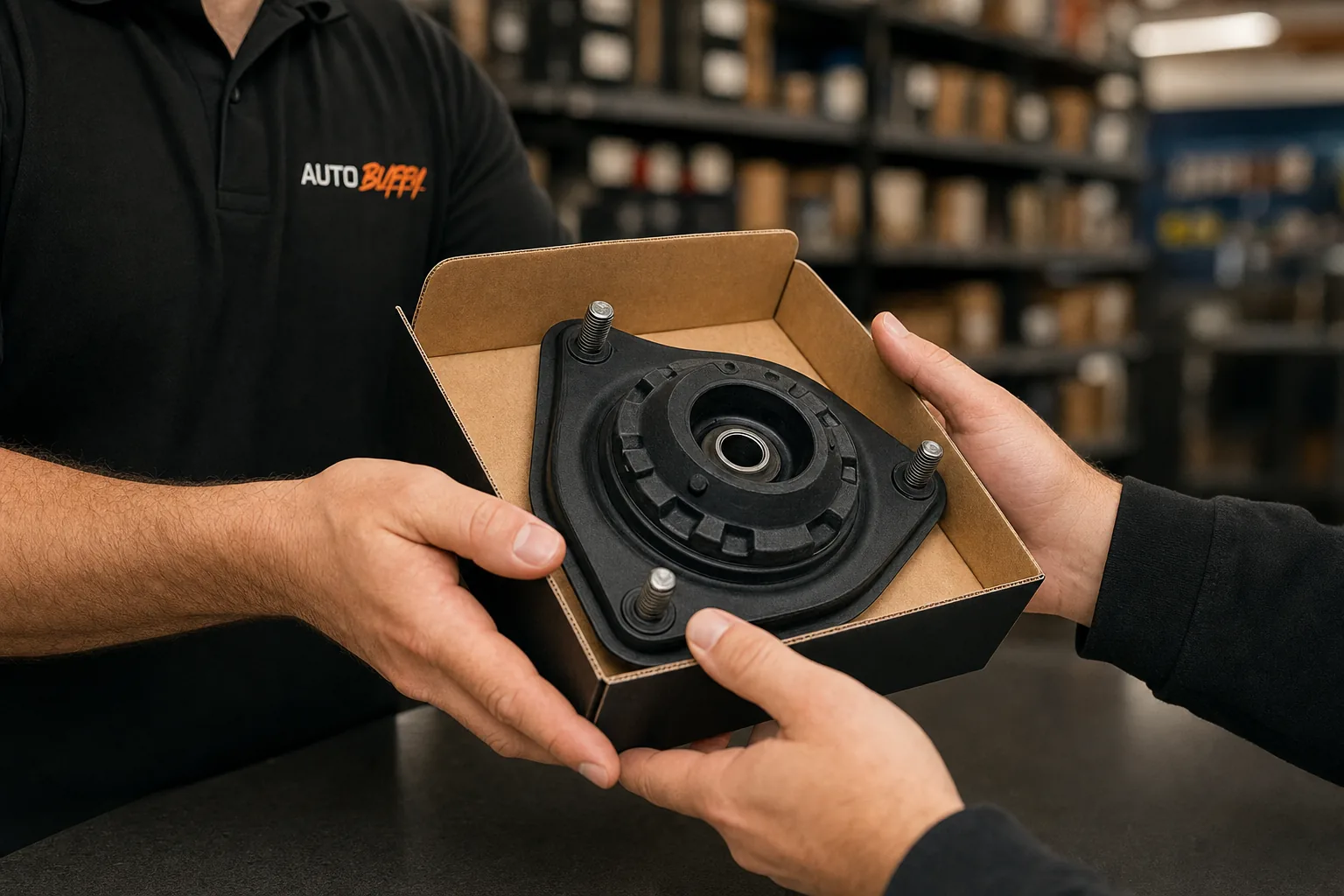
The strut mount sits at the very top of your strut assembly, wedged between the strut and the vehicle's body or strut tower. It does three things at once: it anchors the strut structurally, it isolates road vibration from the cabin using a rubber bushing, and — on front struts — it includes a bearing that allows the strut to rotate when you turn the wheel.
That last part matters. A seized or worn strut mount bearing is a steering problem, not just a ride quality issue. Most drivers don't realize the bearing is even in there until it starts grinding.
7 Symptoms of a Bad Strut Mount
These are the signs that something's wrong at the top of your strut. None of them mean you need to panic and pull over, but all of them mean you should get the car looked at soon.
1. Clunking or Knocking Over Bumps
This is the most common complaint. The rubber isolator inside the mount compresses and hardens over time. When it cracks or separates, the metal components inside start making contact — and you hear it. The knock usually comes from the wheel well area when you hit a pothole or dip.
2. Grinding or Creaking When Turning
If the strut mount bearing seizes or rusts, steering becomes noticeably rougher. You might hear a grinding noise when turning at low speeds, or the wheel may feel like it's catching in spots. In cold weather this is especially common before the car warms up.
3. Vibration in the Cabin
A healthy strut mount absorbs vibration. A worn one doesn't. If road noise and harshness have crept up gradually, mounts that have lost their rubber cushion are a likely cause — though worn shocks and tires can mask the same symptoms.
4. Uneven Tire Wear
A failed mount can shift the strut's angle enough to alter camber. That puts the tire on an uneven contact patch and you'll see wear on one edge before the other. If an alignment shop keeps finding camber issues on a car with no crash history, check the mount.
5. Car Pulling to One Side
Related to the above. If the strut geometry is off because of a collapsed mount, the car can drift toward that corner during normal driving.
6. Poor Handling or Soft, Wallowing Feel
The strut mount keeps the top of the strut positioned correctly. When it fails completely, the strut can shift slightly inside the tower. That translates to vague, unpredictable handling — the car doesn't respond the way it should in corners or during emergency maneuvers.
7. Visual Damage or Rust at the Strut Tower
If you pop the hood and look at the top hat of the strut, you might see rust, corrosion, cracking, or a visible gap in the rubber. That's a definitive sign. In salt-belt states, this is worth checking any time the car is on a lift.
What Affects Strut Mount Replacement Cost?
A few variables can push the cost up or pull it down.
Vehicle type — Luxury and European vehicles tend to cost more both in parts and labor, since some require more disassembly to access the strut tower. A basic front-wheel-drive compact is usually the easier and cheaper job.
Front vs. rear — Front strut mounts are more complex because of the steering bearing. Rear mounts are simpler on most vehicles, so they're generally cheaper to replace.
Kit vs. individual mount — Buying a complete kit that includes the mount, bearing plate, bump stop, and dust boot usually costs more upfront but saves money overall compared to sourcing each piece separately. It also ensures nothing worn gets left behind.
Whether you replace the strut too — The labor for a strut mount replacement overlaps heavily with strut replacement. If the strut needs replacing soon anyway, doing both at the same time saves real money. Doing them separately means paying the labor cost twice.
Shop location — Dealer rates for this job can run significantly higher than an independent shop. In high cost-of-living areas, even independent shops may charge more for labor.
Should You Buy a Single Mount or a Kit?
Honestly, kits make more sense for most people. When you're already tearing down the strut assembly, the bump stop and dust boot are right there — and both of those degrade at a similar rate as the mount. Replacing them in the same job takes maybe 10 extra minutes and prevents a return visit.
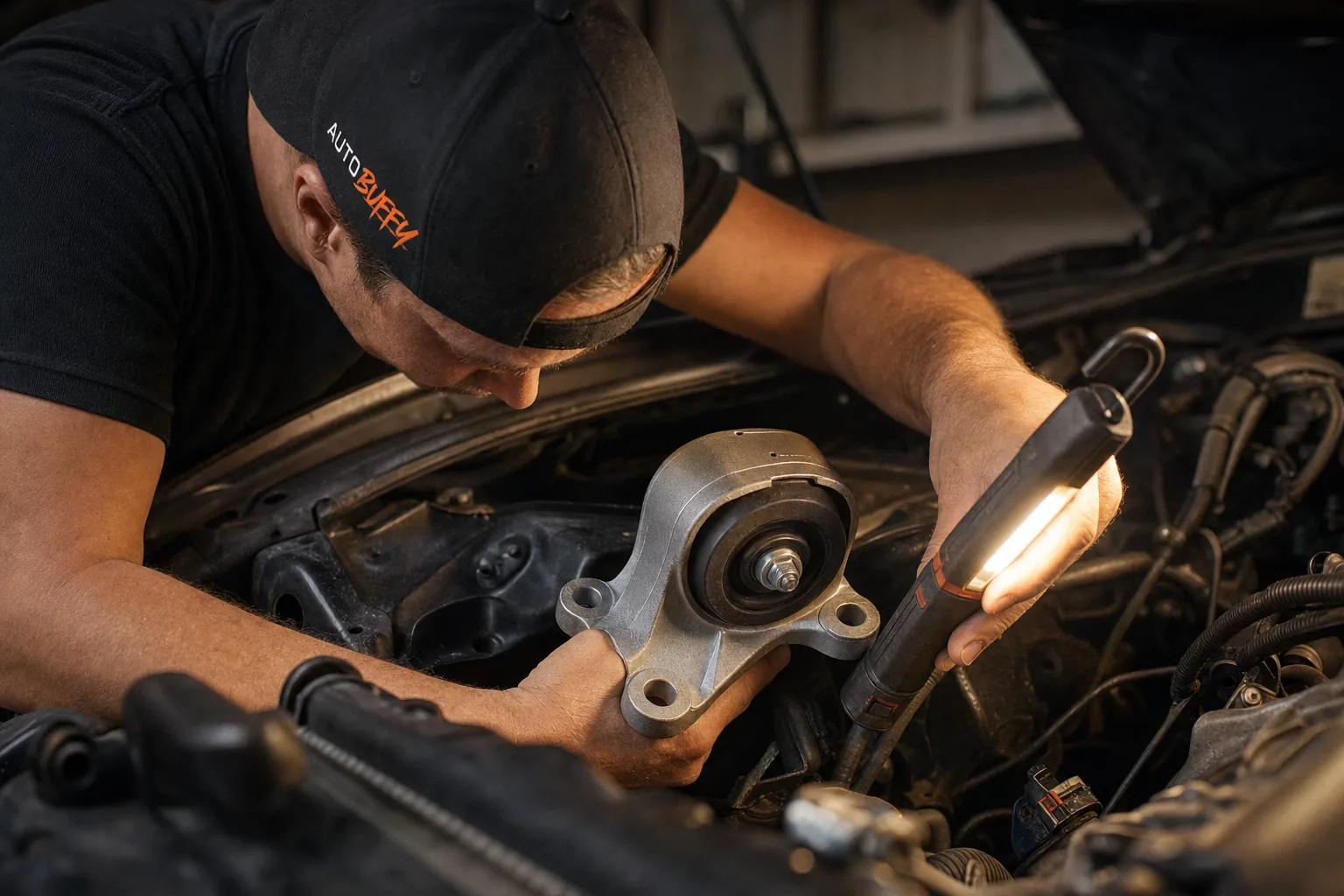
Westar offers multi-piece strut and engine mount kits across a wide range of applications. Their kits bundle the strut mount hardware with related engine and torque mounts — useful on front-wheel-drive vehicles where those mounts affect powertrain behavior as well as ride feel. Westar's focus is exclusively on mounts and related isolator components, which means their engineering is pointed at one thing rather than spread across a broad product catalog.
For vehicles where multiple mounts need attention at once, their kits generally offer better per-piece value than buying individual components piecemeal. Use the part finder below to check which kit covers your exact vehicle.
DIY or Take It to a Shop?
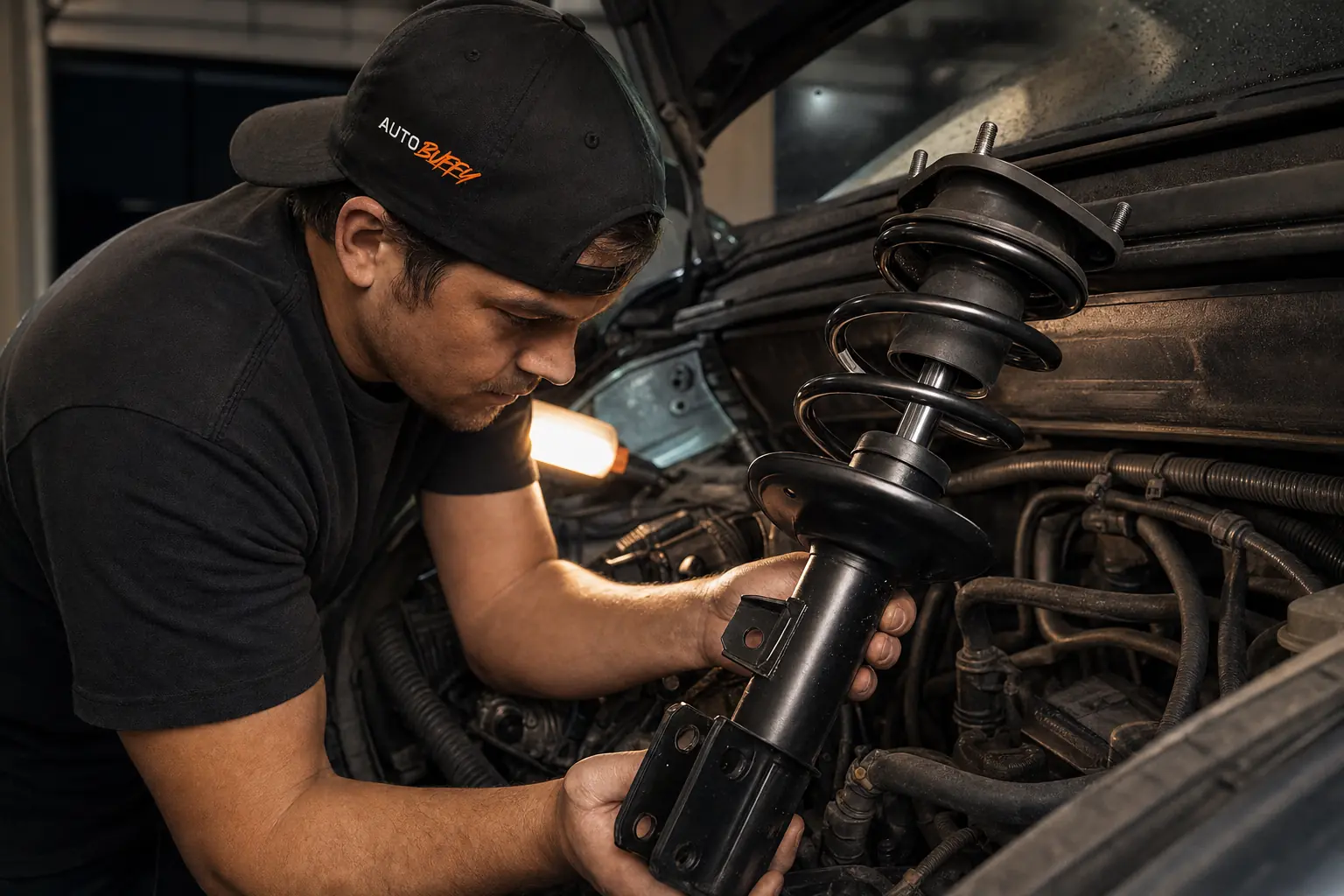
The strut mount itself isn't a complicated part. The job is moderately complicated because of the coil spring. To remove the old mount, you have to compress the spring — and a compressed coil spring stores an enormous amount of energy. Mistakes with a spring compressor cause serious injuries every year.
If you have access to a proper spring compressor and you're comfortable with suspension work, this is a doable DIY job. Budget a few hours and follow your vehicle's service procedure carefully.
If you're not confident with that specific step, this is a reasonable job to hand off to a shop. The labor cost is real, but so is the risk.
My take: Given that Westar's multi-piece kits bring the per-component cost down meaningfully, and given that labor for this job is relatively fixed, buying a comprehensive kit and having a shop install it is often the smartest path for most vehicle owners — especially once a car crosses 80,000 miles and multiple mounts are due.
How Long Do Strut Mounts Last?
Most mounts hold up for 60,000–100,000 miles under normal conditions. Harsh climates shorten that significantly. Road salt attacks the metal components and accelerates rust on the bearing and mounting hardware. Repeated exposure to deep potholes and rough surfaces degrades the rubber isolator faster than highway miles do.
A car spending its life in the Sun Belt on smooth roads might get 100,000 miles out of original mounts. The same vehicle driven through a Chicago winter for a decade might need them at 60,000.
When to Replace Strut Mounts
- At strut replacement time — Always inspect the mount when you're in there. If it shows any wear, replace it.
- At 60,000–80,000 miles — Worth a visual inspection, especially in northern climates.
- Any time you hear clunking from the wheel well — Don't wait. Diagnose it.
- After a front-end collision — Even a minor impact can damage the strut tower or mount.
Find the right part for your vehicle
Guaranteed fit, ships free
FAQ / People Also Ask
Parts typically run $25–$150 per mount. Labor adds $75–$200 per side at a shop, putting the total job between $150 and $400 per corner depending on your vehicle and location.

Comments
Loading comments...
Comments are moderated by the AutoBuffy team.