


Subaru Outback Struts: Which Assembly Fits Your Generation
Not all Outback struts are interchangeable across generations. Here's exactly which assembly fits your year, trim, and chassis code.
The Short Answer
The Subaru Outback has seven generations spanning 1995 to present, and strut fitment is generation-specific — and in the case of the 2026 Wilderness trim, even trim-specific — so buying by year alone will get you the wrong part.
| Generation | Years | Key Fitment Notes |
|---|---|---|
| Gen 1 | 1995–1999 | Unique chassis; limited aftermarket coverage |
| Gen 2 | 1999–2004 | Shared some Legacy platform parts |
| Gen 3 | 2003–2009 | Mid-cycle design; verify crossover years |
| Gen 4 | 2009–2014 | Common aftermarket availability |
| Gen 5 | 2014–2019 | Wide brand coverage; most popular replacement window |
| Gen 6 (BT chassis) | 2019–2025 | OEM front strut fits 2018–2026 range |
| Gen 7 (BU chassis) | 2025–present | Wilderness trim adds electronic dampers |
If you take nothing else from this guide, take that table. It's the reason people order the wrong strut and wonder why it won't bolt up. ---
Why Generation Matters More Than You'd Think
Most suspension parts have model-year lookup tools, and for good reason: even a two-year span can cover two separate generations on the Outback. The Gen 3 and Gen 4 overlap at 2009, and the Gen 6-to-Gen-7 handoff happens mid-decade. Subaru's own parts catalog lists a single OEM front strut (part no. 20310AJ04B) covering the 2018–2026 Outback — which means the Gen 6 BT chassis and early Gen 7 BU chassis share at least one front fitment. That's actually useful information: it tells you there's some cross-generation compatibility in the modern cars, but it absolutely does not apply to a 2013 or a 2008. The practical takeaway is simple: always use your VIN or at minimum your year, trim, and engine when looking up struts. The part finder at the bottom of this page is set up to do exactly that. ---
Front vs. Rear: Not the Same Conversation
Here's something that trips up a lot of Outback owners. The front suspension uses MacPherson struts with lower L-arms, coil springs, and a stabilizer bar — true across modern generations. The rear on current models uses a double-wishbone setup with coil springs. That means "rear strut" replacements on newer Outbacks are a different animal than fronts, and the parts catalog treats them differently. On older generations the rear suspension design varied, which is another reason why the generation column in that table above matters. Don't assume the rear is strut-based just because the front is. ---
The 2026 Wilderness Trim Is a Real Fitment Exception
The seventh-generation Outback launched for 2026 and marks the model's 30th anniversary. Most of that generation carries over familiar suspension DNA, but the Wilderness trim is a genuine exception: it runs electronically controlled dampers and a raised suspension delivering 9.5 inches of ground clearance. That's not a minor tune difference — it's a completely different damper system. If you own a 2026 Wilderness, you can't just pull up a standard strut listing and call it good. The part has to be specifically compatible with the electronic damper setup. Until the aftermarket catches up with dedicated fitments, confirm compatibility carefully before ordering anything. ---
Which Brands Actually Cover the Outback Well? For most Gen 4 through Gen 6 Outbacks — the cars most people are actually replacing struts on right now — the aftermarket is healthy. Here's an honest look at the main brands:
KYB
KYB is the standout choice for owners who want to stay close to factory behavior. The company is an OEM supplier to Subaru — meaning KYB manufactures dampers that go into new Subarus — and that relationship carries over directly to their aftermarket line. KYB is also the world's largest supplier of OE and aftermarket shocks and struts, founded in 1919 and headquartered in Minato, Japan, operating as an independent publicly held corporation. Their Excel-G line is the direct-replacement pick: calibrated to restore factory ride quality, not change it. For a vehicle like the Outback — where people often haul gear, take gravel roads, and trust the suspension to behave predictably — that's the right priority. The Gas-a-Just line uses a monotube design with higher gas pressure and a firmer feel; it makes sense if you want a slightly sportier tune, but most Outback owners doing a maintenance replacement will be happier with Excel-G. Coverage across Gen 4, 5, and 6 is strong. Earlier generations are spottier — worth checking the finder below. ### Monroe
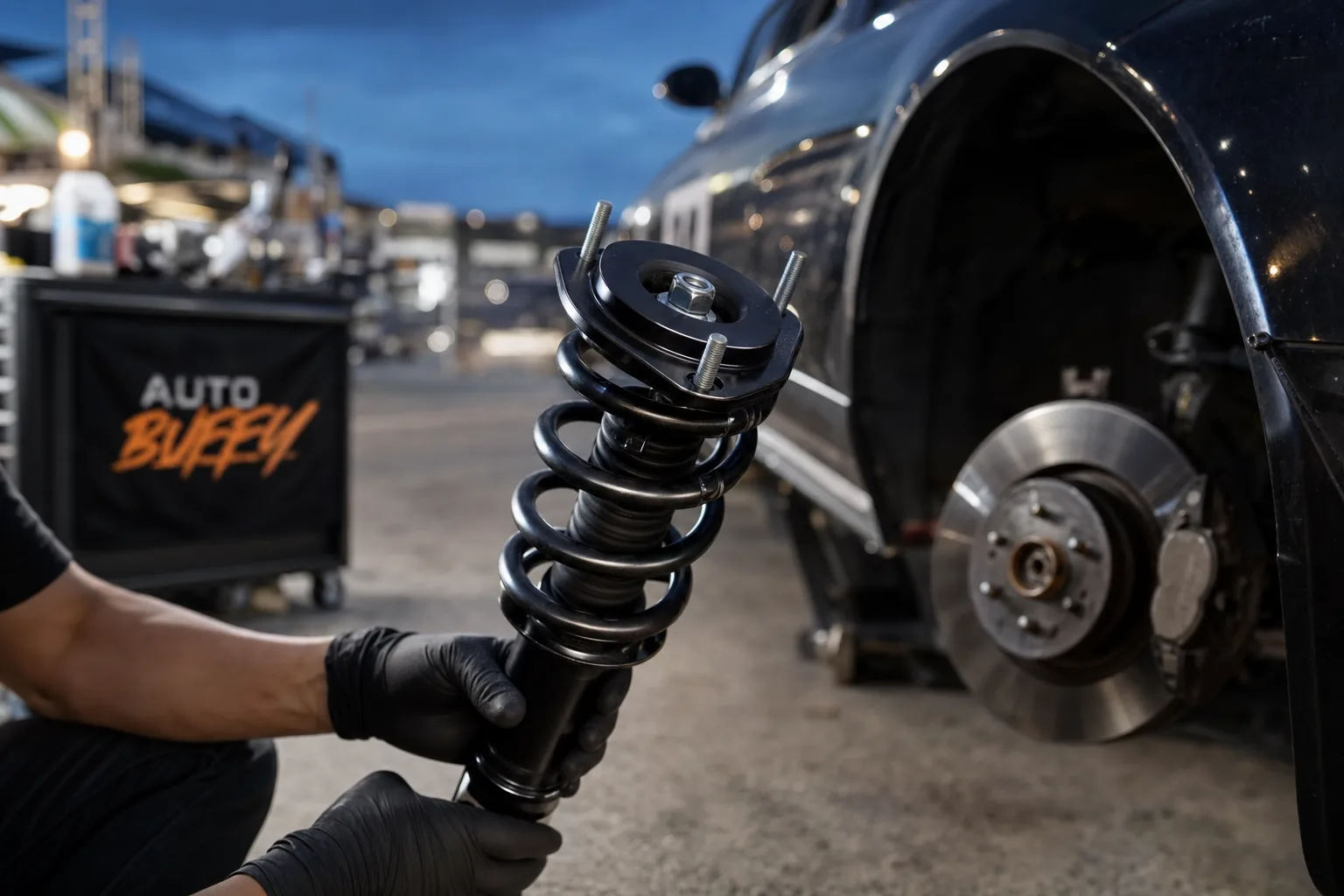
Monroe is a long-established brand under the DRiV Incorporated umbrella (DRiV is owned by Tenneco). Their OESpectrum line uses what they call adaptive valving, designed to self-adjust based on driving conditions. In practice, it's a comfortable highway ride with decent body control — not the most technically aggressive setup, but a reasonable choice for an Outback used primarily on paved roads. Monroe's Quick-Strut assemblies are worth a specific mention. A complete loaded assembly — strut, spring, top mount, and bearing plate together — cuts installation time significantly versus a bare strut swap. If you're paying a shop hourly, the premium for a loaded assembly often pays for itself in reduced labor. ### Bilstein
Bilstein makes sense for Outback owners who push the vehicle harder — overlanding, frequent dirt roads, mountain passes with loaded cargo. Their monotube design handles heat better under sustained use than twin-tube competitors. The trade-off is a firmer daily ride. If your Outback lives in the suburbs and sees the occasional weekend adventure, Bilstein may be overkill. If you regularly run it loaded on rough terrain, the firmer calibration actually pays dividends in control and longevity. Bilstein's Outback coverage is solid for Gen 5 and 6; earlier generations may require more digging. ### Genuine Subaru OEM
For anyone who wants factory spec and nothing else, genuine Subaru OEM struts are an option. They're typically priced higher than aftermarket alternatives, and the replacement interval is no different — but if you're still within warranty or simply want the exact factory calibration, it's a legitimate call. As noted above, Subaru's own catalog shows fitment ranges that sometimes span multiple generations on the modern platform. ---
Complete Assembly vs. Bare Strut: Make the Right Call
This is a real decision that affects your total cost. A bare strut (damper only) is cheaper upfront but requires pressing the old spring off and transferring or replacing the top mount — that's extra shop time. A complete strut assembly arrives ready to bolt in. For most Outback owners paying a shop, the math usually favors the complete assembly. The labor savings at $100–$150/hour often exceed the parts cost difference. If you're doing the job yourself with a spring compressor and the time to spare, the bare strut route makes more sense. ---
What to Budget for the Full Job
Parts for a single axle (both left and right) typically run $150–$450 depending on brand and whether you go assembly or bare strut. Full four-corner replacements are less common unless the car has high mileage and you want to do it once — that's typically $400–$900 in parts for a mid-generation Outback, plus $300–$600 in labor at most shops. Always add an alignment ($80–$150) to the budget. Skipping it after a strut job is a false economy. ---
Quick Installation Notes
- Always replace in pairs — both fronts or both rears at the same time. 2. Torque the strut-to-knuckle bolts to spec with the suspension at ride height, not hanging. 3. On complete assemblies, confirm the bearing plate orientation before final torque — it affects steering feel. 4. Book the alignment immediately after the job, not as an afterthought. > "The alignment isn't optional. I've seen brand-new struts eat a set of tires in 15,000 miles because someone skipped it." — common shop wisdom, and it's accurate. ---
The Bottom Line
For Gen 4–6 Outbacks, KYB is the honest first recommendation given its OEM supplier relationship with Subaru and strong direct-replacement coverage. Monroe Quick-Strut assemblies are a smart labor-saver for shop installs. Bilstein earns its place for owners who actually work the suspension hard. Whatever you choose, verify fitment by generation and trim — especially if you own a 2026 Wilderness — and use the part finder below to confirm the exact assembly for your vehicle before you buy.
Why buy from AutoBuffy
- Fitment check: add your vehicle and we confirm the part fits before you buy. If it doesn't fit because of our listing, you get a free return and a full refund, including original shipping.
- 24-month limited warranty on new parts bought on autobuffy.com.
- Real reviews: rated 4.9 by 19,069 verified customers.
- 30-day returns on unused parts in the original packaging.
- Free shipping on orders $50+. Orders placed before 12:00 PM ET (Mon-Fri) ship the same business day.
- Questions about an order? Call 888-477-2530 or email help@autobuffy.com.
Find the right strut for your Subaru Outback
Guaranteed fit, ships free
FAQ / People Also Ask
No. The Outback has gone through seven generations since 1995, each with different chassis dimensions, spring rates, and mounting hardware. Even within a generation, trims like the Wilderness (2026+) use electronically controlled dampers that require a different part. Always verify by generation and trim, not just year.
Comments
Loading comments...
Comments are moderated by the AutoBuffy team.