

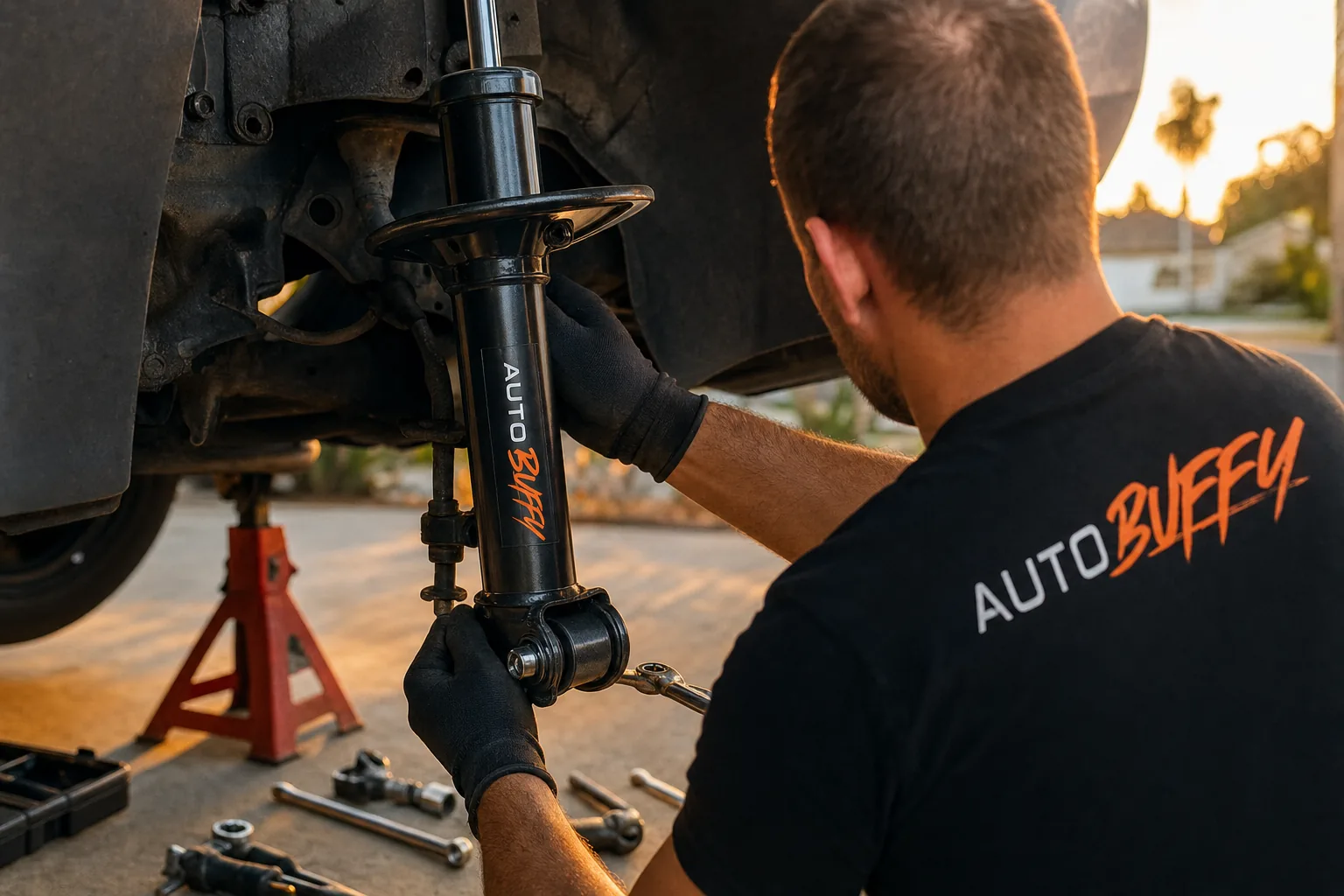
Toyota Pickup Shocks (1984–1995): 2WD vs 4WD and What Else to Replace
The complete guide to shock absorbers for the 1984–1995 Toyota Pickup — which shocks fit 2WD vs 4WD, what else wears out, and how to buy smart.
The Short Answer
For the 1984–1995 Toyota Pickup, shocks are drivetrain-specific — 2WD and 4WD applications require completely different parts, and mixing them up is one of the most common (and expensive) ordering mistakes on this generation of truck.
| Configuration | Front Shock Type | Rear Shock Type | Key Consideration |
|---|---|---|---|
| 2WD (RWD) | Strut-style insert | Twin-tube or monotube | Stock height; sub-model matters (Base, DLX, SR5) |
| 4WD | Conventional shock | Conventional shock | Solid front axle; 4WD-specific geometry |
| Lifted 2WD or 4WD | Extended travel | Extended travel | Must match your lift height exactly |
| Typical full-set cost | $80–$200 (OEM-style) | — | $200–$500+ for performance monotube sets |
That table is the foundation. Everything below explains the why — so you don't buy the wrong part twice. ---
Why 2WD and 4WD Shocks Are Not the Same
The 1984–1995 Toyota Pickup used fundamentally different front suspension designs depending on drivetrain. The 2WD truck ran an independent front suspension — think strut-based geometry with specific insert dimensions. The 4WD, by contrast, used a solid front axle setup with conventional shock absorbers mounted separately from the spring. That difference isn't just about bolt patterns. The travel length, valving rates, and even the mounting hardware differ. Bilstein, for example, explicitly offers their B6 4600 monotube gas shock for the 4WD Toyota Pickup under part numbers that do not apply to the 2WD at all — the brand lists completely separate part numbers for the 1984–1995 2WD at stock height. The same pattern holds across every major brand covering this truck. So step one, before you look at any product listing: confirm your drivetrain, model year, and trim level. The Base, DLX, and SR5 sub-models can affect fitment too, particularly on the 2WD side. ---
Brands Worth Knowing for This Application
Bilstein
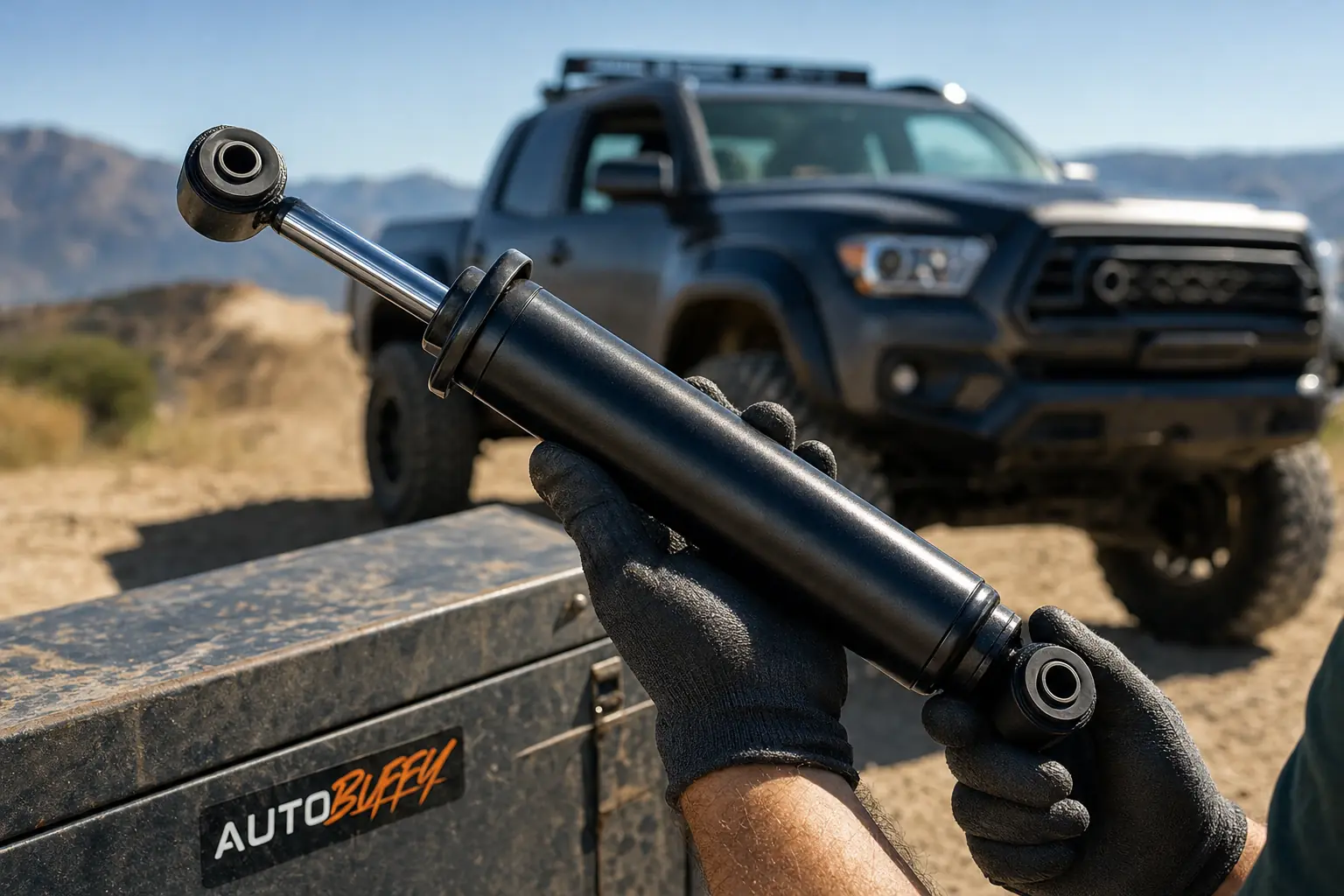
Bilstein is a 100% thyssenkrupp subsidiary headquartered in Ennepetal, Germany. Their reputation in the enthusiast community is built on the monotube gas design, which offers more consistent damping than traditional twin-tube shocks because the oil and gas don't mix — even after a long, punishing dirt road. For the 4WD Pickup, the B6 4600 series is the most commonly cited option. For the 2WD, Bilstein offers shocks specifically designed for stock ride height across the supported sub-models. Neither set crosses over to the other drivetrain, which again reinforces why knowing your configuration matters before you click "add to cart."
KYB
KYB is a publicly traded Japanese company — they changed their trading name from Kayaba to KYB officially in 2009, so if you see "Kayaba" on older forums, that's the same brand. They describe themselves as the world's largest supplier of shocks and struts, and their coverage of the 1984–1995 Toyota Pickup reflects that breadth. The Excel-G line is their factory-ride replacement, while the Gas-a-Just series steps up to monotube performance territory. For a daily driver or a truck that's more work horse than off-road rig, KYB's OEM-equivalent fitment is a practical, cost-effective answer. ### Choosing Between Them
My honest take: if this truck is your weekend wheeler or you're running any kind of aggressive terrain, the monotube design (Bilstein) is worth the price premium. I've seen too many twin-tube shocks fade on repeated washboard roads by the time you're 30 miles from the trailhead. If it's a street truck or a farm hauler that rarely sees harsh off-road use, KYB's OEM-style coverage does the job at a lower upfront cost. Neither choice is reckless — they're just calibrated for different use cases. ---
What Else Wears Out at the Same Time
Replacing just the shocks on a 30-to-40-year-old truck and calling it done is leaving money on the table — or, more accurately, leaving a return trip to the shop on the table. Here's what to inspect and likely replace while everything is apart:
Bump Stops and Jounce Bumpers
These foam or rubber stoppers take the impact when the suspension compresses fully. On a truck this age, they're often crumbled or missing entirely. They're cheap. Replace them. ### Upper Strut Mounts (2WD)
On the independent front suspension of the 2WD Pickup, the upper strut mount contains a bearing that allows the strut to rotate during steering. Worn mounts cause clunking on turns and can affect alignment. If you're pulling the front strut, inspect this mount closely — the bearing should spin smoothly with no roughness or play. ### Shock Mounting Bushings
Both the upper and lower mounting bushings on all four corners absorb vibration and allow slight angular movement. Cracked or collapsed bushings let the shock move in ways it shouldn't, which kills handling feel and accelerates shock wear. ### Leaf Spring Hardware (Rear)
The rear of these trucks uses a leaf spring setup. While you're under there, check the U-bolts for rust and deformation, the spring eye bushings for cracking, and the shackles for wear. U-bolts in particular are a known weak point on trucks that have been loaded or towed regularly — they stretch over time and lose clamping force. ### Steering Components (4WD)
The solid front axle 4WD has a drag link, tie rod, and tie rod ends that wear at their own pace. With the truck on a lift and the wheels hanging, grab the front tires at 9 and 3 o'clock and push/pull — any looseness in steering components shows up here. Do this while you have easy access. ### Sway Bar End Links
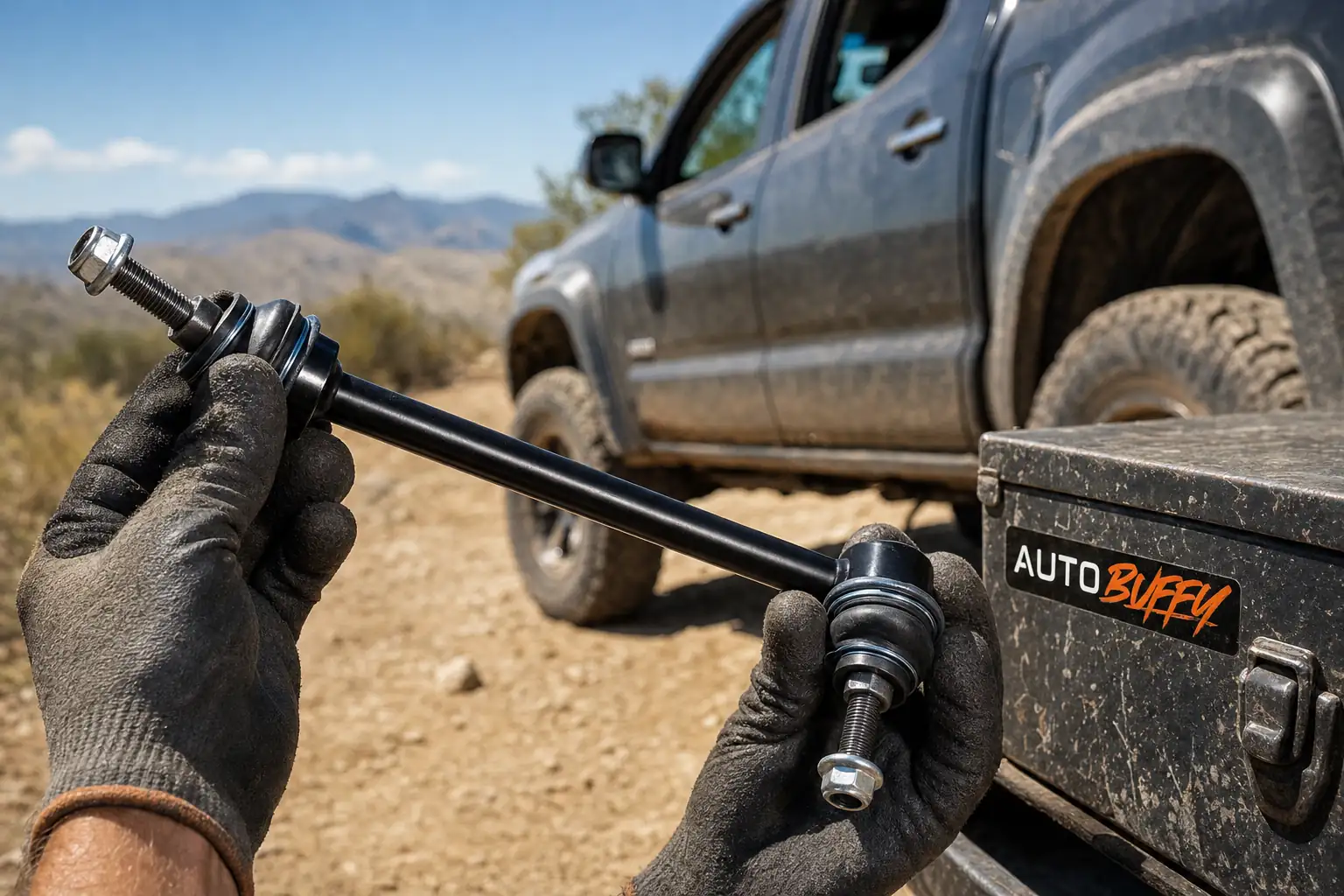
End links are the connecting rods between the sway bar and the suspension. They're inexpensive and often overlooked. Worn end links cause a clunking rattle over bumps that's easy to mistake for something more serious. ---
Lift Height Changes Everything
If you're planning a body lift or suspension lift on this truck, finalize that decision *before* buying shocks. Standard-travel shocks will bind under full droop or bottom out under compression once ride height changes. Extended-travel shocks are sized to match specific lift ranges — 2 inches, 4 inches, and so on. Buying shocks at stock height, then deciding three months later to add a 3-inch lift, means buying shocks again. It's a common sequence among first-time Pickup builders and it's avoidable. ---
Replacing in Pairs: Not Optional
This one comes up constantly in forums and it's worth being direct: replace shocks in axle pairs, minimum. Both fronts together, both rears together. If you can do all four at once — especially on a high-mileage example of a truck this age — do all four. Mismatched damping creates imbalanced handling. The stiffer end of the truck resists body movement while the softer end follows along, which puts uneven stress on every component between them. It also makes the truck feel vague and unpredictable, which is the opposite of what you're trying to accomplish. ---
A Quick Note on Alignment After the Swap
On the 4WD, swapping back to stock-height shocks generally doesn't move your alignment angles. On the 2WD, disturbing the upper strut mount can introduce a small camber change — a quick alignment check after the job is good practice. If you changed ride height at all, alignment is mandatory, not optional. Skipping it accelerates tire wear and can make the truck pull under braking. ---
Why buy from AutoBuffy
- Fitment check: add your vehicle and we confirm the part fits before you buy. If it doesn't fit because of our listing, you get a free return and a full refund, including original shipping.
- 24-month limited warranty on new parts bought on autobuffy.com.
- Real reviews: rated 4.9 by 19,069 verified customers.
- 30-day returns on unused parts in the original packaging.
- Free shipping on orders $50+. Orders placed before 12:00 PM ET (Mon-Fri) ship the same business day.
- Questions about an order? Call 888-477-2530 or email help@autobuffy.com.
Find the right shock absorbers for your Toyota Pickup
Guaranteed fit, ships free
FAQ / People Also Ask
Both 2WD (RWD) and 4WD configurations have dedicated shock absorbers — they are NOT interchangeable. The suspension geometry differs significantly between the two drivetrains, so always confirm your drivetrain, model year, and trim (Base, DLX, or SR5) before ordering.

Comments
Loading comments...
Comments are moderated by the AutoBuffy team.