

Transmission Fluid Change Cost: What You'll Pay & When to Do It
The 2026 national average is ~$147 for a drain-and-fill and ~$232 for a full flush. Here's exactly what drives the price—and when to pay it.
The Short Answer
A transmission fluid change costs $147-$290 at most shops in 2026, depending on whether you get a simple drain-and-fill or a full machine flush, and the filter swap you should always add to the ticket.
| Service Type | Typical Cost Range | What's Replaced |
|---|---|---|
| Drain-and-fill (DIY) | $20-$60 in parts | Pan fluid only (~40-60% of total) |
| Drain-and-fill (shop) | $100-$200 | Pan fluid + filter + gasket |
| Full machine flush (shop) | $180-$450 | ~100% of ATF incl. torque converter |
| RepairPal avg. (automatic) | $232-$290 | Fluid + labor, standard auto trans |
Prices are up roughly 6-9% from 2024, mostly because proprietary CVT and DCT fluids have gotten more expensive and shop labor rates keep climbing. Budget accordingly.
Drain-and-Fill vs. Full Flush: Which One Do You Actually Need?
This is where most people get confused, or oversold.
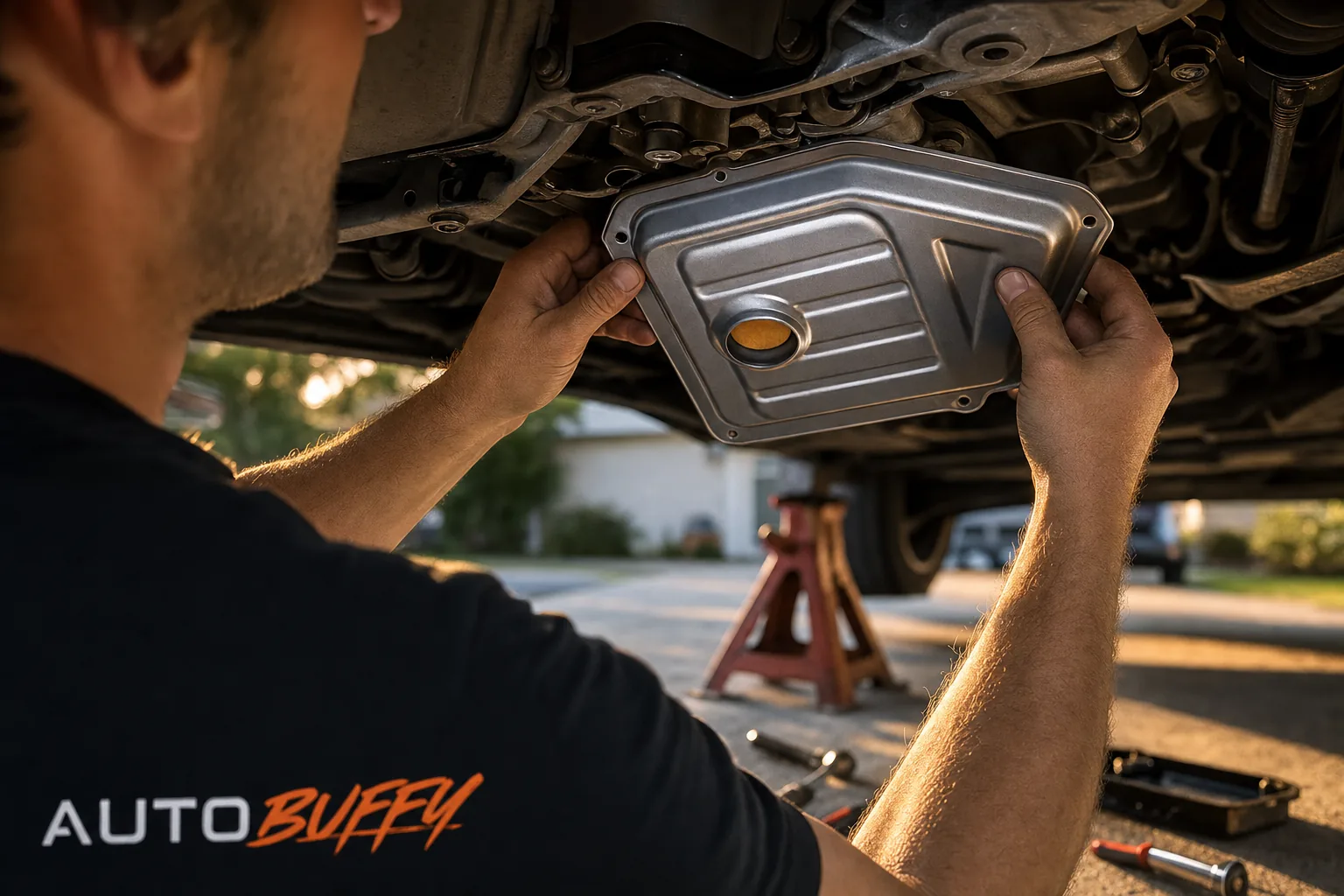
A drain-and-fill drops the pan, drains whatever fluid gravity will give you (typically 40-60% of total volume), swaps the filter and gasket, and refills to spec. It's the appropriate service for a vehicle that's been on a reasonable maintenance schedule.
A machine flush connects equipment to your cooler lines and pushes new fluid through the entire system, reaching fluid trapped in the torque converter and cooler lines. You end up replacing close to 100% of the old ATF. The 2026 national average for a full flush runs $180-$450 depending on the shop and fluid spec.
My honest take: For most vehicles under 80,000 miles that have had at least one prior service, a quality drain-and-fill with a fresh filter is the right call. Spending $450 on a flush when a $150 drain-and-fill would do the job is a waste. Save the flush for when you've bought a used vehicle with unknown service history and want a clean slate, or when your shop can verify the fluid is contaminated all the way through.
What Drives the Price Up or Down
Fluid Type
This is the biggest variable most people don't anticipate. Basic Dexron/Mercon ATF runs $6-$12 per quart. Proprietary CVT fluid? Easily $15-$25 per quart. Some dual-clutch units take manufacturer-specific fluid that costs even more. A service that uses 8-12 quarts of specialty fluid can push the parts cost alone past $200.
Transmission Type
- Conventional automatic: Widest availability of fluid and filters, lowest cost.
- CVT: More expensive fluid, some units have no serviceable filter.
- DCT/dual-clutch: Service intervals and fluid specs vary widely by manufacturer.
- Manual: Usually the cheapest. Gear oil is inexpensive and the interval is long.
Shop Type
Dealer rates run highest, typically at the top of any range. Independent transmission specialists tend to land in the middle with better expertise on complex units. Quick-lube chains can be cost-competitive on basic services, but confirm they're using the correct fluid spec for your vehicle, not a universal substitute.
Your Location
Labor rates in San Francisco or New York will push you toward the top of any range. Rural Midwest shops can come in well below average. The $147-$290 figures above are national averages; your number could land anywhere in that spread.
When to Change Your Transmission Fluid
Mileage-Based Guidelines
- Normal driving conditions: Every 30,000-60,000 miles for most automatics
- Severe conditions (towing, mountain driving, frequent stop-and-go): Every 25,000-30,000 miles
- CVT transmissions: Many manufacturers specify 30,000-40,000 miles; some claim longer, but fluid analysis often tells a different story
- Manual transmissions: Every 30,000-60,000 miles, though some manufacturers push further
Always cross-reference with your owner's manual. "Lifetime fluid" language in some manuals is optimistic marketing. Fluid degrades, full stop.
Warning Signs You're Overdue
- Dark or black fluid on the dipstick. Healthy ATF is bright red to light pink.
- Burnt smell when you pull the dipstick.
- Delayed engagement when shifting from Park to Drive or Reverse.
- Slipping or hesitation between gears at highway speed.
- Shuddering, especially common in CVTs with degraded fluid.
If you're seeing any of those symptoms, don't wait for the mileage interval to roll around.
Why the Filter Change Matters More Than Most People Think
The transmission filter sits in the pan and catches metal particles, clutch material, and oxidized fluid byproducts before they can recirculate through the valve body and clutch packs. A clogged filter restricts fluid flow, raises operating temperature, and accelerates wear on every moving part downstream.
Replacing the filter costs $15-$60 for the part itself. At most shops it's bundled into a drain-and-fill service because you're already dropping the pan. Skipping it to save a few dollars on a $150 service is exactly the kind of false economy that turns a $200 maintenance job into a $3,000 rebuild.
"The filter is the cheapest part of the whole service, and it's the one doing the most work between changes."
Not every transmission has a serviceable in-pan filter. Some CVTs use an internal screen that's technically lifetime. But if yours does have one, replace it every time you drop the pan.
Can You DIY a Transmission Fluid Change?
Yes, on most vehicles with a traditional pan-style automatic. Here's the basic flow:
- Warm the fluid up with a short drive to improve drainage.
- Drain via the drain plug or remove the pan entirely.
- Replace the filter and gasket.
- Reinstall the pan with a new gasket or RTV where specified.
- Refill through the dipstick tube or fill plug to the correct level.
The catch is getting the fluid spec exactly right. Using the wrong ATF or a generic universal fluid when your vehicle requires a manufacturer-specific type can cause shudder, slipping, and accelerated wear. Check your owner's manual before you buy anything.
A machine flush is not a DIY job. It requires equipment you won't find in a home garage.
Is It Worth It on a High-Mileage Vehicle?
Generally, yes, with a caveat. If the fluid truly hasn't been changed in 100,000+ miles, a very aggressive machine flush can dislodge varnish deposits that were effectively sealing worn seals. That's the origin of the "don't flush high-mileage transmissions" advice you've probably heard.
The conservative move on a neglected high-mileage unit: do a drain-and-fill rather than an aggressive flush, see how the transmission behaves over the next few hundred miles, then decide whether a second service makes sense. Fresh fluid and a new filter almost always help. Going nuclear with a flush on a fragile unit carries real risk.
Finding the Right Transmission Filter for Your Vehicle
Filter fitment is highly specific. Pan shape, mounting style, and bypass valve specs all vary by transmission family. Use the finder below to pull exact-fit options for your year, make, and model so you're not guessing at the parts counter.
Find the right part for your vehicle
Guaranteed fit, ships free
FAQ / People Also Ask
The 2026 national average is roughly $147 for a drain-and-fill and $232 for a full machine flush. RepairPal data puts a standard automatic transmission service at $232-$290 all-in at a professional shop.

Comments
Loading comments...
Comments are moderated by the AutoBuffy team.