

Valve Cover Gasket Replacement Cost and Leak Symptoms
Learn what valve cover gasket replacement really costs, how to spot a leak early, and whether it's a DIY job or a shop visit.
The Short Answer
Valve cover gasket replacement typically costs $150–$650 at an independent shop, with parts running $20–$120 and labor making up the rest — catching the leak early keeps it toward the low end.
| Factor | Typical Range |
|---|---|
| Parts (gasket set) | $20 – $120 |
| Labor (4-cylinder) | $80 – $200 |
| Labor (V6 / V8) | $200 – $500+ |
| Total at shop | $150 – $650 |
| DIY total (parts only) | $20 – $120 |
| Dealer premium vs. indie shop | 20–40% higher |
What Does a Valve Cover Gasket Actually Do?
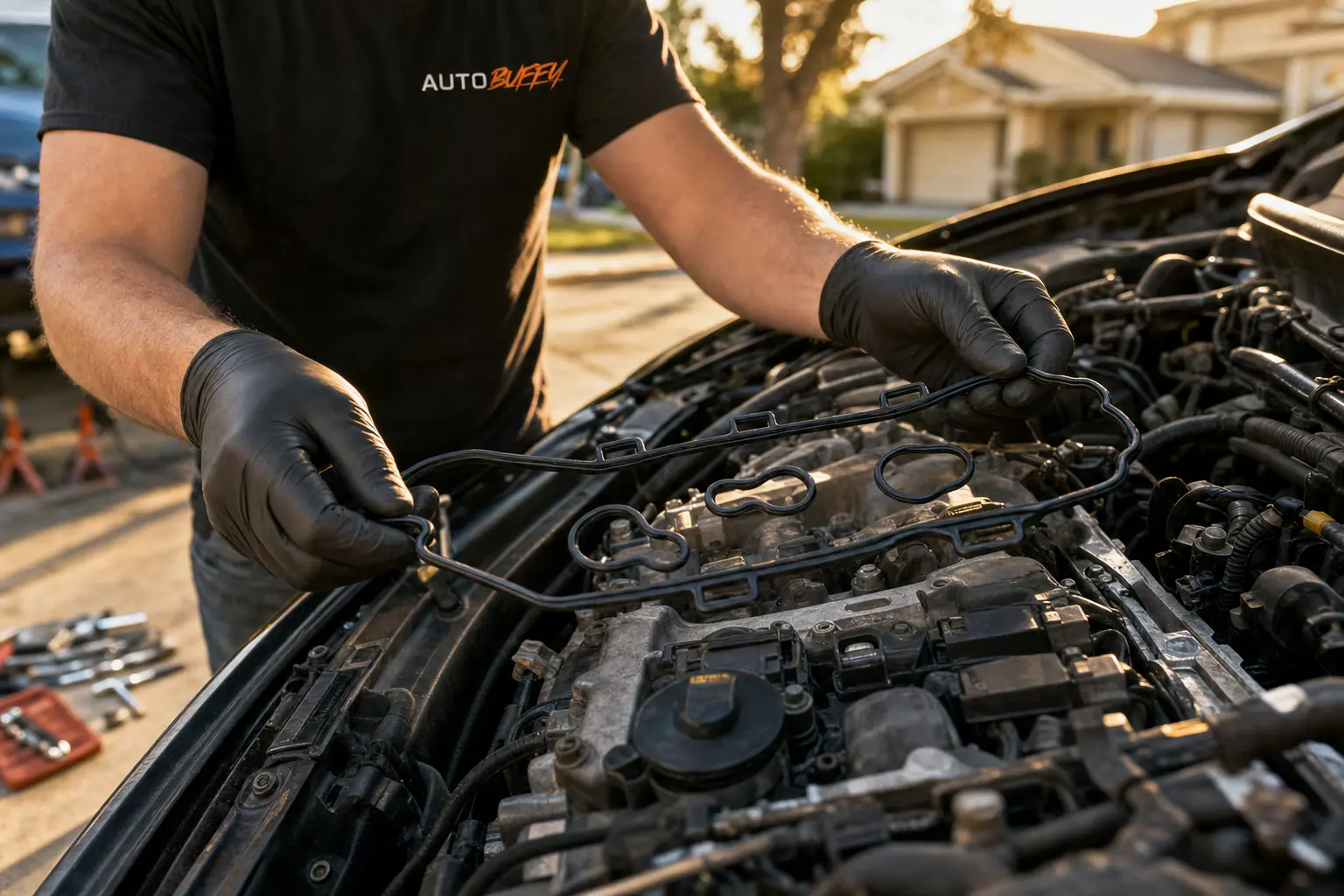
The valve cover sits on top of your cylinder head and keeps the top end of your engine sealed. Inside, pressurized oil lubricates the camshafts, lifters, and rocker arms. The valve cover gasket — a formed rubber or silicone seal that runs around the perimeter of the cover — keeps that oil from seeping out.
It sounds simple because it is. But a failed gasket causes real damage if you ignore it long enough: oil on hot exhaust parts, fouled spark plugs, and a slow but steady drop in oil level that can starve bearings if you're not watching.
Symptoms of a Leaking Valve Cover Gasket
These are the signs that tell you something's wrong before it becomes expensive:
1. Burning Oil Smell
This is usually the first thing people notice. Oil drips onto the exhaust manifold and burns off. You'll smell it from outside the car and especially when idling at a stoplight.
2. Visible Oil Residue Around the Engine
Look at the top and sides of your engine. A dark, greasy residue — sometimes covered in road grime — along the edge of the valve cover is a clear tell. Fresh leaks look wet and shiny.
3. Oil-Soaked Spark Plug Wells
On many engines (Honda, Toyota, and several German platforms in particular), the valve cover seals over the spark plug tubes. When those tube seals fail, oil pools in the wells. Pull the coil-on-plug units and look. Oil in there means misfires are coming if they haven't started already.
4. Low Oil Level Without an Obvious Drip
If you're topping off more often than usual but don't see a puddle under the car, a slow valve cover leak could be the reason. Most of it evaporates off hot engine surfaces.
5. Smoke from the Engine Bay
Bluish-white smoke rising from under the hood — not the tailpipe — almost always means oil on a hot surface. Pull over safely and check.
6. Check Engine or Oil Pressure Light
A significant leak can trigger a low oil pressure warning. At that point, you've waited too long.
What Drives the Replacement Cost?
Engine Configuration
A four-cylinder with one valve cover and an accessible engine bay is a straightforward job. A V6 or V8 has two covers — and the rear one is often buried behind the intake manifold, firewall, or both. Labor hours stack up fast.
Labor Rate in Your Area
Independent shops charge $80–$150/hour on average. Dealers run $130–$200+. If you're in a high cost-of-living metro, budget toward the top of every range here.
What Else Needs Doing
Many shops recommend doing spark plugs at the same time since the covers come off anyway. That's smart — parts cost a little more, but you save on labor. The same logic applies to camshaft position sensors or timing belt covers if they're in the way.
Parts Quality
A $12 gasket and a $60 gasket are not the same thing. Cheap cork gaskets shrink, harden, and leak again faster. A good molded rubber or silicone-coated gasket set — one that includes tube seals and grommets for the cover bolts — is worth the extra money. I'd spend the $15–$30 more every time; it's cheap insurance against doing the job again in two years.
DIY or Shop? An Honest Assessment
When to DIY
- You have a 4-cylinder with a straightforward top-end layout
- You're comfortable with basic hand tools and a torque wrench
- You can find a good service manual for your specific engine
On an accessible engine, this job takes 1–2 hours for someone who's done it once. The main rules: torque the cover bolts in sequence to spec (usually 6–9 ft-lbs — no gorilla-gripping), use a thin bead of RTV only where the manual calls for it, and let it cure before starting the engine.
When to Use a Shop
- V6 or V8 with a buried rear valve cover
- Engines where the intake manifold, throttle body, or fuel rail blocks access
- Any engine that runs a variable valve timing system with components attached to the cover
If the job requires removing the intake manifold, you're looking at a 4–6 hour shop ticket. That's not a beginner project, and cutting corners there can create new vacuum leaks.
Why Gasket Quality Matters More Than Most People Think
For exact fitment and current pricing for your year, make, and model, use the part finder below.
How Long Does the Repair Last?
Done right, with a quality gasket, you shouldn't need to revisit this for 50,000–100,000 miles. The factors that shorten that window: running the engine low on oil (thermal stress), using cheap cork gaskets, or skipping the torque sequence on reassembly. The factors that extend it: fresh coolant (prevents overheating that bakes gaskets), regular oil changes (reduces sludge that can push gaskets out), and not over-tightening the cover bolts.
Quick Reference: Cost by Common Vehicle Type
| Vehicle Type | Estimated Total (Shop) |
|---|---|
| 4-cylinder compact (Honda Civic, Toyota Corolla) | $150 – $300 |
| 4-cylinder truck/SUV (single bank) | $180 – $350 |
| V6 sedan or crossover | $300 – $500 |
| V6 / V8 truck (both covers) | $400 – $650+ |
| European luxury V6 / V8 | $500 – $800+ |
These are market ranges — your actual quote depends on your region, shop, and what else needs attention during the job. Get at least two estimates before authorizing work on a higher-labor engine.
Find the right part for your vehicle
Guaranteed fit, ships free
FAQ / People Also Ask
Total cost typically runs $150–$650 at a shop, depending on your vehicle and how many cylinders it has. Parts alone are usually $20–$120; labor is the bigger variable.
Comments
Loading comments...
Comments are moderated by the AutoBuffy team.