

Wheel Alignment Cost 2026: Prices, When You Need One, and What Throws It Off
Wheel alignments typically cost $80–$200, but worn tie rod ends or ball joints can make that money vanish fast. Here's what to know before you pay.
The Short Answer
A wheel alignment costs $80–$200 for most passenger vehicles in 2026, but that price is wasted money if worn steering parts — especially tie rod ends — haven't been replaced first.
| Alignment Type | Typical Price Range | Best For |
|---|---|---|
| Front (2-wheel) | $80 – $130 | Solid rear axle trucks/vans |
| Four-wheel | $130 – $200 | AWD, RWD, most modern FWD |
| Dealership premium | $150 – $250+ | Luxury/European vehicles with complex geometry |
| Lifetime alignment plans | $150 – $300 one-time | High-mileage drivers, rough road areas |
Prices vary by region, vehicle type, and shop. The ranges above reflect 2026 averages — your local market may run higher or lower.
What Does a Wheel Alignment Actually Do?
Your wheels aren't supposed to point perfectly straight ahead. They're set to precise angles — toe, camber, and caster — that account for the way suspension geometry changes under load, the slight crown of the road, and steering feel. An alignment machine measures all three and adjusts them back to the manufacturer's specs.
When those angles drift out of spec, tires scrub instead of roll cleanly. You might not feel it immediately, but your tire tread definitely notices. Studies from tire industry groups consistently show that a toe error of just 0.17 degrees can scrub off the equivalent of 28 feet of tire wear for every mile driven. That adds up fast.
What Throws a Wheel Alignment Off?
This is where most drivers get surprised. An alignment doesn't just go bad because time passed. Something physical causes it.
Potholes and Curb Strikes
Hitting a pothole hard enough transfers a sharp impact load through the tire directly into the suspension. Tie rod ends, ball joints, and control arm bushings absorb that hit — and if they're already at the edge of their service life, one good pothole can shift your alignment noticeably.
Worn Tie Rod Ends
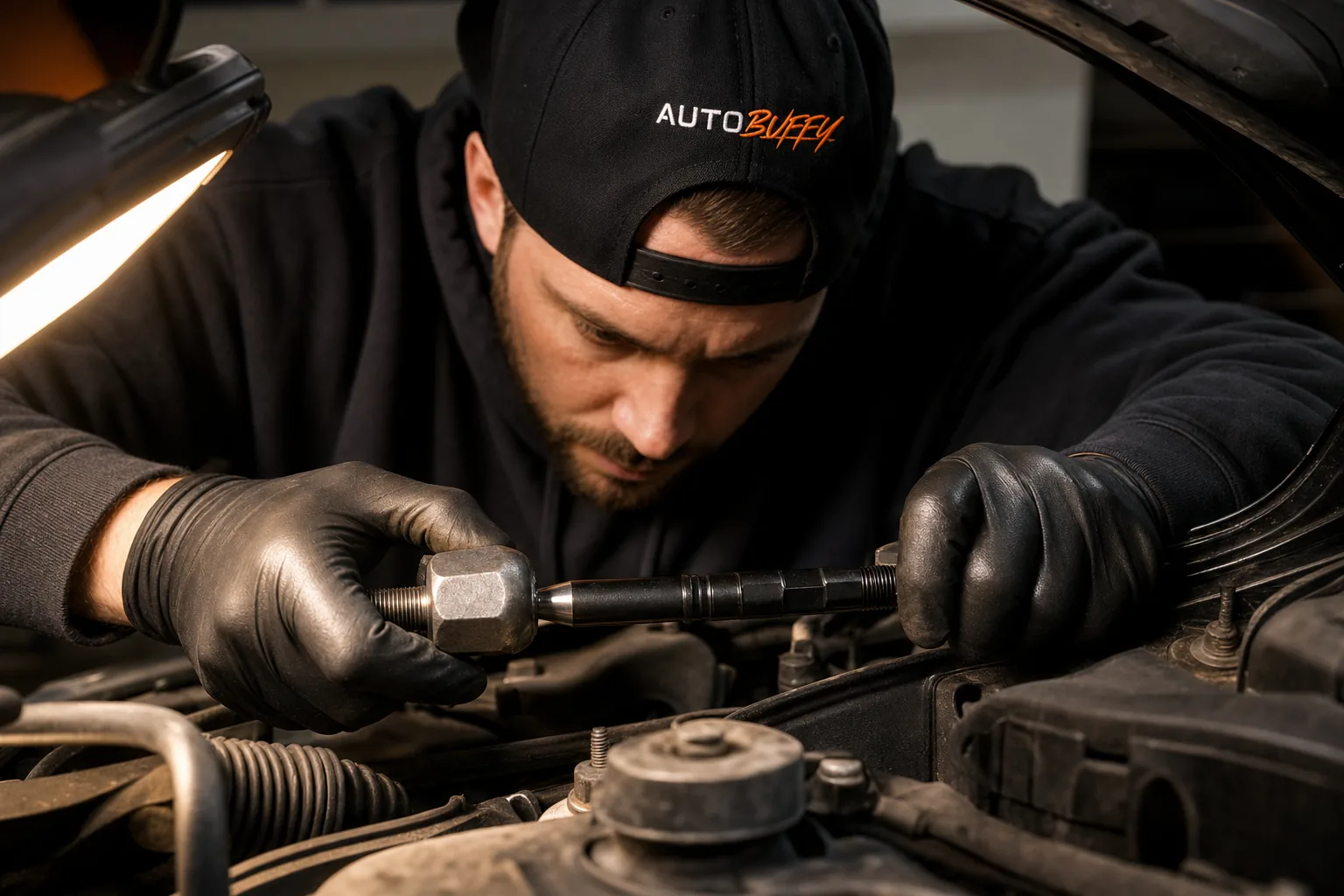
This one deserves its own section because it's the most common culprit. Tie rod ends connect the steering rack to the steering knuckle at each wheel. When the ball-and-socket joint inside a tie rod end wears out, there's play — the wheel can shift slightly without the steering rack moving. That play shows up as wandering, a loose steering feel, and toe angles that won't hold a setting.
Here's the important part: if you pay for an alignment with worn tie rod ends, the settings will drift right back out. The shop isn't doing anything wrong; the hardware just can't hold the position. Replace the tie rod ends first, then align.
Control Arm Bushings and Ball Joints
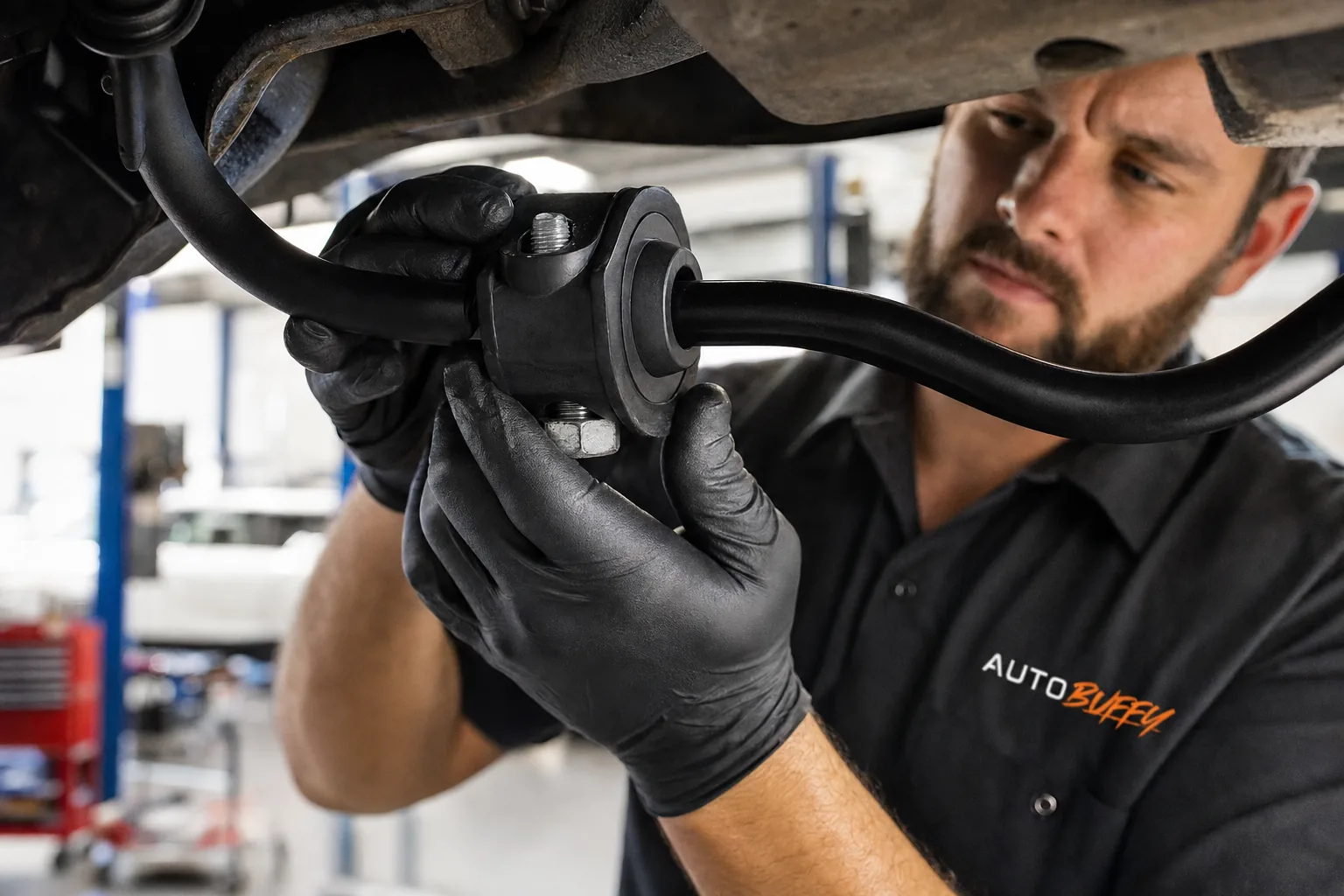
Same logic applies. Worn bushings let the control arm shift under load, which changes camber and caster. A worn ball joint lets the knuckle tilt. Both will cause alignment specs to wander after the machine says everything is set correctly.
Previous Accidents
Even a minor fender-bender that doesn't look like much can bend a control arm, crack a subframe mount, or shift the strut tower enough to affect alignment. If the car has been in an accident, always inspect the underlying geometry before assuming an alignment will fix the pull.
Normal Wear Over Time
Bushings harden and crack. Springs sag slightly. Even on a car that's never seen a bad pothole, these gradual changes add up. That's why annual alignment checks are standard advice regardless of how gently you drive.
How to Know If You Need One Right Now
You don't always need to wait for the annual checkup. Get an alignment check immediately if:
- The vehicle pulls consistently to one side on a flat, straight road
- Your steering wheel is visibly crooked when driving straight
- You notice cupping, feathering, or one-sided wear on a tire
- You just replaced a tie rod end, ball joint, or control arm
- You hit something significant — a pothole, curb, or road debris
- The car was in any accident, even a slow-speed one
A quick visual inspection of your tires before every road trip takes 30 seconds and can catch uneven wear patterns before they become a replacement bill.
Is the Lifetime Alignment Plan Worth It?
A lot of chains sell lifetime alignment packages for $150–$300. Honestly, for most drivers who plan to keep the car for several years and live where roads are rough, the math usually works out. Three or four standard alignments over three years would cost more out of pocket than the package price. The caveat: read what's included. Some plans exclude four-wheel alignments or charge extra for vehicles with complex rear geometry.
If you're buying a used car with unknown history and you're unsure how long you'll keep it, skip the lifetime plan and pay per service.
What Happens at the Alignment Shop
The tech drives the car onto a lift and attaches sensors to all four wheels. The alignment machine reads the current angles and compares them to the OEM spec database for your exact vehicle. Then adjustments happen — usually through eccentric bolts, cam bolts, or adjustable tie rod length — until everything is within spec.
A printout showing before and after measurements is standard practice at any reputable shop. Ask for one. It shows you what was out, by how much, and what it was corrected to. If a shop won't provide that printout, find a different shop.
Before the machine even runs, a good tech will grab each front wheel and shake it to check for play in the tie rod ends and ball joints. If they skip that step, you can do it yourself — a clunk or visible movement when you grip the tire at 9 and 3 o'clock and push/pull means the tie rod ends need attention before alignment.
Tie Rod Ends: The Part That Makes the Alignment Stick
Because tie rod ends come up so often in alignment discussions, it's worth being clear about what they are. Every front-wheel-steering vehicle has inner and outer tie rod ends on each side — four total in a set. The outer tie rod end is the one that's adjusted to set toe and is the more commonly replaced part.
When shopping for replacements, fit and material quality matter more than brand loyalty. A tie rod end that's not precisely manufactured to OEM dimensions introduces its own toe error before the alignment machine even starts. Using quality parts from a supplier that specializes in steering and suspension geometry — with complete vehicle coverage and real warranty backing — is worth the attention. Cutting corners on a $30 part to save the alignment cost doesn't make sense.
A tie rod end is a safety-critical component. If the joint separates at highway speed, you lose steering. This isn't the place for the cheapest part on the shelf.
For your specific vehicle's fitment, use the part finder below to confirm the right set and get current pricing.
Quick Summary: Alignment Cost vs. What Actually Fixes the Problem
- Alignment alone fixes: angles that drifted due to normal wear or minor impacts on solid hardware
- Alignment + tie rod ends fixes: toe that won't hold because of joint play
- Alignment + ball joints / control arm bushings fixes: camber or caster that shifts under load
- Alignment + frame/subframe inspection fixes: post-accident geometry issues
Spending $100 on an alignment when the real fix is $80 in tie rod ends plus an alignment is how people end up back at the shop two months later wondering why their tires are still eating themselves.
Find the right part for your vehicle
Guaranteed fit, ships free
FAQ / People Also Ask
A standard two-wheel (front) alignment typically runs $80–$130 at most shops. A four-wheel alignment on an all-wheel-drive or independent rear suspension vehicle usually costs $130–$200. Dealerships often charge toward the top of those ranges.
Comments
Loading comments...
Comments are moderated by the AutoBuffy team.