

Wheel Bearing Noise and Replacement Cost: What to Expect
Grinding, humming, or rumbling from your wheels? Learn the symptoms, DIY vs. shop costs, and what drives the price of wheel bearing replacement.
The Short Answer
Wheel bearing replacement typically costs $150–$400 per wheel at an independent shop, or $40–$150 in parts if you do it yourself — and ignoring a failing bearing long enough turns a manageable repair into a safety emergency.
| Repair Scenario | Typical Cost Range |
|---|---|
| DIY (hub assembly, parts only) | $40 – $150 per wheel |
| Independent shop (labor + parts) | $150 – $400 per wheel |
| Dealership (labor + parts) | $300 – $650 per wheel |
| Press-in bearing (shop, labor intensive) | $200 – $500 per wheel |
| Both front wheels replaced together | $280 – $750 at most shops |
Those are honest ranges — not worst-case scare numbers, not lowball estimates meant to get you through the door.
What Does a Bad Wheel Bearing Actually Sound Like?
Most people describe it as a low, cyclic hum or growl that rises and falls with vehicle speed. It's deeper than road noise and usually doesn't go away at highway speeds the way a tire buzz might. A few other clues:
- The noise shifts when you swerve. Gently weave the car at 50–60 mph. If the sound gets louder when you veer left, the bad bearing is likely on the right — and vice versa. Weight transfers away from the worn side.
- Clicking or snapping at low speeds usually points to a CV joint, not a bearing, but the two can overlap.
- Steering wheel vibration that gets worse with speed can also indicate a bearing that's advanced past early wear.
About 65% of wheel bearing failures I've seen in the wild first show up as a hum that the driver wrote off as tire noise for weeks. Don't do that.
What Drives the Cost Up (or Down)?
Bearing Type
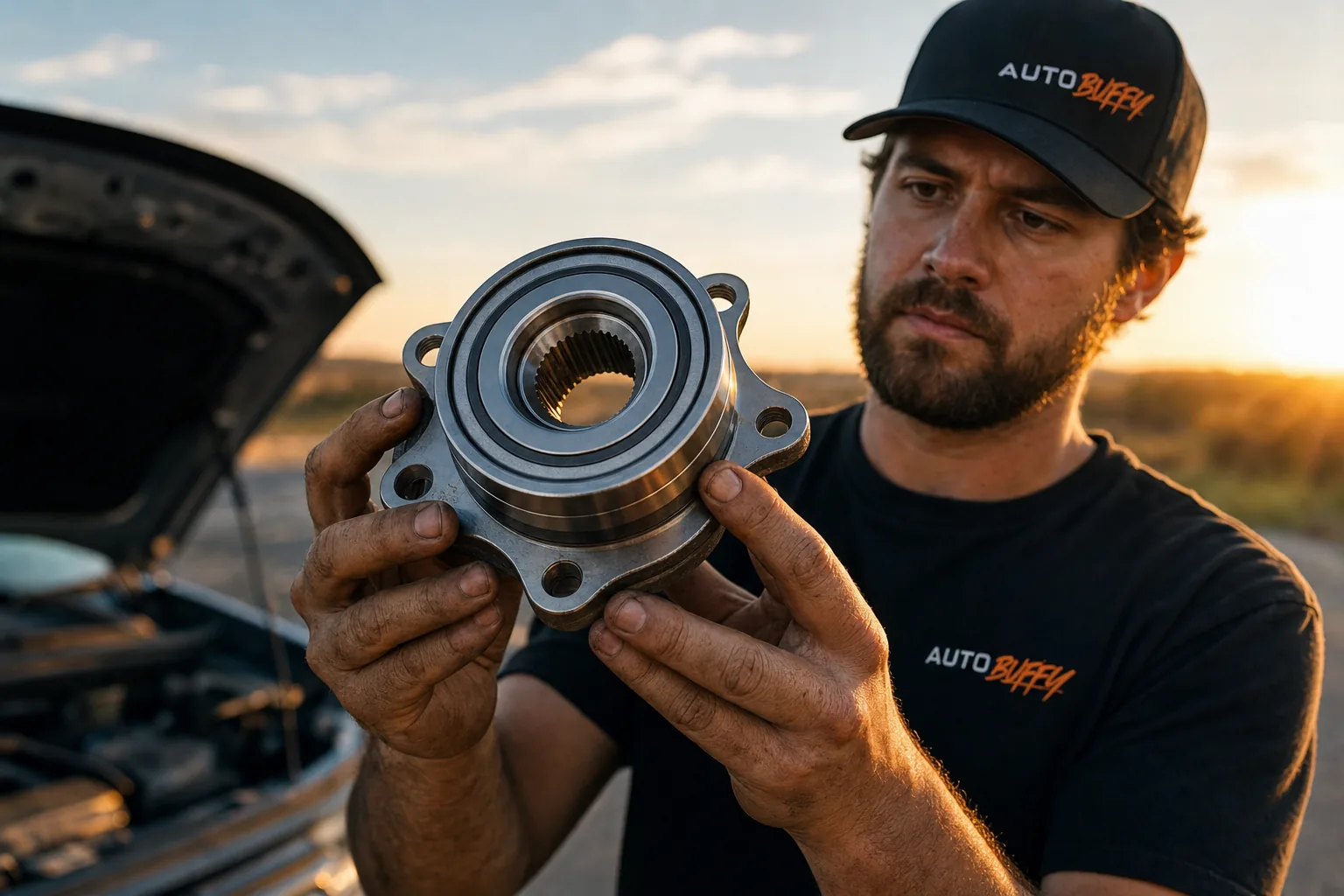
This is the single biggest variable. Modern vehicles mostly use hub assembly units — the bearing, hub flange, and ABS tone ring all come pre-assembled. You unbolt the old one, bolt in the new one, torque the axle nut, and you're done. Parts typically run $60–$150 and a competent DIYer can finish the job in two hours.
Older vehicles and many trucks still use serviceable press-in bearings. These require a hydraulic press to remove and seat the new bearing races. That's specialized equipment most home mechanics don't own, which means shop labor gets involved. Labor alone can run $150–$250 on top of parts.
Vehicle Make and Position
Front bearings on front-wheel-drive cars see more load and fail more often. They're also on the driven axle, which usually means more disassembly — the axle nut alone can take 200 ft-lbs to break loose. Rear bearings on simple solid-axle trucks are often the easiest swap in the driveline.
Luxury and European vehicles carry a price premium on parts, sometimes dramatically. A hub assembly for a German luxury sedan can cost two to three times what the same part runs on a domestic truck.
Labor Rates
Shop labor in rural markets might run $85–$100/hr. Metropolitan shops are often $130–$175/hr. A front hub swap takes 1–2 hours; a press-in job can take 3+. That math explains the wide cost range above.
Diagnosing It Yourself Before You Spend a Dime
You don't need a lift to do a basic check. Park on level ground, block the rear wheels, and jack up one front corner at a time on a stable jack stand.
- Grab the tire at 3 and 9 o'clock and push/pull firmly. Any play is bad.
- Grab at 12 and 6 o'clock and repeat. Looseness here can also mean a ball joint, but a bearing check comes first.
- Spin the wheel slowly by hand. A rough, grinding sensation confirms internal wear. A healthy bearing rolls almost silently.
If you find it at the front, do both front corners while you're at it. Catching a second worn bearing early beats two separate lift fees.
DIY vs. Shop: An Honest Take
Hub assembly swaps are genuinely DIY-friendly for anyone comfortable with basic suspension work. You need a torque wrench, a breaker bar, and patience with corroded hardware. That's it for most vehicles.
Press-in bearings are a different story. Trying to improvise a press with a vise and threaded rod *can* work, but you risk cracking the bearing race, ruining the knuckle, or getting the bearing slightly cocked in the bore — which just means it fails again sooner. My honest opinion: if it's a press-in application and you don't own a proper bearing press, pay the shop. The $150 in labor is worth the certainty that the bearing is seated correctly.
Choosing the Right Replacement Part
For hub assemblies, fit precision matters more than brand loyalty. A hub that's off by even a fraction of a millimeter on the ABS tone ring position will corrupt your wheel speed sensor data and throw warning lights.
When Is It Unsafe to Drive?
The rule of thumb: if you can hear the bearing at highway speed with the radio on, you're past early-stage wear. At that point you have days, not weeks. Signs that mean stop driving *today*:
- Visible wheel wobble at any speed
- ABS or traction control lights appearing alongside the noise
- Steering pulling toward the bad side
- Clunking over bumps from the affected corner
A bearing that's reached the clunking stage has metal-on-metal contact inside the hub. It can seize without warning at highway speed. That's not a repair you postpone.
What to Tell the Shop
If you're taking it to a mechanic, be specific:
- Which corner the noise seems to come from
- Whether it changes when you swerve (and which direction makes it louder)
- Your mileage and whether the vehicle has seen rough roads or frequent water crossings
A good shop will verify your diagnosis before quoting, but walking in with this information stops the "let's just replace all four" upsell before it starts.
Find the right wheel bearing for your vehicle
Guaranteed fit, ships free
FAQ / People Also Ask
For most passenger cars and light trucks, expect to pay $150–$400 per wheel at an independent shop. Dealerships typically run $300–$650 per wheel. DIY parts alone usually fall in the $40–$150 range depending on vehicle and bearing type.

Comments
Loading comments...
Comments are moderated by the AutoBuffy team.