

When to Replace Struts: Mileage, Symptoms, and the Bounce Test Myth
Most struts last 50,000–100,000 miles, but mileage alone doesn't tell the whole story. Here's how to actually know when yours are done.
The Short Answer
Most struts last between 50,000 and 100,000 miles — but mileage alone is a poor replacement trigger; symptoms, driving conditions, and handling feel are what actually tell you when it's time.
| Factor | Typical Threshold | Notes |
|---|---|---|
| Mileage | 50,000 – 100,000 mi | Wide range; road quality matters enormously |
| Age | 7 – 10 years | Condition-based check still required |
| Bounce test | Not reliable | Widely considered "pretty useless" by mechanics |
| Nose-dive under braking | Act now | Direct safety concern |
| Cupped/uneven tire wear | Act soon | Struts may be the root cause |
| Post-replacement alignment | Always required | Not optional on most vehicles |
What a Strut Actually Does (And Why It's Not Just a Shock)
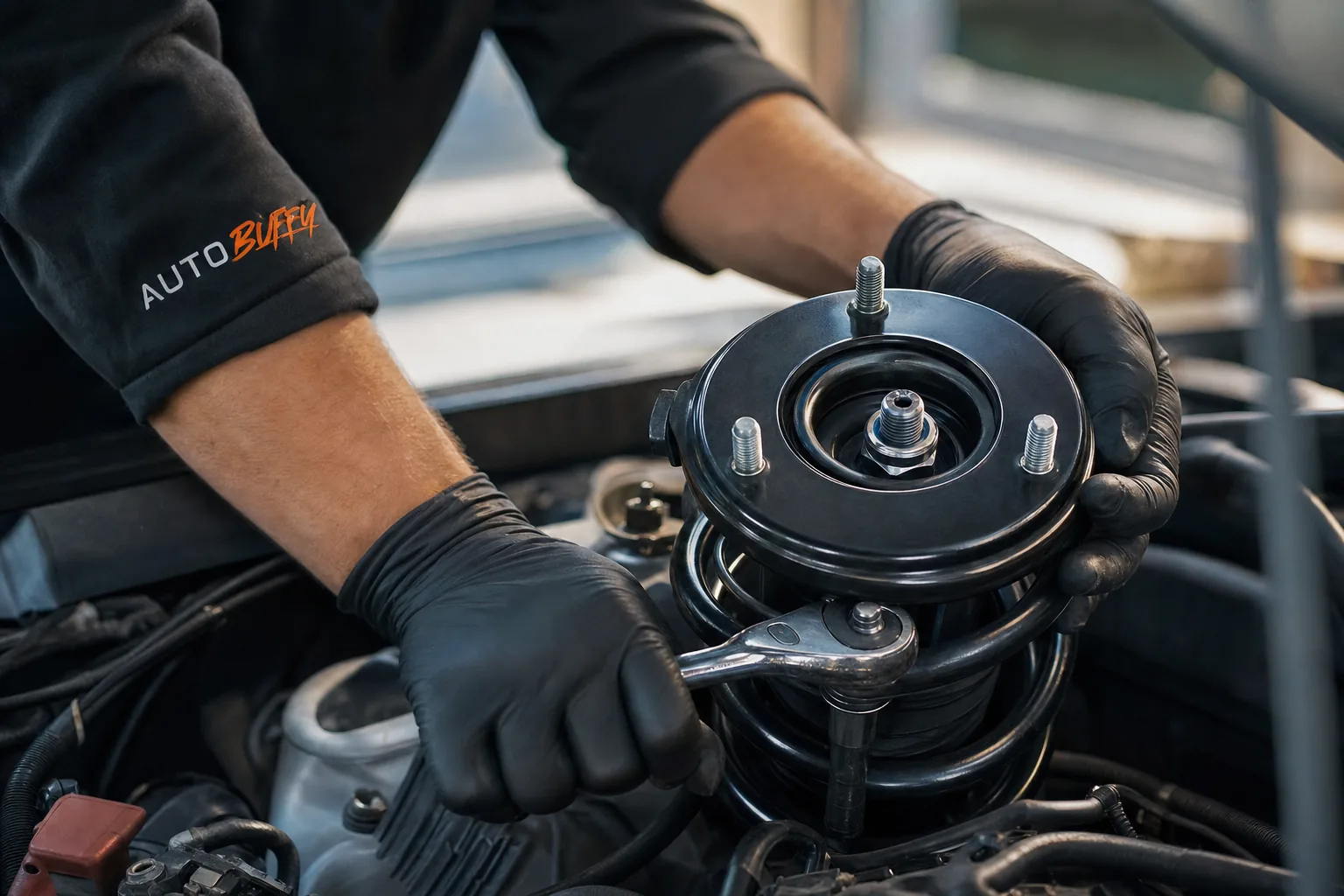
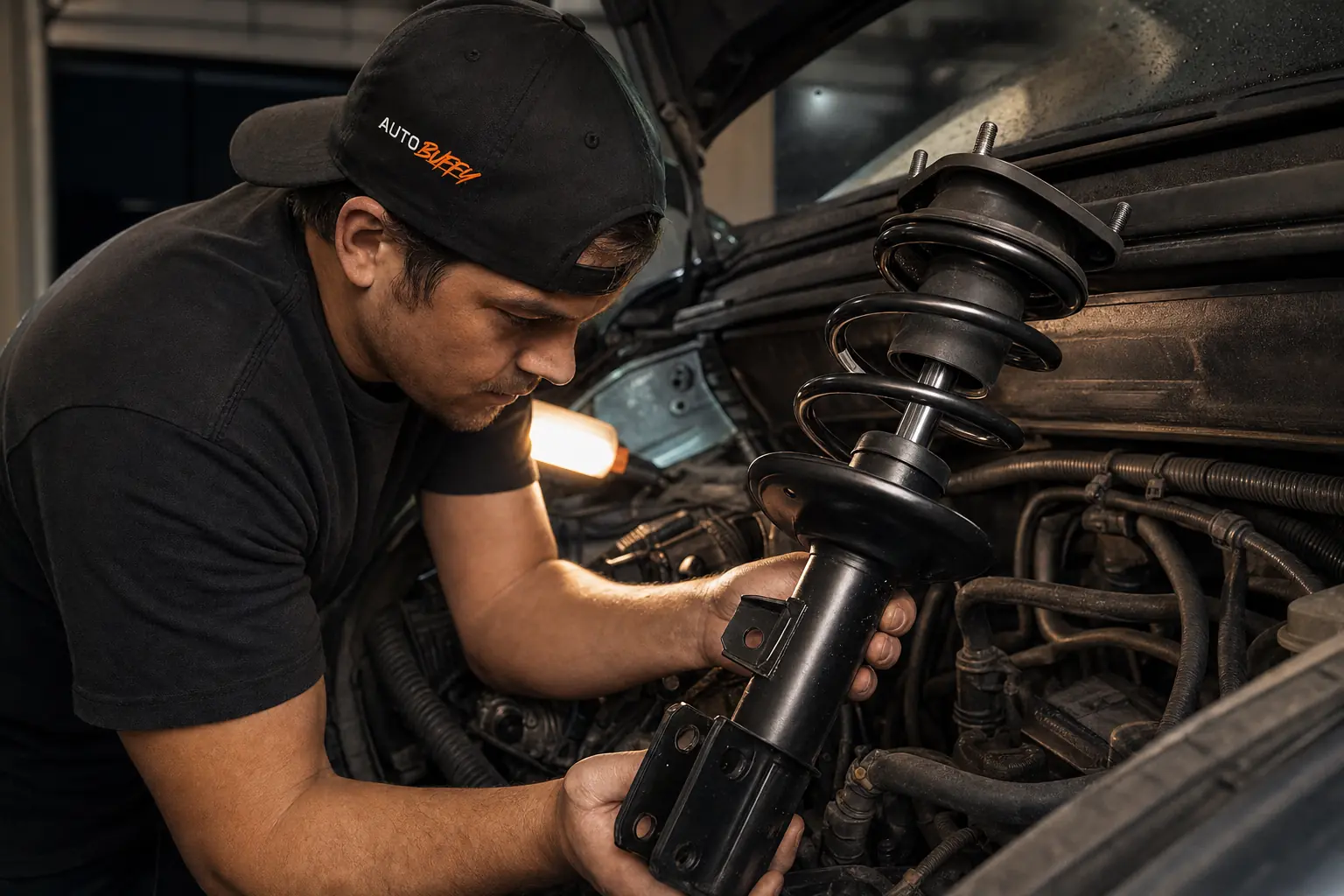
A lot of drivers treat struts like glorified shock absorbers. They're not. A shock absorber dampens spring oscillations — that's it. A strut does that *and* acts as a structural suspension component, bearing the vehicle's weight and serving as the upper pivot point for the steering knuckle. It integrates the coil spring mount, affects your caster and camber geometry, and directly influences how your tires contact the road during braking, cornering, and acceleration. That structural role is why strut replacement is more involved than a simple shock swap, and why alignment is mandatory afterward — not a shop upsell. ---
The Real Mileage Window (And Why It's So Vague)
No universal mileage replacement interval exists. The commonly cited 50,000–100,000 mile range is real, but it's a range for a reason. A strut on a vehicle that spends its life on smooth highways may still be delivering a decent ride at 90,000 miles. That same strut on a truck used for daily towing on potholed city streets could be toast by 45,000. Factors that accelerate wear include:
- Frequent driving on rough or unpaved roads
- Regular hauling or towing near max load capacity
- Extreme temperature cycling (harsh winters + hot summers)
- Aggressive driving habits — hard braking, fast cornering
Time matters too. Even low-mileage struts degrade. The internal seals and fluid break down, and rubber components harden with age. Around the 7–10 year mark is a reasonable time to start paying closer attention, regardless of what the odometer says. My honest take: if you haven't thought about your struts since you bought the vehicle and you're past 60,000 miles, have them inspected. The gradual degradation is genuinely hard to self-detect — you adapt to a worsening ride without realizing it. ---
The Bounce Test Myth
Here's where I'll push back on a persistent piece of DIY advice. The bounce test — push down hard on a corner of the car, let go, count oscillations — sounds intuitive. More than one or two bounces means bad struts, right? Experienced mechanics widely call this test unreliable, and some are more blunt than that: "pretty useless" shows up in mechanic community discussions with regularity. The problem is that a strut can pass the bounce test while still delivering degraded handling, or fail it while still being structurally sound enough. The test doesn't measure what actually matters: how well the strut controls tire contact with the road under real driving loads. What tells you more? How the car handles at highway speed. Whether it nose-dives under hard braking. Whether the steering feels vague or the vehicle drifts in crosswinds. The bounce test feels satisfying to perform, but it's not a diagnostic tool you should trust on its own. ---
Symptoms That Actually Mean Something
Handling and Ride Quality
- Excessive body roll in corners — the vehicle leans more than it used to
- Nose-dive under braking — the front dips sharply when you apply the brakes
- Floaty or bouncy ride that doesn't settle after bumps
- Vague or wandering steering, especially at highway speeds
Tire Wear
Cupped or scalloped tire wear — where the tread wears unevenly in a wavy pattern — is one of the clearest indicators of a strut problem. Worn struts allow the tire to bounce slightly off the road surface instead of maintaining constant contact. Over thousands of miles, that shows up in the tread. If your tire shop mentions cupping, ask them to inspect the struts before you just buy new tires. ### Noise
A clunking or knocking from a strut mount area over bumps or during turns often points to a worn strut mount bearing or a strut that's lost its damping ability and is bottoming out. Don't ignore repetitive clunking — it rarely resolves on its own. ### Stopping Distance
This one matters the most. Worn struts don't just make the ride uncomfortable — they reduce how consistently your tires grip the road under braking. If you've noticed your vehicle seems to need more runway to stop, struts could be a contributing factor alongside brake condition. ---
Air Suspension Struts: A Different Animal
Vehicles with air suspension systems — certain Mercedes-Benz, Porsche, Land Rover, and similar platforms — use air suspension struts instead of conventional coil-over units. The failure symptoms overlap (handling degradation, uneven ride height, rough ride), but you'll also see:
- Sagging at one or more corners — the air bladder has failed or is leaking
- Compressor running constantly — the system is trying to compensate for a leak
- Warning lights for suspension faults on the dash
Replacement costs for air struts are substantially higher than conventional units — parts alone for a pair can run well into four figures depending on brand and vehicle. Brands like ARNOTT (which uses Continental Rubber air components in several of their assemblies) and Dorman offer both new and remanufactured options worth considering if your vehicle rides on air. Use the part finder below to see what's available for your specific application and get current pricing. ---
Replacement: What to Budget and Expect
For conventional coil-spring struts, parts typically run $75–$200 per strut depending on brand and vehicle. Add $150–$400 in labor per axle pair depending on your shop and how complex the job is on your specific vehicle. Always — always — budget for a post-replacement wheel alignment, which runs $80–$150 at most shops. Struts are integral to your suspension geometry. Skip the alignment and you'll eat through your new tires faster than you should. A few brands worth knowing:
- KYB (Kayaba) — claims to be the world's largest OE and aftermarket supplier of shocks and struts, with more than $4.2 billion in annual sales and manufacturing in 21 countries. Their OE-spec fitment is a genuine strength. - Monroe — a long-established strut brand under DRiV Incorporated, a subsidiary of Tenneco, with wide vehicle coverage across their product lines. - ARNOTT and Dorman — solid options for air suspension applications specifically, with both new-build and remanufactured choices. The right brand depends on your vehicle, your budget, and whether you want OE-equivalent performance or a value-oriented option. Use the part finder to see what fits your exact year, make, and model. ---
After Replacement: Don't Skip This Step
Get the alignment done. It's worth repeating because too many drivers skip it to save money, then wonder why their new tires are wearing out faster than expected six months later. Struts set your suspension geometry — replacing them without realigning is like putting on new glasses with someone else's prescription. Beyond alignment, give the new struts 500 miles or so to fully seat. You may notice the ride feels slightly firmer initially, especially if the old struts had degraded gradually over years. That's normal. {partfinder:strut|Find the right strut for your vehicle|Guaranteed fit, ships free}
FAQ / People Also Ask
Most struts last somewhere between 50,000 and 100,000 miles, but that range is wide for good reason. Driving on rough roads, hauling heavy loads regularly, or living in a climate with pothole-riddled winters can cut that lifespan significantly. Smooth highway miles are much gentler. There's no single universal mileage interval — condition and symptoms matter more than the odometer.

Comments
Loading comments...
Comments are moderated by the AutoBuffy team.