

Bad Sway Bar Bushing Symptoms: The Clunk Over Bumps Explained
That thudding clunk over bumps could be your sway bar bushings. Here's how to tell for sure — and what happens if you ignore it.
The Short Answer
A bad sway bar bushing most often announces itself as a low-pitched thud or thump when you drive over a bump — and ignoring it makes your car progressively less stable in corners.
| Symptom | What It Feels/Sounds Like | Urgency |
|---|---|---|
| Thudding over bumps | Low, dull knock from front or rear | High |
| Squeaking on turns | Dry metal-on-metal squeal | Medium-High |
| Loose or vague steering | Car feels floaty in corners | High |
| Excessive body roll | Noticeable lean on highway ramps | High |
| Uneven tire wear | Outer edge wearing faster | Medium |
What a Sway Bar Bushing Actually Does
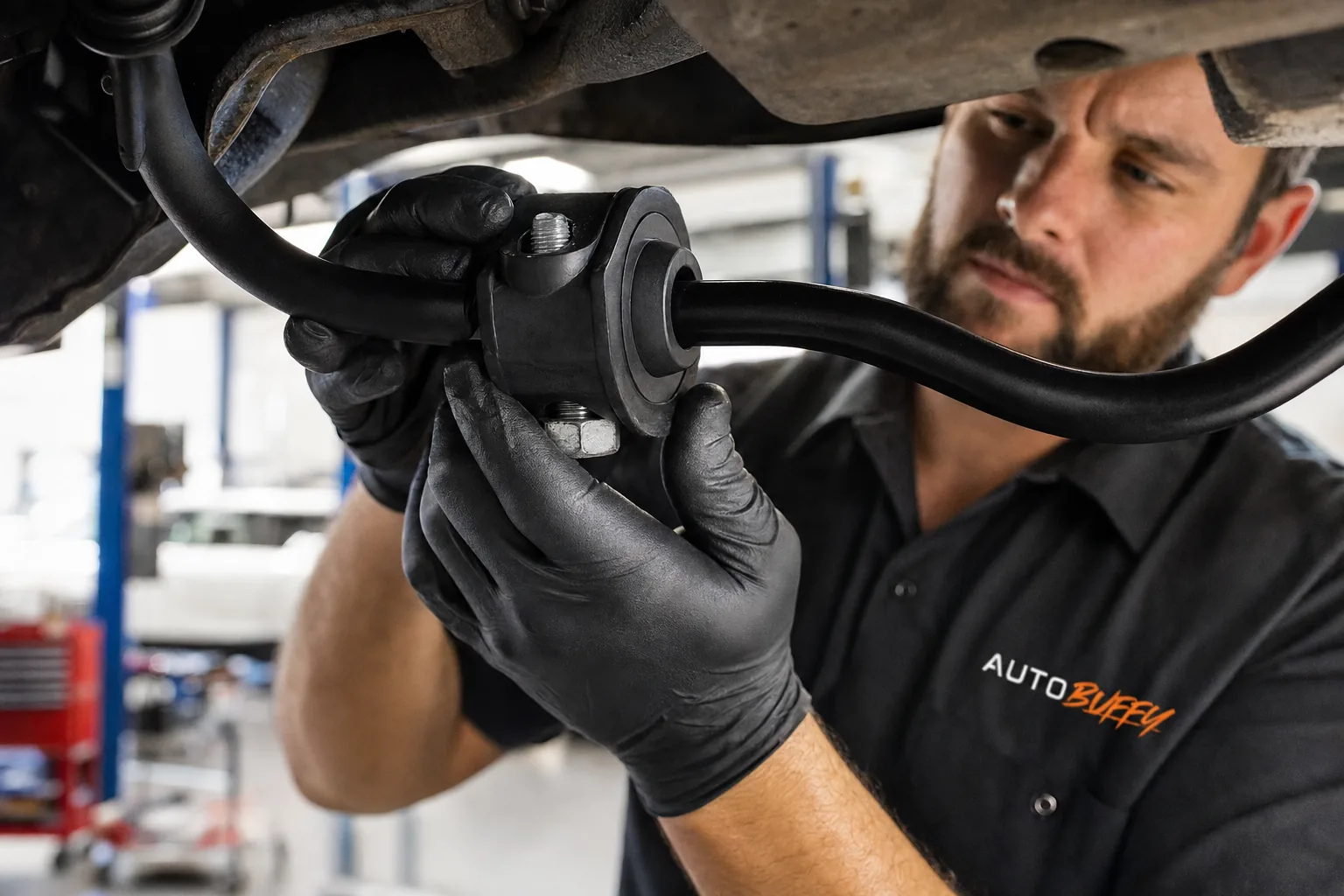
The anti-roll bar (most people call it the sway bar) runs laterally across your suspension, connecting the left and right sides. When one wheel hits a bump, the bar twists and transfers some of that force to the opposite side — keeping the car from leaning excessively in corners. Sway bar bushings are rubber or polyurethane sleeves that hold that bar firmly to the chassis or subframe. They're clamped in place with small brackets, and they look almost trivial — until they wear out. Without a solid bushing, the bar starts moving around in its mount, and the whole system loses effectiveness fast. ---
The 5 Symptoms You Shouldn't Ignore
1. A Thudding Clunk Over Bumps
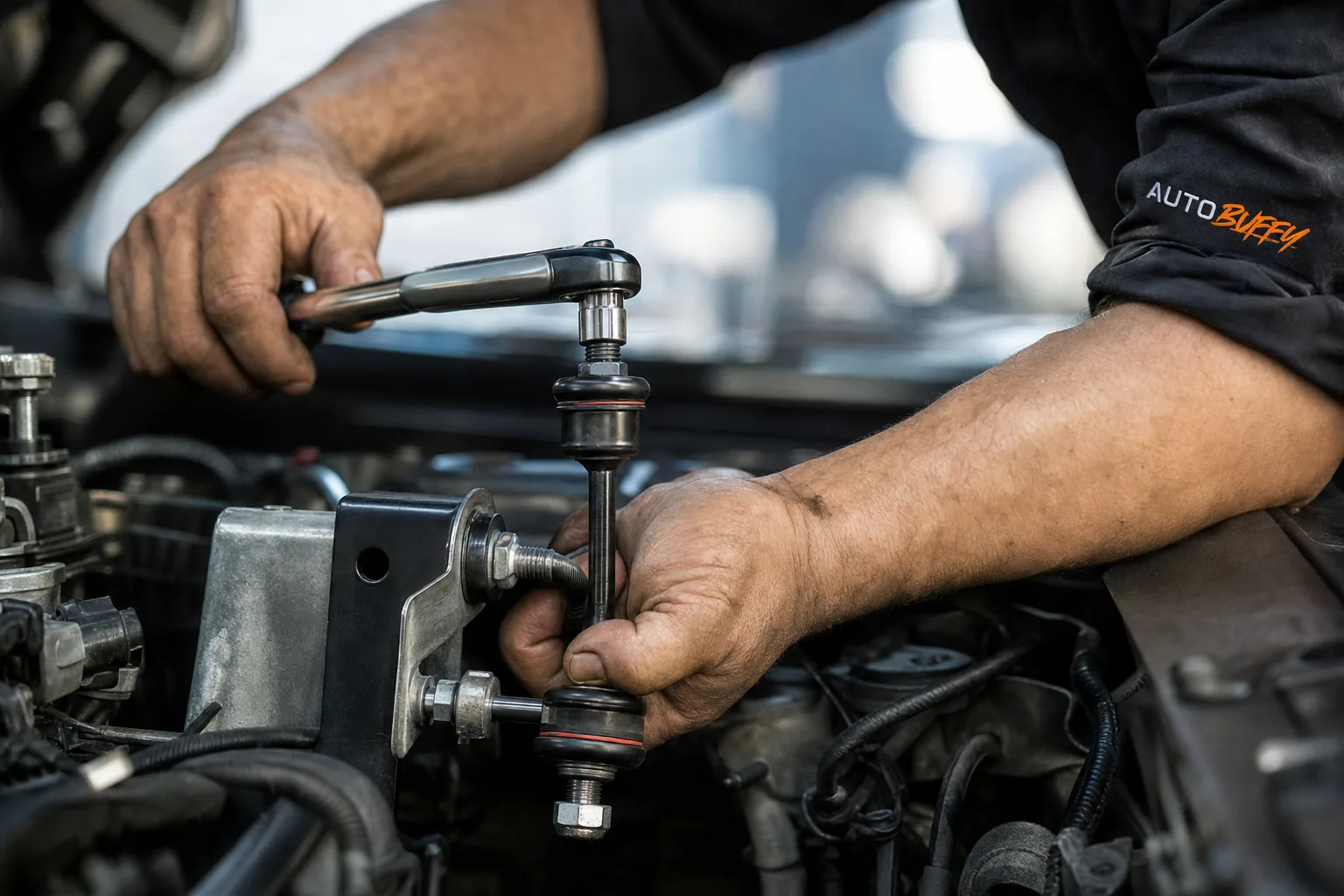
This is the most common complaint, and it's worth getting the sound right. A worn sway bar bushing makes a lower-pitched thud, not a sharp crack. If your noise is more of a high-pitched clunk, the end links are more likely the culprit — those are the connecting rods between the sway bar and the control arm. The pattern tells you a lot too. A clunk going straight over a bump points to the bushings. If it only happens when you hit a dip mid-turn or during cornering, the end links move to the top of the suspect list. ### 2. Squeaking on Turns or Rough Roads
If the bushing's internal lubrication dries out, the metal bar grinds against the bushing sleeve. That creates a squeak or chirp — sometimes intermittent, sometimes constant — that tends to worsen with temperature. Cold mornings are often the worst. Some people chase this noise for months before landing on the bushing as the source. ### 3. Loose, Vague Handling in Corners
This one's subtler but arguably more important. When the bushing wears enough that the bar can slide laterally in its mount, the anti-roll bar can't do its job. You'll notice the car feels less planted in sweeping highway on-ramps, or takes more steering input than it used to. It's easy to chalk this up to "old car feel," but worn bushings are often behind it. ### 4. Excessive Body Roll
Related to the handling issue above. If you've noticed your vehicle leaning noticeably more than it used to on turns — or passengers comment that the car feels "tippy" — bad sway bar bushings are on the short list of causes. The sway bar's whole purpose is to fight that lean; take away its solid mounting point and body roll increases. ### 5. Uneven Tire Wear
A compromised sway bar setup puts abnormal weight distribution on the outer edges of tires during cornering. Over time, that shows up as wear on the outer tread blocks that doesn't match the inner wear. If your tires are wearing unevenly and you've already ruled out alignment and inflation, check the front suspension bushings. ---
Don't Confuse It With These Other Parts
Sway bar links, ball joints, control-arm bushings, shocks, and even loose fasteners can all produce nearly identical noises. This is genuinely one of the trickier suspension diagnostics because you're dealing with an interconnected system. The best move before ordering anything is a proper visual inspection. Jack the car up on stands, grab the sway bar with both hands, and try to move it up-down and side-to-side. Any noticeable play at the bushing mount — not at the end links — confirms the bushing is worn. Look for cracked, shredded, or completely missing rubber while you're in there. > "The diagnosis is free. Replacing the wrong part twice costs real money." — General principle every good shop mechanic lives by. ---
Is It Safe to Keep Driving? Straight answer: no, not long-term. Driving with damaged sway bar bushings is a genuine safety concern because the sway bar is what limits how much your vehicle tilts to the outside during a turn. In normal highway driving you might not feel much difference. In an emergency swerve or on a tight off-ramp, you'll feel it — and so might the guardrail. Missing or completely destroyed bushings are especially dangerous. The bar can shift far enough to contact other components, potentially causing more expensive damage to neighboring suspension parts. ---
Choosing Replacement Bushings: What to Know
You've got two main material choices:
- Rubber — OE-spec feel, quiet, absorbs vibration well. Right choice for most daily drivers. - Polyurethane — Stiffer, longer-lasting, improves handling response. Needs to be greased during install or it'll squeak. Good for trucks, tow vehicles, or anyone who prioritizes handling over ride comfort. For most passenger cars and light trucks, a quality rubber bushing kit from a reputable brand is the correct spec. Our inventory includes kits from Delphi and ACDelco Gold — both are solid OE-quality options with good coverage for domestic vehicles. Detroit Axle offers vehicle-specific kits for popular platforms like the Silverado/Sierra 1500, F-Series Super Duty, and GM full-size SUVs, which can be a practical pick if you're on that platform and want a ready-to-fit pair. Whichever brand you choose, make sure you're buying a kit — it should include the bushing and the retaining bracket if required. Don't buy just the bushing and discover the bracket is corroded beyond reuse. ---
DIY or Shop? Most front sway bar bushing replacements are within reach of a confident DIYer. The job typically takes one to two hours with basic tools, a floor jack, and jack stands. The main challenge is usually corroded bracket bolts — a penetrating oil applied the night before makes a real difference. If you're replacing rear bushings on a truck or the design requires dropping part of the subframe, that's when shop labor starts making more sense. Labor rates vary widely, but for a straightforward front bushing job, expect to pay one to two hours of shop time on top of parts. ---
Find the right part for your vehicle
Guaranteed fit, ships free
FAQ / People Also Ask
A worn sway bar bushing typically produces a low-pitched thud or thump when you roll over a bump. This is different from a bad sway bar end link, which tends to make a higher-pitched clunk. If you hear a squeak over bumps or during sharp turns, the bushing's lubrication has likely dried out, causing metal-on-metal contact.

Comments
Loading comments...
Comments are moderated by the AutoBuffy team.