

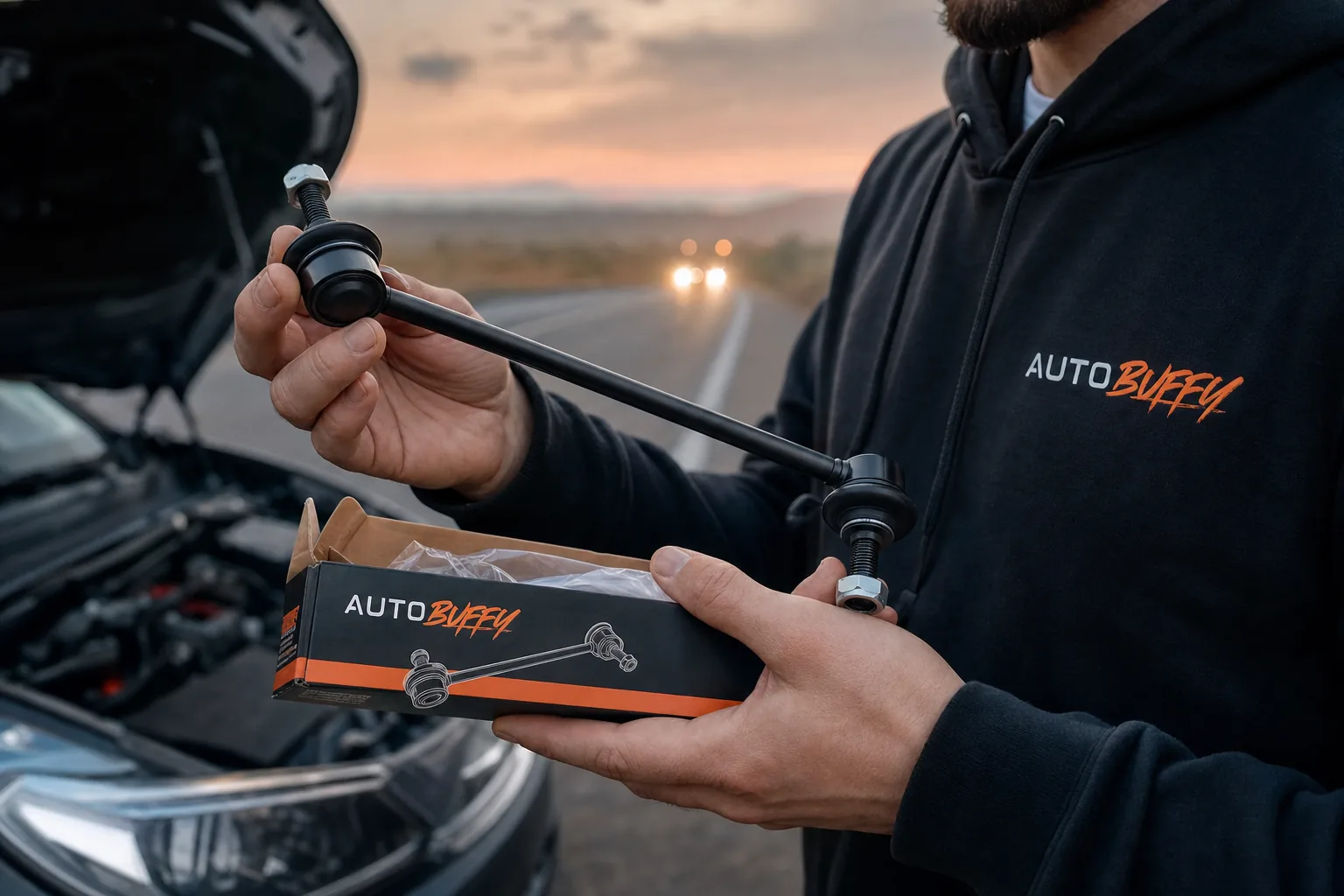
Can You Drive With a Broken Sway Bar Link?
A broken sway bar link isn't an instant breakdown, but driving on one is a real safety risk. Here's what happens, how long you can wait, and what it costs to fix.
The Short Answer
You can drive a short distance at low speed with a broken sway bar link — enough to reach a shop — but driving on it normally is a genuine safety risk you shouldn't take.
| Situation | Safe to Drive? | Urgency |
|---|---|---|
| Clunking noise, link intact but worn | Yes, with caution | Repair within 1–2 weeks |
| One link broken, low-speed local driving | Briefly, to reach a shop | Repair immediately |
| One link broken, highway/high-speed driving | No | Do not proceed |
| Multiple links failed or sway bar detached | No | Tow to shop |
| Broken link + worn control arm/bushings | No | Tow to shop |
That's the core of it. Everything below explains the *why* so you can make a smart call on your specific situation. ---
What a Sway Bar Link Actually Does
A sway bar — also called an anti-roll bar or stabilizer bar — is a metal rod that runs across the width of the vehicle and connects to the wheels on both sides. When you turn or hit a bump, the bar transfers force between the left and right sides of the suspension, limiting how much the body rolls or leans. Sway bar links are the short connecting arms at each outer end of the bar. They bolt the sway bar to the struts, control arms, or steering knuckles, depending on your vehicle's suspension design. The front of most modern vehicles has two links; if your car also has a rear sway bar, you've got four total — one per wheel. Here's the thing people miss: the link is a *load-transfer component*, not a shock absorber. It doesn't control spring oscillation, and it doesn't replace a ball joint or control arm. Its only job is to keep that side of the sway bar connected to the suspension so the bar can do its job. When the link fails, that side of the bar goes along for the ride without actually doing any work. ---
Symptoms of a Failing or Broken Sway Bar Link
Clunking or Knocking Noise
This is almost always the first sign. Worn or loose link joints rattle against each other over bumps, potholes, and rough pavement. The clunk is usually pretty obvious and often happens at low speed in parking lots or on uneven roads. ### Increased Body Roll in Corners
If the car feels like it leans more than it used to through turns — or leans noticeably more to one side — a failed link is a likely culprit. One disconnected link means that side of the sway bar can no longer transfer force the way it's designed to. ### Unsettled Feel During Lane Changes
Quick lane changes at highway speed require the suspension to respond fast. A broken link makes the car feel vague or wallowy during those maneuvers. That's the kind of situation where the safety risk becomes real. ### Abnormal Tire Wear
This one sneaks up on you. A compromised sway bar link changes how loads distribute across the tire contact patch, which can accelerate wear on the outer shoulders of the tire. If you're seeing uneven wear and can't explain it, check the links. ---
How Long Can You Actually Drive on a Broken Sway Bar Link? There's no mileage number to give you here, and anyone who quotes one is guessing. The real answer depends on:
- Road conditions. Smooth, straight city roads are lower risk than highway ramps, rough pavement, or winding roads. - Speed. The handling deficit gets significantly worse at speed. A broken link at 25 mph is manageable; at 65 mph during an emergency swerve, it's not. - What else is worn. If your control arm bushings or sway bar bushings are already tired, a broken link puts more stress on them and they can fail faster. Driving on a broken link actively accelerates wear on those nearby components. The practical answer: drive to the shop, take the quieter route, and keep the speed down. Don't plan a road trip and tell yourself you'll "deal with it next week."
Is It as Serious as a Broken Tie Rod? No — and that distinction matters. A broken tie rod can cause immediate loss of steering control. A broken sway bar link doesn't disconnect your steering; it degrades your handling stability, especially in dynamic situations like cornering or emergency maneuvers. That said, "less immediately dangerous than a tie rod" is not the same as "fine to ignore." In my experience, the people who end up with $1,200 suspension repair bills usually started with a $40 sway bar link they put off for three months. ---
What Does Sway Bar Link Replacement Cost? Parts for most passenger cars typically run **$20–$80 per link**. Trucks, SUVs, and performance vehicles can push that higher. Labor at a shop usually adds **$50–$150**, depending on how accessible the links are and the local labor rate. That's the math for a standalone link replacement. If your control arms or bushings also need attention — which is common on higher-mileage vehicles — a complete front suspension kit that bundles links and control arms together can be the more cost-effective route. MOOG offers combination kits that include both, which also cuts down on total labor time compared to scheduling two separate jobs. Use the part finder below for your exact fit and today's pricing. ---
Can You Replace a Sway Bar Link Yourself? On a lot of vehicles, yes — it's one of the more DIY-friendly suspension jobs. The typical process:
- Lift the vehicle and support it safely on jack stands. 2. Locate the sway bar link connecting the outer end of the sway bar to the strut or control arm. 3. Remove the upper and lower mounting bolts (many links use a ball stud that requires an Allen wrench to hold while you turn the nut). 4. Install the new link, torque to spec, done. Expect 30–45 minutes per side on a cooperative vehicle. The most common complication is rusted hardware — soaking the bolts with penetrating oil the night before makes a real difference. If you're on a vehicle with a lot of miles in a rust belt state, budget extra time. ---
Should You Replace Both Sway Bar Links at Once? Generally, yes. If one link has failed, the other side has lived the same life under the same conditions. Replacing both at the same time costs a little more in parts but saves you a second labor charge down the road — and keeps your handling balanced. It's the same logic as replacing brake pads in axle sets. ---
What to Do Right Now If Your Link Is Broken
- If you hear a clunk but the link is still connected: Get it inspected soon. You've got some time, but don't stretch it. - If the link is visibly broken or detached: Drive only as far as necessary to reach a shop. Avoid highways and keep speeds low. - If you're unsure what broke: Have it looked at before driving further. A shop can tell you in minutes whether it's the link, the bushing, or something more serious.
Why buy from AutoBuffy
- Fitment check: add your vehicle and we confirm the part fits before you buy. If it doesn't fit because of our listing, you get a free return and a full refund, including original shipping.
- 24-month limited warranty on new parts bought on autobuffy.com.
- Real reviews: rated 4.9 by 19,069 verified customers.
- 30-day returns on unused parts in the original packaging.
- Free shipping on orders $50+. Orders placed before 12:00 PM ET (Mon-Fri) ship the same business day.
- Questions about an order? Call 888-477-2530 or email help@autobuffy.com.
Find the right part for your vehicle
Guaranteed fit, ships free
FAQ / People Also Ask
You can drive a short distance at low speed — say, to get to a repair shop — but you shouldn't drive normally on a broken sway bar link. Body roll increases, especially in corners and lane changes, and the longer you wait, the more you risk damaging nearby components like bushings and control arms.
Comments
Loading comments...
Comments are moderated by the AutoBuffy team.