

Control Arm Replacement Cost and Symptoms: What to Expect
Control arm replacement costs $150–$650 per arm. Learn the warning signs, what drives the price, and when you can get away with just a bushing.
The Short Answer
Control arm replacement typically costs $150–$650 per arm all-in, but if only the bushing is worn, you can often fix it for under $80.
| Repair Scenario | Typical Part Cost | Typical Labor | Total Range |
|---|---|---|---|
| Bushing replacement only | $15–$60 | $60–$120 | $75–$180 |
| Front lower control arm (domestic) | $40–$120 | $80–$160 | $120–$280 |
| Front lower control arm (European/luxury) | $100–$300 | $100–$200 | $200–$500 |
| Rear control arm (independent suspension) | $80–$250 | $120–$250 | $200–$500 |
| Alignment (always required after) | — | $80–$150 | $80–$150 |
Those ranges are honest ballparks. Your actual number depends on your vehicle, your region, and whether you're replacing just the arm or an arm-plus-integrated-ball-joint unit.
What Does a Control Arm Actually Do?
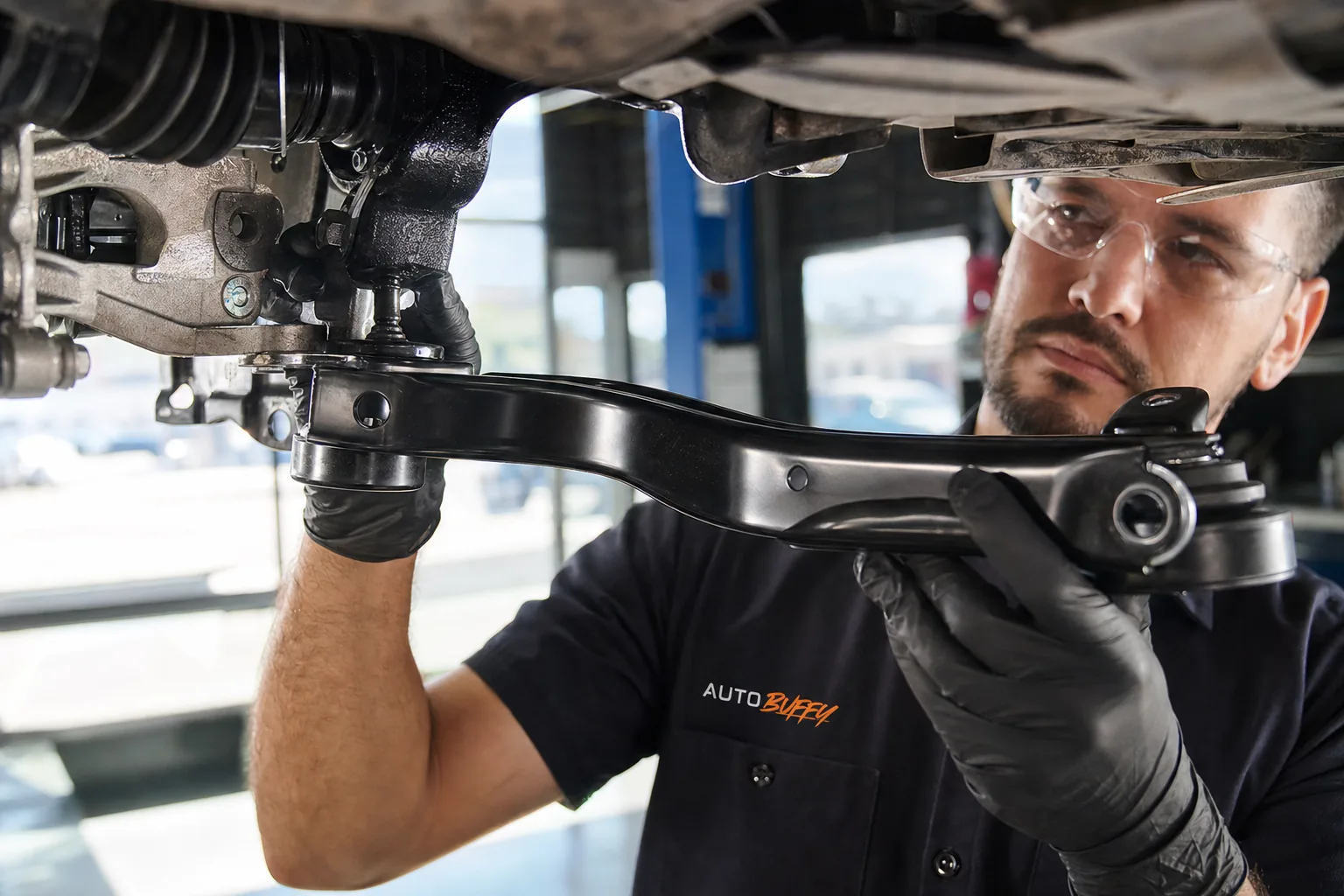
Control arms connect the wheel hub and steering knuckle to the vehicle's frame or subframe. They're the pivot point that lets the suspension travel up and down over bumps while keeping the wheel pointed in the right direction. Most vehicles use two per corner — an upper and a lower — though some simpler front suspensions use only a lower arm with a strut on top.
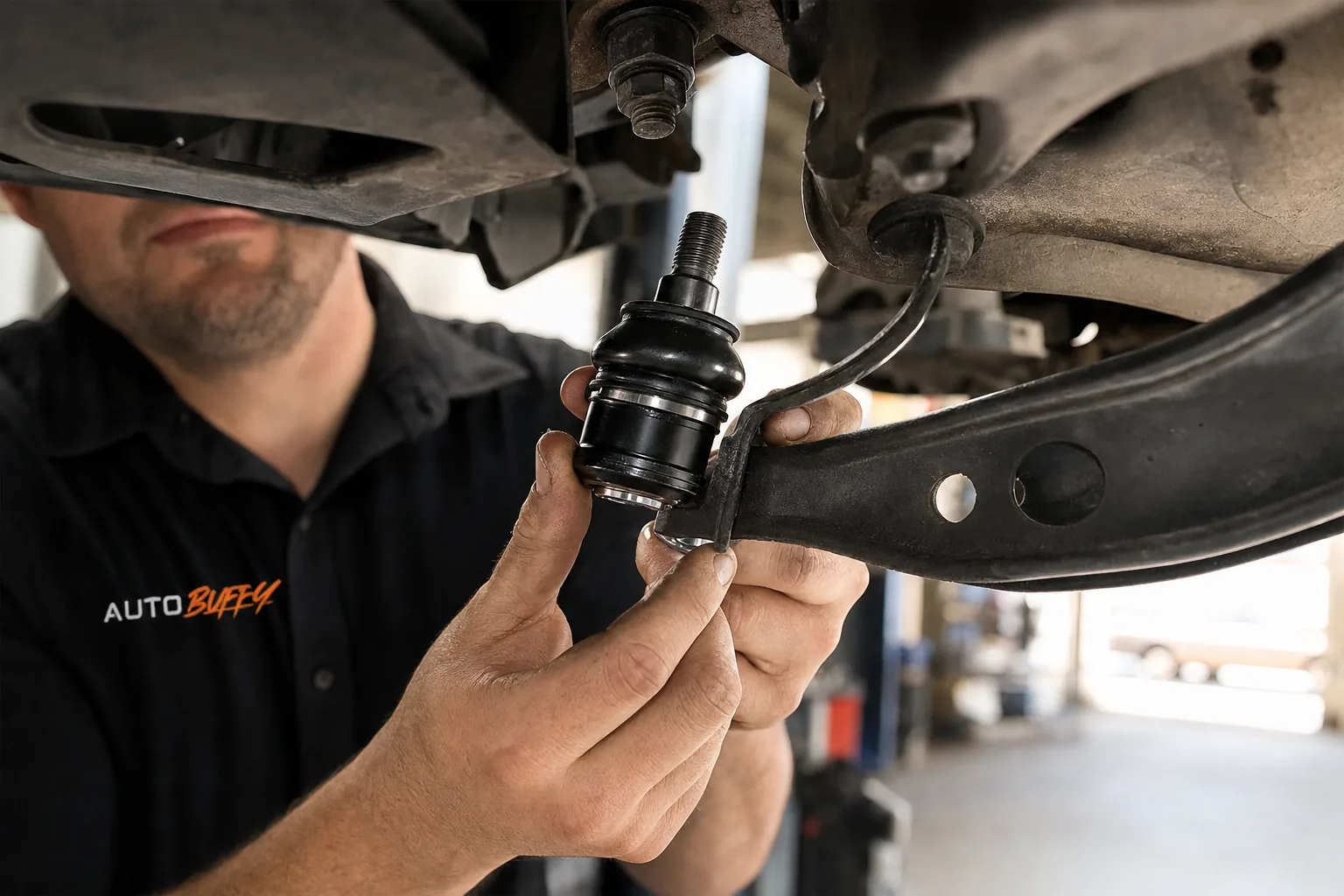
At each end of a control arm, there's a joint. The inner end attaches to the frame through rubber or polyurethane bushings. The outer end connects to the knuckle through a ball joint, which may be pressed into the arm or bolted on separately. When either the bushing or the ball joint fails, the whole suspension geometry drifts out of spec.
Symptoms of a Bad Control Arm
Don't ignore these. They get worse fast.
Clunking or Knocking Noise
This is usually the first thing people notice — a dull thud or metallic knock when going over bumps, turning, or braking. It's coming from the worn bushing or ball joint moving when it shouldn't be. The sound tends to get louder the longer you wait.
Pulling or Drifting to One Side
If the car pulls left or right without you doing anything, especially under braking, a worn control arm is a likely cause. The geometry has shifted enough that the wheel isn't tracking straight anymore.
Uneven Tire Wear
Check your tires. Excessive wear on the inner or outer edge — called camber wear — is a sign the wheel is tilted out of spec. A collapsed bushing is a common cause. By the time you see this pattern, the bushing has usually been bad for a while.
Vague or Wandering Steering
A loose, imprecise steering feel at highway speeds often gets blamed on alignment, but a worn control arm bushing is frequently the real culprit. The arm is moving slightly under load, which makes the whole front end feel unpredictable.
Vibration Through the Steering Wheel
Less common than the other symptoms, but it does happen — particularly if the ball joint is worn. It usually shows up between 45–65 mph.
What Drives the Cost Up (or Down)?
Vehicle Make and Model
This is the single biggest cost factor. A front lower arm for a half-ton domestic pickup is a commodity part — lots of competition, reasonable prices. The same component on a BMW or Mercedes-Benz involves tighter tolerances, more complex geometry, and sometimes proprietary fasteners. Expect to pay more for European vehicles.
OEM-Integrated Ball Joints
Some manufacturers press the ball joint directly into the control arm, so if either one fails, you're replacing the whole assembly. Others use a bolted ball joint that can be swapped independently. The integrated design costs more to fix but it's a more complete repair.
Bushing-Only vs. Full Arm Replacement
If the arm itself is straight and the ball joint (if separate) is still solid, replacing just the bushing is the smart move. It requires pressing the old bushing out and the new one in, which most shops can do quickly. Products like Suspensia's bushing line, VAICO's OE-referenced bushings, and Beck Arnley's catalog cover a wide spread of vehicles — Mercedes-Benz, BMW, Volvo, GMC, Chevy, Cadillac, Kia, Hyundai, and more. The bushings themselves are generally inexpensive; you're mostly paying for labor.
Labor Rates and Seized Hardware
A shop in a major metro area charges more per hour than a rural independent. Beyond the base rate, control arm jobs sometimes run long because old bolts seize into rubber bushings or subframe threads. A job quoted at 1.5 hours can turn into 2.5 hours when one stubborn bolt strips. That's not the shop being dishonest — it's just the reality of suspension work on older vehicles.
Don't Skip the Alignment
Every control arm replacement needs a four-wheel alignment afterward. Budget $80–$150 for that separately. Some shops include it in a package; confirm before you approve the work.
Can You Replace a Control Arm Yourself?
Honestly, yes — if you're comfortable with suspension work. You'll need a floor jack, solid jack stands, a torque wrench, and typically a ball joint press or separator. The most challenging parts are usually removing a seized ball joint taper from the knuckle and getting the inner bushing bolts loose without stripping them.
I'd put it at an intermediate DIY job. If you've done struts or tie rods before, a control arm isn't a huge leap. If you haven't done suspension work before, this isn't the one to start with — a mistake here is a safety issue, not just an inconvenience.
After any DIY control arm swap, you still need a professional alignment. A home alignment string isn't good enough for this.
How to Get an Accurate Quote
- Get quotes from at least two shops — an independent and a dealership. The gap is often $100–$200.
- Ask if the ball joint is integrated into your specific arm. That affects both part cost and whether any additional work is needed.
- Ask whether alignment is included or quoted separately.
- Confirm they're replacing the correct arm — front vs. rear, upper vs. lower, driver vs. passenger side.
- Check if both sides need it. If one side has worn bushings, the other is often close behind. Doing both in one visit saves labor.
In my experience, the shops that give you the lowest quote without asking those questions first are the ones that end up calling you midway through with surprise charges.
Bushing or Full Arm: How to Decide
| Condition | Recommended Repair |
|---|---|
| Bushing cracked/collapsed, arm straight, ball joint good | Bushing replacement only |
| Ball joint loose (integrated design) | Full control arm assembly |
| Arm bent or cracked | Full control arm assembly |
| Ball joint loose (bolt-on design) | Ball joint replacement only |
| Multiple components worn at high mileage | Full arm for reliability |
A good mechanic will inspect the arm while it's in the air and give you a clear answer. If they immediately jump to a full arm replacement without checking the bushing condition, it's fair to ask why.
Finding the Right Part for Your Vehicle
Control arm parts are highly vehicle-specific. The geometry, mounting dimensions, and bushing diameter vary even across trim levels of the same model year. Using the part finder below is the fastest way to confirm fitment and see current pricing — the inventory is always up to date, even when article prices aren't.
Find the right part for your vehicle
Guaranteed fit, ships free
FAQ / People Also Ask
Most drivers pay $150–$650 per control arm including parts and labor. A basic front lower control arm on a domestic vehicle sits toward the low end; a rear upper arm on a European luxury car can push past $600 once labor is factored in.
Comments
Loading comments...
Comments are moderated by the AutoBuffy team.