

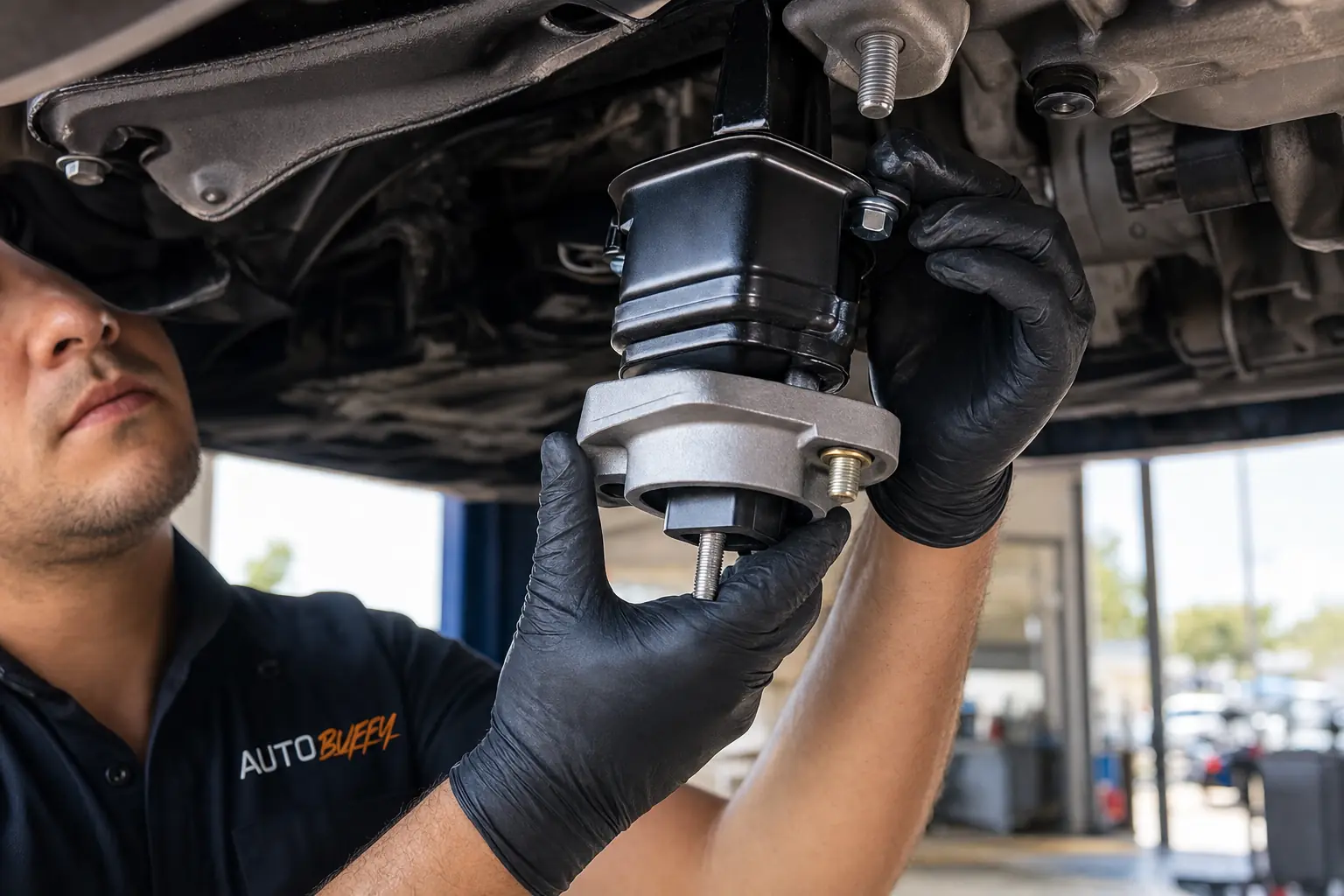
Honda Civic Motor Mount: Symptoms, Replacement Cost & the Right Westar Fit
Clunking, vibration, or a shifting engine? Learn Honda Civic motor mount symptoms, what replacement costs, and how to find the right Westar fit.
The Short Answer
A failing Honda Civic motor mount typically causes clunking noises, cabin vibration, and visible engine movement — and replacement parts cost $30–$120 each, with total repair bills ranging from $150 to $700+ depending on how many mounts need replacing and whether you go DIY or shop.
| Factor | Typical Range |
|---|---|
| Part cost (per mount) | $30 – $120 |
| DIY labor | $0 (1–3 hrs your time) |
| Shop labor (per mount) | $80 – $200 |
| Full replacement (all mounts, shop) | $300 – $700+ |
| Mounts per Civic (typical) | 3 – 4 |
| Expected mount lifespan | 80,000 – 150,000 miles |
What Does a Motor Mount Actually Do?
The motor mount has one job: keep your engine bolted in place while absorbing the vibration and torque that come from, well, the engine running. Honda Civics use a combination of rubber-and-steel mounts positioned at different points around the engine and transmission. Each one takes a slightly different load. The front mount handles fore-and-aft motion. The rear torque mount resists the rotational force when you accelerate hard. Together they keep everything stable.
When the rubber inside a mount cracks, hardens, or tears — which happens from heat cycling, oil contamination, or just age — it stops cushioning properly. That's when you start feeling and hearing things you shouldn't.
The 5 Clearest Symptoms of a Bad Honda Civic Motor Mount
1. A Clunk or Thud When You Accelerate or Brake
This is the one that usually sends people to Google first. When you tip into the throttle and hear a dull thud from under the hood, that's the engine lurching against a mount that can no longer control its movement. Same thing happens under hard braking.
2. Vibration You Can Feel in the Seat or Steering Wheel at Idle
A healthy mount filters out most of that engine shudder before it reaches the cabin. A worn one doesn't. If your Civic shakes noticeably at a red light and smooths out once you're moving, inspect the mounts before chasing an ignition or fuel issue.
3. The Engine Visibly Rocks When Revved
Have someone rev the engine to around 2,000 RPM while you watch from outside (seriously, keep your hands away from moving parts). Some movement is normal. An inch or more of rocking, or a mount that visibly separates, is not.
4. Grinding or Clunking When Shifting Into Drive or Reverse
As the engine torques against the mounts during gear engagement, a failed mount lets it move far enough to contact surrounding components. That contact makes noise.
5. A Cracked, Oil-Soaked, or Visually Separated Mount Body
This one you can see. Oil from a nearby leak can accelerate rubber breakdown dramatically. If a mount looks shiny, cracked, or has an obvious gap between its rubber and metal sections, it's done.
How to Confirm Which Mount Is Bad
You don't need a lift or a scanner for a basic inspection. A floor jack, a piece of wood to protect the oil pan, and a flashlight will get you most of the way there. Jack the engine up slightly to take the weight off the suspect mount, then look for:
- Visible cracks or tears in the rubber
- Oil saturation (rubber and oil are not friends)
- Metal separation from the rubber core
- A gap or sag in the mount body under load
If you're not comfortable with this, most shops will do a visual inspection for free or low cost as part of a standard estimate.
Honda Civic Motor Mount Replacement Cost: Honest Breakdown
Parts are the easy part of the budget. A single OE-style replacement mount runs roughly $30–$120 depending on position and brand. Labor is where the range widens. Independent shops typically charge $80–$200 per mount. Dealers charge more. Some mounts on the Civic — the front mount in particular — come out without too much drama. Others, especially on the 10th-generation (2016–2021) Civic with its packed engine bay, require supporting the engine from below, which adds time.
If two or three mounts are worn (which is common if the car has 100K+ miles), replacing them all at once makes sense. You save on labor since the engine is already supported.
My honest take: if your Civic has over 100,000 miles and one mount is bad, budget for two. It's rare for only one to fail when the others have seen the same heat cycles and mileage.
Why Westar for Your Honda Civic?
Westar specializes in engine and transmission mounts — that's essentially the whole catalog. That focus means their rubber compounds and mount geometry are developed specifically for this part type, not as a side product of a broader parts line. For a Honda Civic owner who wants OEM-comparable NVH (noise, vibration, harshness) without upgrading to a stiffer performance mount, that's exactly what you want.
Westar mounts are engineered to match factory stiffness ratings, which means the ride and refinement your Civic had when new. If you're tracking the car or doing autocross, a firmer aftermarket option might make sense. For the 95% of Civic owners who commute and occasionally push it on the highway, OE-style replacement is the right call.
Westar offers broad Honda Civic fitment coverage across multiple generations. Use the part finder below to confirm the exact mount for your year, trim, and engine — fitment details matter here because mount configurations changed between generations.
DIY vs. Shop: Which Makes Sense for Your Civic?
Go DIY If:
- You're comfortable with a floor jack, jack stands, and basic hand tools
- The failed mount is the front or rear torque mount (generally more accessible)
- You have a Saturday afternoon and a YouTube video for your specific generation
Go to a Shop If:
- You're not confident supporting the engine while unbolting a mount
- Multiple mounts need replacing (the labor savings from doing them together are real)
- Your Civic is still under warranty or a CPO plan
The torque mount on later Civic generations sits in a tight spot. It's doable DIY, but it's not a first-timer job.
Picking the Right Mount for Your Civic Generation
Honda has built several distinct Civic platforms over the years, and motor mount configurations are not interchangeable between them. A mount for an 8th-gen Civic Si won't fit a 10th-gen Civic Sport. Always verify by:
- Your model year
- Engine code (1.5T, 2.0, 1.8, K-series, etc.)
- Transmission type (manual vs. CVT vs. automatic)
- Mount position (front, rear, driver side, passenger side, torque)
Get all five right and the mount will drop in cleanly. Miss one and you're returning parts.
Find the right motor mount for your Honda Civic
Guaranteed fit, ships free
FAQ / People Also Ask
Most Honda Civic generations have three to four engine/transmission mounts. The exact count depends on the model year and whether the car has a manual or automatic transmission.
Comments
Loading comments...
Comments are moderated by the AutoBuffy team.