

Jeep CJ7 Shocks (1976–1986): Which Brand Fits Your Build?
CJ7 shocks explained — front, rear, and steering stabilizer options for every build style and budget across the full 1976–1986 range.
The Short Answer
For the 1976–1986 Jeep CJ7, Bilstein's B8 5125 Series is the top pick for lifted, hard-used rigs, while Rancho RS5000X and Rough Country N3 Series offer solid performance at a lower price point for trail and street builds.
| Brand | Series | Type | Best For | Approx. Cost Per Shock |
|---|---|---|---|---|
| Bilstein | B8 5125 | Monotube | Lifted / hard off-road | $120–$200+ |
| Fox Factory | Performance 2.0 IFP | Monotube IFP | Performance off-road | $110–$180+ |
| Rancho | RS5000X | Twin-tube gas | Street + trail combo | $60–$110 |
| Rough Country | N3 Series | Twin-tube nitrogen | Budget lift builds | $50–$90 |
| Monroe | Reflex / OESpectrum | Twin-tube | Stock-height / street | $30–$70 |
Note: The CJ7 requires front shocks, rear shocks, and a separate steering stabilizer — these are three distinct components. A "set of four shocks" does not include the steering damper. ---
Why CJ7 Shock Selection Is More Complicated Than Most Trucks
The CJ7 ran from 1976 to 1986 with a solid Dana 30 front axle and leaf springs front and rear. That setup is simple and tough, but it also means your shocks are doing a lot of heavy lifting — especially if you've added a lift kit, bigger tires, or spend real time off pavement. Unlike a modern SUV where struts handle spring duty, every CJ7 runs four conventional shock absorbers. The steering stabilizer is a fifth, separate unit that mounts across the front axle. It's easy to overlook when pricing out a shock job, and that's a mistake — a worn stabilizer on a lifted CJ7 is one of the fastest ways to end up with death wobble. Lift height is the other wrinkle. A stock-height CJ7 and a CJ7 with a 4-inch lift need completely different shocks. The travel specs don't overlap, and running the wrong shock for your lift will hurt both ride quality and shock longevity. Every brand below offers multiple lift-height variants — get the right one for your actual setup. ---
Bilstein B8 5125: The Right Monotube for Lifted CJ7s
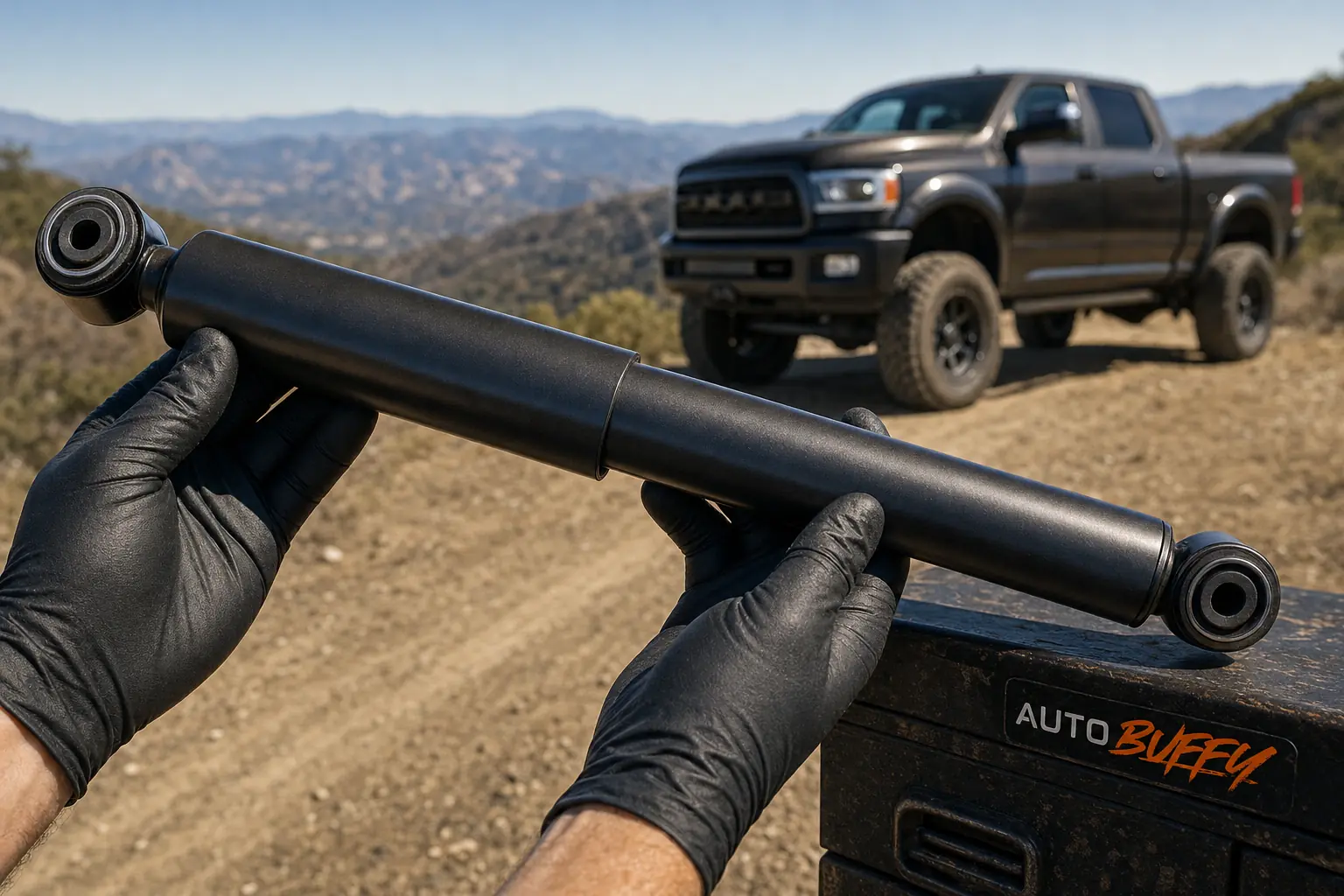
One thing worth getting straight up front: the correct Bilstein series for the 1976–1986 Jeep CJ7 (and CJ5 and CJ8 Scrambler) is the B8 5125, not the 5100. This is a common ordering mistake and it matters — the 5125 is engineered for modified, lifted applications with the extended travel those builds need. Bilstein has been making monotube gas-pressure shocks since 1957, when they put the first production monotube on Mercedes-Benz vehicles. That single-tube design — oil and pressurized gas separated by a floating piston — dissipates heat faster than a twin-tube and responds more consistently through repeated cycles. On a hard-working CJ7, that matters. thyssenkrupp Bilstein manufactures the 5125 Series to OEM-grade tolerances, and the digressive valving is specifically tuned for off-road articulation rather than highway comfort. If you're rockcrawling or running aggressive trails regularly, this is the shock to spec. The trade-off is price — monotubes cost more, and the 5125 is no exception. ---
Fox Performance Series 2.0 IFP: For the Performance-First Build
Fox Factory's Performance Series 2.0 IFP shocks are a confirmed fitment for the 1976–1986 CJ7. "IFP" stands for Internal Floating Piston — functionally similar to Bilstein's monotube approach, with oil and nitrogen gas separated to prevent aeration under hard use. Fox shocks are popular in the Jeep community for a reason: they're tuned specifically for off-road articulation and high-speed trail driving, and the 2.0 body is a proven size for this application. They tend to sit at a similar price point to Bilstein 5125s, so the choice between the two often comes down to brand preference and valving feel. Fox rides a bit more plush in some configurations; Bilstein tends to feel more controlled under hard compression. If your CJ7 spends more time on fast dirt roads than technical rock gardens, Fox is worth a serious look. ---
Rancho RS5000X: The Street-and-Trail Middle Ground
Rancho is part of Tenneco's DRiV brand portfolio, alongside Monroe and other well-known names. The RS5000X is a twin-tube gas shock with a 10-stage velocity-sensitive valving design — in plain terms, it firms up more as the suspension moves faster. That makes it reasonably capable both on the highway and on moderate trails. For a CJ7 that splits time between daily driving and weekend wheeling, the RS5000X hits a sensible middle ground. You won't get the heat resistance of a monotube under sustained hard off-road use, but for most owners who aren't hammering rocks every weekend, the performance gap versus a Bilstein 5125 isn't something you'll feel in everyday driving. The price savings are real, though. ---
Rough Country N3 Series: Multiple Variants for Lifted CJ7s
Rough Country offers N3 Series shocks specifically for the Jeep CJ7 in the 1969–1986 4WD range, and — this is worth knowing — they sell multiple lift-height variants, not just one size. If you're running a 2-inch lift versus a 4-inch lift, Rough Country has a specific N3 spec for each. The N3 is a nitrogen-charged twin-tube. It's not a monotube, so it won't outperform Bilstein or Fox in sustained hard-use scenarios. But for mild to moderate trail use on a budget build, it does the job. At roughly $50–$90 per shock, a full set of four is attainable without a major budget hit. The honest take: if your CJ7 sees more campsite access roads than serious rock lines, N3 shocks are a practical, cost-effective pick. ---
Monroe: The Sensible Choice for Stock-Height Street Builds
If your CJ7 is largely stock and you spend most of your time on pavement, Monroe's twin-tube lineup — Reflex or OESpectrum — is a legitimate, lower-cost option. Monroe is also part of Tenneco's brand portfolio. Their shocks won't excite you, but they ride comfortably and replace worn original-equipment shocks without drama. One honest note: a completely stock 1976–1986 CJ7 already rides firmly. If you're looking for a soft, comfortable shock for street cruising, manage your expectations — the leaf-spring solid-axle setup has its limits regardless of which shock brand you bolt on. ---
Don't Forget the Steering Stabilizer
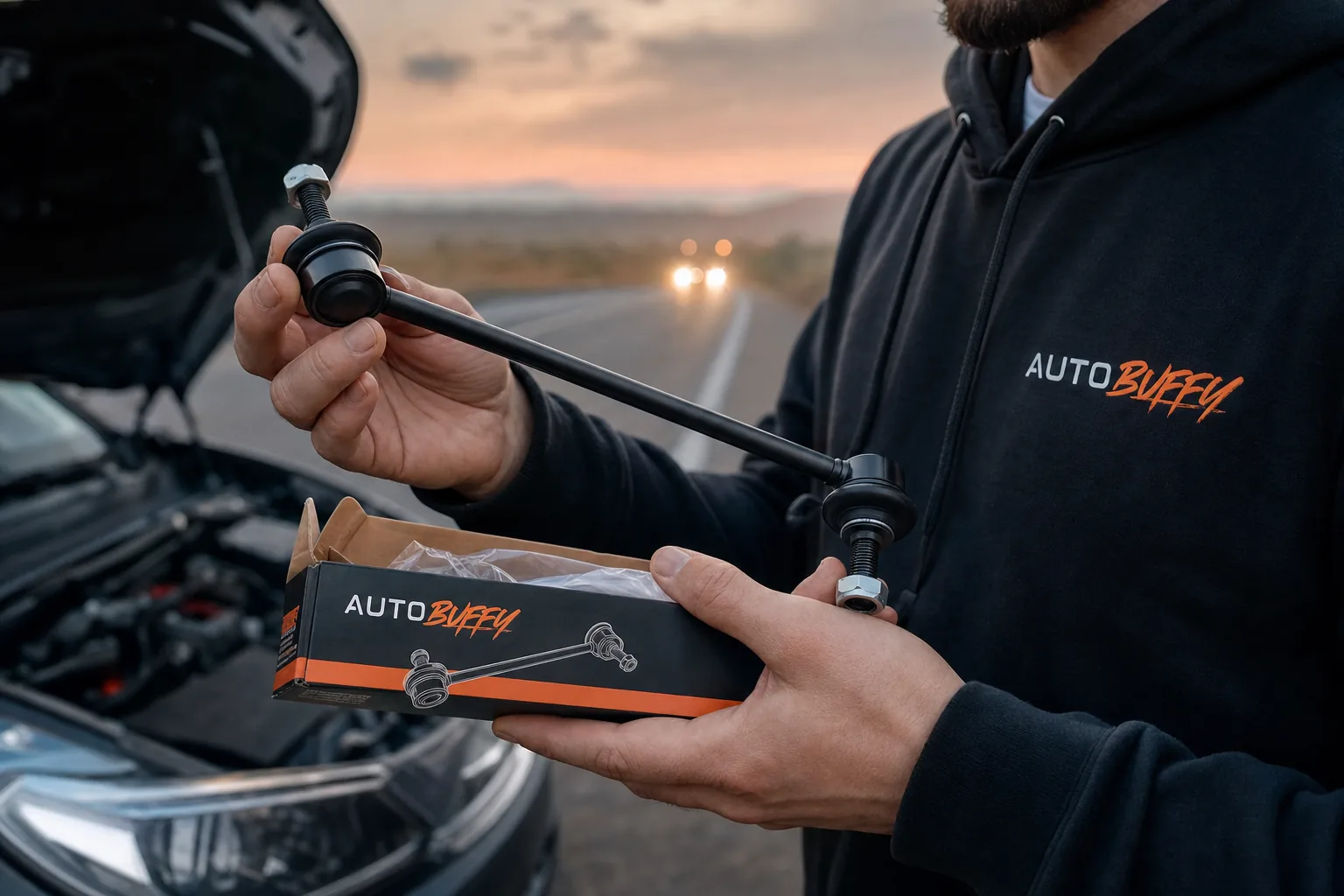
The steering stabilizer mounts across the front axle on the CJ7 and is a separate purchase from your four corner shocks. It's not optional if you're lifting the truck — bigger tires and a higher center of gravity make the stabilizer essential for preventing death wobble and reducing steering wander. Rancho, Bilstein, and Rough Country all offer stabilizers confirmed for CJ7 fitment. Budget for it when you're planning your shock refresh. ---
Front vs. Rear: Do You Need to Replace All Four at Once? Technically, no — you can replace just the fronts or just the rears. In practice, if one shock is worn, its partner on the opposite side is probably close behind, and shocks age in pairs. Replacing all four at once (and the stabilizer if it's original) gives you a consistent, predictable baseline across the truck and saves you from doing the job twice in a year. My honest opinion: on a CJ7 over 50,000 miles that does any off-road use, replacing all four shocks at once is always the right call. Twin-tube units wear gradually and quietly — you often don't notice how tired they are until you put new ones on. The difference in body control and off-road confidence is usually immediate and significant. ---
Installation: What to Expect
Shock replacement on the CJ7 is a realistic DIY job for anyone comfortable with basic tools. The solid-axle leaf-spring setup means there's no spring compression involved — you're unbolting two mounting points per shock and reversing the process with the new unit. Budget 1–2 hours for all four corners in a clean shop environment. Add time if hardware is rusted (common on older CJ7s). Penetrating oil on the mounting hardware the night before makes the job go considerably smoother. Torque specs vary by brand and mounting style — always follow the manufacturer's spec sheet that comes with the shock.
Why buy from AutoBuffy
- Fitment check: add your vehicle and we confirm the part fits before you buy. If it doesn't fit because of our listing, you get a free return and a full refund, including original shipping.
- 24-month limited warranty on new parts bought on autobuffy.com.
- Real reviews: rated 4.9 by 19,069 verified customers.
- 30-day returns on unused parts in the original packaging.
- Free shipping on orders $50+. Orders placed before 12:00 PM ET (Mon-Fri) ship the same business day.
- Questions about an order? Call 888-477-2530 or email help@autobuffy.com.
Find the right shocks for your Jeep CJ7
Guaranteed fit, ships free
FAQ / People Also Ask
The CJ7 uses separate front and rear shock absorbers plus an optional steering stabilizer. Fitment depends on your lift height — stock-height trucks use standard-travel shocks, while lifted CJ7s (2" to 6"+) require longer-travel units. Bilstein B8 5125, Fox Performance 2.0 IFP, Rancho RS5000X, Monroe Reflex, and Rough Country N3 Series all list confirmed CJ7 fitments across the 1976–1986 range.

Comments
Loading comments...
Comments are moderated by the AutoBuffy team.